What is Filter Meaning in Electronics and Signal Processing?
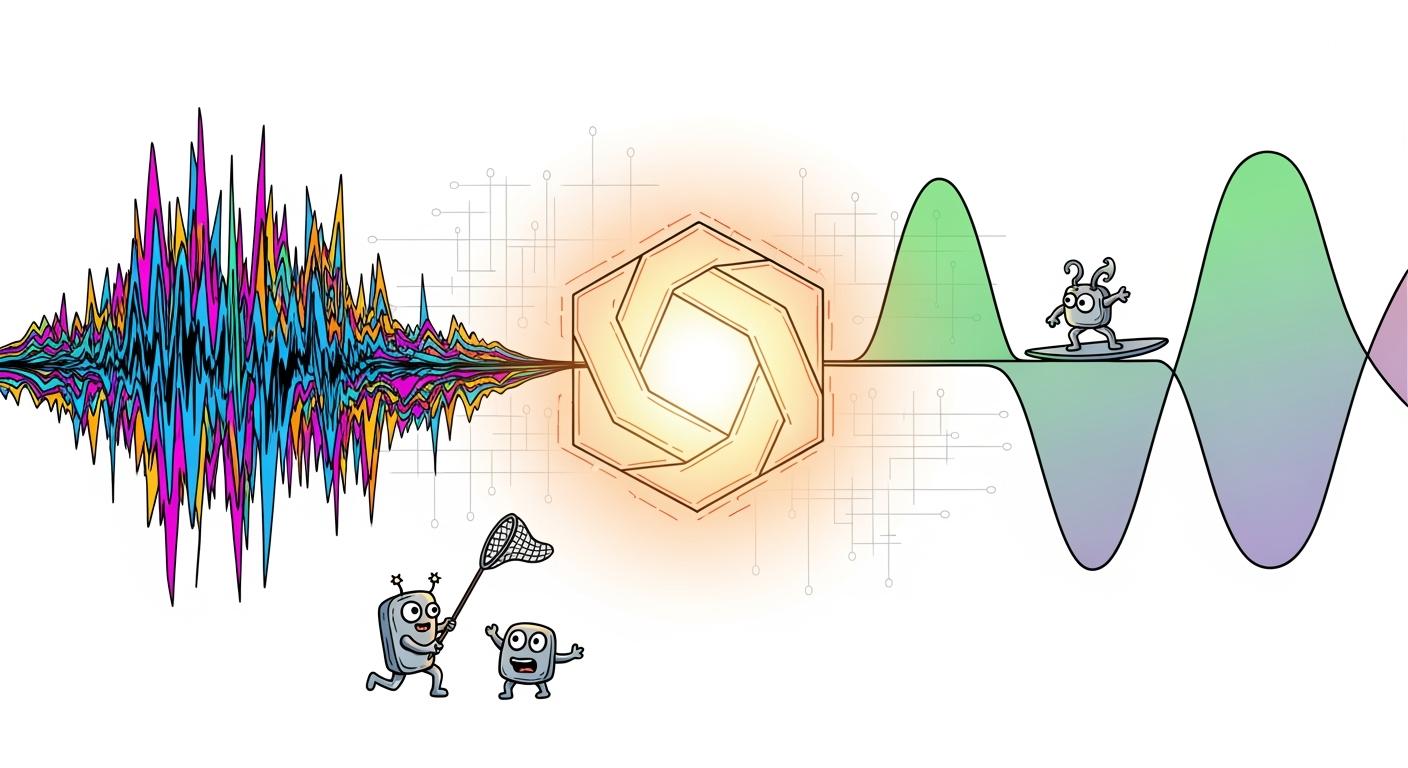
An electronic filter is a circuit designed to process a signal. Think of a simple coffee filter; it blocks grounds while letting coffee pass through. A signal filter acts similarly with an electrical signal, removing an unwanted frequency like noise. This selective action is the fundamental filter meaning. An electronic circuit filter cleans or isolates parts of a signal, making it more useful. The importance of a quality filter is clear, as the market for signal processing technology continues to grow.
Report Attribute | Detail |
|---|---|
Digital Signal Processor Market Size (2024E) | US$ 75.49 Billion |
Forecasted Market Value (2034F) | US$ 150.16 Billion |
Global Market Growth Rate (2024 to 2034) | 7.1% CAGR |
The core filter meaning is all about this precise control over a signal's frequency content.
Key Takeaways
An electronic filter cleans a signal. It removes unwanted parts like noise. This makes the signal clearer and more useful.
Filters work by choosing which frequencies to keep. There are four main types: low-pass, high-pass, band-pass, and band-stop. Each type blocks or allows different frequency ranges.
Filters are very important in many modern technologies. They help with clear phone calls, accurate medical tests, and good sound from speakers. They also help computers see and understand images.
Filters use basic electronic parts like resistors, capacitors, and inductors. These parts react differently to various signal speeds. This helps the filter decide what to let through.
Digital filters use math to clean data. They are used in things like digital cameras and self-driving cars. This shows filters are key for many new technologies.
Understanding the Core Filter Meaning
The word "filter" originally described a tool for purifying a fluid. This idea directly translates to electronics. The core filter meaning in signal processing is the removal of unwanted parts from a signal. A filter acts as a system designed to transform a signal in a specific way. This processing purifies the signal, making it clearer and more useful. The operation discriminates between different components of the signal. It accepts desired parts and rejects unwanted ones.
This selection process most often happens in the frequency domain. Every complex signal is a mix of different frequencies. A signal filter works by modifying the signal's frequency spectrum. It essentially decides which frequencies to keep and which to discard. This is the fundamental filter meaning in action.
A Filter's Main Job 📝 A filter's primary function is to enhance a signal. It achieves this by removing unwanted components like noise. It can also highlight important features, such as specific peaks or trends in the data.
Engineers design a filter to target a specific frequency range. The four basic types of signal filter operations are:
Low-Pass Filter: This filter allows frequencies below a certain point to pass through. It blocks higher frequencies.
High-Pass Filter: This filter does the opposite. It blocks low frequencies and lets high frequencies pass.
Band-Pass Filter: This filter passes only the frequencies within a specific range. It blocks everything lower and higher.
Band-Stop Filter: This filter removes a specific band of frequencies. It allows all other frequencies to pass through.
Each type of filter provides a precise way to clean up or isolate parts of a signal.
The Essential Role of a Signal Filter
A signal is rarely perfect in the real world. It often contains unwanted noise and interference. The essential role of a filter is to make a signal useful by improving its quality. A filter achieves this by cleaning the signal, which directly enhances the signal-to-noise ratio (SNR). A higher SNR means the desired part of the signal is much stronger than the background noise. This function is critical for clear communication and accurate data processing.
Noise exists everywhere and degrades signal quality. It can come from many sources. A signal filter is the primary tool engineers use to combat this problem.
Common Sources of Signal Noise 🔊
Radiated Interference: Noise travels through the air from sources like radio towers, Wi-Fi routers, and cell phones. Wires can act like antennas, picking up this unwanted frequency.
Conducted Interference: Electrical noise travels through physical wiring. High-power motors, transformers, or faulty power supplies often create this type of interference.
Ground Loops: Improper grounding in a system can create unintended electrical paths. These paths act as large antennas that pick up ambient noise.
A signal filter works to suppress these unwanted components. Digital Signal Processing (DSP) services use a filter to analyze the characteristics of noise within a signal. The filter then selectively removes the noise, leaving a cleaner, more intelligible signal behind. Advanced systems even use an adaptive filter that dynamically adjusts to changing noise conditions, maximizing signal clarity in real time.
Beyond just removing random noise, a filter also plays a vital role in signal extraction. Many systems need to isolate one specific signal from a complex mixture. For example, acoustic monitoring systems use a filter to extract the sound of a specific bird species from a noisy natural environment. The filter isolates the unique frequency of the bird call, allowing researchers to track species accurately. This shows how a filter can pull a valuable, specific signal out of a sea of information.
How an Electronic Filter Works
An electronic filter operates by exploiting the different ways its components react to signals of varying frequencies. This frequency-dependent behavior is the key mechanism that allows a filter to "choose" which parts of a signal to pass and which to block. The design of the filter determines its specific function.
The Core Principle of Frequency Selection
The selection process in a filter relies on a property called impedance. Impedance is the total opposition a circuit presents to an alternating current. Simple passive components form the building blocks of many filter designs.
Resistors (R): Their impedance is constant across all frequencies.
Capacitors (C): Their impedance decreases as frequency increases. They easily pass high-frequency signals but block low-frequency ones.
Inductors (L): Their impedance increases as frequency increases. They readily pass low-frequency signals but block high-frequency ones.
Engineers combine these components to create specific filtering effects. For instance, an RC filter uses a resistor and a capacitor. The arrangement of these parts determines whether it becomes a low-pass or high-pass filter. This fundamental principle of impedance is central to filter design.
Filters are broadly categorized into two types: passive and active. The choice between them depends on the application's specific needs.
Feature | Active Filters | Passive Filters |
|---|---|---|
Components | Resistors, Capacitors, Inductors + Op-amps | Resistors, Capacitors, Inductors |
Power Supply | Required | Not required |
Gain | Can amplify the signal | Cannot amplify the signal |
Flexibility | High control over frequency response | Limited control over response |
Complexity | More complex design | Simple design |
Digital filters use mathematical principles instead of physical components. A key tool is the Z-transform, which helps analyze and process sampled data. It is essential for understanding how digital systems, using difference equations, can perform filtering tasks.
The Math Behind Digital Filters 🧮 The Z-transform converts a discrete-time signal into a complex frequency-domain representation. This property is crucial for the design and analysis of digital filters, such as Finite Impulse Response (FIR) and Infinite Impulse Response (IIR) types. It allows engineers to predict a filter's frequency response with high precision.
Low-Pass and High-Pass Filters
Low-pass and high-pass filters are the two most fundamental types. They work by setting a specific frequency threshold. This threshold is known as the cutoff frequency. It is the point where the filter begins to block the signal, often defined as the frequency where the output power drops to half its original strength (-3 dB).
A low-pass filter is like a bouncer at a club who only lets in people below a certain age. It allows all frequencies below its cutoff frequency to pass through while blocking higher ones. A simple RC low-pass filter circuit achieves this. A common application is in audio speaker crossovers. A low-pass filter directs only the low-frequency bass sounds (typically 20-200 Hz) to a subwoofer, preventing muddy sound and ensuring the speaker operates efficiently.
A high pass filter does the opposite. It is like a height restriction on a theme park ride, only allowing those tall enough to pass. This filter blocks all frequencies below its cutoff frequency and passes the higher ones. A simple RC high pass filter circuit can perform this function. One important use is for "DC removal" in sensor measurements. The filter blocks the constant DC component of a signal, which can drift over time, allowing for accurate measurement of the changing AC signal components.
Band Pass Filter: Isolating a Specific Range
A band pass filter is more selective. It acts like a VIP pass that only grants entry to a specific, pre-approved group. A band pass filter allows only the frequencies within a certain range, or band, to pass through. It blocks all frequencies that are lower or higher than this desired band.
Engineers can construct a band pass filter by combining a low-pass filter and a high-pass filter. The high-pass section blocks frequencies below the desired band, and the low-pass section blocks frequencies above it. The result is a filter that isolates a specific band of frequencies. The characteristics of a band pass filter are defined by two key parameters:
Center Frequency (Fc): The midpoint of the pass band.
Bandwidth (BW): The width of the pass band, calculated as the difference between the upper and lower cutoff frequencies.
The most familiar example of a band pass filter is a radio tuner. When you tune a radio, you are adjusting a band pass filter to select the frequency of a single station. This design prevents interference from other stations broadcasting on nearby frequencies, improving the receiver's sensitivity and ensuring you hear only the station you want. A tunable LC circuit (using an inductor and capacitor) is a classic band pass filter design for this purpose. The band pass filter is essential for isolating a specific signal from a crowded spectrum. This type of band pass filter is crucial in modern communications.
Band Stop Filter: Removing a Specific Range
A band stop filter, also known as a notch filter, performs the opposite function of a band pass filter. It is like a security guard tasked with blocking one specific person from entering an event while letting everyone else in. A band stop filter rejects all frequencies within a specific, narrow band and allows all other frequencies—both lower and higher—to pass through.
The design of a band stop filter targets a very precise frequency for removal. This makes the band stop filter extremely useful for eliminating known sources of interference. The most common use for a band stop filter is to remove the 50 Hz or 60 Hz "hum" from power lines that can contaminate audio signals. This unwanted noise can be very distracting. A well-designed band stop filter can be precisely tuned to this frequency, removing the hum with minimal impact on the rest of the audio.
A band stop filter can be built using various component combinations, such as arranging resistors and capacitors in a specific parallel and series configuration. For more severe interference, multiple band stop filter stages can be cascaded to remove the primary hum frequency and its harmonics. The precision of a band stop filter makes it an indispensable tool in audio processing and other sensitive electronic systems where a specific interfering frequency must be eliminated from a signal. The band stop filter design ensures a clean output.
Modern Filter Applications in 2025
The fundamental meaning of a filter finds its purpose in countless modern technologies. From the smartphone in your pocket to advanced medical equipment, filters are the unsung heroes that enable clear communication and accurate data processing. Their applications are diverse and essential for the performance of today's electronic systems. The precision of a filter makes complex technology reliable. Here are some key modern applications where filters play a critical role.
Advanced Telecommunications and 5G: Modern telecommunications systems rely heavily on filters to manage a crowded radio frequency (RF) spectrum. In 5G and Wi-Fi 6 devices, a filter is essential for clear communication. These systems must isolate specific communication channels to prevent interference. Bulk Acoustic Wave (BAW) filters are high-performance chips that excel at this task. BAW technology handles higher power levels and works effectively at the higher frequencies used in 5G. This gives them an advantage over older Surface Acoustic Wave (SAW) filters. The precise performance of these advanced filters ensures reliable data transmission. As technology evolves, so does the filter. Companies like Murata are introducing new RF MEMS filters designed for next-generation 5G and IoT applications, promising even better performance and power handling. This application shows the importance of filters in global communication networks.
Medical Device Signal Processing: In medicine, the precision of a filter can be life-saving. An electrocardiogram (ECG) machine measures the tiny electrical signals of the heart, which are around 1 millivolt. This data is easily corrupted by noise from many sources. A filter cleans this data to provide a clear picture of heart activity. ECG systems use a combination of filters for this purpose.
A high-pass filter removes low-frequency noise, such as baseline drift caused by a patient's breathing.
A low-pass filter blocks high-frequency noise from muscle tremors or other electronic equipment.
A notch filter (a type of band-stop filter) specifically targets and removes the 50 Hz or 60 Hz hum from electrical power lines. This multi-stage filtering dramatically improves the signal-to-noise ratio. It allows doctors to analyze clean heart data for accurate diagnosis. The precision of these systems is paramount for patient care.
High-Fidelity Audio Systems: Audio crossovers are a classic filter application found in multi-speaker systems. A single speaker driver cannot reproduce the full range of audible sound with high quality. Crossovers use filters to split the audio signal into different frequency bands and send each band to the correct driver. A low-pass filter directs low-frequency sounds (bass) to the large woofer. A high-pass filter sends high-frequency sounds (treble) to the small tweeter. This separation ensures each driver operates within its optimal range, resulting in cleaner, more detailed sound and better overall system performance. The precision of the crossover design is key to achieving a seamless audio experience. This is one of the most common applications of a filter.
The Digital Frontier: Image and Data Processing 🖼️ Filters are not limited to analog circuits. Digital filters use mathematical algorithms to process data. This form of processing is central to applications like digital photography and autonomous vehicle systems. The core principle of selective modification remains the same.
Digital Image and Data Processing: Digital filters play a crucial role in how computers "see" and interpret visual data. One key application is edge detection. An edge in an image is a boundary where brightness changes suddenly. Digital filters, such as the Sobel operator, scan an image to find these changes. The filter calculates the gradient, or rate of change, between neighboring pixels. A high gradient indicates a sharp edge. This data is fundamental for object recognition in computer vision systems, from facial recognition on your phone to the navigation system in a self-driving car. The precision of these algorithms allows a system to make sense of complex visual data.
Clean Power for Electronic Systems: Every electronic device, from a laptop to a server farm, needs a clean, stable DC power supply to function correctly. Power supply systems use filters to convert noisy AC power from the wall outlet into smooth DC power. An output filter, typically a low-pass filter, is essential for removing high-frequency switching noise generated during the power conversion process. Without this filtering, the noise could disrupt the performance of sensitive microchips, leading to data errors or system crashes. The precision of the power supply filter ensures the reliability and longevity of the entire electronic system. This is one of the most foundational applications for any electronic system.
The fundamental filter meaning is its role as a selective gatekeeper for signal frequencies. This function is not a minor detail; it is the foundation that makes countless electronic systems work. The proper application of a filter is critical for everything from power supplies to advanced telecommunications. Innovations like BAW filters enable the high performance required by 5G networks, ensuring reliable communication. Ultimately, understanding how a filter cleans and isolates signals is key to understanding how the modern digital world communicates so clearly.
FAQ
What is a notch filter?
A notch filter is another name for a band stop filter. This filter removes a very narrow frequency band from a signal. Engineers use a band stop filter to eliminate specific interference, like the 60 Hz hum from power lines, without affecting the rest of the signal band.
Why is filter design important?
A proper filter design ensures a circuit performs its job correctly. The design determines the filter's frequency band and sharpness. A poor design can fail to remove noise or might even block the desired signal band. Good filter design is critical for system performance.
What is a filter's passband?
A filter's passband is the range of frequencies it allows to pass through. The stop band is the frequency band it blocks. For example, a low-pass filter has a pass band below its cutoff frequency and a stop band above it. The design sets this band.
Filter Bands Explained 📊
Pass Band: The range of frequencies a filter passes.
Stop Band: The range of frequencies a filter rejects.
Transition Band: The area between the pass band and stop band.
How does a band stop filter work?
A band stop filter works by targeting a specific frequency band for rejection. Its design creates high impedance for that narrow band, blocking it. This action lets frequencies outside the stop band pass through. This makes the band stop filter ideal for removing a known interfering band.
See Also
AC Filters: Essential Technology for Today's Electronic Systems
Boosting Circuit Performance: The Role of AC Filters Explained
Power Regulation: Why It's Crucial for Modern Electronic Devices
Circuit Board Components: Driving Tomorrow's Electronic Innovations Forward
The Impact of Circuit Board Components on Today's Electronics