A Beginner’s Guide to Alternating Current Filters in Modern Technology
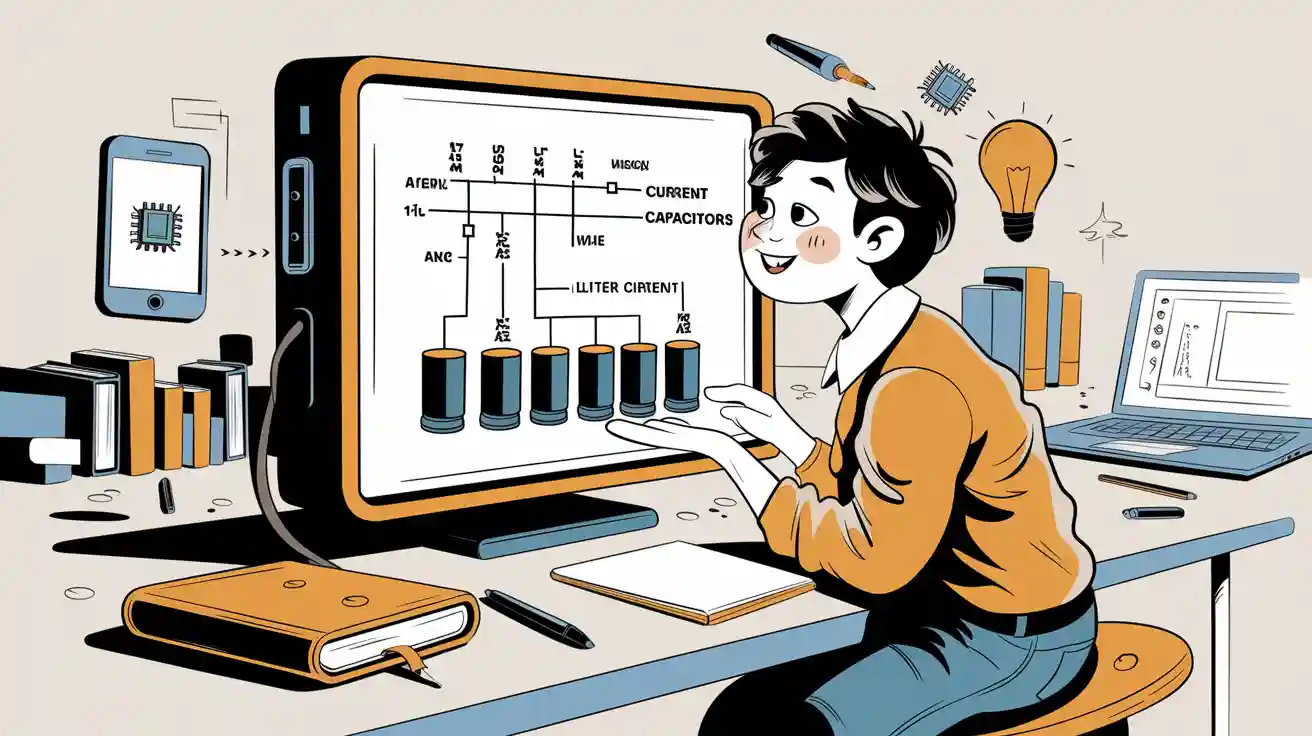
An alternating current filter helps you remove unwanted noise from your electronic devices. You often face problems from electrical noise and interference, which can lead to issues like:
- Voltage spikes or surges that damage components
- Signal corruption in low-voltage circuits
- Fuzzy displays, flickering readings, or buzzing sounds
- Equipment malfunctions or shortened device lifespan
You rely on an AC filter to block this unwanted noise and protect your electronics. The filter improves performance by keeping signals clean and stable, so your devices work reliably every day.
Key Takeaways
- AC filters block unwanted electrical noise to protect your devices and keep signals clear.
- Capacitors, inductors, and resistors work together in AC filters to control which frequencies pass through.
- Different filter types like low-pass, high-pass, band-pass, and band-stop help manage specific frequency ranges.
- Using the right AC filter improves device performance, extends lifespan, and meets safety standards.
- Regular filter maintenance and proper installation ensure your electronics stay safe and energy-efficient.
Alternating Current Filter Basics
What Is an Alternating Current Filter
You use an alternating current filter to control which electrical signals pass through your devices. This type of electronic filter lets certain frequencies move forward while blocking or reducing others. You often find these filters in audio systems, communication devices, and power supplies. They help you keep signals clear and free from unwanted noise.
An alternating current filter uses three main parts: resistors, capacitors, and inductors. Each part plays a special role in signal processing:
- Capacitors let AC signals pass but block DC signals. This helps you separate AC from DC in your circuits.
- Inductors allow DC to pass but block high-frequency AC signals. You use them to keep out unwanted high-frequency noise.
- Resistors do not filter by themselves, but when you combine them with capacitors or inductors, you can adjust how much filtering happens.
You often see electronic filters designed as low-pass, high-pass, band-pass, or band-stop types. Each type helps you manage different frequency ranges. For example, a low-pass filter lets low frequencies through and blocks high ones. A high-pass filter does the opposite.
Tip: You can think of an alternating current filter like a bouncer at a club. Only the right guests (frequencies) get in, while the troublemakers (noise) stay out.
Why AC Filters Matter
You depend on ac line filters to protect your electronic devices from electrical noise and interference. Without these filters, your equipment can face many problems:
- Electromagnetic interference (EMI) can disrupt or damage sensitive parts.
- Unfiltered noise can cause data loss or make your devices less reliable.
- Over time, your devices may suffer permanent damage from constant interference.
You use ac line filters to keep your power supply stable and reliable. This is especially important as you add more electronic devices to your home or workplace. Clean power helps your devices last longer and work better.
Here are some main reasons why you need ac line filters in modern technology:
- You want to protect sensitive equipment from electrical noise and interference.
- You use more electronic devices every day, so you need steady, clean power.
- Industrial automation and digital systems require precise and reliable electrical signals.
- You need to improve power quality by reducing harmonic distortions and improving power factor.
- You must follow safety and power quality rules set by governments and industry groups.
- New technology, like IoT-enabled and hybrid ac line filters, gives you even better performance.
If you skip using an ac filter, you risk equipment malfunctions, data loss, and even permanent damage. You also might not meet important safety standards. By using the right ac line filters, you make sure your devices run smoothly and last longer.
Note: A power line ac filter is essential for keeping your electronic equipment safe and reliable, especially in places with lots of electrical noise.
| Filter Type | What It Does | Where You Use It |
|---|---|---|
| Low-pass | Blocks high frequencies | Audio systems, power supplies |
| High-pass | Blocks low frequencies | Communication devices |
| Band-pass | Allows only a range of frequencies | Signal processing, radios |
| Band-stop | Blocks a range of frequencies | Noise reduction, EMI control |
You rely on electronic filters and ac line filters every day, even if you do not notice them. They keep your electronics safe, your signals clear, and your devices working as they should.
How AC Filters Work
Key Components: Capacitors, Inductors, Resistors
You can think of an ac filter as a team of players, each with a special job. Capacitors, inductors, and resistors work together in filter circuits to clean up your electrical signals. Capacitors store energy in an electric field. They block direct current but let alternating current pass. This makes them useful for removing unwanted parts of a signal. Inductors store energy in a magnetic field. They resist changes in current, especially at higher frequencies. This helps them block high-frequency noise. Resistors limit the flow of current. When you combine resistors with capacitors or inductors, you can control which frequencies pass through your filter circuits.
In filter circuits, you often see capacitors and resistors paired together in RC filters. These can act as low-pass or high-pass filters, depending on how you connect them. Inductors can replace capacitors to create RL filters. When you combine capacitors and inductors, you get LC filters, which can target specific frequency ranges. The values of these components depend on the frequency you want to filter out. You choose the right combination to match your signal processing needs.
Capacitors in ac filters help smooth out signals by removing ripples. Inductors block unwanted high-frequency signals. Resistors help set the cutoff point for your filter circuits. Together, these components improve signal quality and make your devices more reliable.
Filtering Noise and EMI
Imagine your electronic device as a radio trying to play your favorite song. If there is too much static, you cannot hear the music clearly. This static is like electromagnetic interference, or EMI. EMI comes from many sources, such as motors, transformers, fluorescent lights, and even other electronic devices. Power lines and switch-mode power supplies also create radio frequency interference, which can disrupt your signals.
An emi filter acts like a shield for your device. It uses inductors (sometimes called chokes) and capacitors to block unwanted noise. Inductors in emi filters resist changes in current, which helps stop high-frequency noise from passing through. Capacitors in emi filters send unwanted signals to ground, keeping them away from your sensitive circuits. Some emi filters use special safety capacitors, called Class-X and Class-Y, to handle dangerous voltages safely.
You find emi filters in many places. They protect your devices from both differential-mode noise (between two wires) and common-mode noise (between wires and ground). By absorbing or blocking high-frequency noise, emi filters keep your electronics safe and help you meet electromagnetic compatibility rules. Proper installation and grounding are important for the best noise suppression and noise mitigation.
Tip: If you notice buzzing sounds or flickering screens, you might have electromagnetic interference. An emi filter can help solve these problems.
AC Filter Operation
You can picture an ac filter as a security guard at the entrance of a concert. Only people with tickets (the right frequencies) get in. The guard turns away troublemakers (unwanted noise and radio frequency interference). In filter circuits, the arrangement of capacitors, inductors, and resistors decides which signals pass and which get blocked.
In a simple RC low-pass filter, a resistor connects to the input, and a capacitor connects to ground. Low-frequency signals pass through, but high-frequency signals go to ground. In a high-pass filter, you swap the positions. Now, high-frequency signals pass, and low-frequency signals get blocked. Inductors can replace capacitors to create RL filters, which work in a similar way but with different frequency responses.
When you need sharper filtering, you combine capacitors and inductors in LC filter circuits. These can create band-pass or band-stop filters, letting you target specific frequencies for signal processing. The exact values of the components depend on the cutoff frequency you want. You calculate these values based on the relationship between resistance, capacitance, and inductance.
AC filters work in both single-phase and three-phase systems. In single-phase systems, you use X and Y capacitors rated for the voltage between line and neutral. In three-phase systems, you need higher-rated capacitors and different connection methods, such as Wye or Delta. This affects how much voltage the capacitors handle and how much leakage current flows. Proper design ensures your ac filter works safely and lasts longer.
By using the right filter circuits, you protect your devices from electromagnetic interference and radio frequency interference. You improve signal quality and keep your electronics running smoothly. AC filters play a key role in noise mitigation and signal processing, making sure you get the best performance from your technology.
Types of Electronic Filters
Low-Pass and High-Pass Filters
You often use electronic filters to control which signals pass through your devices. The low-pass filter lets signals with frequencies below a certain cutoff move forward, while it blocks higher frequencies. This helps you smooth out signals and remove unwanted high-frequency noise. In a low-pass filter, the capacitor acts like an open circuit at low frequencies, so most of the signal reaches the output. When the frequency increases, the capacitor sends the signal to ground, reducing the output. The cutoff frequency marks the point where the output drops to about 70% of the input.
The high-pass filter works in the opposite way. It allows signals above the cutoff frequency to pass and blocks lower frequencies. You often use this filter to remove low-frequency hums or rumbles. Both low-pass and high-pass filters use resistor-capacitor (RC) filter circuits. You can see their behavior on a Bode plot, which shows how much of the signal passes at each frequency. These filters have a gradual rolloff, so the change from passband to stopband is smooth.
Tip: If you want to block both very high and very low frequencies, you can use a band-pass filter or a band-stop filter. The band-pass filter only lets a certain range of frequencies through, while the band-stop filter blocks a specific range.
EMI Filter and AC Line Filters
You rely on ac line filters to keep your devices safe from electromagnetic interference. The emi filter is a special type of ac line filter. It targets both conducted and radiated noise that can disrupt your electronics. You find emi filters in devices with high-frequency switching, like switch-mode power supplies. These filters use common-mode chokes, ferrite beads, and LC filter circuits to block unwanted noise.
- EMI filters focus on removing electromagnetic interference, especially at high frequencies.
- They use special components to handle both differential-mode and common-mode noise.
- You need emi filters to meet strict noise emission standards.
- AC line filters provide broad protection from unwanted noise on power lines.
- You choose ac line filters based on voltage, current, and how much noise they block.
- Some ac line filters are made for homes, while others are custom-built for factories.
The main difference is that the emi filter is designed for specific noise problems, while ac line filters give general protection for your equipment.
Choosing the Right AC Filter
You want to pick the best ac line filters for your needs. Start by thinking about what kind of noise or interference you need to block. Look at the rated voltage and current for your devices. Check the insertion loss, which tells you how well the filter removes unwanted signals. Decide if you need a single-stage or multi-stage filter for better performance.
Here are some steps to help you choose:
- Identify the types of noise or electromagnetic interference in your environment.
- Match the filter’s voltage and current ratings to your equipment.
- Check if you need a filter that targets specific frequencies, like a band-stop filter or band-pass filter.
- Consider the size and type of filter circuits used in the filter.
- Make sure the filter meets safety and regulatory standards.
- Think about how often you will need to replace or maintain the filter.
You can use electronic filters in many ways, but picking the right ac line filters will help your devices last longer and work better.
Applications and Benefits
Everyday Electronics
You use ac line filters every day, often without noticing. These filters work inside your consumer electronics, such as televisions, computers, and audio systems. They help keep your devices safe from electrical noise and improve signal quality. When you watch TV or listen to music, ac line filters block unwanted signals so you get clear sound and sharp images. You also find these filters in power supplies and inverters, which help your devices run smoothly and last longer.
Tip: AC line filters protect your electronics from voltage spikes and provide protection against surges. This keeps your devices working even during storms or power changes.
Industrial Uses
Factories and large buildings rely on ac line filters to keep machines running safely. You see these filters in air filtration systems for manufacturing processes like grinding, welding, and soldering. They help remove dust, smoke, and fumes, making the air cleaner for workers. Companies like Jewett Automation use advanced electronic systems with ac line filters to build high-quality products for the automotive, medical, and electronics industries. These filters also support robotic assembly and inspection, which improves production speed and quality.
- AC filters clean the air in dust control booths and mist collectors.
- They help factories meet OSHA safety rules and keep workers healthy.
- Automated systems use ac line filters to ensure electronic stability and reduce downtime.
Performance and Safety
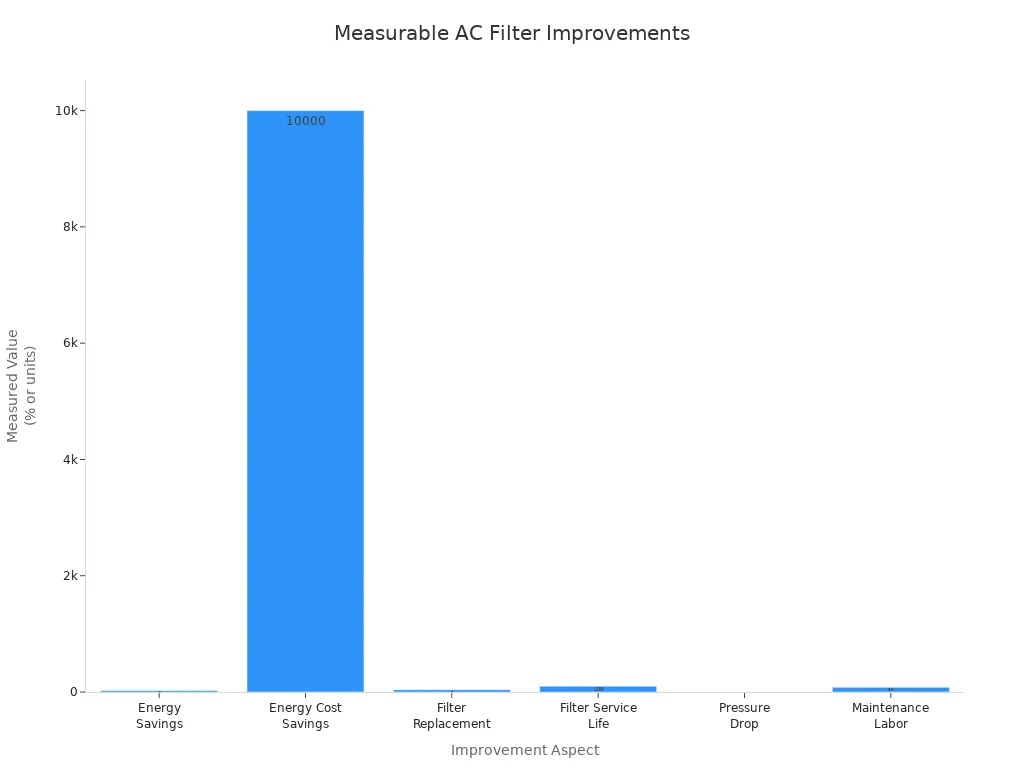
AC line filters give you many benefits. They improve signal quality and stability in your devices. You get better indoor air quality because these filters capture tiny particles, dust, and even viruses. Hospitals and data centers use high-efficiency filters to keep the air clean and protect sensitive equipment. AC line filters also help you save energy and money by reducing how often you need to replace filters and lowering maintenance costs.
| Benefit | Outcome |
|---|---|
| Improved air quality | Healthier spaces, fewer allergens |
| Energy efficiency | Lower utility bills, less energy waste |
| Equipment protection | Longer device life, fewer repairs |
| Cost effectiveness | Less money spent on replacements |
| Environmental impact | Less waste, more sustainable living |
Note: AC line filters help your electronics meet safety and EMC standards. This means your devices work reliably and safely, even in busy or noisy environments.
AC Filter Selection and Care
Selection Tips
When you choose ac line filters for your electronic devices, you need to think about several important factors. Start by checking the filtering properties. Look at the cutoff frequency and insertion loss to make sure the filter blocks unwanted noise. Next, match the filter’s voltage rating to your system. Using the wrong voltage can damage your electronic equipment. Pay attention to the circuit configuration. Some ac line filters use simple designs, while others have more complex circuits for better performance.
You should also consider the construction of the filter. Some filters use special shapes or materials to fit tight spaces or handle high power. Always check if the filter fits your device and meets your needs. Cost matters too. Balance performance with your budget. For mission-critical electronic systems, choose filters that pass strict testing and inspection.
Tip: Avoid common mistakes like picking the wrong size or ignoring the filter’s direction. These errors can reduce the effectiveness of ac line filters and harm your electronic devices.
Installation Basics
Proper installation helps ac line filters work at their best. Always follow the arrows or markings that show the correct airflow or current direction. If you install a filter backward, it will not block noise as well. Make sure the filter fits tightly in its slot. Gaps let unfiltered air or current pass through, which can hurt your electronic equipment.
You should ground the filter if the instructions say so. Good grounding helps ac line filters block electromagnetic interference. For electronic systems, place the filter close to the power entry point. This stops noise before it reaches sensitive parts. Never run your system while changing filters. This keeps you safe from shocks.
| Common Installation Mistake | Effect on System |
|---|---|
| Wrong direction | Poor filtering |
| Loose fit | Air or current bypass |
| Skipped grounding | More interference |
Maintenance Advice
Regular care keeps ac line filters working well. Check and replace filters every 1 to 3 months, or more often if you have pets or allergies. Dirty filters can block airflow and make your electronic devices work harder. This leads to higher energy bills and can shorten the life of your equipment.
Watch for signs of filter problems. Weak airflow, poor cooling, or higher bills mean your filter may be clogged. If you see dust building up on your electronic devices, it is time to check the filter. Always use the right size and type for your system. Clean reusable filters as the manufacturer suggests. Keep the area around your filters clean to prevent dust and debris from getting inside.
Note: Good maintenance of ac line filters protects your electronic equipment, saves energy, and keeps your devices running smoothly.
AC filters play a vital role in keeping your electronics and indoor air clean. You benefit from improved device performance, better air quality, and lower energy bills. Regular filter care prevents problems like clogged coils and poor airflow.
- AC filters trap dust, pollen, and pollutants, protecting both your devices and your health.
- High-efficiency filters, such as HEPA, capture almost all particles and help allergy sufferers.
- Cleaning or replacing filters every few months keeps your system efficient.
If you want to learn more or maintain your AC filter, try these steps:
- Turn off your AC before starting.
- Remove and vacuum the filter.
- Wash with mild soap, rinse, and let it dry.
- Replace the filter securely.
- Ask an HVAC expert if you need help choosing the right filter.
Tip: Choose a filter with a MERV rating of at least 6 for general use. Higher ratings offer better protection for sensitive users.
FAQ
What is the main job of an AC filter?
You use an AC filter to block unwanted electrical noise. It lets clean power reach your devices. This helps your electronics work better and last longer.
How often should you replace or clean your AC filter?
You should check your AC filter every 1 to 3 months. Replace or clean it if you see dirt or dust. Clean filters keep your devices safe and efficient.
Can you install an AC filter by yourself?
You can install simple AC filters by following the instructions. For complex systems, ask a professional. Safety matters, so always turn off the power first.
What happens if you skip using an AC filter?
Skipping an AC filter can cause noise, device errors, or even damage. You may notice buzzing, flickering, or short device life. Using a filter helps prevent these problems.