What is the USB Type C The Story Behind One Connector
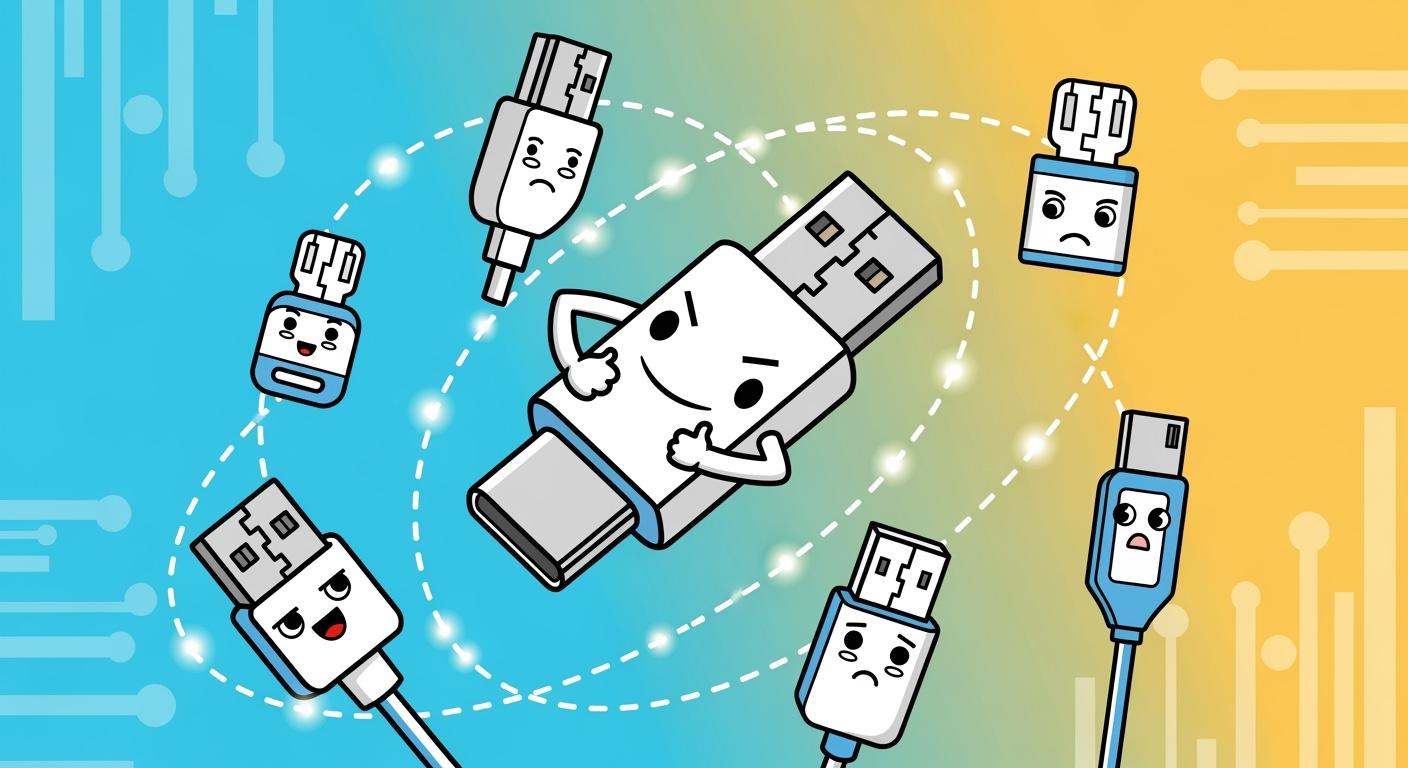
So, what is the USB Type C? It is the 24-pin, reversible USB connector system that has become the new standard for modern electronics. The rise of this USB Type-C connector was not accidental. It resulted from a superior design and a powerful push from the tech industry. This one small USB solution solved some of technology's biggest frustrations. The Type-C port is now a universal connector for countless devices.
Did You Know? 📈 As of 2023, the USB Type-C port is found on:
This widespread adoption shows how the Type-C USB design has reshaped modern technology.
Key Takeaways
USB-C is a new, reversible connector. It solves old problems like one-way plugs and too many different cables.
USB-C is very versatile. It can transfer data, video, and power through one port.
USB-C offers much faster data speeds and charges devices quickly. This is due to new USB standards and Power Delivery technology.
Many tech companies worked together to create USB-C. Governments also helped make it a common standard for electronics.
The Connector Chaos Before USB-C

Before the arrival of the USB Type-C connector, the world of cables was messy. Users faced daily frustrations that made connecting their devices a chore. The industry needed a better solution than the existing USB standards. The introduction of the Type-C connector aimed to solve these problems.
The Frustration of One-Way Plugs
Nearly everyone experienced the annoyance of one-way USB plugs. Users often tried to insert a USB-A or Micro-USB connector upside down. This simple act required people to stop and check the plug's orientation every time.
Users frequently complained about this design. It created a small but constant mental burden. Some companies added symbols to help, but these were useless when ports were in hard-to-see places. The design of the Micro-USB port itself made a reversible plug difficult to create without adding moving parts that could easily break.
A Different Cable for Every Device
The cable drawer was a tangled mess for most people. A huge variety of USB connectors existed for different devices. Common types included:
USB A-Type: The standard rectangular plug for computers.
USB B-Type: A square plug for printers and other large devices.
USB Mini-B: Used for older cameras and GPS units.
USB Micro-B: The standard for most non-Apple smartphones and small electronics.
Major companies also created their own special cables. Apple used a 30-pin connector for early iPhones, while Samsung had its own 30-pin plug for tablets. This meant users needed a different cable for their phone, camera, and tablet, creating clutter and confusion. The dream of a universal Type-C connector was born from this chaos. The USB Type-C standard promised one cable for all devices.
The Limits of Older USB Standards
Older USB standards had major technical limits. Data transfer speeds were slow, and charging power was weak. This made the old USB technology unsuitable for modern needs. The speeds of early USB versions show a slow progression.
USB Standard | Maximum Data Transfer Speed |
|---|---|
USB 1.0 | 1.5 Mbps |
USB 2.0 | 480 Mbps |
USB 3.0 | 5 Gbps |
Power for charging was also a problem. The standard USB-A port officially supplied a maximum of 7.5 watts. Later updates allowed up to 12 watts. This was not enough for fast charging of large batteries in new smartphones and laptops. The industry needed the more powerful charging capabilities that the USB Type-C specification would later provide.
What is the USB Type C Solution?
The USB Type-C connector is more than just a new shape. It acts as a gateway for multiple technologies. This design consolidates different functions into one powerful port. So, what is the usb type c solution? It is a direct answer to the chaos of older cables, offering a streamlined and superior experience for all modern devices. The new standard provides universal compatibility for users.
The Reversible Design Advantage
The most celebrated feature of the USB Type-C connector is its reversible design. Users no longer need to check a plug's orientation before inserting it. This simple change eliminates a major daily frustration. The connector's oval shape is symmetrical, so it works perfectly upside down.
This clever design is possible because of its 24-pin internal structure. The pins for data transfer and power are mirrored on the top and bottom rows. When a user plugs in the cable, the device uses special Configuration Channel (CC) pins to detect the orientation. It then activates the correct set of pins to establish a connection. This seamless integration happens instantly.
This design also improves durability. Older Micro-USB ports had a fragile internal tongue that could easily break. The Type-C connector is a hollow receptacle, making it much stronger. It is rated for at least 10,000 insertion cycles, ensuring a long lifespan even with frequent use.
One Port for All Needs
The true power of USB Type-C lies in its incredible versatility. It is not just a USB port; it is a universal port that can handle different jobs. This capability comes from a feature called "Alternate Mode." This mode allows the Type-C connector to carry non-USB signals.
This feature allows a single USB Type-C port to replace several other ports. For example:
Video Output: Using DisplayPort or HDMI Alternate Mode, a USB Type-C port can send high-definition video to a monitor or TV. This removes the need for a separate HDMI or DisplayPort connection on a laptop.
High-Speed Peripherals: Thunderbolt compatibility allows the USB port to connect to high-performance devices like external graphics cards and fast storage drives.
Power and Data: The port can simultaneously handle charging, data transfer, and video output. A user can connect a laptop to a docking station with one USB Type-C cable to charge it, display on two monitors, and use multiple USB accessories.
This ability to connect a multitude of devices with one cable is what makes the USB Type-C a truly universal solution. It simplifies setups and creates universal compatibility between different brands and types of devices.
Faster Data Transfer and Charging
The USB Type-C specification also introduced massive improvements in data transfer and charging speeds. It serves as the physical connector for newer, faster USB protocols. This allows for high-speed data transfers that were impossible with older USB types. The evolution of data transfer speeds shows this significant leap.
This level of high-speed data transfer is essential for tasks like editing 4K video or backing up large files quickly.
Beyond data, what is the usb type c answer to slow charging? The solution is a technology called USB Power Delivery (PD). Power Delivery allows a device and a charger to communicate. They negotiate the optimal voltage and current for safe and efficient fast charging. This process uses the CC pins inside the USB Type-C cable.
The charger tells the device what power levels it can offer.
The device requests the amount of power it needs.
The charger accepts the request and supplies the correct power.
This smart charging system enables much higher power levels. The latest USB Power Delivery 3.1 standard supports up to 240 watts. This is enough power for fast charging of demanding devices like gaming laptops and large monitors, which previously required bulky, proprietary power bricks. The combination of high-speed data transfer and powerful charging makes the USB Type-C the definitive new standard for modern electronics.
The Path to Universal Adoption
The journey of the USB Type-C connector to becoming a global standard was not left to chance. It required a rare level of industry cooperation, a major technological boost, and a strong push from government regulators. This combination secured the widespread adoption of the new standard.
How Tech Giants Collaborated
The creation of the USB Type-C connector is a story of "co-opetition." Major tech rivals sat down together to solve a common problem. The USB Implementers Forum (USB-IF) included powerhouse companies like Apple, Intel, HP, and Microsoft. They collaborated to design a single, powerful USB port for all devices.
This effort began in late 2013. The group announced its goal to create a new, unified connector. Key moments in this collaboration include:
2014: The USB-IF officially released the USB Type-C specification.
2015: Apple launched its new MacBook with only a single USB Type-C port, a bold move that showcased the port's all-in-one capability.
2016: Samsung released the Galaxy Note 7, its first phone with a USB Type-C port.
These early adoptions by industry leaders signaled a major shift for all consumer electronics.
The Boost from Thunderbolt
The capabilities of the USB standard received a massive upgrade thanks to Thunderbolt technology. Intel, a co-creator of Thunderbolt with Apple, contributed its powerful Thunderbolt 3 protocol to the USB4 standard. This donation integrated high-end features directly into the open USB specification.
This collaboration gave the USB Type-C connector incredible new powers. It enabled data transfer speeds of up to 40 Gbps, which was a huge leap for the USB ecosystem. This boost allowed a single Type-C port to handle demanding tasks that previously required multiple, specialized cables. These tasks included connecting two 4K monitors at once and using high-speed external storage. This integration made the USB Type-C a truly versatile and future-proof solution.
The Universal Type-C Mandate
Government regulation provided the final push for the widespread adoption of USB Type-C. In 2020, the European Union (EU) introduced a landmark law to reduce electronic waste and simplify life for consumers. The law mandates USB Type-C as the common charging port for most consumer electronics sold in the EU.
This directive sets clear deadlines for manufacturers.
Device Category | Compliance Date |
|---|---|
Mobile Phones, Tablets, Cameras | December 28, 2024 |
Laptops | April 28, 2026 |
This move by the EU forced many companies, including Apple with its iPhone 15, to switch their devices to the USB Type-C standard. Other regions, including India and the United Kingdom, are now considering similar laws, cementing the Type-C connector's role as the universal port for the future.
The success of the USB Type-C connector stems from three key factors. It solved user frustrations, offered superior technology, and received powerful backing from industry and government. So, what is the usb type c solution for modern electronics?
It is a single, powerful USB standard designed for universal compatibility. The USB Type-C port combines high-speed data, video, and advanced charging into one reversible Type-C connector.
This universal USB Type-C design is the future, simplifying charging and connections for all USB devices.
FAQ
Is USB-C the same as USB4?
No. USB-C is the physical connector shape. USB4 is the technology standard that sets data speed. A USB-C port can support different standards, like USB 3.2 or USB4. The port's capabilities depend on the device manufacturer's design.
Can I use USB-C with older USB-A devices?
Yes, users can connect USB-C and USB-A devices. This requires an adapter or a special cable. The cable needs a USB-C connector on one end and a USB-A connector on the other. The connection will operate at the older USB standard's speed.
Are all USB-C ports also Thunderbolt ports?
No. Thunderbolt is a high-performance technology that uses the USB-C connector shape.
A lightning bolt symbol (⚡) next to the port indicates Thunderbolt capability. While all Thunderbolt 3 and 4 ports are USB-C ports, not all USB-C ports support Thunderbolt's advanced features.
Do all USB-C cables support fast charging?
Not all USB-C cables are the same. Fast charging depends on two things:
The cable's quality.
Its support for USB Power Delivery (PD).
For charging over 60 watts, a special e-marked cable is necessary to ensure safety and performance.
See Also
Understanding Wire Connector Types: Essential Knowledge for Various Applications
T568A Versus T568B: Choosing the Right RJ45 Pin Layout
64-Pin Ceramic Packages: Crucial for Future Device Technology Explained
Female 1/4 to XLR Adapters: Unlocking Their Benefits for Audio
Quality Battery Cable Connectors: Vital for Your Vehicle's Performance