Why Quality Battery Cable Connectors Matter for Your Vehicle
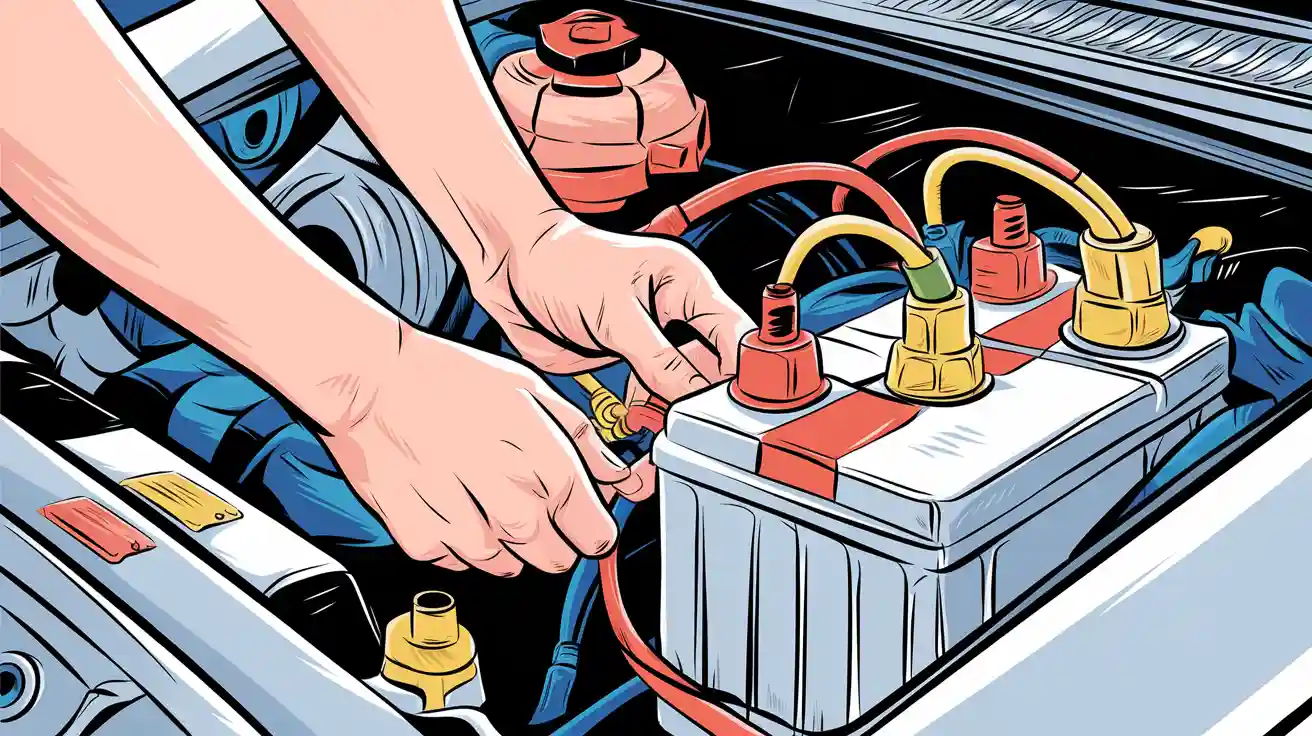
Quality battery cable connectors play a key role in how your vehicle runs each day. When you use strong connectors, you get a solid connection that keeps your battery working at its best. Poor or corroded connectors can lead to weak power flow, slow engine starts, and even safety risks. Industry studies show that reliable connectors pass tough tests for shock, vibration, and heat, helping your battery and vehicle stay safe. New materials like copper and smart sensors also give better protection against corrosion and help keep each connection strong.
Key Takeaways
- Choose high-quality battery cable connectors made from strong, corrosion-resistant materials like copper to ensure steady power flow and quick engine starts.
- Regularly inspect and clean your battery terminals and connectors to prevent corrosion, loose connections, and power loss that can cause starting problems or electrical failures.
- Use connectors with large contact areas and secure fittings to reduce resistance, avoid heat build-up, and lower the risk of fires or damage to your vehicle’s electrical system.
- Invest in durable connectors designed to resist vibration, temperature changes, and moisture to extend the life of your battery and reduce costly repairs.
- Follow simple maintenance steps like cleaning terminals twice a year, applying anti-corrosion sprays, and checking cable tightness to keep your vehicle running safely and reliably.
Battery Cable Connectors & Performance
Conductivity
When you choose high-quality battery cable connectors, you help your vehicle’s battery deliver power with less resistance. Good conductivity means electricity flows easily from the battery terminals to the rest of your electrical systems. The material of your battery terminal matters a lot. For example, copper and advanced carbon nanotube composites like Galvorn show enhanced electrical conductivity. Galvorn wiring matches copper in conductivity but is much stronger and resists corrosion better. Scientists have also found that changing the mix of metals in copper alloys, such as adding cobalt or titanium, can make battery terminals both stronger and more conductive. Even the way manufacturers process plastics for connectors, by adding carbon or metal particles, can improve how well they carry electricity.
You want your battery cable connectors to keep resistance low. This helps your vehicle start quickly and keeps all electrical systems running smoothly. If you use connectors made from poor materials, you may notice dim lights or slow cranking. Good battery terminals make sure your battery gives steady power every time you turn the key.
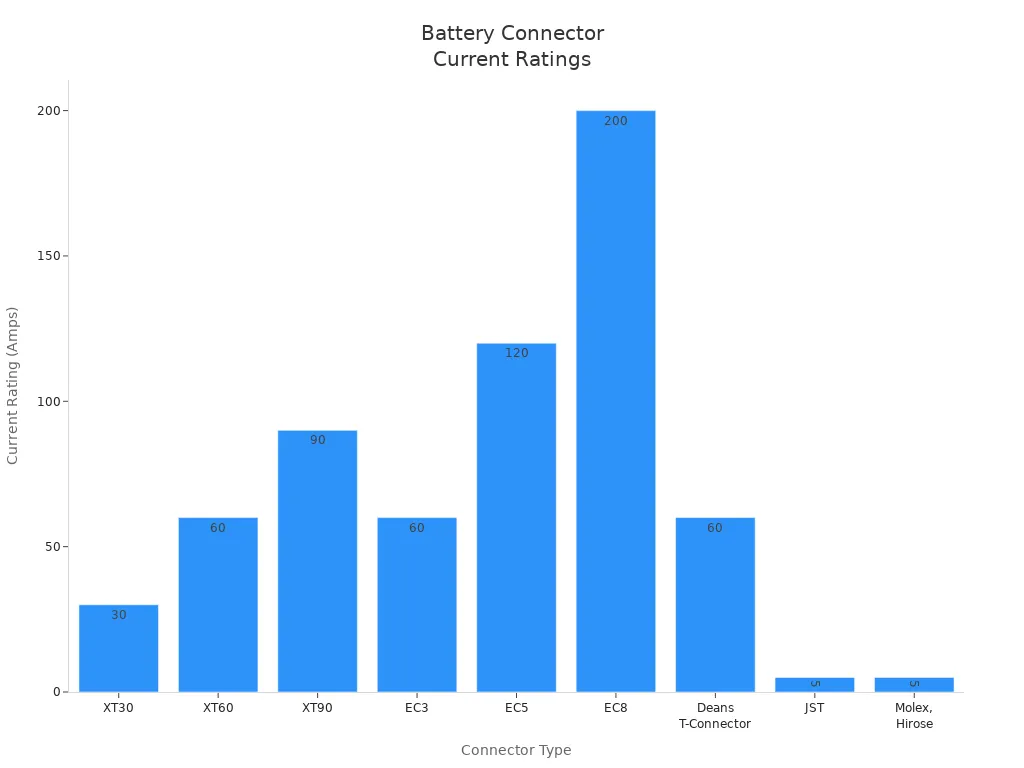
Here is a table that compares different types of battery cable connectors and how they affect resistance and power transfer:
| Connector Type | Current Rating (Amps) | Typical Applications | Key Features Impacting Resistance and Efficiency |
|---|---|---|---|
| XT30 | ~30A | Small drones, mini quads | Small size, higher resistance for high power |
| XT60 | ~60A | Drones, RC cars, planes | Gold-plated, low resistance, corrosion resistant |
| XT90 | ~90A | Large RC vehicles, e-bikes | Large contact area, secure fit, low resistance |
| EC3 | ~60A | Lower current RC | Large contact area, reliable contact |
| EC5 | Up to 120A | Large scale electrics | Handles higher current, efficient power transfer |
| EC8 | Over 200A | High-power systems | Minimal resistance, very large contact area |
| Deans T-Connector | Up to 60A | RC vehicles, planes | Compact, secure, low resistance |
| JST | Low current | Small electronics | Small, higher resistance if overloaded |
| Molex, Hirose | Low current | Compact devices | Small, higher resistance at high power |
Tip: Choose connectors with larger contact areas and high-quality materials for the best performance in your vehicle’s electrical systems.
Power Loss
Power loss happens when your battery cable connectors or battery terminals have high resistance. This resistance turns some of the battery’s energy into heat instead of sending it to your vehicle’s electrical systems. If you use poor connectors, like ring terminals with wing nuts or rusty steel clamps, you may notice your vehicle struggles to start. The starter motor may not get enough power, and your battery may drain faster than normal. Over time, these problems can damage your battery and other electrical parts.
You can avoid these issues by using battery cable connectors that fit tightly and use strong materials. Swaged cable ends attached to heavy lead lugs work best. They keep resistance low and help your battery deliver full power to the starter and charging system. This means your vehicle starts easily, your lights stay bright, and your battery lasts longer.
Note: Regularly check your battery terminals and connectors for signs of corrosion or looseness. Clean and tighten them to keep your vehicle running at its best.
Safety & Reliability
Electrical Failures
You depend on your vehicle’s electrical systems every time you drive. Secure battery connections help you avoid many common problems. When you use high-quality connectors, you lower the risk of electrical failures that can leave you stranded or cause damage to your car.
Faulty battery cable connectors can cause several issues in automotive wiring systems. Here are some of the most common electrical failures you might face:
- Corrosion at the battery terminal can create an acid layer. This layer increases resistance and blocks electricity flow. Sometimes, corrosion spreads into the cables and makes them useless.
- Physical stress or corrosion can damage connectors. Wires may disconnect while you drive, leading to sudden electrical problems.
- Water can enter through cracks in the wires. This water travels inside and causes internal corrosion, often starting at the connectors and spreading along the wire.
- Mechanical stress, flexing, or tension on wires and connectors can break or disconnect them. Strong insulation can hide these breaks, making them hard to spot.
- Cold weather causes wires to contract. This tightens the wires and increases the risk of breaks or disconnections at the connectors.
- Poor electrical contact at connectors can cause your engine to shut off without warning. You may also have trouble starting your vehicle or notice malfunctioning lights and other electrical systems.
Tip: Regularly inspect your battery connections for signs of corrosion, loose wires, or damage. Early detection helps you avoid bigger problems later.
You need reliable connections to keep all your electrical systems working. This is true for both basic setups, like headlights and starters, and advanced systems, such as navigation or safety features. Ensuring system reliability starts with strong, clean, and secure battery cable connectors.
Fire Risks
Loose or corroded connections do more than just cause electrical failures. They can also create serious fire risks. When a connection has high resistance, it generates heat. This heat can build up at the connector or along the wire. If the temperature gets high enough, it can melt insulation or even start a fire.
Modern vehicles have increased safety standards, but even the best systems cannot protect you if your battery cable connectors fail. A poor connection can cause sparks. These sparks may ignite flammable materials under the hood. In some cases, a fire can spread quickly and damage your entire vehicle.
You can reduce these risks by using connectors made from quality materials. Make sure each connection is tight and free from corrosion. Check your battery and electrical systems often, especially if you notice any warning signs like a burning smell, flickering lights, or difficulty starting your car.
| Risk Factor | How It Causes Fire Risk | How to Prevent It |
|---|---|---|
| Loose Connection | Sparks and heat build-up | Tighten and secure all connectors |
| Corroded Terminal | Increased resistance and overheating | Clean terminals regularly |
| Damaged Insulation | Exposed wires can short and spark | Inspect and replace damaged wires |
| Overloaded Circuit | Excess current can overheat connectors | Use correct connector ratings |
Note: Never ignore signs of trouble with your battery or electrical systems. Quick action can protect you and your vehicle from serious harm.
Durability & Longevity
High-Quality Terminal Connectors
You want your vehicle to last, and that starts with the parts you choose. High-quality terminal connectors help your battery perform well for a long time. Manufacturers often use lead alloy and tinned copper alloy for these connectors. These materials resist corrosion and carry electricity efficiently. When you use connectors made from these metals, you get a strong connection that stands up to daily use.
High-quality terminal connectors also handle tough environments. They keep working even when temperatures swing from freezing cold to extreme heat. Some connectors use advanced materials like PEEK, which can survive temperatures from -65°C to 300°C. These connectors do not lose strength or shape, even after years of use. You can trust them to keep your battery connected, no matter where you drive.
Wear Resistance
Your vehicle faces bumps, shakes, and vibrations every day. High-quality terminal connectors are built to handle this stress. They use special designs, like anti-vibration structures and stiffening ribs, to stop parts from bending or wearing out. Some brands add preloaded stainless steel springs that keep the connection tight, even when temperatures change.
Here are some ways these connectors stand out:
- They resist vibration up to 30.6 G and random vibration up to 18 gRMS.
- Sealing ribs keep out water and dirt, so the connection stays clean.
- They meet or exceed tough standards for ruggedness and reliability.
When you choose high-quality terminal connectors, you save money over time. You will not need to replace them as often, and you will spend less on repairs. This improved durability and longevity means fewer headaches and a safer, more reliable vehicle.
Tip: Investing in quality connectors now helps you avoid costly maintenance and keeps your battery working longer.
Corrosion & Maintenance
Car Battery Protection
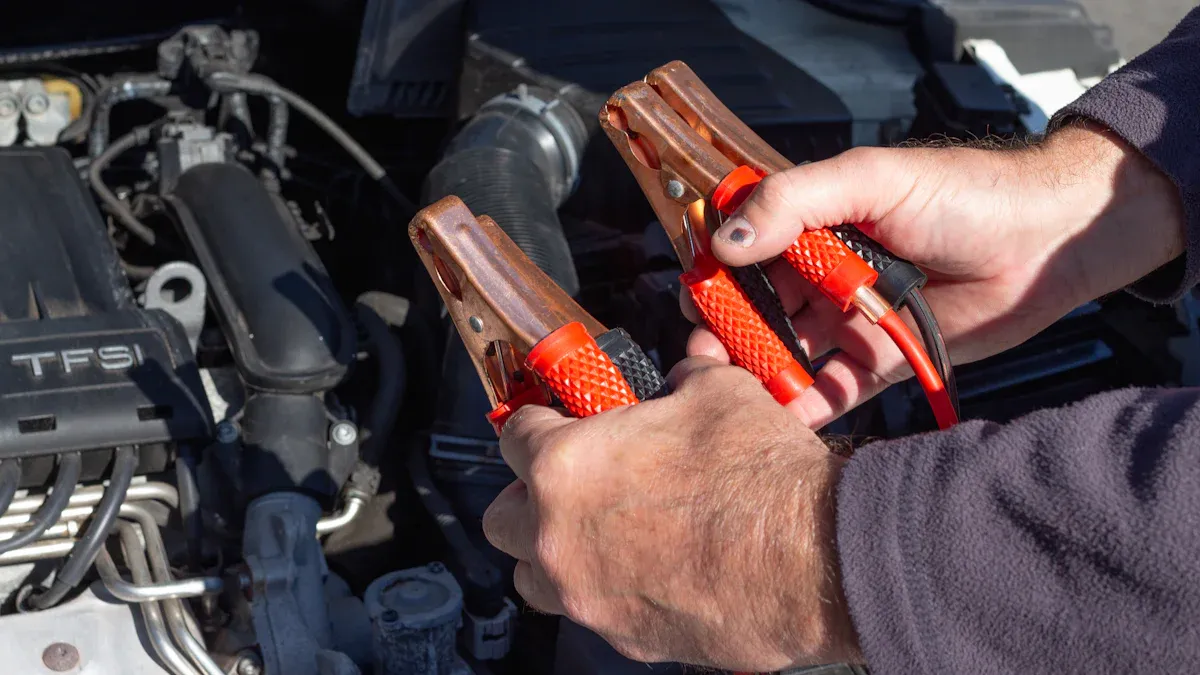
You want your car battery to last as long as possible. Corrosion is one of the biggest threats to battery terminals. This problem starts when battery acid reacts with the metal on your battery terminals. The reaction creates a white or blue buildup that blocks electricity. Moisture, high humidity, and temperature changes make corrosion worse. These conditions can cause micro-cracks in the metal, letting in more acid and speeding up damage.
Quality connectors help protect your car battery in several ways:
- Manufacturers use materials that do not react easily with battery acid. This choice slows down the chemical process that causes corrosion.
- High-quality connectors often have special coatings, like zinc or tin. These coatings act as shields, keeping moisture and acid away from the metal.
- Some connectors come with protective caps or sprays. These extra layers stop water and dirt from reaching the battery terminals.
- Good connectors meet strict standards. They resist stress from heat, cold, and vibration, so they last longer and keep your car battery safe.
If you choose the right battery terminal, you help prevent corrosion and oxidation. This step keeps your car battery strong and your vehicle running smoothly.
Tip: Corrosion resistance not only protects your battery terminals but also lowers your maintenance costs over time.
Maintenance Tips
You can keep your car battery and battery terminals in top shape with a few simple steps. Regular care helps you avoid problems like slow starts or corroded battery terminals. Here are some tips for maintaining battery terminals and cables:
- Always disconnect the negative car battery cable first when working on your battery. This step keeps you safe and prevents sparks.
- Clean battery terminals with a mix of baking soda and water. Use a small brush to scrub away any buildup. Rinse with clean water and dry with a cloth.
- Check your battery terminals for tightness. Loose connections can cause power loss and make your car battery work harder.
- Apply a thin layer of anti-corrosion spray or petroleum jelly to the battery terminals. This coating blocks moisture and slows down corrosion.
- Inspect the negative car battery cable and positive cable for cracks or wear. Replace any damaged cables right away.
- Make sure the area around your car battery stays dry and free from dirt. Good ventilation helps reduce heat and humidity, which can speed up corrosion.
- Use protective caps on your battery terminals if possible. These caps keep out water and dust.
Note: Clean battery terminals at least twice a year. Regular checks help you spot problems early and keep your car battery working longer.
By following these steps, you can extend the life of your car battery and avoid common issues. Choosing the right battery terminal and taking care of your negative car battery cable will help you get the best performance from your vehicle.
Common Issues
Warning Signs
You can spot problems with battery terminals before they cause bigger trouble. Watch for these common symptoms:
- Slow engine cranking when you try to start your car.
- Flickering or dim headlights, especially when you turn on other electrical devices.
- Clicking sounds instead of a smooth start.
- Dashboard warning lights that stay on or flash.
- Corrosion or white, blue, or green buildup around battery terminals.
- A car battery that needs frequent jump-starts.
- Visible cracks or breaks in the battery terminals or cables.
A damaged battery terminal can make your car battery work harder. This leads to poor performance and can even leave you stranded. If you see any of these signs, check your battery terminals right away.
Tip: Early detection of a damaged battery terminal helps you avoid costly repairs and keeps your car battery running strong.
Prevention
You can prevent most issues with simple care and by choosing quality parts. Follow these steps to keep your battery terminals in top shape:
- Clean battery terminals often with a wire brush and a mix of baking soda and water.
- Make sure battery terminals stay tightly secured to avoid loose connections.
- After cleaning, apply a thin layer of dielectric grease or a battery terminal protector to stop corrosion.
High-quality connectors also play a big role in prevention. They use strong materials and smart designs to keep your car battery safe. Here is how these features help:
| Feature | Description | How it Helps Prevent Issues |
|---|---|---|
| Durable Materials | Strong thermoplastics and metals resist heat, vibration, and moisture | Stops damage and keeps connections reliable |
| Resistance to Heat, Moisture, Corrosion | Waterproof and corrosion-resistant designs protect against the elements | Prevents short circuits and bad contacts |
| Low-Resistance Contacts | Gold or silver-plated contacts for better conductivity | Keeps power steady and reduces failures |
| Secure Locking Mechanisms | Locking features that click into place | Stops disconnections from vibration or movement |
| Compatibility and Fit | Designed for proper fit in your vehicle | Reduces loose connections and electrical faults |
| Safety Features | Insulation and design to prevent short circuits | Protects your car battery and electrical systems |
When you use quality connectors and take care of your battery terminals, you avoid most problems. You keep your car battery strong and your vehicle reliable.
Investing in quality battery cable connectors gives you better performance, safety, and peace of mind. Mechanics often recommend premium connectors because they deliver reliable power, resist corrosion, and fit your vehicle’s needs. Regular inspection and maintenance help you avoid breakdowns and keep your car running smoothly.
| Benefit | Why It Matters |
|---|---|
| Reliable Power | Keeps your engine and electronics working well |
| Long-Lasting Durability | Handles heat, vibration, and harsh conditions |
| Safety | Reduces risk of fires and electrical failures |
Choosing high-quality connectors and caring for them means fewer repairs and a safer drive every day.
FAQ
What signs show my battery cable connectors need replacing?
You may notice slow engine starts, dim headlights, or corrosion on the terminals. Cracks or loose connections also signal trouble. If you see these signs, check your connectors soon.
How often should I clean my battery cable connectors?
You should clean your connectors at least twice a year. If you drive in wet or salty areas, check and clean them more often. Regular cleaning helps prevent corrosion and keeps your battery strong.
Can I use any type of connector for my vehicle?
No, you need to use connectors that match your vehicle’s power needs and fit your battery terminals. Using the wrong type can cause poor connections or even damage your electrical system.
What materials work best for battery cable connectors?
Copper and tinned copper work best. These materials resist corrosion and carry electricity well. Some connectors use special coatings for extra protection. Avoid connectors made from cheap metals.
Why do mechanics recommend high-quality connectors?
High-quality connectors give you better power flow, last longer, and resist corrosion. You get fewer problems and save money on repairs. Mechanics trust them for safety and reliability.