The Essential Guide to EM Waves in Today's Digital World
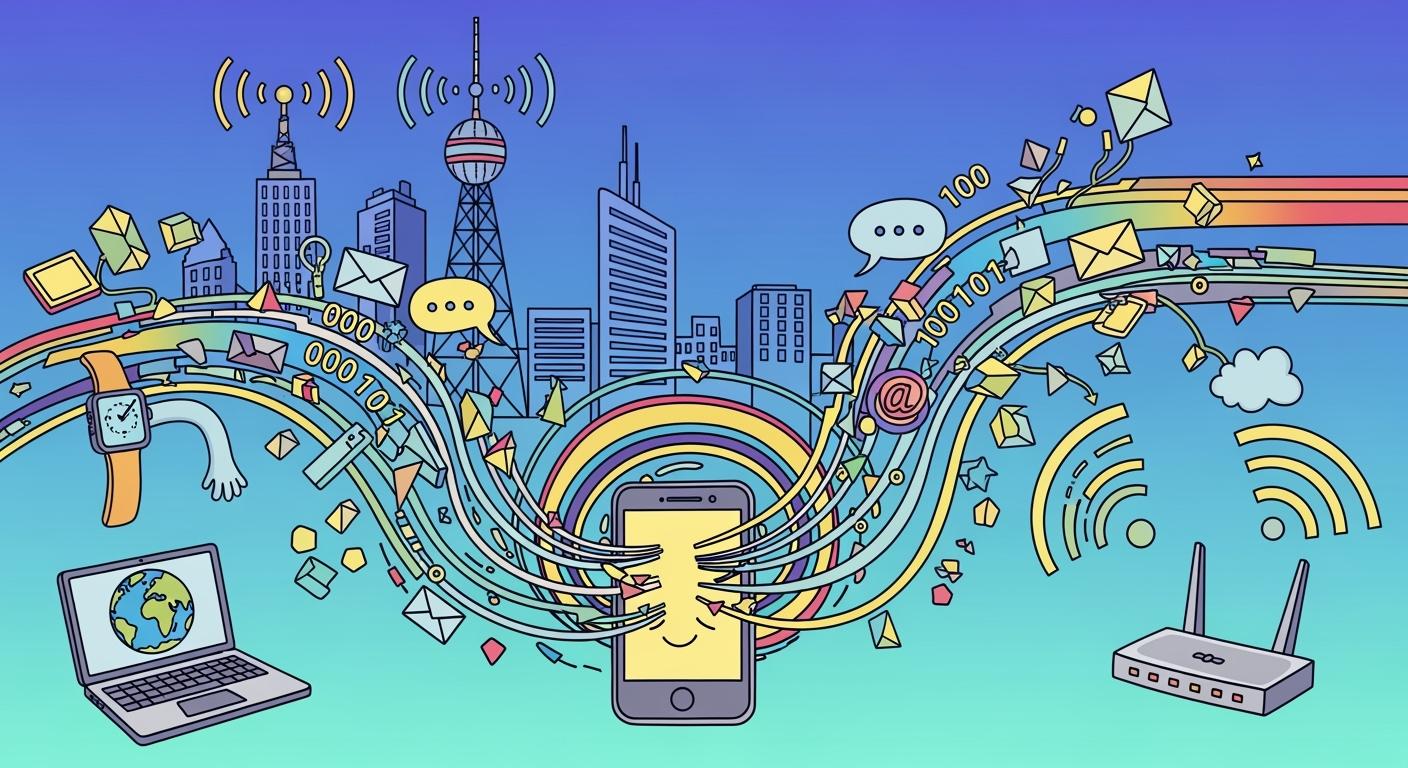
Invisible forces power your daily digital life. Sending a text or using GPS relies on an electromagnetic wave. This raises the question: what is em wave? An electromagnetic wave is a ripple of electromagnetic energy carrying information at the speed of light.
The full electromagnetic spectrum is like a rainbow. 🌈 Different colors, or frequencies, of this spectrum handle different jobs.
Key Takeaways
Electromagnetic (EM) waves are energy ripples. They carry information at the speed of light. These waves power all our digital devices.
The electromagnetic spectrum has many types of waves. Each type has different uses. Examples include radio waves for Wi-Fi and X-rays for medical imaging.
EM waves have key features. These include wavelength, frequency, and amplitude. These features help us understand how waves work.
EM waves power our daily lives. They enable Wi-Fi, mobile phones, and TV. They also help with GPS and medical scans.
New EM wave technologies are coming. These include 6G networks and Li-Fi. They will make communication even faster and more secure.
What Is EM Wave? A Full Breakdown
The introduction answered the basic question, "what is em wave?". Now, we will explore this concept in greater detail. An electromagnetic wave is more than just an invisible force. It is a fundamental part of how our universe communicates energy and information. This section breaks down its creation, its vast range, and its essential properties.
Waves of Energy Explained
An electromagnetic wave begins with a tiny, charged particle. A particle moving at a steady speed does not create a wave. The magic happens when that particle accelerates or changes its motion. This acceleration creates a disturbance in the surrounding electric and magnetic fields. This disturbance, a ripple of energy, travels away from the particle at the speed of light. This traveling disturbance is electromagnetic radiation.
The process involves a few key steps:
Oscillating electric charges or currents generate the initial energy.
These accelerating charges produce changing electric and magnetic fields.
The fields interact, creating a self-propagating electromagnetic wave.
Think of it like tapping your finger in a still pond. The tap creates ripples that spread out. Similarly, accelerating a charge creates ripples in the electromagnetic field. The strength of this electromagnetic radiation is directly related to how much the particle accelerates.
The Full Electromagnetic Spectrum
The electromagnetic spectrum is the complete range of all types of electromagnetic radiation. This spectrum organizes waves by their frequency, from very low to extremely high. Different parts of this vast spectrum have different properties and uses. We can organize the main regions of the electromagnetic spectrum into a simple chart. This helps visualize the different types of electromagnetic radiation and their roles.
Region | Frequency Range (Approx.) | Common Applications 📡 |
|---|---|---|
Radio Waves | < 3 GHz | AM/FM radio, Wi-Fi, mobile phones |
Microwaves | 3 GHz - 300 GHz | Microwave ovens, radar, 5G networks |
Infrared | 300 GHz - 480 THz | Remote controls, thermal imaging |
Visible Light | 480 THz - 750 THz | Human vision, photography, fiber optics |
Ultraviolet (UV) | 750 THz - 30 PHz | Sterilization, counterfeit money detection |
X-Rays | 30 PHz - 3 EHz | Medical imaging, airport security |
Gamma Rays | > 3 EHz | Cancer treatment, sterilizing medical gear |
This entire spectrum is a resource. Engineers select a specific frequency from the spectrum for each task. For example, your car radio uses low-frequency radio waves, while a hospital's X-ray machine uses a very high-frequency part of the same electromagnetic spectrum. The lower end of the spectrum includes the familiar radio frequencies used for broadcasting.
Key Electromagnetic Properties
Every electromagnetic wave shares a few core properties that define its behavior. Understanding these properties helps explain what is em wave and how it works.
1. Wavelength and Frequency These two properties are closely linked.
Wavelength (λ) is the distance between two consecutive peaks of a wave.
Frequency (f) is the number of waves that pass a point in one second.
They have an inverse relationship. A wave with a long wavelength has a low frequency. A wave with a short wavelength has a high frequency. This relationship is defined by a simple, powerful equation.
Frequency multiplied by Wavelength equals the Speed of Light.
c = f × λ
This means all electromagnetic energy, from radio waves to gamma rays, travels at the same constant speed in a vacuum: about 299,792 kilometers per second!
2. Amplitude Amplitude refers to the wave's intensity or strength. For a light wave, amplitude corresponds to brightness. For a radio signal, it relates to the signal's power. A high-amplitude wave carries more energy than a low-amplitude wave of the same frequency.
3. Polarization Polarization describes the direction in which the wave's electric field oscillates. Imagine shaking a rope. You can shake it up and down (vertical polarization) or side to side (horizontal polarization). An electromagnetic wave behaves similarly. This property is crucial for technologies like polarized sunglasses, which block glare by filtering out horizontally polarized light. It also helps radio engineers prevent interference between different signals.
EM Waves Powering Your Digital Life

The principles of the electromagnetic spectrum are not just theoretical. They are the engine behind the devices we use every second. From a simple text message to complex medical scans, an electromagnetic wave is at work. This section explores how these waves power our modern, connected lives.
Wireless Tech: Electromagnetic Radiation in Wi-Fi
Wireless devices like smartphones and laptops connect to the internet using radio waves. Wi-Fi routers transmit data using specific radio frequencies, mainly 2.4 GHz and 5 GHz. These two bands offer different balances of speed and range. The 2.4 GHz band provides wider coverage, while the 5 GHz band offers faster speeds over a shorter distance.
To send data, the wireless signal must be encoded. This process is called modulation. Modulation techniques are fundamental to wireless communication. They allow a simple carrier wave to carry complex digital information.
Quadrature Amplitude Modulation (QAM): This method adjusts both the amplitude and phase of the signal. It allows more data to be sent at once, increasing speed. QAM is common in Wi-tFi and modern mobile networks.
Phase Shift Keying (PSK): This technique changes the phase of the carrier wave to represent data. It is very resilient to interference and is used in both Wi-Fi and Bluetooth.
Orthogonal Frequency Division Multiplexing (OFDM): This advanced method splits data across many smaller sub-carriers. It makes the signal robust against interference, which is crucial for reliable wireless connections in busy environments.
Advanced techniques help manage the crowded radio spectrum. For example, Dynamic Frequency Selection (DFS) allows 5 GHz devices to avoid interfering with critical radar systems by automatically finding and using clear channels.
Mobile Networks in 4G and 5G
Mobile phones rely on a sophisticated network of cell towers. These towers use radio waves to provide wireless coverage. The evolution from 4G to 5G networks involves significant changes in how the electromagnetic spectrum is used. 5G technology uses a wider range of frequencies to deliver major performance boosts.
Network | ||
|---|---|---|
4G LTE | 700, 800, 1800, 2100, 2600 | 1.4 MHz to 20 MHz |
5G | 700, 3600, and mmWave bands | 100 MHz to 800 MHz (mmWave) |
The biggest leap for 5G comes from using millimeter waves (mmWave). These are very high-frequency radio waves (24 GHz to 100 GHz). This part of the electromagnetic spectrum offers enormous bandwidth. Greater bandwidth allows for multi-gigabit speeds and extremely low latency, making 5G much faster and more responsive than 4G. This powerful wireless technology enables everything from instant movie downloads to real-time communication for self-driving cars.
Radio and Television Broadcasting
Long before the internet, radio and television broadcasting brought news and entertainment into homes worldwide. This classic form of communication uses an electromagnetic wave to carry signals over vast distances.
AM (Amplitude Modulation) and FM (Frequency Modulation) radio stations each use a different method to encode audio onto radio waves.
AM radio varies the amplitude (strength) of the wave. These waves can travel very far, especially at night.
FM radio varies the frequency of the wave. This method provides higher-fidelity sound but has a shorter range.
Television broadcasting works similarly. It uses one set of radio frequencies to transmit video and another for audio. This electromagnetic radiation travels from a broadcast tower to the antenna on a television, delivering the final picture and sound.
Beyond Daily Communication
The electromagnetic spectrum powers more than just communication devices. Many other technologies use different parts of the spectrum to perform specialized tasks.
A microwave oven is a perfect example. It uses a specific frequency of microwave radiation, 2.45 GHz, to heat food. Water molecules in food resonate strongly at this frequency. The microwave energy makes the molecules vibrate rapidly, which generates heat and cooks the food from the inside out.
Medical imaging is another critical field that relies on electromagnetic waves.
X-rays use high-energy electromagnetic radiation. These waves can pass through soft tissues but are absorbed by denser materials like bone. This property allows doctors to create images of the skeletal system.
Magnetic Resonance Imaging (MRI) uses a combination of a strong magnetic field and radio waves. The machine exposes a patient to radio frequency energy, typically between 8.5 MHz and 340 MHz. This causes hydrogen atoms in the body to emit signals, which a computer then uses to create detailed images of organs and soft tissues.
Global Reach Through Space Communication
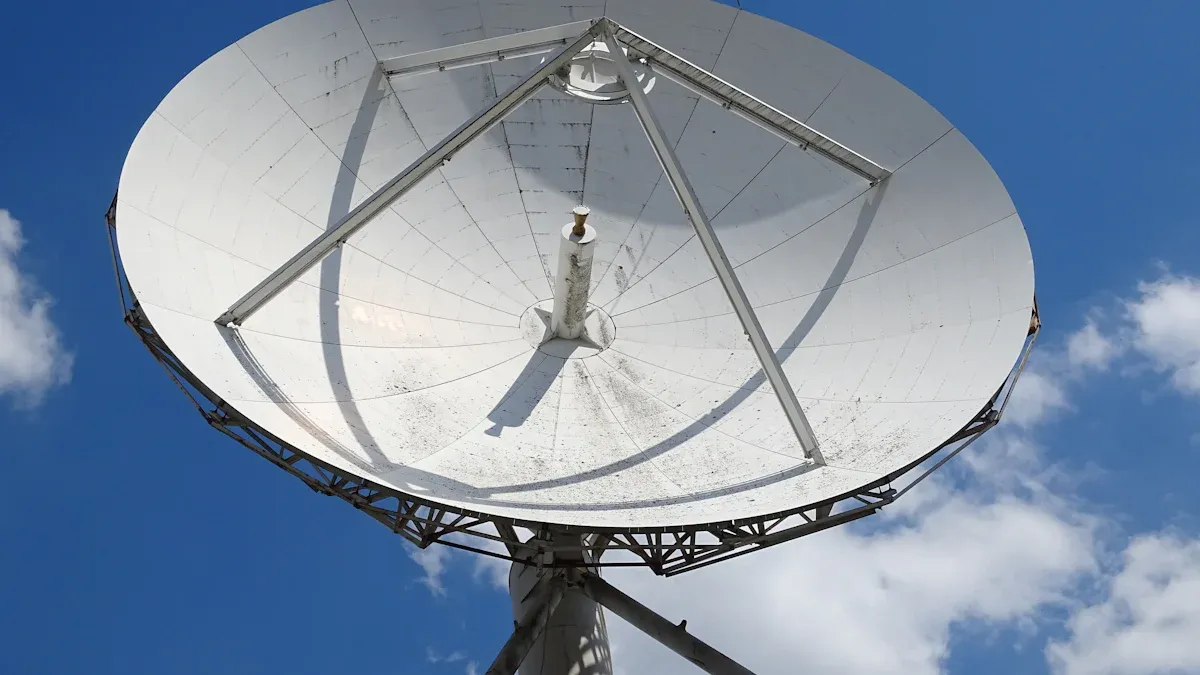
Electromagnetic waves travel beyond Earth's atmosphere. They connect our planet through a network of satellites. This technology enables global positioning, internet access, and more. Space communication relies on sending and receiving signals across vast distances.
Satellites, GPS, and Global Internet
Satellites use radio waves for global communication. The Global Positioning System (GPS) is a prime example. GPS satellites transmit precise signals from space. Your phone or GPS device receives these signals to find your location.
A satellite sends a microwave signal with its exact position and time.
A receiver on Earth measures the time it took for the signal to arrive.
The system calculates the distance by multiplying this time by the speed of light.
Receiving signals from four satellites pinpoints your exact location.
Satellite internet services also use specific radio frequencies. Providers like HughesNet and Viasat use the Ka-band. Other systems use the Ku-band. These high-frequency bands allow for fast data transmission to homes in remote areas.
Overcoming Space and Interference
Sending an electromagnetic wave through space presents challenges. The Earth's atmosphere can weaken signals. This effect is called atmospheric attenuation. Rain, clouds, and fog absorb or scatter the radio energy, degrading the signal.
Engineers use several techniques to fight interference. They can install special filters to block unwanted signals. Sometimes, simply repositioning a satellite dish or adjusting its angle improves reception. These adjustments ensure a clear and stable connection.
The Rise of LEO Constellations
A new type of satellite network is changing space communication. Low Earth Orbit (LEO) constellations use thousands of small satellites orbiting closer to Earth. Companies like SpaceX's Starlink and OneWeb operate these massive networks. Starlink has over 9,000 active satellites, while OneWeb has more than 600.
LEO systems offer major advantages over traditional satellites. Their lower altitude drastically reduces latency, or signal delay. This makes the user experience feel as fast as fiber optic internet. This powerful electromagnetic technology supports real-time applications like video calls and online gaming anywhere on the planet.
The Future of EM Wave Technology
The world of electromagnetic technology is constantly evolving. Researchers are pushing the limits of what is possible. They are developing faster networks, smarter devices, and entirely new ways to communicate. This next wave of innovation promises to reshape our digital landscape once again.
The Promise of 6G Networks
The next generation of wireless, 6G, will bring incredible performance gains. It will move beyond the capabilities of current 5G networks. Scientists are exploring new parts of the electromagnetic spectrum to achieve this, including terahertz (THz) frequencies. This part of the spectrum offers massive bandwidth for data.
Feature | 5G Performance | 6G Performance |
|---|---|---|
Peak Speed | Up to 1 Tbps (50x faster) | |
Latency | 1–10 milliseconds |
These advancements will enable futuristic applications. Imagine holographic communication and interconnected smart cities operating in perfect real-time.
Smarter Antennas and Materials
Future wireless systems will need more than just speed. They will need to be smarter and more efficient. Smart antenna systems, like MIMO (Multiple-Input, Multiple-Output), use multiple antennas to send and receive several data streams at once. This technology improves signal quality and extends the coverage area of radio signals.
Researchers are also creating metamaterials. These are special structures engineered to control an electromagnetic wave in ways not found in nature. They can improve antenna performance, reduce interference, and make communication more reliable.
New Frontiers in Communication
Innovation extends beyond the traditional radio spectrum. New technologies are creating communication methods that seem like science fiction.
Li-Fi (Light Fidelity): This technology uses visible light from LED bulbs to transmit data. A device modulates the light's intensity at ultra-fast speeds, invisible to the human eye. A receiver then decodes these light signals back into data. Li-Fi offers a secure, high-speed alternative to Wi-Fi.
Quantum Communication: This field uses the principles of quantum physics to create unhackable communication channels. It relies on quantum properties like entanglement. Any attempt to intercept the signal disturbs it, immediately alerting the users. This form of secure electromagnetic communication could revolutionize finance and national security.
An electromagnetic wave is the fundamental carrier of information in our digital world. It connects everything from the smartphone in a pocket to satellites orbiting Earth, answering the core question of what is em wave. As innovators find new ways to use the full electromagnetic spectrum, this technology will become even more vital. Future exploration of the electromagnetic spectrum, especially the terahertz spectrum, promises to reshape communication. This powerful electromagnetic force will define the future of human connection.
What is the one piece of EM wave technology you couldn't live without? Share your thoughts in the comments!
FAQ
Is electromagnetic radiation from phones and Wi-Fi harmful?
Regulatory agencies set safety limits for consumer devices. Everyday gadgets like phones and routers emit low-level electromagnetic radiation. These emissions fall well within established safety guidelines to protect public health. Scientists continue to study the long-term effects.
Why do Wi-Fi routers have 2.4 GHz and 5 GHz bands?
These two bands offer different benefits. 📡
2.4 GHz: Travels farther and passes through walls more easily.
5 GHz: Provides faster speeds but has a shorter range.
Using both bands helps manage network traffic and provides the best connection for different devices.
Do all EM waves travel at the same speed?
Yes, in a vacuum, all EM waves travel at the same constant speed. This is the speed of light, approximately 299,792 kilometers per second. The speed can decrease slightly when a wave passes through materials like water, glass, or air.
What is the difference between an EM wave and a sound wave?
The main difference is how they travel. An electromagnetic wave is a disturbance in electric and magnetic fields. It can travel through the vacuum of space. A sound wave is a mechanical vibration. It requires a medium like air or water to travel.
See Also
Circuit Board Elements: Shaping Today's Electronic Innovations and Devices
Understanding AC Filters: An Introduction for Today's Tech Enthusiasts
Circuit Board Elements: Forging Tomorrow's Electronic Advancements and Designs
STM32 Radiation Insights: Implications for Future Space Exploration Endeavors
Key Advantages of Incorporating Zener Diodes in Electronic Circuitry