Why Do Microcontrollers Use the SPI Interface?
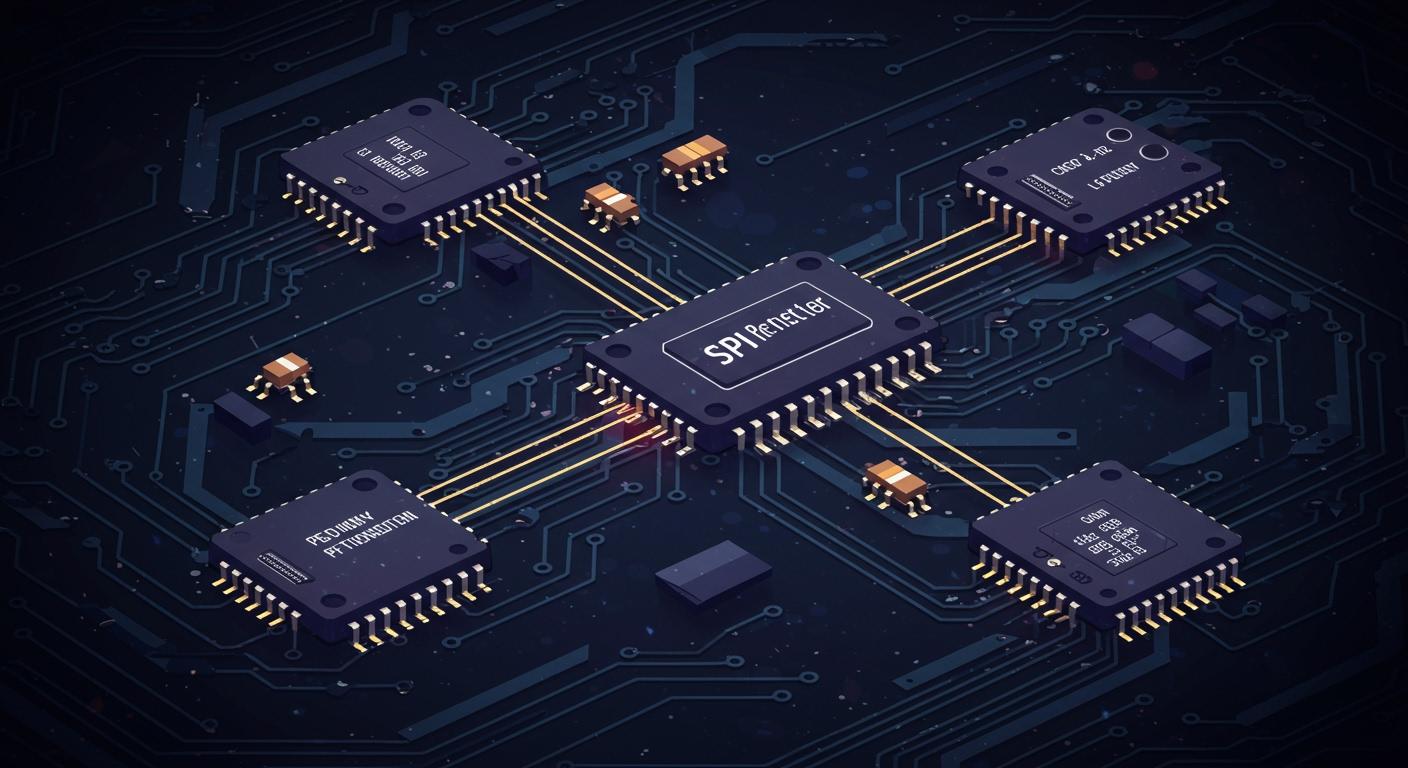
Microcontrollers use the Serial Peripheral Interface (SPI) for its key advantages. You get high-speed data transfer and simple hardware control. These benefits make the SPI interface ideal. Your microcontrollers can connect to displays and fast sensors. The SPI protocol is a top choice for many designs.
Think of the Serial Peripheral Interface (SPI) like a private, high speed highway lane. This SPI setup offers clear benefits for your data transfer. It allows your microcontrollers to communicate directly with components like sensors. The SPI protocol is very efficient.
Key Takeaways
- SPI allows microcontrollers to send and receive data very fast. This is good for screens and sensors that need quick updates.
- SPI uses simple hardware with four wires. This makes it easy to set up and saves computer power.
- SPI can send and get data at the same time. This helps systems react instantly, like in robots.
- SPI is faster than other ways to send data. But it uses more pins on the microcontroller.
High-Speed Data Transfer
The primary reason you choose the SPI protocol is its capacity for high-speed data transfer. This capability is essential for applications that require rapid and continuous data exchange. The design of SPI allows your microcontrollers to handle large volumes of information efficiently, making it a superior choice for demanding tasks. This high speed performance is what sets SPI apart.
The Role of the Synchronous Clock
SPI achieves its impressive speed through synchronous serial communication. Unlike other protocols, SPI uses a separate clock line (SCK) that the master device controls. This clock signal tells the slave device exactly when to read a bit of data. This precise timing removes the need for start and stop bits in the data transmission, which reduces overhead and speeds up the entire process.
This creates a direct link between clock speed and data throughput. For every clock cycle, one bit of data is transferred. An SPI bus operating at 20 MHz gives you a 20 Mbps data transfer rate.
Many modern microcontrollers, like the STM32 series, can drive SPI at 50 MHz or even higher. Some specialized modules can reach a data transfer rate of 50 Mbits/s, enabling extremely fast communication.
Use Cases: Displays, ADCs, and Memory
This high speed makes SPI the perfect interface for components that generate or consume data quickly. You will find SPI used in many common applications:
- High-Resolution Displays: Color LCD and OLED screens require you to send a large amount of pixel data to refresh the image. The high data rates of SPI ensure smooth, flicker-free updates.
- Analog-to-Digital Converters (ADCs): To get accurate readings from high-frequency sensors, you need to capture data very quickly. SPI allows your microcontrollers to sample data from these sensors without missing critical information.
- External Memory: When you need to read or write large files or log data from sensors, SPI flash memory offers a significant speed advantage over other options.
You can see the advantage clearly when comparing SPI flash memory to older I2C EEPROMs:
| Feature | SPI (for external flash) | I2C (for EEPROMs) |
|---|---|---|
| Data Rates | Higher | Lower |
| Read/Write Speed | Faster | Slower |
| Edge Rates | Faster | Slower |
Furthermore, advanced versions like Quad SPI (QSPI) expand the standard SPI interface to achieve even faster data exchange, with throughputs over 50 MB/s for memory devices.
The Simple SPI Interface Hardware
Beyond speed, the simplicity of the SPI hardware makes it a favorite for embedded systems. The straightforward design of the serial peripheral interface reduces complexity and cost. You can implement this communication protocol with minimal resources, making it an excellent choice for your projects.
The Four-Wire Master-Slave Architecture
The SPI interface uses a simple and effective master-slave architecture. This setup typically requires just four wires to establish a connection, creating a dedicated data link between your microcontroller (the master) and a peripheral (the slave).
- SCK (Serial Clock): The master generates this clock signal to synchronize data transfer.
- MOSI (Master Out Slave In): The master sends data to the slave on this line.
- MISO (Master In Slave Out): The slave sends data back to the master on this line.
- CS/SS (Chip Select/Slave Select): The master uses this line to select which slave it wants to talk to. Each slave on the SPI bus needs its own dedicated CS line.
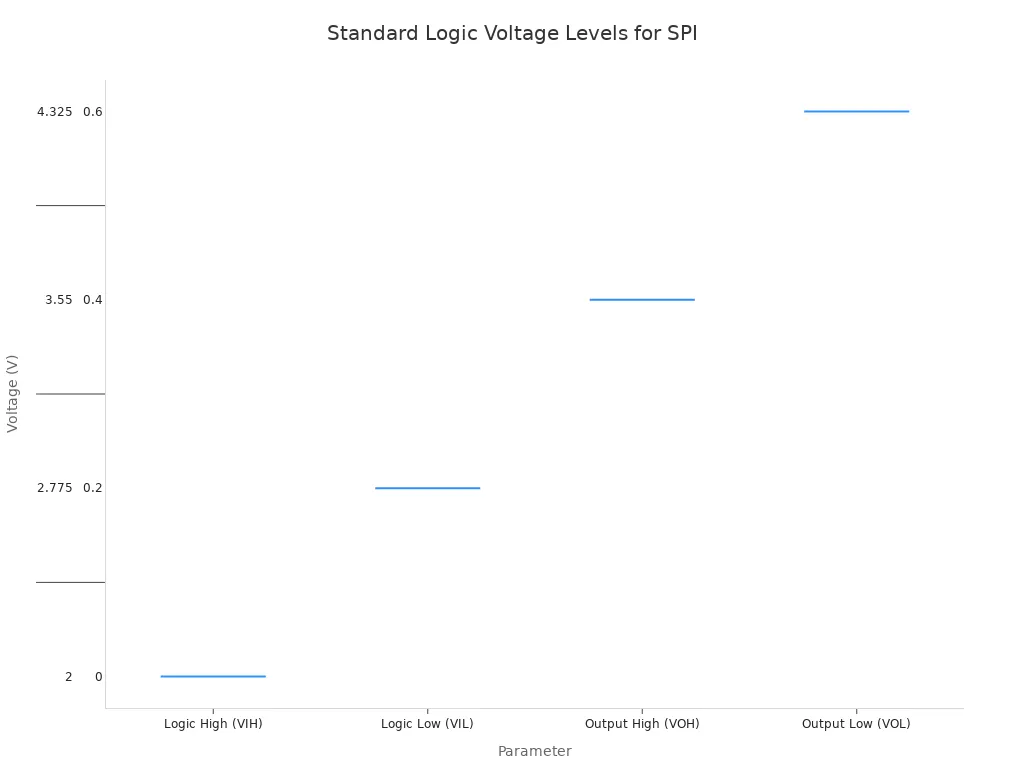
This master-slave architecture ensures clear and direct communication. The master activates a single slave by pulling its CS line low, and only that slave listens to the clock and data lines. The logic voltage levels for these pins are standardized, ensuring compatibility between devices.
Low Overhead and Resource Usage
The simple master-slave architecture of the SPI protocol leads to very low processing overhead. Most modern microcontrollers include dedicated hardware for the serial peripheral interface. This hardware manages all the timing and data shifting for SPI communication automatically.
Tip: Using the built-in SPI hardware on your microcontroller frees up its main processor (CPU). The CPU can perform other important tasks while the SPI transfer happens in the background.
This is much more efficient than a method called "bit-banging." Bit-banging uses software to manually control the GPIO pins to simulate SPI. This manual process consumes a lot of CPU time and power. By using dedicated SPI hardware, you ensure your system runs faster and more efficiently. This makes SPI a powerful yet resource-friendly choice for your designs.
Efficient Communication Method
The SPI protocol provides more than just speed; it offers a truly efficient communication method. This efficiency comes from its ability to handle data in a way that saves time and resources, making it perfect for systems that need to react instantly.
Full-Duplex SPI Communication
A key advantage of SPI is its full-duplex capability. This means your microcontroller can send and receive data at the exact same time. The interface uses two dedicated data lines to make this possible:
- MOSI (Master Out Slave In): Your microcontroller (the master) sends data on this line.
- MISO (Master In Slave Out): The peripheral (the slave) sends data back on this line.
Because these operations happen simultaneously and are timed by the same clock signal, you get a highly effective data exchange. For example, you can send a new command to a device on the MOSI line while reading its current status from the MISO line in a single data transmission.
This simultaneous data transfer makes SPI extremely efficient for tasks that require constant two-way conversation between your microcontroller and peripherals like sensors or communication modules.
Real-Time Data and Control Loops
The combination of high speed and full-duplex data exchange makes SPI ideal for real-time control systems. In applications like robotics or motor control, low latency is critical. Delays in communication can cause jitter or lag, leading to unstable and inaccurate movements. SPI helps you avoid this.
You can build fast and responsive control loops for many applications:
- Motor Control: Send precise speed and direction commands to motor drivers.
- Data Acquisition: Interface with ADCs to convert signals from sensors without missing data.
- Audio Interfaces: Achieve clear digital audio data transmission between a microcontroller and an audio codec.
The low overhead of an SPI transaction makes it much faster than other protocols. This table shows how it compares to I2C.
| Feature | SPI | I2C |
|---|---|---|
| Transaction Time | Substantially shorter | Longer due to addressing signals |
| Duplex Support | Full-duplex | Bidirectional (half-duplex) |
| Maximum Speed | Often >50 MHz | Up to 5 Mbps |
This efficient communication ensures your system can monitor sensors and react to changes instantly, a crucial requirement for high-performance devices.
Choosing the Serial Peripheral Interface
When you design an embedded system, you must select the right data transfer protocol. The three most common communication protocols are the serial peripheral interface (SPI), I2C, and UART. Each offers unique benefits, and your choice depends on your project's needs for speed, pin count, and device complexity. The SPI interface excels at high speed tasks, but other communication protocols might be better for different situations.
Protocol Comparison: SPI vs. I2C vs. UART
Understanding the core differences between these communication protocols helps you make an informed decision. While the serial peripheral interface uses four wires for its full-duplex data exchange, I2C only needs two wires for its shared bus. UART also uses just two wires for point-to-point data transmission.
This table summarizes the key distinctions between these popular communication protocols.
| Feature | SPI (Serial Peripheral Interface) | I2C | UART |
|---|---|---|---|
| Speed | Very Fast (often >50 MHz) | Moderate (up to 5 Mbps) | Slower |
| Wires Needed | 4+ (SCK, MOSI, MISO, CS) | 2 (SDA, SCL) | 2 (TX, RX) |
| Communication | Full-Duplex | Half-Duplex | Full-Duplex |
| Slave Selection | Dedicated Chip Select (CS) line | 7-bit Address on the bus | Point-to-Point (no selection) |
Key Limitations and Considerations
Despite its advantages, the SPI communication protocol has limitations you must consider. The primary drawback is its higher pin requirement. Each slave device on the SPI bus needs its own dedicated Chip Select pin from your microcontrollers. This can quickly consume the available pins on smaller microcontrollers.
💡 Tip: While I2C can connect many devices with just two wires using a software address system, SPI's hardware-based selection makes its data exchange faster and simpler to implement in firmware.
Another key consideration for the SPI interface is its performance over distance. The high-speed clock signal makes SPI sensitive to signal integrity issues like clock skew and reflections, especially on longer wires. This sensitivity generally limits the serial peripheral interface to short-distance communication on the same circuit board. For longer-distance data exchange, a more robust communication protocol like UART is often a better choice. These factors highlight the trade-offs between the speed benefits of SPI and the practical constraints of your hardware design.
Your microcontrollers favor the spi interface for its key advantages. It delivers an optimal balance of high speed performance and simple control. These benefits make the serial peripheral interface a superior choice for data-intensive tasks. The SPI protocol offers many benefits.
The SPI protocol is a reliable workhorse in modern embedded design. The high speed advantages of SPI are essential for your microcontrollers. You can build responsive devices that handle real-time data, a key benefit for today's secure, connected systems. The serial peripheral interface provides many benefits for your microcontrollers. SPI is a great choice.
FAQ
What is the main job of the Chip Select (CS) pin?
The Chip Select (CS) pin acts like a light switch. Your microcontroller (the master) uses this pin to activate one specific slave device. This tells the slave to listen for data on the bus. Only the selected slave will respond.
Can you connect multiple slave devices to one SPI bus?
Yes, you can connect multiple slaves. However, you must remember one important rule:
- Each slave device needs its own dedicated Chip Select (CS) pin from your microcontroller.
- The SCK, MOSI, and MISO lines are shared among all devices.
Why is SPI faster than I2C?
SPI achieves higher speeds because it uses a dedicated clock line (SCK) that synchronizes data transfer. It also avoids the addressing overhead found in I2C. This simple hardware approach allows for a much faster data exchange between your devices.
What does "full-duplex" mean for SPI? 💬
Full-duplex communication is a key feature of the SPI protocol.
It means your microcontroller can send data and receive data at the exact same time. The MOSI line sends data out while the MISO line brings data in, all synchronized by the same clock.