What You Need to Know About PCM Audio
PCM audio stands for Pulse Code Modulation audio. You use PCM to turn real-world sounds into digital signals that devices can store and play back. This method keeps the original sound clear and accurate. You find PCM in many places:
- Mobile networks and VoIP use it to digitize phone calls.
- CDs store uncompressed audio with PCM.
- Video formats like MPEG and H.264 rely on PCM for audio tracks.
- Hearing aids and ultrasound machines also use PCM.
You care about PCM because it preserves audio quality in both home and professional setups.
Key Takeaways
- PCM audio preserves sound quality by converting analog signals into digital data without losing detail.
- You can find PCM in various devices, including CDs, DVDs, and streaming services, ensuring high-fidelity audio.
- Choosing PCM audio means you get uncompressed sound, making it ideal for audiophiles and professional settings.
- Be aware that PCM files are larger than compressed formats, requiring more storage space.
- Check device compatibility before using PCM, as not all devices support multichannel audio.
What Is PCM Audio?
PCM Audio Definition
You often hear about pcm audio when you explore digital sound. PCM stands for pulse code modulation. This method changes real-world sounds into digital signals that devices can store, process, and play back. You find pcm audio at the heart of many digital audio systems because it keeps the sound clear and true to the original.
PCM is the standard way to encode uncompressed digital audio. You see this in many industry standards and products. For example:
- PCM is the method of encoding typically used for uncompressed digital audio.
- LPCM (Linear PCM) is used for lossless audio encoding in the compact disc Red Book standard, which started in 1982.
- LPCM has been included in the DVD and Blu-ray standards since 1995 and 2006.
You can trust pcm audio because it follows strict rules set by important organizations. The Audio Engineering Society (AES) creates standards and guidelines for audio engineers. The International Electrotechnical Commission (IEC) also sets rules for how pcm audio works. These groups make sure that pcm audio stays reliable and works across different devices.
Pulse Code Modulation Basics
You might wonder how pulse code modulation began and why it matters today. The story of pcm starts with a few key moments in history:
- In 1937, Alec Reeves invents pulse code modulation, but few people notice at first.
- In 1965, Reeves receives the Stuart Ballantine Medal for his work, showing how important pcm has become.
- In 1921, Paul M. Rainey files a patent for a pcm-like technique for fax transmission, even before Reeves's invention.
- During World War II, Bell Labs creates the first working example of pcm for secure voice communication, called SYGSALY.
- In 1947-48, Bell Labs publishes research on pcm, proving its value for multichannel telephony.
- In 1969, the U.K. issues a stamp to honor pcm, showing its impact on communication.
The move to digital audio changed everything in music and sound. Before digital, people used analog methods, which often added noise and distortion. Digital audio, using pcm, samples sound waves at regular intervals and turns them into binary code. This process gives you cleaner, more consistent sound quality. You no longer have to worry about the hisses and pops that came with analog recordings. Digital audio, powered by pcm, now offers better fidelity and flexibility. It has transformed how you listen to music and experience sound.
You see pcm audio everywhere today. It forms the backbone of CDs, DVDs, Blu-ray discs, and even many streaming services. When you listen to music or watch movies, pcm often ensures you get the best possible sound.
How PCM Audio Works
Sampling and Quantization
When you listen to music or watch a movie, the sound starts as an analog signal. To turn this into something your devices can use, you need to convert it into digital data. This process begins with sampling and quantization.
Sampling means you measure the sound wave at regular time intervals. The rate at which you take these measurements is called the sampling rate. According to the Nyquist-Shannon sampling theorem, you must sample at more than twice the highest frequency in the sound to capture it accurately. For example, if the highest frequency is 20 kHz, you need a sampling rate above 40 kHz.
Quantization comes next. Here, you round each sample to the nearest value that your system can store. This step introduces a small error called quantization noise. You can reduce this noise by using a higher bit depth, which gives you more levels to choose from. Oversampling, dithering, and noise shaping are techniques that help improve sound quality by managing quantization noise.
- The Nyquist-Shannon theorem ensures accurate sound capture.
- Quantization noise happens when rounding samples.
- Oversampling increases dynamic range and lowers noise.
- Dithering adds random noise to make quantization errors less noticeable.
- Noise shaping moves noise to higher frequencies, which you can filter out.
You face some challenges during this process:
- You must sample fast enough to avoid aliasing, which can distort the sound.
- Quantization can introduce errors that affect how the audio sounds.
- Keeping a high signal-to-noise ratio is important for clear audio.
The choices you make in sampling rate and bit depth affect how true the digital sound is to the original. Higher values give you better sound but also create larger files.
| Application | Typical Sampling Rate | Typical Bit Depth |
|---|---|---|
| Music Production | 44.1kHz or 48kHz | 16 bit or 24 bit |
| Podcasting | 44.1kHz | 16 bit or 24 bit |
| High-end Equipment | Up to 192kHz | 24 bit |
You see that music production and podcasting often use 44.1kHz or 48kHz sampling rates with 16 or 24 bits. High-end gear can go up to 192kHz and 24 bits for even better quality.
- Higher bit depths lower the noise floor and give you more headroom.
- Moving from 16-bit to 24-bit adds 24 dB of headroom and reduces noise by 48 dB.
- 16-bit audio has a dynamic range of about -96.3 dBFS, while 24-bit audio reaches -144.5 dBFS.
Encoding Process
After sampling and quantization, you need to encode the data so your device can store and play it. The encoding process for pcm audio follows several steps:
| Step Number | Step Name | Description |
|---|---|---|
| 1 | Low Pass Filter | Removes high-frequency parts to prevent distortion. |
| 2 | Sampler | Measures the sound at set intervals, following the Nyquist theorem. |
| 3 | Quantizer | Rounds each sample to the nearest allowed value, which can add some noise. |
| 4 | Encoder | Changes the rounded values into binary numbers for storage. |
| 5 | Regenerative Repeater | Boosts the signal for long-distance travel, removing extra noise. |
| 6 | Decoder | Turns the binary data back into numbers for playback. |
| 7 | Reconstruction Filter | Smooths the signal to make it sound natural again. |
You start with a low pass filter to remove unwanted high frequencies. Then, you sample the signal and quantize it. The encoder turns these values into binary code. If you send the signal far, a regenerative repeater keeps it strong and clean. When you play the audio, the decoder and reconstruction filter turn the digital data back into sound.
Uncompressed Audio Format
One of the biggest strengths of pcm audio is that it is uncompressed. This means you keep all the original sound data without losing any detail. When you use uncompressed pcm, you get an exact copy of the original sound. This is different from compressed formats like MP3 or AAC, which remove some data to make files smaller.
Note: Uncompressed audio formats, like PCM, keep the sound quality high because they do not lose any information. You hear the music or voice just as it was recorded.
Here is a quick comparison of file size and quality:
| Audio Format | Type | File Size Impact | Quality Impact |
|---|---|---|---|
| PCM | Uncompressed | Larger | Lossless |
| MP3 | Compressed | Smaller | Lossy |
| AAC | Compressed | Smaller | Lossy |
You use pcm audio in CDs, computers, and professional audio gear because it preserves every detail. However, uncompressed pcm files are much larger than compressed files. You need more storage space, but you get the best possible sound.
PCM Audio in Everyday Use
Devices and Applications
You interact with pcm audio every day, often without noticing. Many devices use pcm to deliver clear sound.
- CD players and DVD players rely on pcm audio for music and movies.
- Blu-ray Disc players use pcm for high-quality soundtracks.
- Home theater receivers process pcm signals to give you immersive audio.
- Professional audio recording studios depend on pcm for accurate sound capture.
- Video game consoles use pcm to create realistic sound effects.
- Streaming services send pcm audio for high-quality listening.
You also experience pcm audio in music CDs, Blu-ray movies, studio recordings, podcasts, audiobooks, and video games. Streaming platforms use pcm to offer high-quality audio to your devices. Smartphones, televisions, and home theater systems convert analog signals into digital audio using pcm. This process samples the sound wave at specific points, keeping the audio true to the original. HDMI and optical connections transmit pcm audio between devices, making your home entertainment setup sound better.
Stereo and Multichannel Support
You hear pcm audio in both stereo and multichannel setups. Stereo uses two channels—left and right—to create basic sound reproduction. Multichannel audio goes beyond stereo, adding center, surround, and height channels. This creates a 3D soundscape.
- Multichannel pcm audio brings sound from multiple directions, not just the front.
- You feel more immersed in movies, games, and music.
- HDMI cables transmit multichannel pcm, keeping the audio uncompressed and high quality.
As technology improves, multichannel audio becomes more common. You enjoy a richer listening experience with more channels, making entertainment more engaging.
PCM in WAV and AIFF Files
You store uncompressed sound data using digital audio formats like WAV and AIFF. Both formats use pcm encoding to keep the highest sound quality. WAV files maintain a lossless format, accurately representing the original audio waveform. AIFF files also preserve the original sound, making them ideal for professional audio work. You choose these formats when you want the best possible audio without any loss.
PCM vs Dolby Digital and DTS
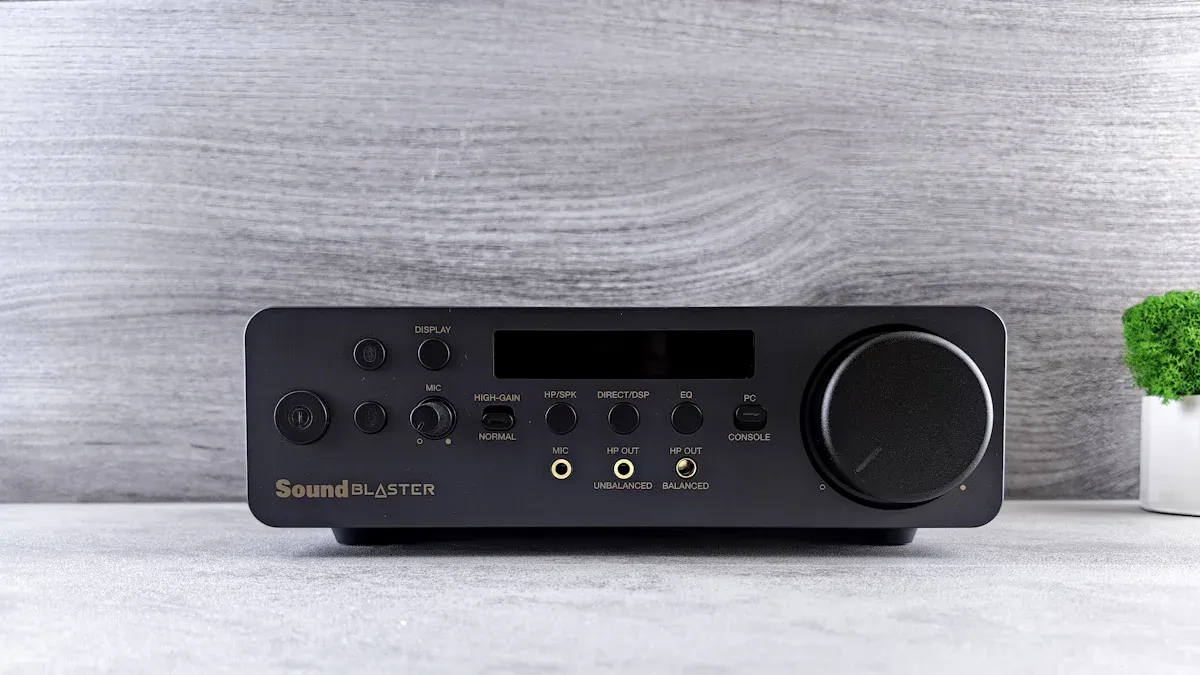
Audio Quality Comparison
You want the best sound for your movies and music. PCM audio gives you the purest signal because it is uncompressed. Dolby Digital and DTS use compression, which changes the sound. You hear smoother and more balanced tones with Dolby Digital. DTS sounds louder and more dynamic. The table below shows how each format compares:
| Format | Compression Type | Bitrate (Blu-ray) | Sound Quality Description |
|---|---|---|---|
| PCM | Uncompressed | N/A | Purest audio signal |
| Dolby Digital | Compressed | Up to 640 kbps | Smoother, more balanced |
| DTS | Less compressed | Up to 1.5 Mbps | Louder, more dynamic |
Tip: If you want the most accurate sound, choose pcm audio. If you prefer a more cinematic feel, Dolby Digital or DTS may suit your taste.
Compression Differences
You notice a big difference in how these digital audio formats handle data. PCM audio keeps every detail because it does not compress the sound. Dolby Digital and DTS use lossy compression. This means they remove some audio data to make files smaller. You get lower quality, but you save space. Here is a quick look:
| Format | Compression Type | Audio Quality | File Size |
|---|---|---|---|
| Dolby Digital | Lossy | Lower | Smaller |
| DTS | Lossy | Lower | Smaller |
| PCM | Uncompressed | Higher | Larger |
- Dolby Digital uses lossy compression to shrink file size.
- DTS also compresses audio, but keeps a bit more detail.
- PCM audio stays uncompressed, giving you higher quality but bigger files.
Channel Support
You want surround sound for your home theater. PCM, Dolby Digital, and DTS all support multiple channels. PCM audio can handle up to 7.1 channels when you use HDMI or eARC connections. Dolby Digital and DTS also support up to 7.1 channels, but you need the right equipment. The chart below shows the maximum channel support for each format:
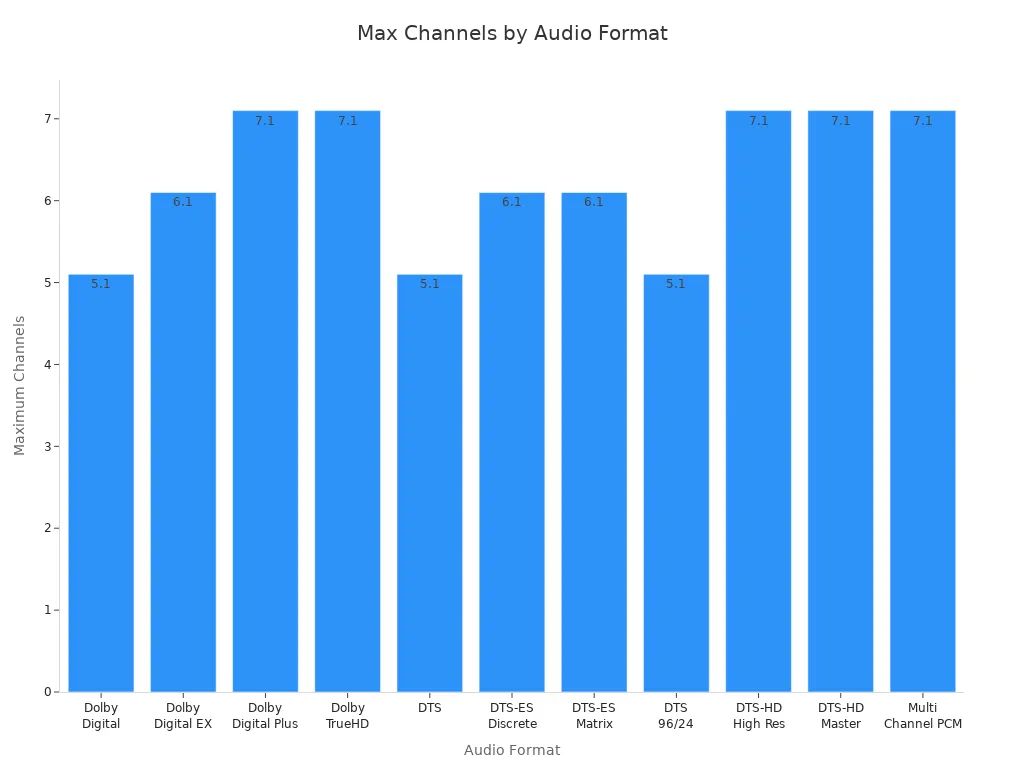
You see that all three formats can deliver immersive surround sound. PCM audio works best with HDMI connections. Dolby Digital and DTS also use optical and coaxial cables, but may limit channel support.
Pros and Cons of PCM
Advantages
You get several important benefits when you use pcm audio.
- You hear uncompressed sound with high fidelity and dynamic range. This makes pcm audio a top choice for audiophiles who want every detail.
- You find pcm perfect for professional settings, such as music production and editing, where accuracy matters most.
- You enjoy universal support. Most devices can play pcm audio without extra decoding or special software.
- You can play pcm audio directly from many devices, which makes setup easy and reliable.
Tip: If you want to capture every detail of your favorite song or movie, pcm audio gives you the closest match to the original recording.
Limitations
You also face some drawbacks with pcm audio.
- You need more storage space because pcm files are much larger than compressed formats like MP3 or Dolby Digital.
- You may run into compatibility issues, especially with multichannel audio or certain digital interfaces. Not every device supports all pcm options.
Note: Large file sizes can make it harder to store or send pcm audio, especially if you have limited space or bandwidth.
Choosing PCM for Your Setup
You should think about your needs before picking pcm audio for your system.
- Choose pcm audio if you want the highest sound quality, especially with standard speakers or high-end equipment.
- Use pcm when you want a richer sound experience and do not want to lose any details.
- Pick pcm audio for standard television speakers to avoid muted tones or loss of clarity.
You can use this table to help decide if pcm fits your setup:
| Factor | Description |
|---|---|
| Device Compatibility | Make sure your devices support pcm, as some only work with this format. |
| Audio Quality Needs | Use pcm for uncompressed sound and high-quality stereo listening. |
| Surround Sound vs. Stereo | PCM works best for stereo. For surround sound, check if your system supports multi-channel pcm. |
| Cable Type and Handling | Optical cables reduce electrical noise but can be fragile. |
| Bitrate and Sampling Rate | Check if your devices handle high sampling rates for the best audio quality. |
Remember: If you want the best sound and your devices support it, pcm audio is a strong choice for both home and professional use.
You now know that pcm audio delivers uncompressed sound by converting analog signals into digital values. This process preserves detail and dynamic range, making pcm a top choice for high-fidelity systems.
- PCM captures subtle nuances, giving you accurate sound.
- It works with most digital devices, including CDs and Blu-ray.
- Large file sizes remain the main drawback.
| Format | Advantages | Disadvantages |
|---|---|---|
| PCM | High quality, wide support | Larger file sizes |
Choose pcm if you want pure audio and your setup supports it.
FAQ
What is a PCM audio file?
You store sound in a pcm audio file without compression. This file keeps every detail from the original recording. You use it for music production, editing, and archiving when you want the best sound quality.
Can you play PCM audio on any device?
You can play PCM audio on most computers, CD players, and home theater systems. Some older devices may not support multichannel PCM, so you should check your equipment before using it.
Why do PCM files take up more space?
You get larger files because PCM audio saves every bit of sound data. The format does not remove any information. You need more storage, but you hear the clearest sound.
How does PCM compare to MP3?
You hear better sound with PCM because it is uncompressed. MP3 uses compression to make files smaller, but you lose some audio detail. You choose PCM for quality and MP3 for saving space.
Is PCM audio good for streaming?
You can stream PCM audio, but you need a fast internet connection. The files are bigger, so streaming may use more bandwidth. Many streaming services use compressed formats to make playback smoother.