The Shocking Truth About Static Electricity
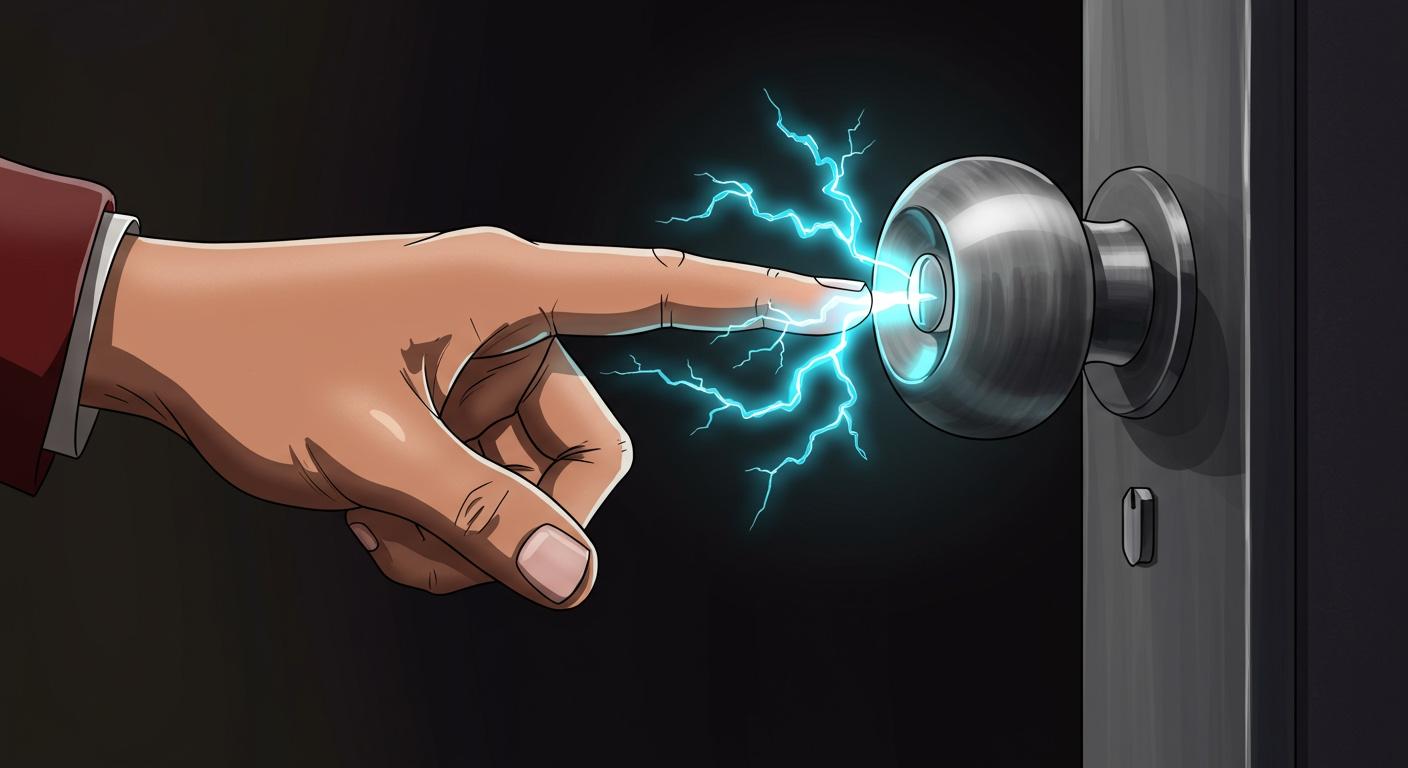
Ever wondered about that sudden zap from a doorknob? ⚡ People experience this jolt, a static shock, as a rapid static discharge from their bodies.
This event results from a buildup of static charge. A person's body accumulates a massive number of particles. A single shock can transfer approximately 6.3 x 10¹⁰ electrons!
This build up of electric charge can create a spark of 1,000 volts, though the current is too low to cause harm. The science of static electricity explains this daily phenomenon. Understanding what static electricity is uncovers the simple physics at play.
Key Takeaways
- Static electricity happens when electrons move from one object to another. This creates an imbalance of charges.
- Friction, like rubbing materials together, causes electrons to transfer. This builds up static charge on objects.
- Dry air lets static charge build up easily. Humid air helps charges go away, which stops shocks.
- You can prevent static shocks. Increase humidity, wear natural fabrics, moisturize skin, and touch metal objects to ground yourself.
WHAT STATIC ELECTRICITY IS
Understanding what static electricity is requires a look at the tiny world of atoms. Everything around us, from the clothes we wear to the air we breathe, is made of atoms. Atoms themselves contain even smaller particles: positively charged protons, neutral neutrons, and negatively charged electrons. An object is electrically neutral when its atoms have an equal number of protons and electrons. Static electricity occurs when this balance is disrupted.
ATOMS AND ELECTRON TRANSFER
An imbalance happens when electrons move from one object to another. Electrons are not fixed in place; they can be transferred between materials.
- An object that loses electrons becomes positively charged.
- An object that gains electrons becomes negatively charged.
This imbalance creates an electric charge on the surface of an object. The object stays charged until it can release the extra electrons or gain back the ones it lost. This buildup of charge is the essence of what static electricity is. These charged objects then exert electrostatic forces on each other, leading to attraction or repulsion.
THE ROLE OF FRICTION
Friction is a key player in creating static electricity. When two materials come into contact and then separate, electrons can be exchanged. Rubbing materials together vigorously increases the amount of contact and energy, which encourages more electrons to jump from one surface to the other. This process is known as the triboelectric effect.
Scientists rank materials based on their tendency to gain or lose electrons. This ranking is called the triboelectric series.
The triboelectric series is a list that ranks materials according to their tendency to gain or lose electrons. It helps predict which material combinations will generate the most static electricity. This is a fundamental principle behind charging insulators by friction.
Walking across a wool rug in rubber-soled shoes is a perfect example of friction at work. The rubbing action facilitates the transfer of electrons, turning a person into one of the charged objects. The chart below shows how different materials are ranked. Materials at the top tend to become positive, while those at the bottom tend to become negative.
| Tendency to Charge | Material |
|---|---|
| Become Positive (+) | Dry human skin, Leather, Wool |
| Neutral | Cotton, Steel |
| Become Negative (-) | Hard rubber, Polyester, Vinyl (PVC), Teflon |
CONDUCTORS VS. INSULATORS
The type of material involved determines if a static charge can build up. Materials fall into two main categories: conductors and insulators. The difference between them is how easily electrons can move. This distinction is central to understanding what static electricity is.
| Feature | Conductors (e.g., Metals) | Insulators (e.g., Rubber, Plastic) |
|---|---|---|
| Electron Mobility | Electrons move freely, like a 'sea of electrons'. | Electrons are tightly bound to their atoms. |
| Charge Distribution | Charge spreads quickly across the entire surface. | Charge stays in the spot where it was transferred. |
| Resistivity | Very low (e.g., Copper: 1.68 x 10⁻⁸ Ω·m) | Very high (e.g., Hard Rubber: 1 x 10¹³ Ω·m) |
Insulators are excellent at holding onto a charge. The process of charging insulators by friction is effective because the transferred electrons cannot easily move away. A plastic comb, a balloon, and a wool sweater are all insulators. When you rub them together, they become charged objects. The electrostatic forces they generate are strong enough to make your hair stand on end or attract small pieces of paper.
Conductors, like metals, allow electrons to flow with very little resistance. If a static electricity charge is transferred to a conductor that is grounded, the charge flows away instantly. This is why charging insulators by friction is a common phenomenon, while charging a metal rod by rubbing it in your hand is not. The electrostatic forces dissipate too quickly through your body, which is also a conductor.
THE EFFECTS OF STATIC ELECTRICITY

The buildup of static electricity on a person leads to several noticeable outcomes. These results are the most common ways people experience physics in their daily lives. Understanding the effects of static electricity explains the surprising zap from a doorknob and the tiny spark seen in the dark.
YOUR BODY AS A CHARGE CARRIER
A person can become a walking power source. Everyday actions like walking on a carpet or taking off a sweater can transfer electrons to the body. This turns a person into one of the charged objects, carrying an excess electric charge. The human body acts like a capacitor, a component that stores electrical energy.
The body's ability to store this charge is its capacitance. Experiments show the average human body has a capacitance between 100 and 200 picofarads (pF). This value changes based on a person's surroundings.
Footwear plays a major role in how much static charge a person accumulates. Certain shoe sole materials, like EVA or rubber, are excellent insulators. They prevent the built-up charge from safely escaping to the ground. This allows a person's body to store a significant amount of static electricity, sometimes reaching over 30,000 volts. The table below shows how capacitance can increase with better contact to a surface.
| Condition | Capacitance (pF) |
|---|---|
| To a far ground (minimum value) | 100-200 |
| Hand flat on metal plate (dry skin) | 1350 |
THE DISCHARGE 'ZAP' EXPLAINED
The familiar zap is a rapid event known as an electrostatic discharge (ESD). A person does not feel every instance of this discharge. The human body has a sensory threshold for a static shock. An individual typically feels a zap only when the discharge is at least 3,000 volts.
The feeling itself comes from the sudden flow of electrons. When a charged person touches a conductor like a metal doorknob, the stored electrons jump from the body to the object. This rapid current stimulates nerve receptors in the skin. The stimulation of these nerves creates the distinct and surprising sensation of a zap. This entire event is incredibly fast.
- A static discharge can last for just a few tens of nanoseconds.
- Some events may last up to one microsecond (1,000 nanoseconds).
This speed is why the feeling is a short, sharp jolt rather than a continuous current.
THE SPARK YOU CAN SEE
Sometimes, a person can see a tiny spark during a discharge. This visible light is a direct result of the effects of static electricity on the air itself. A visible spark does not require the 3,000 volts needed to feel a shock. Under the right conditions, a spark forms from voltages as low as 380 to 700 volts.
The spark is created through a process called dielectric breakdown. Air normally acts as an insulator, preventing electricity from flowing through it. However, strong electrostatic forces from highly charged objects can overcome this resistance.
- A high voltage creates a strong electric field between the charged person and a conductor.
- This field must exceed air's breakdown strength, which is about 3 million volts per meter.
- The intense field pulls electrons from the person's body.
- These electrons rush through the air, causing the air to ionize, or become electrically charged.
- The ionization of air atoms releases energy in the form of light, creating the visible spark.
This is the same basic principle that creates lightning, just on a much smaller and safer scale.
WHY SHOCKS ARE WORSE IN WINTER
People often notice more zaps during colder months. The reason for this increase is not the cold itself but the air's lack of moisture. Winter air holds less water vapor, creating the perfect environment for static electricity to build up on a person's body and objects. This dryness dramatically changes how electrical charges behave.
DRY AIR AS AN INSULATOR
Dry air is an excellent electrical insulator. An insulator is a material that prevents electricity from moving easily. Air's ability to resist electrical flow is its dielectric strength. When air is very dry, its resistance is high, making it difficult for a built-up charge to escape into the atmosphere. This allows a person to accumulate a significant charge from simple actions like walking on a carpet.
The dielectric strength of air is a measure of its insulating capability. A higher value means it is a better insulator. Dry air's strength is quite high, as shown below.
| Material | Dielectric Strength (MV/m) |
|---|---|
| Air | 3 |
This high resistance means the charge stays on a person's body, waiting for an opportunity to escape.
HUMIDITY AND CHARGE DISSIPATION
Humid air has the opposite effect. Water molecules are good conductors of electricity. In humid conditions, these water molecules form a microscopic, invisible layer of moisture on all surfaces, including skin and clothing. This thin film contains ions that help neutralize and carry away excess electrical charges before they can accumulate to high levels. The charge safely dissipates into the air. Keeping indoor relative humidity between 40% and 60% is often enough to prevent a surprising static discharge.
DRY AIR AND STATIC ELECTRICITY
Dry air directly contributes to the buildup of static electricity. Without a conductive moisture layer on surfaces, electrons transferred through friction have nowhere to go. They become trapped on a person's body or clothing. As a person moves around, they continue to collect more and more excess electrons. This accumulation continues until the person touches a conductor, like a metal doorknob. The massive buildup of charge then jumps to the conductor, creating the noticeable zap and spark.
PREVENTING A STATIC SHOCK
A person can take simple steps to avoid the surprise of a static shock. These tips work by either reducing the buildup of charge or providing a safe way for it to dissipate. Following these suggestions can make dry winter months much more comfortable.
INCREASE INDOOR HUMIDITY
Dry air is a major cause of static electricity. A simple solution is to increase the moisture in the air. Using a humidifier adds water vapor to a room. This moisture creates a thin, conductive layer on surfaces. This layer helps electrical charges move off a person's body and into the air, preventing a large charge from accumulating.
Pro Tip: Keeping indoor humidity between 40% and 60% is ideal. This range is comfortable for people and very effective at preventing static buildup.
CHOOSE NATURAL FABRICS
The type of clothing a person wears makes a big difference. Synthetic fabrics like polyester are excellent insulators and tend to hold a static charge. Natural fibers like cotton and wool are better choices because they retain more moisture, which helps dissipate charge. The chart below shows how different fabrics compare.

When different materials rub together, they can become charged objects. Choosing fabrics that are less prone to static can significantly reduce shocks.
| Fabric Type | Static Electricity Propensity (Rank) |
|---|---|
| Polyester fiber | Highest |
| Cotton & Linen | Lowest |
MOISTURIZE YOUR SKIN
Dry skin has a higher electrical resistance than moisturized skin. This makes it easier for a static charge to build up on the body. Applying moisturizing lotion helps solve this problem. Lotions increase the hydration of the skin's outer layer. This added moisture improves the skin's surface conductivity, allowing excess electrons to flow away before they can cause a zap.
GROUND YOURSELF FREQUENTLY
Grounding is the process of safely transferring a static charge to the earth. The earth acts as a massive reservoir that can accept or supply electrons to neutralize charged objects. A person can ground themselves by touching a large, conductive object that has a path to the ground.
- Touch a metal water pipe or radiator.
- Use a key to touch a metal doorknob before using your hand.
- Briefly touch the metal screw on a wall outlet cover plate.
This action provides a pathway for the built-up charge to leave the body, preventing a sudden discharge.
A static shock is nature's way of balancing a static charge built up on a person, especially in dry air. While the zap can be startling, the current is usually too low to cause harm. The same electrostatic forces, however, can be hazardous in industrial settings. People can explore these principles with simple static electricity experiments.
Next time a zap occurs, a person can smile. They now understand the science. Fun static electricity experiments, like rubbing a balloon on a sweater, show these same electrostatic forces at work. This activity demonstrates what static electricity is in a safe, visible way.
FAQ
Is a static shock dangerous?
A static shock from a person's body is usually not dangerous. The voltage can be high, but the electrical current is extremely low. This current is too small to harm a person. The zap feels surprising but is medically harmless.
Why do some people get shocked more than others?
Certain factors make a person more prone to shocks.
- Wearing synthetic fabrics like polyester builds more charge.
- Walking in rubber-soled shoes also increases static buildup.
- A person with dry skin accumulates static electricity more easily.
Can static electricity damage electronics?
Yes, static electricity can permanently damage electronic components. A small discharge, even one a person cannot feel, can destroy sensitive circuits inside computers or phones 💻. Technicians use anti-static wrist straps to prevent this damage.
Does static electricity happen in summer?
Yes, static electricity can occur in summer, but it is less frequent. Summer air contains more humidity. The moisture helps dissipate static charge from a person's body before it builds up. This reduces the chance of a noticeable shock.