What Is Voltage and Potential Difference?
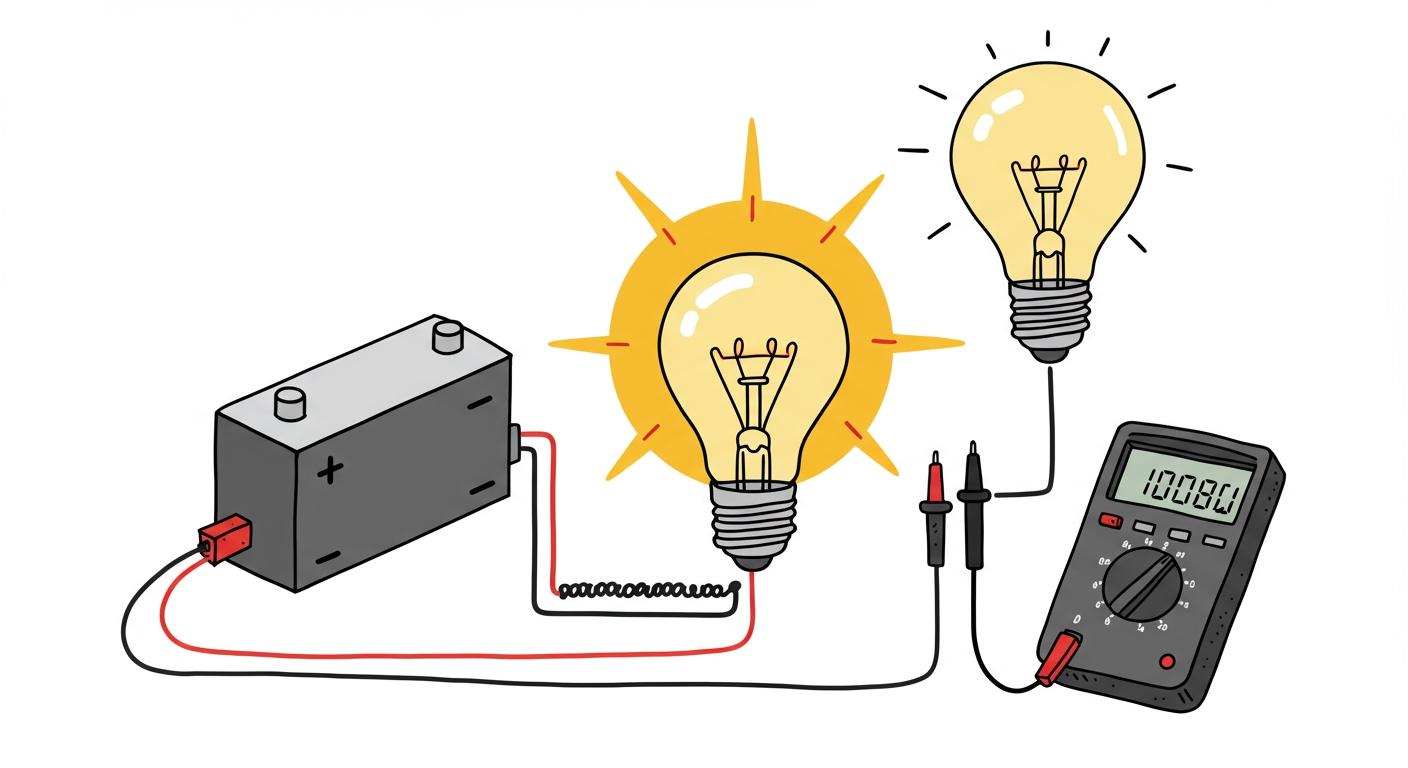
You can think of voltage as the common name for electric potential difference. This potential difference is the "push" or pressure that moves electricity through your devices. Have you ever wondered what the '1.5V' on your AAA battery really means?
That number, measured in volts, shows the energy push available. A 9V battery, for example, combines several smaller cells to create a larger voltage. 🔋
The potential potential difference is this push, so the difference between voltage and potential difference is simply a matter of terminology.
Key Takeaways
- Voltage is the push that moves electricity. It is also called electric potential difference.
- Electric potential is stored energy at one point. Voltage is the difference between two points, which makes electricity flow.
- You can calculate voltage using energy and charge, or by using Ohm's Law with current and resistance.
- Many devices use low voltage, like phones. Big appliances use high voltage, like stoves.
- Always be careful with electricity. High voltage can be dangerous.
THE CONCEPT OF ELECTRIC POTENTIAL:
To understand voltage, you first need to grasp the idea of electric potential. Think of it as the stored energy waiting at a specific point in an electric field. This potential exists even before any electricity starts to flow.
ENERGY IN AN ELECTRIC FIELD:
Every electric charge creates an invisible electric field around it. This field holds stored energy. Imagine you place a tiny positive charge into this field. The field will push or pull on it, and the energy the charge has due to its position is its electric potential energy. The relationship between voltage and electric field is direct; the field always points from a location of higher electrical potential to one of lower electrical potential. As you move a charge farther away from the source, the electrical potential decreases. This creates a potential energy difference between two points. A higher voltage indicates a stronger push because there is a greater potential potential difference.
DEFINING ELECTRIC POTENTIAL:
So, what is electric potential? It is the amount of energy per unit charge available at a single point. The key difference is that electric potential is a property of the location itself, not the charge you place there. The standard unit for measuring electric potential is the volt (V).
A great way to visualize this is with a water tank. 💧 The height of the water in the tank represents the electrical potential. A tank full of water has high potential. A single drop of water at that height has potential energy, but the height itself is the potential. There is no flow yet, just the possibility of it. This possibility is the electric potential.
This concept helps explain the potential potential difference. You need two points with different potentials to create a potential difference, which is the voltage that makes charges move.
WHAT IS ELECTRIC POTENTIAL DIFFERENCE?:
The previous section explained electric potential as stored energy at a single point. Now, let's connect two points to make electricity flow. This connection creates an electric potential difference. You need this difference for any current to move through a conductor.
FROM POTENTIAL TO DIFFERENCE:
Imagine our water tank analogy again. A single tank has potential. However, water only flows when you connect it to another tank with a lower water level. The difference in water height creates the pressure for flow. Electrical circuits work the same way.
A potential difference creates an electric field. This field forces free electrons inside a wire to move in one direction. Without this push, electrons just move around randomly. The potential difference gives them the organized push needed to create a current. These are the potential difference basics. A greater difference in electrical potential results in a stronger push.
VOLTAGE AS POTENTIAL DIFFERENCE:
You will often hear the term voltage used instead of electric potential difference. For everyday purposes, they mean the same thing. The difference between voltage and potential difference is simply a matter of terminology.
A higher voltage means there is more energy available to push each charge. This is why a 9V battery can power a more demanding device than a 1.5V battery. The 9V battery provides a much larger potential potential difference.
MEASURING IN VOLTS:
We measure potential difference in a unit called the volt (V). The name honors Alessandro Volta, an Italian physicist who made groundbreaking discoveries.
- Volta invented the first true battery, the "voltaic pile," in 1799.
- This device created a steady, reproducible source of electrical current.
- He proved that a chemical reaction between different metals could produce electricity.
- In 1881, the scientific community officially named the unit of electric potential the "volt" to celebrate his work.
So, what is one volt? One volt is the potential difference needed to provide one joule of energy to each coulomb of charge that moves between two points (1 V = 1 J/C).
For measuring potential difference in a real circuit, you use a tool called a digital multimeter. You connect the tool's two probes to two different points in the circuit. The digital multimeter then displays the potential potential difference, or voltage, between those points.
CALCULATING VOLTAGE:
Understanding the concepts is great, but how do you actually calculate voltage? You can determine the potential difference in a circuit using a couple of fundamental formulas. This section provides a step-by-step guide to these calculations.
THE ENERGY AND CHARGE FORMULA:
The most direct way to define voltage is through the relationship between voltage and energy. The formula connects voltage, work (energy), and charge.
V = W / Q
Here is a breakdown of what each variable means:
- V is the voltage (or potential difference) in Volts.
- W is the work done, or the energy transferred, in Joules.
- Q is the charge in Coulombs.
This formula shows that voltage is the amount of energy per unit charge. The 'Work' (W) represents the energy given to the charge carriers to move them between two points. For example, a battery does work to push charges from its negative terminal to its positive terminal, creating a higher electric potential. This work is the energy given to thecharge carriers.
OHM'S LAW IN CIRCUITS:
In a working circuit, you can calculate voltage using Ohm's Law. This law describes how voltage, current, and resistance relate to each other. This step-by-step guide is essential for circuit analysis.
V = I × R
Let's look at the components:
- V is the voltage in Volts.
- I is the current in Amperes (Amps).
- R is the resistance in Ohms (Ω).
This formula shows that voltage is the push needed to drive a current (I) through a component with resistance (R). A higher resistance requires a greater voltage to maintain the same current. The relationship between voltage and electric field explains this push, as the field directs the charge flow.
Note: Ohm's Law works perfectly for simple components like resistors. However, it does not apply to "non-ohmic" devices like diodes or transistors. These components have a non-linear relationship between voltage and current, meaning their resistance changes as the voltage changes.
For complex circuits, you can use simulation software to calculate and visualize the electric potential. These tools offer advanced analysis for any circuit you design.
- EveryCircuit provides real-time animations of voltages and currents.
- CircuitLab offers in-browser simulation with SPICE-like component models.
- PLECS is designed for simulating complex power electronic systems.
- SPICE is a powerful tool that performs many types of analysis, including DC, AC, and transient analysis.
These tools help you see the potential difference and how it behaves in any part of your circuit.
VOLTAGE IN DAILY LIFE:
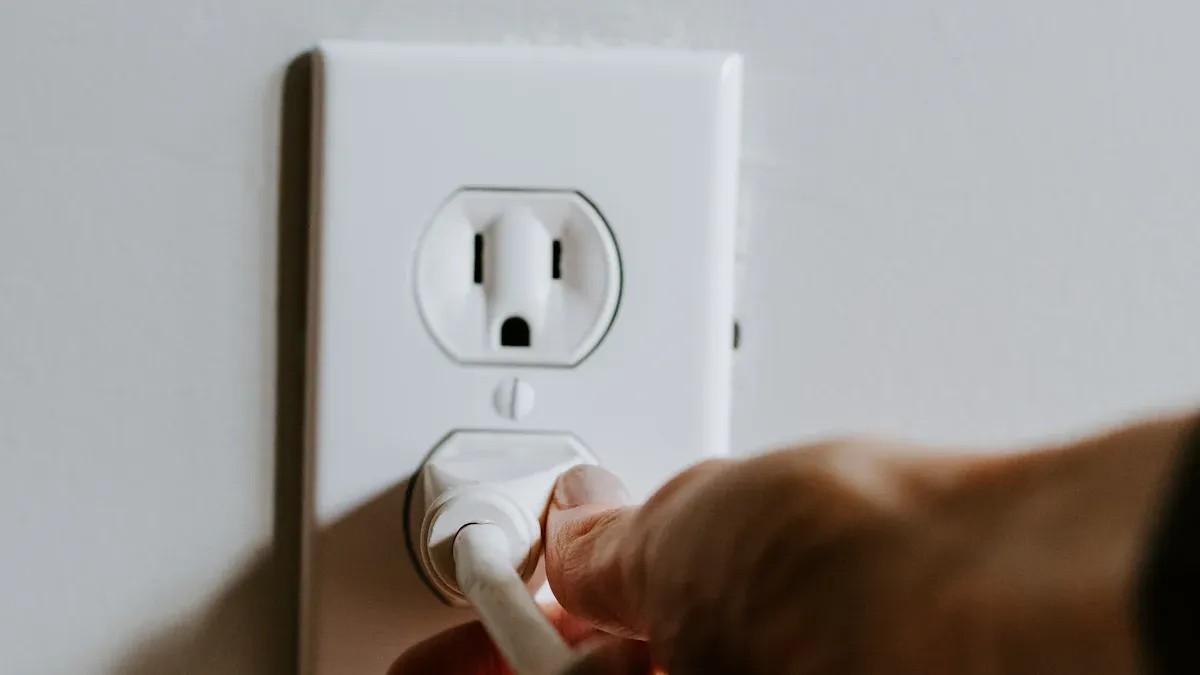
You interact with different voltage levels every day, often without thinking about it. The concept of voltage powers everything from your phone to your refrigerator. Understanding these differences helps you see how your devices work.
COMMON LOW-VOLTAGE SOURCES:
Many of your favorite gadgets run on low voltage. This design makes them safer and more portable. Small electronics like smartphones and laptops require less electrical push to function.
You can see low voltage in action with USB ports.
- A standard USB port provides a 5V output.
- Newer USB-C ports support fast charging with higher outputs, such as 9V or 12V.
- Car adapters also use low voltage, typically converting your car's 12V system to power your devices.
Even though the voltage is low, you should still handle these power sources with care. Devices with lithium-ion batteries, for example, have specific safety risks. Always use the correct charger for your electronics to ensure safety and efficiency.
HOUSEHOLD HIGH-VOLTAGE EXAMPLES:
Your home's wall outlets deliver a much higher voltage to power larger appliances. This higher electrical pressure is necessary for devices that do a lot of work, like generating heat or running powerful motors.
| Region/Continent | Standard Voltage | Frequency |
|---|---|---|
| North America | 120 V | 60 Hz |
| Most of Europe | 230 V | 50 Hz |
| Most of Asia | 220 V | 50 Hz |
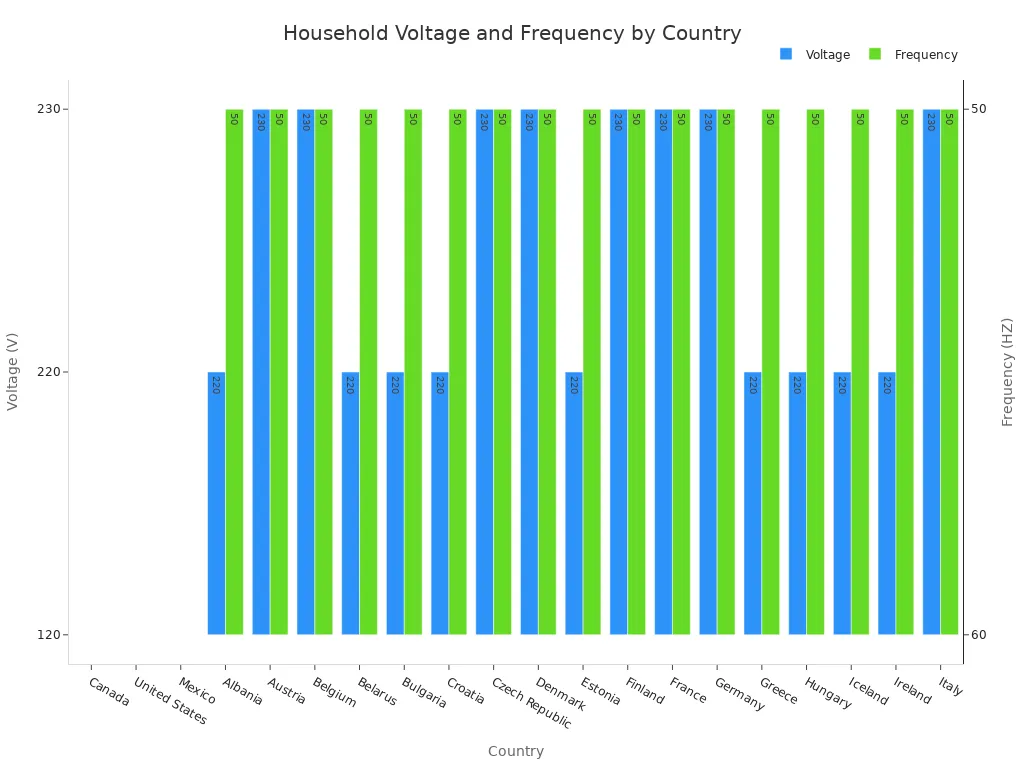
In the United States, most outlets provide 120V. However, large appliances need more power.
- Electric Stoves and Dryers: These often require a 240-volt connection to generate heat quickly.
- Central Air Conditioners: These also use 240-volt circuits to handle their high energy needs.
Working with high-voltage wiring is dangerous. If you are ever unsure about an electrical project, you should always contact a licensed electrician to ensure your safety.
You now know that "voltage" is the common term for electric potential difference. This potential difference is the electrical pressure that moves charge through a circuit. A higher voltage means a greater difference in electric potential between two points.
Remember, this pressure is measured in volts. It represents the energy per unit charge available to power your devices. A greater potential difference provides a stronger push.
Understanding voltage is the first step to understanding how all your electronics work. The concept of electric potential and electrical potential helps explain the voltage that brings your gadgets to life.
FAQ
### What is the difference between voltage and current?
Voltage is the "push" that makes electricity move. Current is the actual flow of electric charge. You can think of voltage as the water pressure in a hose and current as the amount of water flowing out.
### Is high voltage always dangerous?
Yes, you should always treat high voltage as dangerous. It provides a strong electrical push that can send a harmful current through your body. Always have a professional handle high-voltage wiring and repairs. ⚡
### Why do some devices need more voltage?
Devices that perform heavy work, like heating or running big motors, need a stronger electrical push. A higher voltage delivers more energy to each charge. This gives the device the power it needs to function correctly.
For example:
- A small toy may only need a 1.5V battery.
- A power tool often requires an 18V battery for more demanding tasks.
### Can you have voltage without current?
Yes, you can. A battery sitting on a shelf has voltage (potential difference) between its terminals. However, no current flows until you connect it to a device. This connection completes a circuit and allows the charge to move.