Understanding the MSP430 A Core Component for Embedded Systems
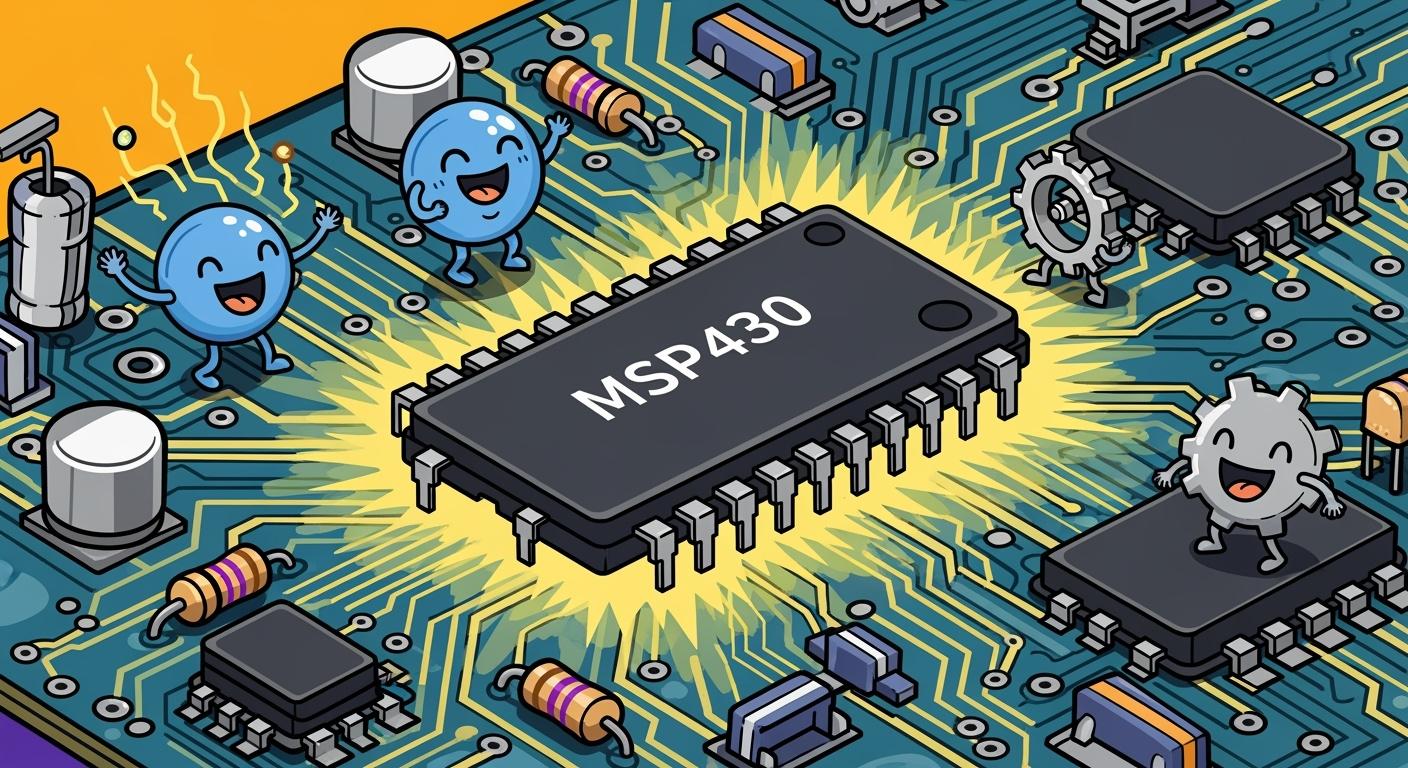
The MSP430 is a family of 16-bit microcontrollers from Texas Instruments. This MSP430 microcontroller is famous for its energy efficiency. It sets a standard for ultra-low power consumption in embedded systems. This focus on low-power operation is a critical design choice.
The primary goal of the MSP430 is to minimize power consumption. This extends battery life for countless embedded devices. Its ultra-low power and low-power modes make it ideal.
The 16-bit microcontroller architecture, including the MSP430, holds a firm position in the global embedded systems market. Market analysis reports confirm its continued relevance.
Reports detail market share for 16-bit architectures.
Specific forecasts track the size of the 16-bit microcontroller segment.
Key Takeaways
The MSP430 is a special 16-bit computer chip. It uses very little power. This makes it great for devices that run on batteries.
This chip has a simple design. It can wake up very fast from sleep. This helps save even more power.
The MSP430 has parts built-in to talk to sensors. It can also connect to other devices. This makes it useful for many projects.
It is a good choice for things like smart meters and wearable gadgets. It helps them work for a long time without new batteries.
The MSP430 is easy to learn. It is a good tool for students and people who like to build things.
What is the MSP430 Microcontroller?
The MSP430 is a popular family of low-power microcontrollers from Texas Instruments. It is a cornerstone for many embedded systems. The design of this microcontroller focuses on efficiency and performance. This makes the MSP430 a top choice for battery-operated applications.
A 16-bit RISC Architecture
The MSP430 uses a 16-bit RISC (Reduced Instruction Set Computer) architecture. This design choice makes the microcontroller very efficient. A RISC CPU uses a small, optimized set of instructions. The MSP430 CPU is built for control-oriented tasks. Its simple instruction set reduces processing cycles. This design provides fast and predictable responses. It is great for embedded systems needing precise timing.
💡 Did You Know? A simpler instruction set often leads to faster execution. The MSP430 can handle more complex computations than many older microcontrollers.
The table below compares the MSP430 architecture to a common 8-bit CISC microcontroller.
Feature | MSP430 (16-bit RISC) | 89C51 (8-bit CISC) |
|---|---|---|
Instruction Set Type | RISC | CISC |
Number of Instructions | 27 | 111 |
Execution Speed | Higher | Lower |
Efficiency | Increased | Lower |
A History of Low-Cost Design
The MSP430 microcontroller was created to be an affordable solution. Its low-cost design makes it accessible for a wide range of projects. Engineers can use this powerful microcontroller in commercial products without a large budget. Students and hobbyists also find the MSP430 platform great for learning about embedded programming. This focus on affordability helps drive innovation in low-power electronics.
A Versatile Microcontroller Platform
The MSP430 is not a single microcontroller. It is a large family of devices. This platform offers many options to fit specific project needs. Each series provides a different mix of memory, peripherals, and features. This versatility makes the MSP430 suitable for countless embedded applications.
Some popular MSP430 series include:
MSP430G2xx (Value Line): Low-cost, flash-based devices for general-purpose low-power use.
MSP430F5xx: Higher-performance MCUs with more memory and peripherals.
FRAM Series: Uses Ferroelectric RAM, which is faster and more durable than traditional Flash memory.
This variety ensures developers can find the right MSP430 for their specific low-power embedded project.
Key Features and Advantages
The MSP430 family stands out in the crowded microcontroller market. Its design philosophy prioritizes specific features. These features make it a powerful choice for modern embedded systems. The key advantages revolve around power efficiency and high integration.
The Focus on Ultra-Low Power
The defining characteristic of the MSP430 is its focus on ultra-low power consumption. This microcontroller is engineered from the ground up to save energy. This design makes it a leader in low-power applications. The MSP430 competes well with other low-power microcontrollers.
Texas Instruments MSP430: This family is famous for its ultra-low power modes. It draws very little current and has rapid wake-up times.
Microchip's nanoWatt XLP Technology: These devices are designed for extreme low power. They feature sleep currents as low as 20 nA.
ARM Cortex-M Series (e.g., STM32L): These processors balance low power with high performance. They use features like dynamic voltage scaling.
Newer family members like the MSP432 show even greater energy efficiency. This constant innovation keeps the MSP430 platform competitive for developers building energy-conscious embedded products.
Optimizing Power Consumption
The MSP430 achieves its ultra-low power consumption through several clever design features. The microcontroller offers multiple low-power operating modes. An engineer can choose the best mode for the application's current task. This flexibility is key to minimizing power consumption. The device only uses the energy it absolutely needs.
The MSP430 has a unique clock system. It allows individual functional modules to be turned on or off. This granular control dramatically reduces overall power consumption.
The current draw in these modes is incredibly small. The table below shows typical power consumption figures for an MSP430 device.
Mode/Operation | Current Consumption |
|---|---|
Standby mode with RTC running | 350 nA |
Shutdown mode | 45 nA |
Firmware running from FRAM (no cache hits) | 3 mA |
Code running from cache | 790 µA |
This chart visualizes the vast difference in power consumption between active and low-power modes.
Fast Wake-Up from Sleep Modes
Low power consumption in sleep mode is only half the story. The time it takes for a microcontroller to wake up is also critical for energy efficiency. The MSP430 excels in this area. It can transition from a power-saving standby state to full operation very quickly.
An MSP430 can wake up from a low-power mode in just a few microseconds. Some devices can respond to an interrupt request in as little as 6 microseconds. This rapid response is vital for event-driven applications. The microcontroller spends the maximum amount of time in a low-power state. It only wakes up for brief periods to perform a task. This behavior directly extends battery life in embedded systems.
Strong On-Chip Analog Circuitry
Many embedded applications need to interact with the real world. They measure things like temperature, pressure, or light. These are analog signals. The MSP430 is a true mixed-signal processor. It includes high-quality analog components directly on the chip.
This integration is a standout feature. The MSP430 often includes components like:
Analog-to-Digital Converters (ADCs)
Digital-to-Analog Converters (DACs)
Comparators
Having these components built-in makes the MSP430 a powerful mixed-signal device. It reduces the need for external analog parts. This simplifies the circuit design and lowers the total cost of the final product. This makes the microcontroller ideal for sensor-based embedded designs.
Integrated Digital Peripherals
A microcontroller needs more than just a CPU to be useful. It needs peripherals. Peripherals are specialized hardware blocks that handle specific tasks. They offload work from the main CPU. The MSP430 integrates a rich set of digital peripherals. This high level of integration significantly reduces system complexity.
Common peripherals found on an MSP430 microcontroller include:
Timers: Hardware counters for precise timing and generating pulse-width modulation (PWM) signals.
Communication Interfaces: Modules for standard protocols like UART, SPI, and I2C. These allow the microcontroller to talk to other chips and sensors.
Watchdog Timer: A safety feature that can reset the microcontroller if the software freezes.
Integrating these peripherals onto a single chip reduces the number of components needed for a project. This lowers the bill of materials (BOM) cost. It also makes the overall embedded system smaller and more reliable.
Why Choose the MSP430?
Developers choose the MSP430 for many reasons. Its unique combination of low-power features, performance, and accessibility makes it a strong contender for a wide range of embedded projects. This microcontroller excels in specific areas where its design philosophy provides a clear advantage for embedded systems.
Ideal for Battery-Powered Devices
The MSP430 is a top choice for battery-operated devices. Its design prioritizes ultra-low power consumption. This focus directly translates to longer battery life in low-power applications. Engineers can build products that run for months or even years on a single battery. This capability is essential for modern portable electronics.
A handheld RF receiver using an MSP430 core can achieve 26 to 60 hours of operation on rechargeable batteries.
This excellent energy efficiency makes the MSP430 perfect for devices that need to operate for long periods without a power source.
A Great Platform for Learning
The MSP430 is an excellent microcontroller for students and hobbyists. Texas Instruments provides low-cost development tools that make learning about embedded systems accessible. The MSP430 LaunchPad is a popular and affordable board. Some community projects, like the "$1 MSP430 LunchBox," offer an even cheaper entry point. Universities also use the MSP430 in their courses because of its low cost and powerful features.
💡 Tip for Learners: The Energia IDE provides an Arduino-like environment for the MSP430. It helps hobbyists transition smoothly to this powerful low-power platform.
More Capable Than 8-bit MCUs
The 16-bit architecture of the MSP430 offers significant advantages over older 8-bit microcontrollers. It processes data in 16-bit chunks. This makes it much faster at handling tasks that involve numbers larger than 255. For example, it can easily manage data from a 10-bit or 12-bit ADC. This capability results in more compact code and better performance for many embedded applications.
Use as a Digital Signal Processor
Certain MSP430 variants include a hardware multiplier. This special hardware allows the microcontroller to perform mathematical calculations very quickly. This feature enables the MSP430 to handle basic digital signal processing (DSP) tasks. Developers can implement algorithms like:
Finite Impulse Response (FIR) filters
This ability makes the MSP430 a versatile choice for applications that need to analyze signals, such as audio processing or sensor data filtering.
Real-World MSP430 Applications
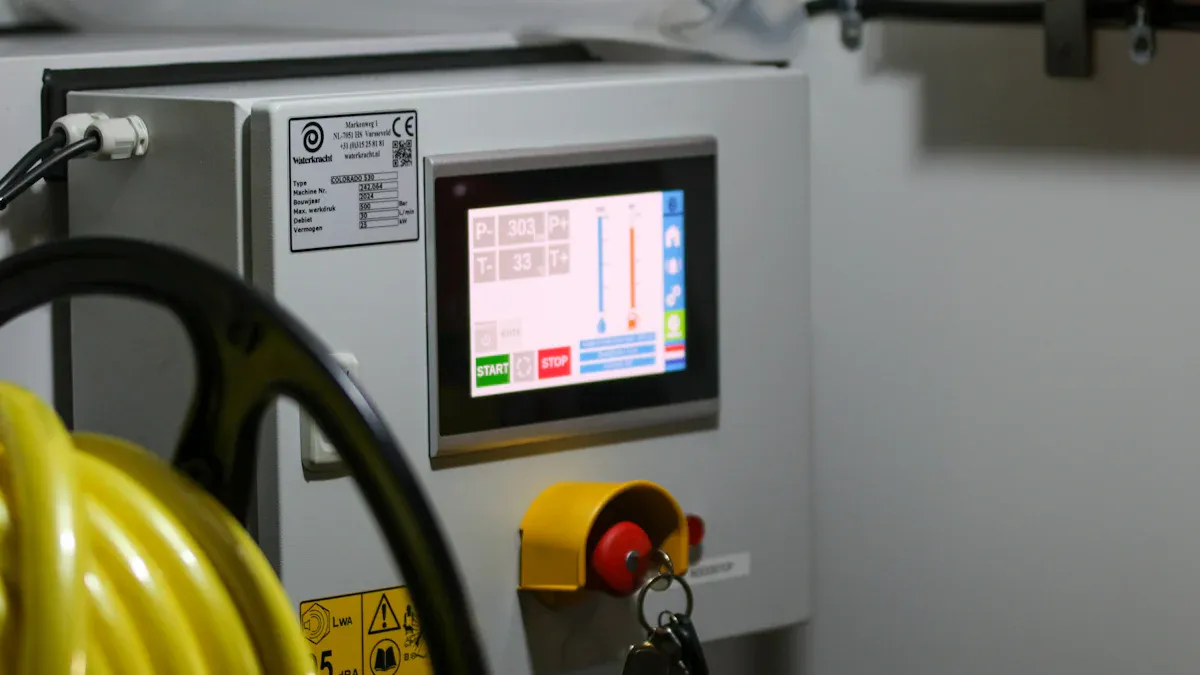
The MSP430 microcontroller's unique features make it a popular choice for a wide range of embedded applications. Its low-power capabilities are essential for creating efficient and long-lasting electronic devices. The versatility of the MSP430 allows it to power many modern embedded systems.
Portable and Wearable Devices
The MSP430 is a cornerstone of many battery-operated devices. Its design is perfect for wearable technology, such as fitness trackers and portable health monitors. The microcontroller's sophisticated power management is a key advantage for these low-power applications.
It has ultra-low power consumption, extending the life of portable devices.
The design minimizes leakage current, which significantly cuts down energy drain.
Its small size is ideal for the compact designs required in wearable technology.
These features allow devices to monitor vitals continuously without frequent recharging.
Smart Sensing and IoT
The MSP430 is well-suited for the Internet of Things (IoT). Its features support the development of intelligent edge devices for predictive maintenance and asset tracking. The microcontroller can process real-time data from sensors, which is critical for smart industrial applications. For example, a smart fault indicator on a power line uses an MSP430 to send temperature and current data wirelessly. This allows remote monitoring and helps prevent failures.
Metering and Data Acquisition
Smart utility meters for electricity, water, and gas often use an MSP430. The microcontroller's low-power operation is a major reason for its use in devices like smart water meters. It can interface with radio circuits to broadcast billing information. The MSP430 also excels in data acquisition systems for environmental monitoring. In agriculture, an embedded system might use the microcontroller to process data from temperature and humidity sensors. This information is then sent wirelessly to a central server.
Automotive Electronics
The automotive industry uses the MSP430 in various embedded systems. Its energy-saving benefits are especially valuable for components that rely on small, long-lasting batteries.
A great example is a Tire Pressure Monitoring System (TPMS). A sensor inside each tire must operate for years on a single small battery. The MSP430's extremely low-power sleep modes and fast wake-up times make this possible. It spends most of its life asleep, waking only briefly to take a measurement and transmit data.
The MSP430 is a specialized microcontroller family where low-power efficiency is the top priority. Its unique combination of low-power modes, an efficient 16-bit architecture, and integrated peripherals makes this microcontroller a premier choice for battery-operated embedded designs. The MSP430 serves as a fundamental building block for creating long-lasting and intelligent embedded products.
The market for ultra-low-power microcontrollers is projected to grow significantly. This trend highlights the increasing demand for low-power solutions in modern electronics.
This focus on low-power design solidifies the MSP430's role in the future of portable technology.
FAQ
What is the main difference between an MSP430 and an Arduino?
The MSP430 is a specific family of low-power microcontrollers. Arduino is a complete development platform that includes a board and a simplified programming environment. An Arduino board often uses a different type of microcontroller, like one from the ATmega family.
What programming languages do developers use for the MSP430?
Developers primarily program the MSP430 using the C programming language. For very specific, low-level control, they may also use Assembly language. The Energia IDE provides a simpler, Arduino-like language for beginners to get started quickly.
Is the MSP430 a good microcontroller for beginners?
Yes, the MSP430 is an excellent choice for learning. Texas Instruments offers affordable development kits like the LaunchPad. The platform has strong community support and educational resources, making it very accessible for students and hobbyists interested in low-power electronics.
Why is a 16-bit MCU like the MSP430 better than an 8-bit one?
A 16-bit microcontroller processes larger chunks of data at once. This makes it faster and more efficient for tasks involving math or sensor readings above 255. It handles complex instructions with more speed than a typical 8-bit microcontroller.