Exploring SerDes The Core of Modern Chip-to-Chip Communication
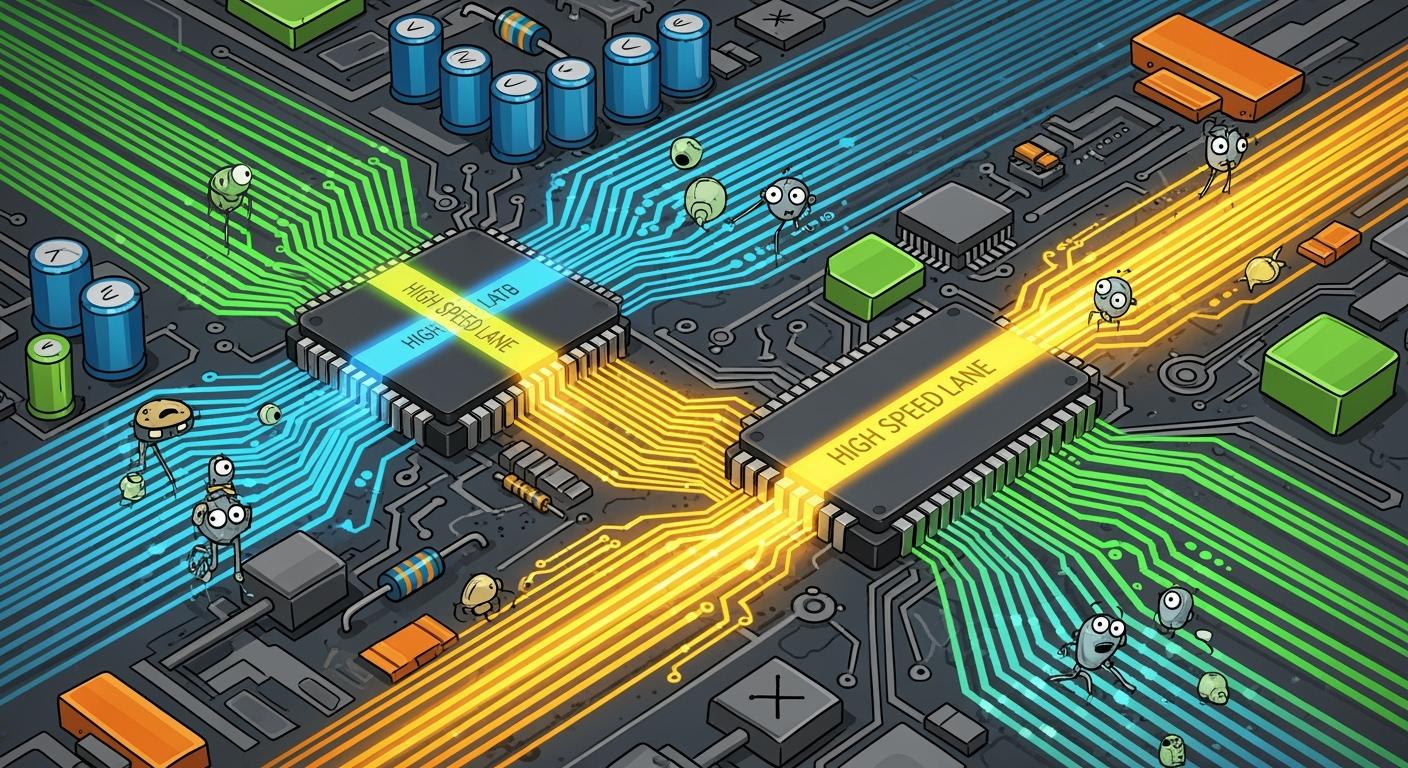
A SerDes, or serializer/deserializer, is a functional pair. It enables modern high-speed chip-to-chip communication. Its main job is to reduce the number of connections needed between chips. This technology allows for massive data rates over longer distances. It also solves problems like signal timing errors. This data communication method is essential for today's chip-to-chip interconnect systems. A serializer converts parallel data to serial data. The deserializer then changes the serial signal back to parallel.
Think of it like this: SerDes technology transforms a wide, multi-lane highway (parallel data) into a single, ultra-fast bullet train line (serial signal). This makes high-speed communication more efficient.
Key Takeaways
- SerDes helps chips talk to each other very fast. It changes many data lines into one fast line.
- Old ways of sending data were too slow. SerDes fixes problems like timing errors and noise.
- SerDes uses fewer wires. This saves money and space on computer boards.
- SerDes makes data centers, phones, and cars work better. It helps send huge amounts of data quickly.
The Need for SerDes in High-Speed Design
The digital world demands ever-increasing speed. This creates a classic problem-and-solution dynamic in chip design. The old method of parallel data communication cannot keep up. The solution is a shift to serial transmission, a change made possible by SerDes technology. Understanding this shift shows why SerDes is essential for modern electronics.
The Limits of Parallel Communication
Parallel communication sends multiple bits of data at once over many wires. This method works well for short distances. However, it faces major problems as speeds and distances increase. These limitations prevent it from meeting modern data demands.
One critical issue is signal skew. In a parallel interface, all data bits should arrive at the receiver at the same time. Tiny differences in wire length or electrical properties cause bits to arrive at slightly different times. This timing difference is skew. To prevent errors, the receiver must slow down and wait for the last bit of the signal to arrive. Even a tiny skew of a few picoseconds can severely limit the maximum speed of data transmission.
Another problem is electrical noise. Parallel buses with many wires packed closely together are prone to interference.
| Interference Type | Description | Effect on the Signal |
|---|---|---|
| Crosstalk | Electromagnetic energy from one wire "leaks" and creates unwanted noise on an adjacent wire. | It can corrupt the data signal, causing errors. |
| Inter-Symbol Interference (ISI) | Echoes of a previous signal pulse overlap with the current one, often due to signal loss in the wire. | It blurs the signal, making it hard for the receiver to read the data correctly. |
These issues get worse at higher frequencies. The large number of wires also increases cost and complexity. More wires mean more I/O pins on a chip and more space on the circuit board. This makes devices larger and more expensive to manufacture.
The Advantage of Serial Transmission
Serial transmission, powered by SerDes, solves the problems of parallel buses. It provides a robust solution for high-speed communication. A SerDes device takes a wide, parallel stream of data and converts it into a very fast serial signal. This single high-speed signal travels over just a few wires, often a differential pair.
This approach offers several key benefits:
- Reduced Pin Count and Cost: Using fewer wires drastically reduces the number of pins needed on a chip. This saves valuable space on the circuit board, simplifies the layout, and lowers manufacturing costs. It allows for smaller, more efficient devices.
- Elimination of Signal Skew: Since data travels in a single stream, there is no risk of skew between different bits. The clock information is embedded directly into the data signal, ensuring perfect synchronization at the receiver.
- Superior Noise Immunity: High-speed serial links often use differential signaling. This technique sends the same signal over two wires with opposite polarities. The receiver looks at the difference between the two signals. Any noise that affects both wires equally is canceled out. This makes the transmission highly resistant to crosstalk and other electromagnetic interference (EMI).
- Higher Data Rates: By overcoming the limits of skew and noise, SerDes enables much faster data communication. A single serial lane can run at speeds like 10 Gbps or higher. Multiple lanes can be combined to achieve massive throughputs, reaching 400 Gbps or even 800 Gbps.
The demand for this high-speed data transmission is everywhere. Large data centers, the rise of artificial intelligence (AI), and new telecom standards all require faster and more efficient data communication. SerDes technology is the key that unlocks this performance, enabling the next generation of high-speed systems.
How a Serializer/Deserializer Works
A serializer/deserializer operates on a simple yet powerful principle: converting data from a representation in space to one in time, and then back again. The transmitter takes a wide parallel data bus (space) and transforms it into a single, fast-moving stream of bits (time). The receiver then catches this stream and rebuilds the original parallel data. This process allows a massive amount of information to travel efficiently across just a few wires.
The Transmitter: Parallel to Serial
The transmitter side of a SerDes device performs the first half of this conversion. It takes wide, slow parallel data from a chip's core logic and prepares it for high-speed serial transmission. This involves several key steps.
-
Parallel-to-Serial Conversion: The core of the transmitter is a component called a Parallel-In, Serial-Out (PISO) shift register or a multiplexer (MUX) tree. This circuit takes a parallel word, such as 64 bits of data, and feeds it out one bit at a time. To do this at billions of bits per second, it needs an extremely fast clock. A Phase-Locked Loop (PLL) circuit generates this high-frequency clock by multiplying a slower, more stable reference clock from the system.
-
Data Encoding and Scrambling: Raw data can cause problems during transmission. For example, a long string of zeros or ones can make it difficult for the receiver to extract timing information. To prevent this, the serializer uses an encoding scheme.
- 8b/10b Encoding: This method converts each 8-bit chunk of data into a 10-bit symbol. The system chooses between two possible symbols to ensure the number of ones and zeros in the data stream stays balanced. This balance, known as DC balance, is critical for a stable signal.
- 64b/66b Encoding: A more efficient method that adds just two extra bits to every 64 bits of data. It uses a process called scrambling, which uses a mathematical function to make the data appear random. This breaks up long, repetitive patterns and ensures the signal has enough transitions for the receiver to work properly.
-
Signal Conditioning (Pre-emphasis): The physical channel (the wire or trace) naturally weakens a high-speed signal, especially the sharp transitions that represent changing bits. To counteract this, the transmitter uses a technique called pre-emphasis. It intelligently boosts the high-frequency parts of the signal before transmission. This pre-distorts the signal in a helpful way, ensuring it arrives at the receiver looking clean and sharp.
💡 Think of Pre-emphasis like this: Imagine you have to shout a message across a noisy room. You would naturally emphasize certain words to make sure they are heard clearly. Pre-emphasis does something similar for the electrical signal, "shouting" the bit transitions so they survive the journey down the wire.
After these steps, a final output driver sends the conditioned electrical signal onto the transmission channel, beginning its journey to the receiver.
The Receiver: The Serializer-Deserializer Pair
The receiver's job is to perfectly reverse the process performed by the transmitter. It must capture the high-speed serial signal, recreate the original parallel data, and extract the all-important clock timing. This half of the serializer-deserializer pair is where some of the most complex engineering in a SerDes lies.
The first and most critical task is Clock and Data Recovery (CDR). The serial data arrives without a separate clock wire. The timing information is embedded within the transitions of the data signal itself. The CDR circuit is a sophisticated system that performs two functions simultaneously:
- It locks onto the incoming data stream's frequency and phase.
- It generates a new, clean clock that is perfectly synchronized to the data.
The CDR circuit uses its recovered clock to sample the incoming signal at the ideal moment, right in the middle of each bit, to decide if it is a 1 or a 0. This process is highly sensitive to noise and jitter, making the CDR one of the most challenging parts of SerDes design.
Once the CDR has recovered the clock and the raw serial bits, the rest of the process unfolds:
- Decoding/Descrambling: The receiver performs the inverse of the encoding step. If 64b/66b encoding was used, a descrambler reverses the scrambling function. If 8b/10b was used, it converts the 10-bit symbols back into their original 8-bit data values.
- Serial-to-Parallel Conversion: A Serial-In, Parallel-Out (SIPO) shift register collects the individual bits. With each tick of the recovered clock, a new bit enters the register. After the correct number of bits (e.g., 64) have been collected, the SIPO makes the entire parallel word available at once.
This reconstructed parallel data is then passed to the core logic of the receiving chip, completing the data transmission. The serializer/deserializer successfully moved a large block of data across a minimal interface, overcoming the physical limits of parallel communication.
Core Components and Architectures
A SerDes is a complex system built from several specialized parts. These parts work together to handle the high-speed data transmission. Engineers often group these parts into logical layers. This organization helps manage the design and ensures different devices can communicate.
Key Functional Blocks
A SerDes IP core contains several essential functional blocks. Digital logic drivers and receivers are fundamental for the conversion process. The main blocks include a transmitter (TX) and a receiver (RX). The transmitter acts as the serializer. A Phase-Locked Loop (PLL) generates a very fast clock signal to time the outgoing data. The receiver is the deserializer. It uses its own clocking system to capture the incoming signal correctly. Some advanced receivers use a Dynamic Phase Alignment (DPA) block. The DPA selects the best clock phase to sample the data, improving signal integrity.
These functional blocks are often organized into two main layers, the PCS and the PMA. This layered approach is common in many high-speed communication standards.
| Layer | Primary Function |
|---|---|
| Physical Coding Sublayer (PCS) | This digital layer prepares the data for transmission. It handles tasks like 64b/66b encoding and scrambling to ensure the data signal has good properties. |
| Physical Medium Attachment (PMA) | This mixed-signal layer manages the electrical interface. It performs the actual serialization and deserialization, converting the digital signal to an analog one for the wire. |
Common SerDes Architectures
Different applications need different types of performance. As a result, industry standards define specific SerDes architectures. These standards ensure that devices from various manufacturers can work together seamlessly. The core serializer/deserializer function remains, but the implementation details change.
Common standards built on SerDes technology include:
- PCI Express (PCIe): This standard connects components inside a computer. It uses a flexible number of SerDes lanes (x1, x4, x8, x16) to scale bandwidth. Each new PCIe generation uses faster SerDes to boost speed.
- Ethernet: This technology powers computer networks. High-speed Ethernet standards like 100GbE and 400GbE rely on multiple SerDes channels running at very high speeds to achieve massive data throughput.
- Serial ATA (SATA): This interface connects storage drives, like SSDs, to a computer's motherboard. Its speed increases have been driven by advances in SerDes transmission technology.
These architectures show the adaptability of SerDes. It is the foundational technology for nearly every modern high-speed data interface.
Real-World SerDes Applications
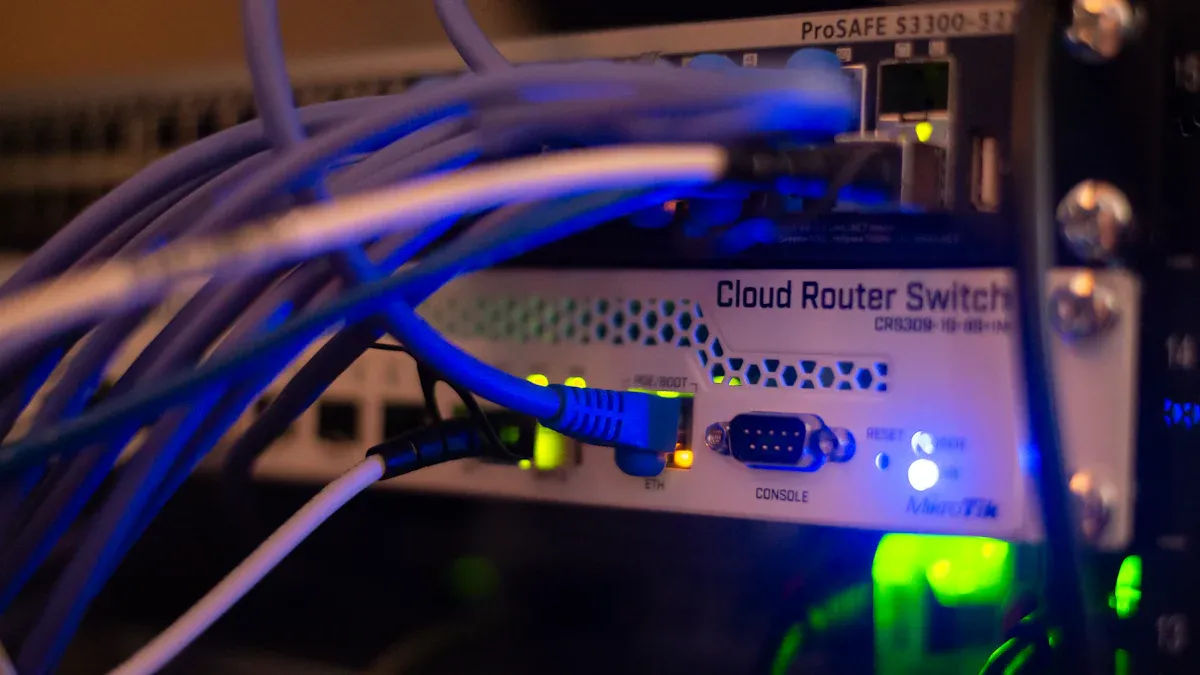
SerDes technology is not just a theoretical concept; it is the engine driving the modern digital world. From the massive data centers that power the internet to the smart devices in our homes and cars, SerDes makes high-speed data communication possible. Its ability to send huge amounts of data reliably over a few wires has made it essential across many industries.
Data Centers and Telecom
Data centers and telecommunication networks are the backbones of our connected society. They rely on SerDes to handle enormous data traffic. Inside a data center, this technology enables critical high-speed data transmission between servers, switches, and storage systems.
Key applications include:
- High-Speed Ethernet: Network switches use SerDes to provide 100G, 400G, and even faster Ethernet connectivity. This allows data centers to support demanding workloads like AI and machine learning.
- 5G Infrastructure: In 5G base stations, SerDes devices facilitate rapid data communication between antennas and processing units, ensuring the low latency needed for next-generation mobile networks.
- Optical Networks: The technology is a core part of optical transceivers. It converts electrical signals to light for transmission over fiber optic cables, forming the foundation of long-distance networks.
Automotive and Consumer Electronics
SerDes technology has also transformed the automotive and consumer electronics industries. Modern cars use it to connect the growing number of sensors and cameras required for Advanced Driver-Assistance Systems (ADAS). This reliable connectivity is crucial for safety features. Protocols like GMSL and FPD-Link are specialized SerDes solutions for the harsh automotive environment.
In consumer electronics, SerDes is the key to delivering high-quality media experiences. It powers the high-speed interface needed for crisp, lag-free visuals on 8K TVs and gaming consoles.
The technology also supports the fast data transmission required for VR/AR headsets, high-resolution cameras, and advanced wireless standards like Wi-Fi 6E. In each case, SerDes provides the fast, efficient connection that makes modern features possible.
SerDes technology is a cornerstone of modern high-speed communication. It efficiently converts data between parallel and serial formats, ensuring reliable data communication and connectivity. Looking ahead, SerDes will continue to evolve.
Innovations like 224 Gbps speeds and integration with co-packaged optics will meet the endless demand for faster high-speed communication, powering the next generation of digital systems.
FAQ
What does SerDes stand for?
SerDes stands for Serializer/Deserializer. A serializer turns wide parallel data into a fast serial stream. A deserializer receives that stream and converts it back into parallel data. This pair of functions enables high-speed communication.
Why is SerDes better than parallel communication?
SerDes technology uses far fewer wires. This reduces cost and saves space on circuit boards. It also solves signal timing problems and resists electrical noise. These benefits allow SerDes to achieve much faster data speeds.
What is a PLL in a SerDes?
A PLL, or Phase-Locked Loop, is a vital clocking circuit inside the SerDes transmitter. It takes a standard system clock and multiplies its frequency. This action creates the extremely fast clock signal needed for serial data transmission.
What is the difference between the PCS and PMA?
The PCS and PMA are two main layers within a SerDes device. They handle different jobs to prepare the data for transmission.
The PCS (Physical Coding Sublayer) is a digital layer. It encodes and scrambles the data. The PMA (Physical Medium Attachment) is a mixed-signal layer. It creates the final electrical signal for the wire.