The Ultimate Guide to Transceivers for Beginners
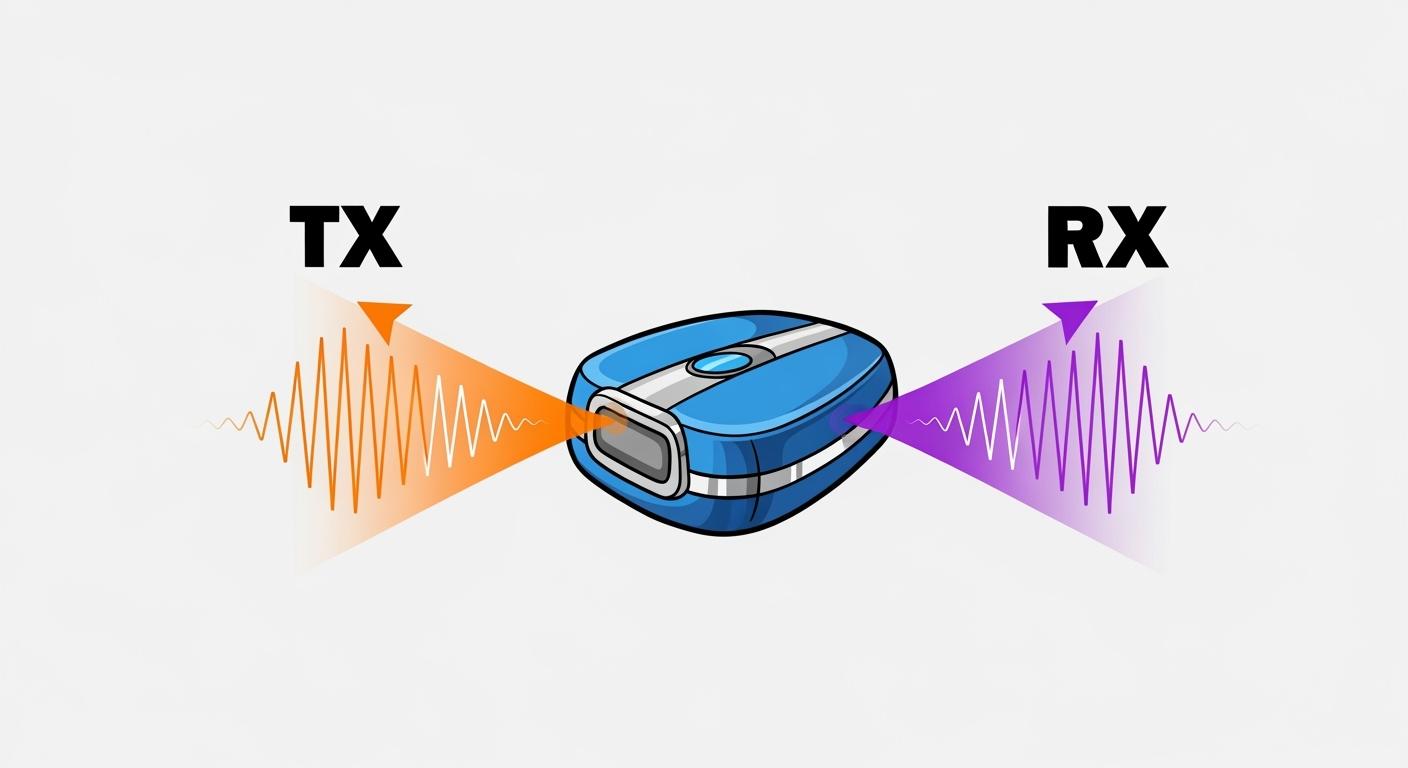
Have you ever wondered what is a transceiver? The name combines "transmitter" and "receiver". Think of a transceiver as a single device that can both talk and listen. This two-way communication ability is a building block for nearly all modern technology you use. It powers everything from your Wi-Fi to the global internet. The growing importance of transceivers is clear from market projections.
Category | Market Size (2024) | Projected Market Size (2030) |
|---|---|---|
Global Optical Transceiver Market | USD 21.8 billion |
This tiny device, combining a transmitter and a receiver, makes our connected world possible.
Key Takeaways
A transceiver is one device. It sends and receives information. This makes two-way talks possible.
Transceivers save space and money. They make devices smaller and cheaper. This helps battery life.
Transceivers use modulation to send data. They use demodulation to receive data. This is how they translate information.
Transceivers can be half-duplex or full-duplex. Half-duplex means one person talks at a time. Full-duplex means both people talk at the same time.
Different transceivers do different jobs. RF transceivers use radio waves. Fiber optic transceivers use light. Ethernet transceivers use electrical signals.
What is a Transceiver?
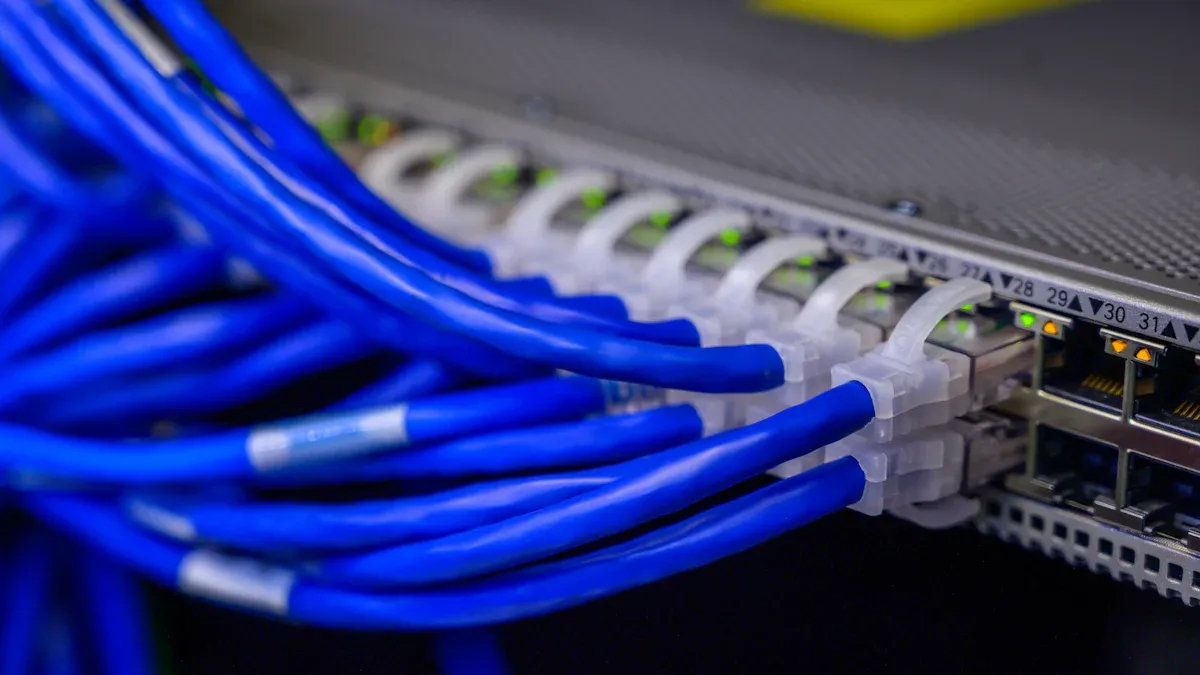
You now know that a transceiver is a single device that handles two-way communication. The name itself gives you a clue, as it's a combination of the words "transmitter" and "receiver." To truly understand what is a transceiver, you need to look at each of its two core functions separately.
The Transmitter Function: Sending Signals
The transmitter part of a transceiver has one main job: to send information out into the world. It takes your data—like your voice, a text message, or a website request—and prepares it for its journey. This process involves several key steps handled by specific components.
A basic transmitter circuit uses five main parts to work its magic:
Power Supply: This provides the electrical energy needed for the transmitter to operate.
Electronic Oscillator: It generates a steady, repeating wave, known as a carrier wave. Think of this as the empty vehicle that will carry your information.
Modulator: This is where your data gets loaded onto the carrier wave. It changes the wave's properties, like its height or frequency, to encode the information.
RF Amplifier: This component boosts the power of the signal, giving it the strength to travel long distances.
Antenna Tuner: It makes sure the transmitter and the antenna are perfectly matched, allowing for the most efficient transfer of power.
Your digital data, which is just 1s and 0s, must be converted into an analog, wave-like signal before it can be sent. This conversion is often handled by a component called a modem, which can be built directly into the transceiver. Modern devices use advanced parts like Radio Frequency Digital-to-Analog Converters (RF DACs) to do this directly, making the whole system simpler and more efficient.
The Receiver Function: Receiving Signals
The receiver has the opposite job of the transmitter. It must capture incoming radio waves and convert them back into data you can understand. A receiver is constantly surrounded by noise from countless other electronic devices. Its most important task is to filter out this noise and lock onto the specific signal it's looking for.
How a Receiver Finds the Signal Filtering circuits are key to a receiver's success. These circuits are designed to only allow a specific frequency or range of frequencies to pass through. This is like tuning a radio to a specific station. By blocking out all other frequencies, the receiver can isolate the desired information from the background noise. More advanced systems even use Digital Signal Processing (DSP) to mathematically identify and reconstruct the original message, even if it's weak or distorted.
Why Combine Them in One Device?
So, why not just keep the transmitter and receiver as separate parts? Combining them into a single transceiver offers huge advantages, especially for the compact devices you use every day.
The main benefits of an integrated transceiver include:
Saves Space: A single, tiny chip can replace multiple components that would otherwise take up five times more space. This is essential for making devices like smartphones and wireless earbuds small and sleek.
Lowers Cost: Using one chip is cheaper than using two. This integration helps make advanced communication technology affordable for everyone.
Simplifies Design: With fewer external parts to worry about, engineers can design and build new products much faster.
Improves Battery Life: A single, efficient transceiver uses less power. This directly leads to longer battery life for your portable gadgets.
Ultimately, the transceiver is a brilliant engineering solution that packs powerful two-way communication into a tiny, efficient, and cost-effective package.
How Does a Transceiver Work?
You know a transceiver sends and receives information, but how does it actually perform this magic? The secret lies in a two-part process called modulation and demodulation. Think of it as a special code that lets your digital data travel through the air or over a wire. Understanding this core function is the key to knowing how does a transceiver work. The device operates in one of two main ways: half-duplex or full-duplex.
The Core Process: How It Works
At its heart, a transceiver is a translator. It translates your digital information into a wave that can travel, and then translates that wave back into digital information on the other end. This is how it works.
Modulation is the process of encoding your data onto a carrier wave. Imagine you write a message (your data) and put it inside a bottle (the carrier wave) to send across the ocean.
Demodulation is the opposite. It's the process of receiving the bottle and taking your message out to read it.
This entire process happens in a fraction of a second. For modern digital transmissions, the steps are very precise.
Sending a Message (Modulation)
Grouping Data: Your device groups the 1s and 0s of your digital data into small packets.
Mapping to a Wave: Each packet is assigned a specific wave attribute, like a certain height or frequency.
Shaping the Wave: Digital signal processing shapes the wave to make it clean and prevent it from interfering with others.
Converting to Analog: A Digital-to-Analog Converter (DAC) turns the digital instructions into a smooth, physical wave.
Sending to the Antenna: The wave is amplified and sent to the antenna for transmission.
Receiving a Message (Demodulation)
Capturing the Wave: The antenna picks up the incoming wave.
Filtering and Boosting: The receiver filters out noise and uses Automatic Gain Control (AGC) to boost a weak signal.
Converting to Digital: An Analog-to-Digital Converter (ADC) samples the wave and turns it back into digital 1s and 0s.
Decoding the Data: The device reads the wave's attributes to reconstruct the original data packets.
Rebuilding the Message: The packets are put back in order to deliver the complete message to you.
The Antenna's Critical Role 📡 The antenna is the gateway for all these signals.
For sending, it converts the transceiver's electrical energy into electromagnetic waves that radiate outward.
For receiving, it does the reverse, converting incoming waves back into electrical energy for the transceiver to process. The antenna's design directly impacts the quality and range of your connection. A well-designed antenna ensures your "message in a bottle" is thrown far and caught reliably.
Half-Duplex Operation
Imagine you are using a walkie-talkie. You have to press a button to talk, and you can't hear anything while you are talking. When you finish, you say "over" and release the button so the other person can speak. This is half-duplex operation.
A half-duplex transceiver can only send or receive at one time, not both simultaneously.
This method is managed by a "push-to-talk" (PTT) button. Pressing it switches the device to transmit mode, and releasing it switches it back to receive mode. This simple but effective system prevents users from talking over each other.
While you might think of walkie-talkies, half-duplex is also used in professional systems where reliability is key:
Industrial Control Systems (RS485): In factories, machines often communicate over a single pair of wires. They take turns sending and receiving data to control equipment.
Token Passing Networks: An older networking method where computers on a network would pass a virtual "token." Only the computer holding the token was allowed to transmit data.
Full-Duplex Operation
Now, think about a telephone call. You and the person you are talking to can both speak and listen at the same time. You can interrupt each other, laugh together, and have a natural conversation. This is full-duplex operation.
A full-duplex transceiver can send and receive information simultaneously.
This is the technology that powers much of our modern world, including the cellular network that enables your phone calls. Your phone uses a full-duplex transceiver to handle the constant, two-way flow of voice data. To make this happen, networks use clever techniques like Time-Division Duplexing (TDD), which rapidly switches between sending and receiving to create a seamless, simultaneous experience. This complex data transmission requires sophisticated engineering.
Achieving true full-duplex communication is technically challenging. It requires careful design to prevent the powerful outgoing signal from drowning out the weak incoming signal.
Requirement | Simple Explanation |
|---|---|
Keeping the "sending" and "receiving" paths physically separate on the circuit board so they don't interfere. | |
Duplexer | A special filter that separates the sending and receiving frequencies, like a traffic cop for signals. |
Using advanced digital signal processing to mathematically remove the "echo" of your own transmitted signal from what you receive. | |
Antenna Design | Using multiple antennas or advanced materials to help isolate the two signals. |
Ultimately, full-duplex operation is what makes our digital communications feel instant and effortless, from video calls to online gaming.
Different Types of Transceivers
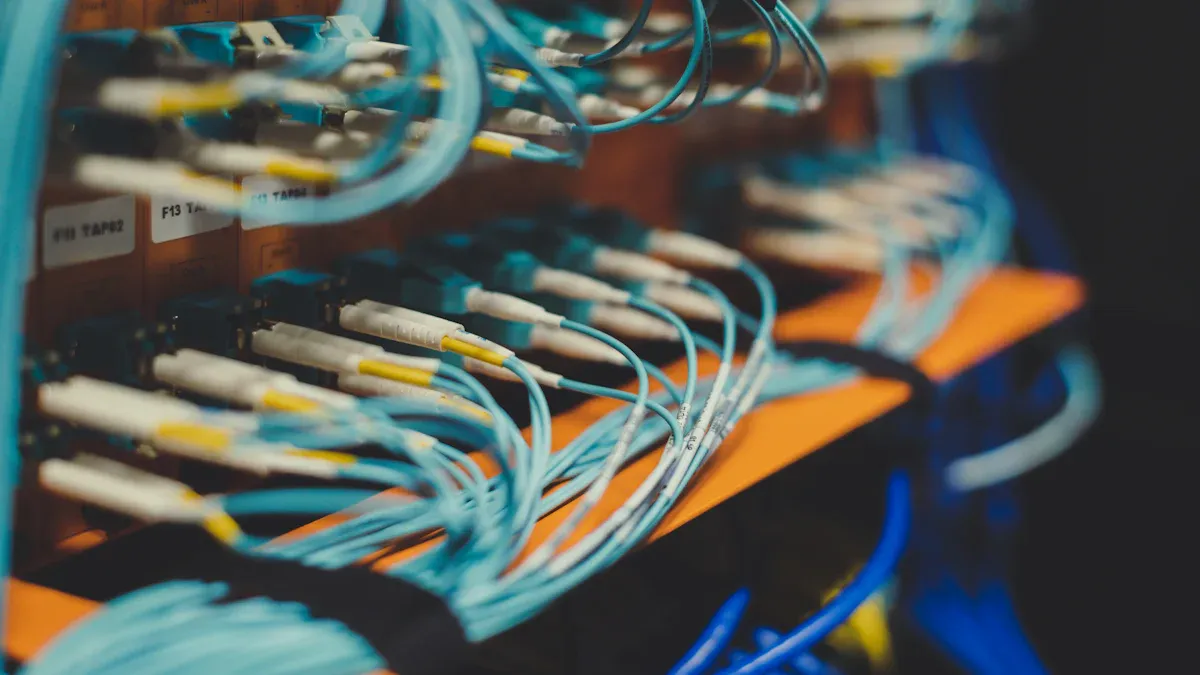
A transceiver is not a one-size-fits-all device. You will find different types of transceivers designed for specific jobs, from sending signals through the air to flashing them down glass tubes. Each type is a master of its domain, enabling the technology you rely on every day. Understanding these different types of transceivers helps you see how our digital world is connected.
RF (Radio Frequency) Transceivers
An RF transceiver is the engine behind wireless communication. It sends and receives information using radio waves. You use these constantly without even thinking about it. This technology is essential for radio communication and many applications of transceivers.
Everyday RF Devices 📶 Your Wi-Fi router, Bluetooth headphones, and car key fob all contain an RF transceiver. Each one uses a specific frequency for wireless communication. For example, Bluetooth operates in the 2.4 GHz band to connect your devices. Your car key uses a secure form of wireless transmission with rolling codes to prevent theft.
Fiber Optic Transceivers
Fiber-optic transceivers are the superstars of high-speed data. They perform an amazing task: converting digital electrical signals into pulses of light. A laser diode inside the transceiver generates these light pulses. The light then travels through a thin core of ultra-pure glass or plastic. These fibre-optic transceivers form the backbone of the global internet and massive data centers. They can transmit digital data at incredible speeds, with some reaching 400 Gbps and beyond. This makes fiber-optic transceivers perfect for moving huge amounts of information quickly and reliably.
Ethernet Transceivers
An Ethernet transceiver connects your devices to a wired network. You can find this transceiver inside the network card of your desktop PC or in the ports of an office network switch. It handles the sending and receiving of digital data over copper Ethernet cables. This is one of the most common applications of transceivers in homes and offices.
A key feature supported by many Ethernet transceivers is Power over Ethernet (PoE). This technology allows a single Ethernet cable to provide both a data connection and electrical power. It simplifies the installation of devices like:
Security cameras
IP phones
Wireless access points
PoE removes the need for a separate power outlet, giving you more flexibility in where you place your equipment.
You now see a transceiver is a fundamental component enabling two-way communication. It combines a transmitter and a receiver into a single, efficient package. The importance of transceivers is clear, as this solution powers the technology you use daily and drives future innovations like 6G and the Internet of Things.
Understanding this core concept helps you demystify the connected world all around you. 🌍
FAQ
What is the difference between a transceiver and a modem?
A modem translates data for a specific medium, like a phone line. A transceiver sends and receives the final signal through the air or a cable. Your home router uses both. The modem talks to your internet provider, and the transceiver creates your Wi-Fi network.
Can a wireless transceiver work without an antenna?
No, an RF transceiver cannot work without an antenna. The antenna acts as its mouth and ears 🗣️👂. It converts electrical energy into radio waves to send signals. It also captures incoming radio waves to receive signals. The antenna is essential for wireless communication.
Why are there different types of transceivers?
You use different transceivers for different jobs. Each type is specialized for the signal it handles.
Transceiver Type | Signal Used | Common Example |
|---|---|---|
RF | Radio Waves | Bluetooth Headphones |
Fiber Optic | Light Pulses | Internet Backbone |
Ethernet | Electrical | Office Network Switch |
What does "duplex" mean for a transceiver?
Duplex describes the direction of communication. It tells you if a device can send and receive information at the same time.
Half-duplex is one-way at a time, like a walkie-talkie. Full-duplex is two-way simultaneously, like a phone call.