A Complete Introduction to PLCs in 2025
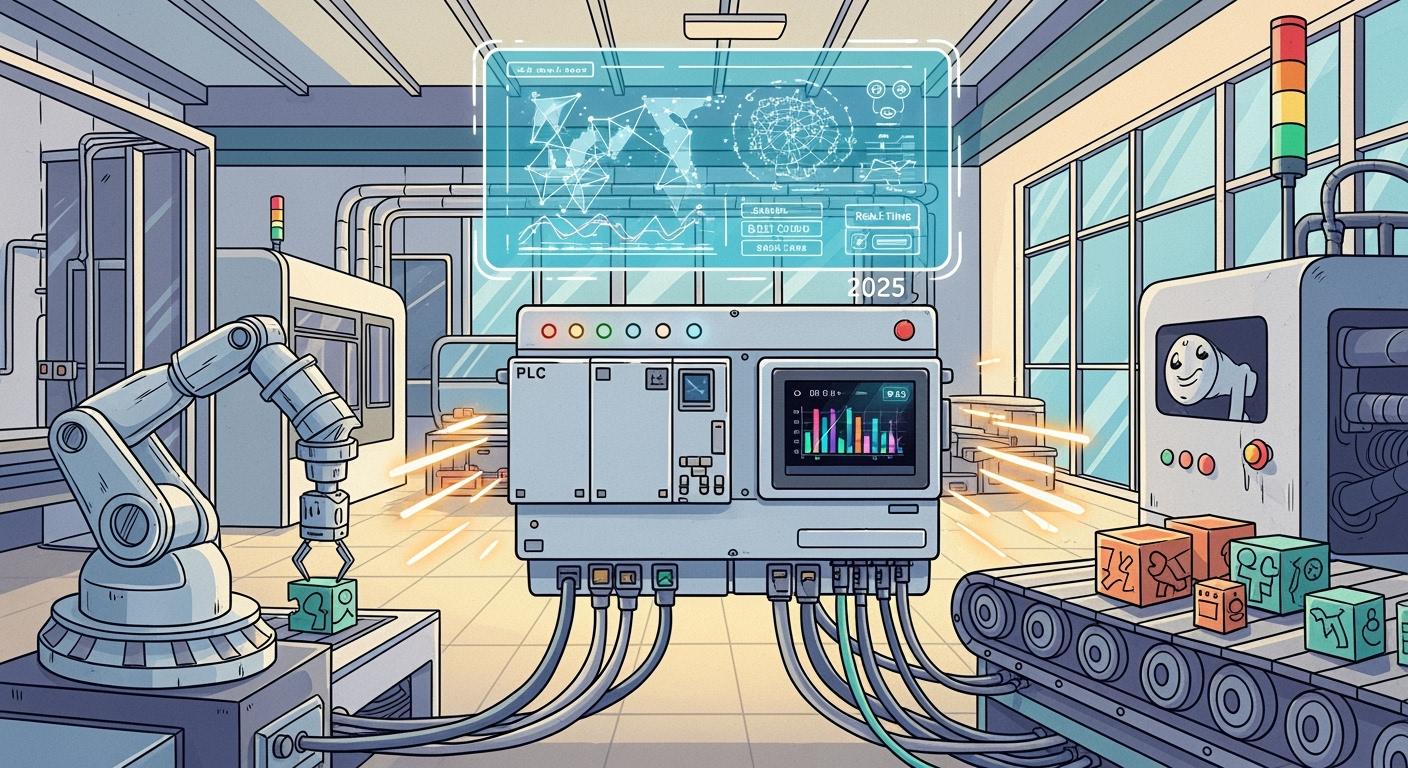
A programmable logic controller is a rugged industrial computer. It drives automation in manufacturing. A PLC reads information from input devices like sensors. The PLC then uses its program to make decisions. It can control various processes by sending commands to outputs like motors and lights.
Think of a PLC as the solid-state brain of an industrial system. It provides reliable control, making it a cornerstone of modern industrial automation.
Key Takeaways
A PLC is a strong industrial computer. It controls machines in factories. It reads information from sensors and makes decisions.
PLCs work in a fast cycle. They check inputs, run a program, and control outputs. This makes machines work correctly and quickly.
PLCs are used in many places. They help make cars, process food, and manage water systems. They make these tasks precise and reliable.
Learning PLC programming is possible. Ladder Logic is a common language. It uses pictures that look like electrical diagrams.
PLCs are changing for the future. They connect with other systems like SCADA. This helps create smarter factories.
How a Programmable Logic Controller Works
A programmable logic controller operates through a continuous, repetitive process. This process allows it to manage industrial equipment with precision and reliability. The PLC reads data, executes a program, and controls outputs in a high-speed loop. This fundamental cycle is the key to its role in automation.
The Core Operational Cycle
The core of a PLC's operation is the scan cycle. This is the process where the PLC completes one full loop of its functions. The total time for one cycle is the scan time. Scan time is measured in milliseconds (ms). Modern PLCs have very fast scan times, often between 1 ms and 20 ms. This rapid cycle ensures the PLC can react quickly to changes in the industrial environment, enabling real-time control.
The scan cycle consists of four main stages:
Input Scan: The PLC begins by checking the status of all connected input devices. It reads signals from sensors, buttons, and switches. It stores this information in its memory, creating a snapshot of the machine's current state for monitoring.
Program Execution: Next, the CPU executes the user-created program one instruction at a time. It uses the input data it just collected to make decisions based on the program logic. The results determine which outputs need to be activated or deactivated.
Output Scan: Based on the program's decisions, the PLC updates the status of all connected output devices. It sends signals to control motors, open valves, or turn on lights. This action brings the logical decisions into the physical world.
Housekeeping: Finally, the PLC performs internal diagnostics and communication tasks. It checks its own operational health and communicates with other devices or networks. This ensures system stability before the entire cycle repeats. This constant monitoring makes the plc a reliable tool.
Note: A shorter scan time is critical for high-speed automation. Applications like robotic motion or safety systems depend on the PLC's ability to respond almost instantly to ensure precision and prevent accidents.
Key Hardware Components
A PLC is not a single item but a system of powerful components designed to withstand harsh industrial settings. Each part has a specific job. Together, they create a robust control system. A typical plc controlled system relies on these core parts for its operation.
Component | Function |
|---|---|
CPU (Central Processing Unit) | The brain of the PLC. It executes the program, performs calculations, and manages all other components. |
Memory (RAM/ROM/EEPROM) | Stores the operating system, the user program, and I/O data. Memory capacity varies; a micro PLC might have less than 16 KB, while powerful models can have gigabytes. |
Input/Output (I/O) Modules | These modules are the connection points to the outside world. Input modules receive signals from sensors, and output modules send signals to control devices. |
Power Supply | Converts incoming AC power to the DC voltage required by the PLC's internal components, ensuring a stable power source. |
Communication Interface | Allows the PLC to communicate with other devices, such as computers for programming, other PLCs, or HMI panels for monitoring. Common protocols include EtherNet/IP, Profinet, and Modbus. |
These components are built for durability. Standard industrial PLCs typically operate in temperatures from 0°C to 55°C (32°F to 131°F). More rugged models can even function in extreme conditions, with some components rated for temperatures from -40°C to 85°C. This resilience makes the PLC the perfect choice for factory floors and other demanding environments.
Real-World PLC Applications
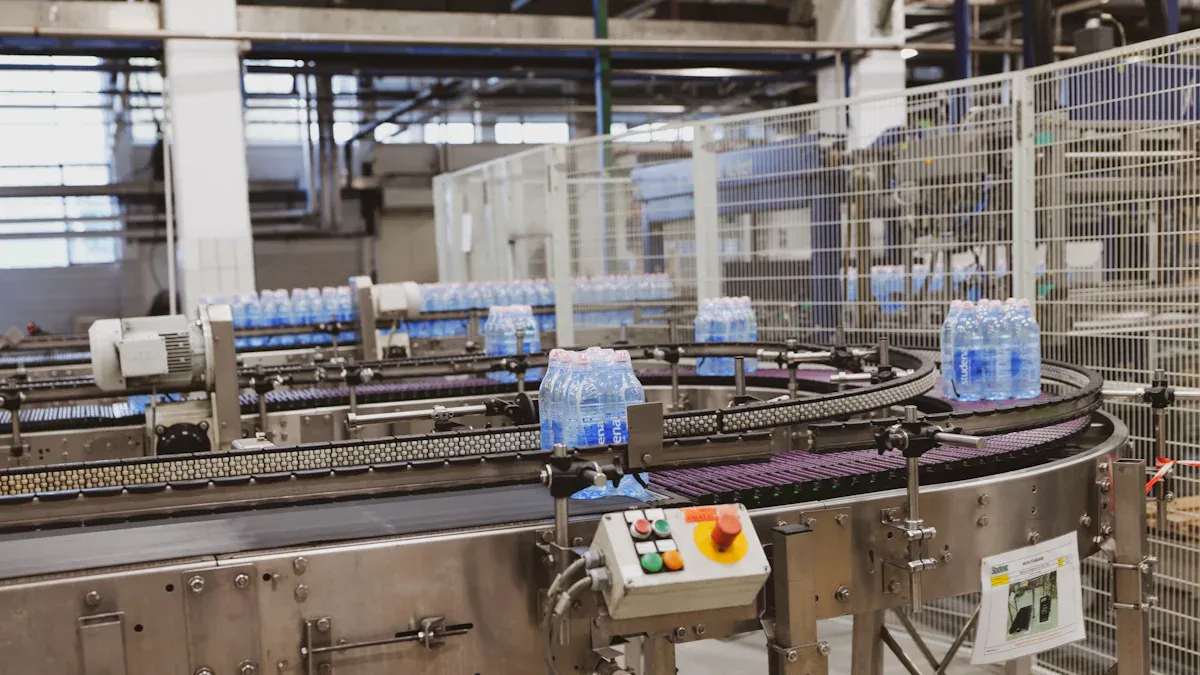
The reliability and flexibility of the PLC make it essential across numerous industrial sectors. From producing cars to ensuring clean drinking water, these controllers are the unseen engines of modern production and infrastructure. Their applications are diverse, yet they all share a common goal: precise and dependable automation.
Manufacturing and Assembly
PLCs are central to modern manufacturing. They are the brain behind industrial robotics. The field of robotics depends on the plc for precise movements. These robotics systems perform repetitive tasks with high accuracy. A plc directs robotic arms on assembly lines, a key part of automotive manufacturing. This use of robotics improves both speed and quality. A plc also manages complex conveyor systems. It controls motor speed, product sorting, and synchronization across the network. This automation increases throughput and reduces errors. The integration of robotics and PLCs in manufacturing is essential for efficiency. The field of robotics continues to grow with PLC technology, making industrial processes smarter.
Food and Beverage
The food and beverage industry has many plc applications. A plc controlled system ensures product consistency and safety. For example, PLCs manage ingredient mixing with exact timing and temperature control. In bottling plants, they oversee filling, capping, and packaging.
One liquid packaging facility increased its productivity by 10% after implementing a PLC-based system. The system helped identify equipment failures quickly, saving over $100,000 in less than a year.
PLCs also automate Clean-in-Place (CIP) systems. They control the entire cleaning sequence of valves and pumps. This automation guarantees that industrial equipment is sanitary, meeting strict health standards.
Energy and Utilities
PLCs are vital for managing public utilities. These industrial applications require extreme reliability. In water treatment plants, a plc automates chemical dosing and filtration processes. It adjusts chemical levels based on real-time water quality data to ensure safety. In the energy sector, PLCs monitor and control electrical grid substations. They track equipment parameters and issue alarms during faults. This function helps maintain a stable and safe power supply for entire communities. The precise control provided by a plc is critical for these essential services.
Essential PLC Programming Skills
Mastering a programmable logic controller requires a blend of specific programming knowledge and practical technical skills. A programmer must understand how to write a clear program. They also need the ability to diagnose issues in a live industrial environment. Developing these skills is key to a successful career in automation.
Common Programming Languages
Programmers use several standard languages to create a plc program. Each language offers a different way to build the control logic. The choice often depends on the task's complexity and the programmer's preference. A good plc professional should be familiar with the main types.
Ladder Logic (LD): This is the most common language. It looks like the electrical relay wiring diagrams it replaced. Its visual nature makes the program easy to read for technicians.
Function Block Diagram (FBD): This language uses graphical blocks connected by lines. Each block performs a specific function. It helps visualize the flow of data and control signals in the program.
Structured Text (ST): This is a high-level, text-based language similar to Pascal or C. It is excellent for complex math, loops, and managing large amounts of data in a program.
Foundational Technical Abilities
Beyond writing a program, a plc expert needs strong foundational abilities. These skills help them solve real-world problems on the factory floor. Analytical thinking is crucial for diagnosing and resolving issues within a program.
Troubleshooting Tip: When a system fails, a good technician first gathers information from operators. They then check physical components like wiring and I/O modules before examining the program logic for errors.
Effective plc professionals possess several core traits. They have a solid grasp of electrical principles and industrial communication protocols. They also show great attention to detail and enjoy problem-solving. A strong ability to troubleshoot is essential. This involves using software tools to monitor the program, checking connections, and reviewing the program to find the source of an error. This complete skill set allows them to manage and control automated systems effectively.
The Future of PLCs and Automation
The world of industrial automation is changing quickly. The traditional plc is evolving to meet new demands. This evolution connects factory floors to cloud systems, making manufacturing smarter and more efficient. The future of automation depends on this powerful technology.
Integration with Industry 4.0
Industry 4.0 is the new standard for manufacturing. It connects machines, data, and people. The plc plays a key role in this connected environment. Modern automation systems use a plc to gather data from sensors. This data then flows to other platforms for analysis. The plc executes its control program while sending information to SCADA systems. A SCADA system centralizes data for monitoring. This partnership between a plc and SCADA is fundamental.
The synergy of a plc, SCADA, and HMI creates a powerful trio.
A plc runs the machine-level program and sends data to the SCADA system.
The SCADA system gathers information for large-scale monitoring and remote control.
An HMI gives operators a screen to interact with the SCADA system.
This integration with SCADA enables real-time monitoring and data analytics. For example, a Siemens S7-1500 plc has built-in OPC UA support. This feature allows secure data exchange between the plc and a SCADA network. This connection is vital for building smart factories. The SCADA platform helps manage the entire industrial process. The SCADA program uses data from the plc to optimize operations.
The Rise of PACs
A Programmable Automation Controller (PAC) is an evolution of the plc. A PAC combines the reliability of a plc with the processing power of a PC. It uses a flexible program and open architecture. This design makes it ideal for complex automation tasks.
Engineers choose PACs for applications that need advanced control and large data handling. A PAC excels in systems with high-speed motion control or extensive communication needs. Its open architecture also makes it easier to upgrade hardware and software over time. The market for this technology is growing rapidly.
Market Segment | 2024 Market Size (USD) | 2032 Projected Market Size (USD) |
|---|---|---|
PLC | $18.3 billion | |
PAC | $3.5 billion | $6.4 billion |
The faster growth of PACs shows a trend toward more data-intensive industrial automation. While the plc remains a workhorse, the PAC offers a solution for the most demanding challenges.
The programmable logic controller is the foundational workhorse of industrial automation. Its unmatched reliability makes it essential for harsh industrial environments. A PLC makes modern manufacturing and infrastructure efficient, safe, and productive. The growing market for this technology confirms its central role. Understanding the PLC is key to understanding the core of modern industrial automation and manufacturing.
Key Takeaway: The PLC remains the backbone of industrial control. Its evolution ensures it will continue to drive smart automation for years to come. ⚙️
FAQ
What is the main difference between a PLC and a regular computer?
A PLC is a tough computer built for factories. It controls machines in real time. A regular computer works in an office. It cannot handle factory conditions or control equipment with the same reliability. The PLC's design ensures dependable operation in harsh settings.
Is it hard to learn PLC programming?
Learning PLC programming is achievable for many people. The most common language, Ladder Logic, uses simple visual symbols. These symbols look like electrical drawings. This visual style makes the program logic easy for technicians to follow and troubleshoot.
Can a PLC work without an HMI?
Yes, a PLC operates on its own. It executes its stored program to control machinery automatically. An HMI (Human-Machine Interface) is a separate screen. It gives operators a way to view the process or give commands. The PLC does not need it to function.
Note: While a PLC can run alone, an HMI makes the system much easier for people to manage and monitor. 🧑🔧
Why are PLCs still used instead of newer technologies?
Industries trust PLCs for their extreme reliability. They are built to survive tough factory conditions for many years. For most control tasks, they offer a proven, safe, and cost-effective solution. Their long history of performance makes them a top choice for automation.