The Role of Knock Sensors in Modern Engine Performance
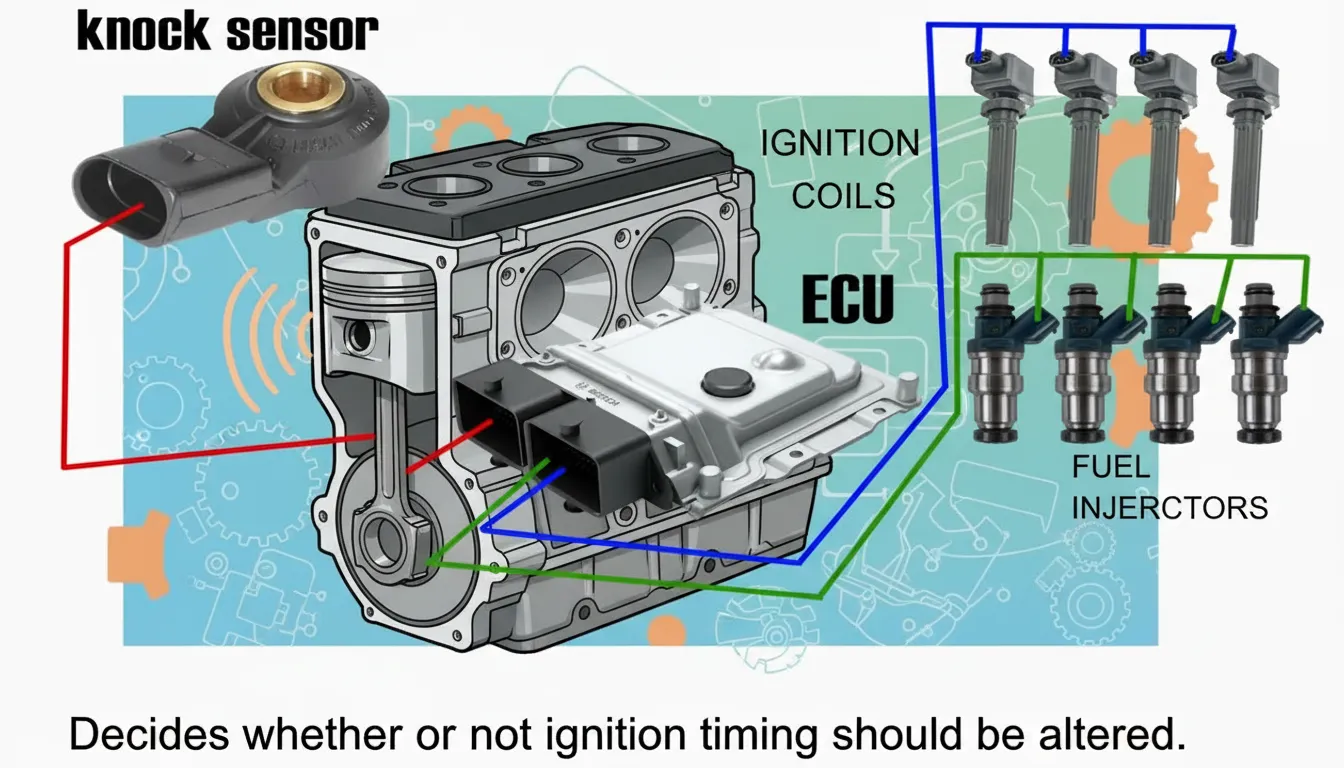
You might wonder, what is a knock sensor? This device acts like your engine’s early warning system. When you ask, what is a knock sensor, you learn it detects abnormal vibrations before they cause damage. Modern knock sensor technology uses sensitive materials to spot even subtle signs of engine knock, which lets your vehicle adjust ignition timing for better performance and longer engine life. Because of these advances, engines now run more efficiently and reliably. Knowing what is a knock sensor helps you protect your engine and keep it running at its best.
Key Takeaways
A knock sensor detects harmful engine vibrations early to protect your engine from damage.
The sensor helps the engine control unit adjust ignition timing for better power and fuel efficiency.
Ignoring a faulty knock sensor can cause engine damage, poor performance, and higher repair costs.
Watch for warning signs like engine knocking sounds, warning lights, and loss of power to spot sensor issues.
Regular maintenance and timely sensor checks keep your engine running smoothly and save money long-term.
What Is a Knock Sensor
Engine Knock Explained
You may have heard an engine knock sound before. This noise happens when the fuel-air mixture in your engine ignites too early or unevenly. When this occurs, you get a sharp, metallic pinging or knocking noise. This is called engine knock or sometimes detonating knock. It can damage your engine if you ignore it.
Several things can cause engine knock. Here are some common reasons:
Using low-octane fuel can lead to detonating knock because the fuel ignites before it should.
Bad ignition timing makes the engine fire at the wrong moment, causing knock.
A lean air/fuel mixture, often from sensor or fuel delivery problems, can result in engine knock.
Worn engine bearings or old spark plugs can also create knocking noises.
Excessive carbon deposits inside the engine can make hot spots that ignite the mixture too soon.
Tip: Regular maintenance, like changing spark plugs and using the right fuel, helps prevent engine knock.
If you let engine knock continue, you risk serious problems. Prolonged knocking can damage pistons, cylinder walls, and connecting rods. It can also wear out spark plugs and increase heat and friction inside the engine. Over time, this leads to lower power, poor fuel efficiency, and expensive repairs. In the worst cases, your engine may fail completely.
Knock Sensor Basics
Now you may wonder, what is a knock sensor? This small device acts as your engine’s electronic ear. It listens for vibrations caused by engine knock, even those too quiet for you to hear. Most modern engines use a piezoelectric knock sensor. This type uses special crystals that create a voltage when they feel vibrations from detonating knock.
Here’s how a knock sensor works in your engine:
The sensor mounts on the engine block, close to where knocking might happen.
When the engine runs, the sensor detects vibrations from engine knock.
The sensor sends an electric signal to the Engine Control Unit (ECU).
The ECU checks these signals and adjusts the ignition timing to stop the knock.
If the knock stops, the ECU slowly returns the timing to normal for best performance.
There are different types of knock sensors. The table below shows the main types and how they work:
Sensor Type | How It Works | Where Used | Sensitivity and Accuracy |
|---|---|---|---|
Piezoelectric Knock Sensor | Generates voltage from engine vibrations | Most modern engines | High sensitivity and accuracy |
Electromagnetic Knock Sensor | Detects vibration by changes in magnetic fields | Some industrial or special engines | Moderate sensitivity, less common |
Semi-Resistive Knock Sensor | Measures resistance changes due to vibrations | Special high-sensitivity needs | Very sensitive, less common in cars |
Modern knock sensors help your engine run smoothly and efficiently. They allow the ECU to keep the ignition timing as advanced as possible without causing knock. This means you get more power, better fuel economy, and lower emissions. Advances in knock sensor technology, like MEMS sensors and machine learning, make detection even more accurate. These improvements help engines meet strict emission rules and support new engine designs, including turbocharged and hybrid models.
Note: Knowing what is a knock sensor and how it works helps you understand why your car runs better and lasts longer with this technology.
Knock Sensor Function
Detecting Engine Vibrations
You might wonder how your car’s knock sensor actually works. The knock sensor function starts with a special material called a piezoelectric element. This element sits between a metal housing and a small weight inside the sensor. When your engine runs, it creates many types of vibrations. If engine knock happens, these vibrations become stronger and sharper.
The piezoelectric element feels these vibrations as pressure changes.
When the pressure changes, the element bends or deforms.
This bending creates a small electrical voltage.
The voltage matches the strength and frequency of the vibration.
Most knock sensors in modern cars use this piezoelectric effect. The sensor can pick up a wide range of vibration frequencies, usually from about 4 kHz to 16 kHz. This range covers the typical sounds made by engine knock. Some sensors focus on a narrow frequency, while others listen to a broad range. This helps the sensor tell the difference between normal engine noise and real knocking.
Tip: The knock sensor can detect knocking even before you hear it. This early warning helps protect your engine from damage.
ECU Communication
Once the knock sensor creates a voltage signal, it sends this signal straight to the ecu. The ecu acts as your engine’s brain. It constantly checks the signal from the knock sensor. If the signal shows knocking, the ecu reacts right away.
Here is how the process works:
The ecu receives the voltage signal from the knock sensor.
It filters the signal to find the exact frequency and strength of the knock.
The ecu compares this data to normal engine operation.
If it finds knocking, the ecu changes the ignition timing. It makes the spark happen later, which helps stop the knock.
The ecu keeps checking the knock sensor and adjusts timing as needed. This process happens many times each second.
This system works in both turbocharged and naturally aspirated engines. Turbocharged engines often run at higher pressures, which makes them more likely to knock. The knock sensor and ecu work together to keep these engines safe and powerful. Naturally aspirated engines also benefit because the system allows them to run with advanced timing for better efficiency.
Environmental factors can affect how the knock sensor and ecu work. For example, high air temperatures or low humidity can make knocking more likely. The ecu uses information from other sensors to adjust timing and keep your engine running smoothly. Even small changes in sensor accuracy or calibration can affect how well the ecu controls ignition timing.
Note: The knock sensor function is a key part of modern engine control. It helps your car run with more power, better fuel economy, and less risk of engine damage.
Engine Performance
Preventing Damage
You rely on your engine to deliver smooth and reliable performance every day. The knock sensor plays a vital role in protecting your engine from serious harm. When abnormal combustion, like knocking or pinging, occurs, the knock sensor detects the vibrations right away. It sends a signal to the engine control unit (ECU), which quickly adjusts the ignition timing or fuel mixture. This action lowers the pressure and heat inside the cylinders. As a result, you avoid damage to important parts such as pistons, valves, and cylinder walls.
Without a working knock sensor, your engine cannot respond to knocking in time. This can lead to catastrophic engine failure. Some vehicles even use the knock sensor to monitor for mechanical issues, like connecting rod bearing wear. Early warnings from the sensor help you prevent expensive repairs and keep your engine running longer.
If you notice increased knocking or the check engine light comes on, you might have a faulty knock sensor. This can cause reduced engine performance and put your engine at risk.
Optimizing Efficiency
The knock sensor does more than just protect your engine. It also helps you get the best possible engine performance and fuel economy. The sensor works with the engine management system (EMS) to monitor real-time data from many sensors. The ECU uses this information to adjust ignition timing and fuel injection for each driving condition.
When the knock sensor detects knocking, the ECU retards the ignition timing. This prevents engine damage and keeps combustion efficient. The EMS also considers factors like engine speed, load, and temperature. By making these adjustments, your engine delivers strong engine power, smooth acceleration, and reduced fuel efficiency.
If the knock sensor fails, you may notice symptoms such as:
Reduced engine performance
Reduced fuel efficiency
Unusual hesitation or rough idle
These issues happen because the ECU cannot optimize combustion without accurate knock sensor data. Keeping the knock sensor in good condition ensures your engine runs efficiently and avoids reduced fuel efficiency.
Knock Sensor Symptoms
Warning Signs
You can spot a faulty knock sensor by watching for several clear warning signs. Your vehicle’s computer often turns on the engine warning light when it detects a knock sensor faulty condition. This light means the system has stored a diagnostic trouble code. You might also hear a metallic pinging noise from the engine, especially when you accelerate or drive uphill. This sound happens because the knock sensor cannot detect and correct spark knock.
Other symptoms of a faulty knock sensor include poor engine performance and power loss. The engine may feel sluggish or hesitate when you press the gas pedal. Sometimes, starting your car becomes harder, but a faulty knock sensor rarely causes a complete no-start. If you notice any of these issues, you should check the knock sensor soon.
Common warning signs include:
Engine warning light appears on the dashboard
Metallic pinging or knocking noise from the engine
Poor engine performance or power loss
Harder starting, but not a complete no-start
If you ignore these symptoms of a faulty knock sensor, you risk more serious engine problems.
Risks of Failure
A faulty knock sensor puts your engine at risk. When the sensor fails, it cannot detect knocking or pinging. This leads to high pressure and heat inside the cylinders. Over time, this damages pistons, valves, and cylinder walls. The engine control unit cannot adjust ignition timing, so unburned fuel may reach the catalytic converter. This increases emissions and can clog or overheat the converter.
The table below shows how a knock sensor faulty condition affects your engine:
Effect/Sign | Cause (Faulty Knock Sensor Impact) | Consequence/Engine Damage or Performance Impact |
|---|---|---|
Engine knock or ping | Fails to detect pre-ignition or detonation | Damages pistons, cylinder heads, spark plugs; causes metallic knocking noise |
Poor fuel economy | ECU cannot adjust ignition timing properly | Wasted fuel, increased emissions, reduced engine efficiency |
Engine damage | Prolonged undetected knocking causes shock waves inside cylinders | Piston cracks, cylinder head warping, spark plug damage, catalytic converter harm |
You should also know the main causes for faulty knock sensors. Rough handling, dropping the sensor, or improper removal can damage it. The sensor’s fragile parts and its location on the engine make it easy to harm during repairs. Always handle the knock sensor with care and ask a professional for help if you suspect a problem.
Taking care of your knock sensor protects your engine and helps you avoid costly repairs.
Check the Knock Sensor
Diagnosis Steps
You can check the knock sensor using several effective methods. Start with an OBD-II scan tool. This tool reads diagnostic trouble codes from your car’s computer. If you see codes related to the knock sensor, you have a strong clue about the problem. Next, perform a visual inspection. Look for damaged wires, loose connectors, or corrosion around the sensor. Make sure the sensor’s electrical connector is clean and secure.
For a deeper diagnosis and repair, you can test the sensor’s electrical resistance. Use a multimeter set to the 200-ohm range. Measure the resistance between the sensor terminals and ground. A normal reading is about 0.1 ohms. If the reading is much higher or lower, you may have a wiring issue. For advanced testing, connect an oscilloscope to the knock sensor. Start the engine and watch for a signal waveform. No signal means the sensor may not work.
Tip: Modern diagnostic methods use advanced tools and even machine learning to analyze vibration signals. These methods help you find knock sensor faults quickly and accurately.
Repair or Replace
If you confirm a problem, you must decide whether to repair or replace the knock sensor. Many repairs require special skills and tools. You should seek professional help if you feel unsure. Professionals have access to genuine parts and know how to handle complex repairs. They also use advanced diagnostic equipment for accurate diagnosis and repair.
DIY replacement is possible if you have mechanical experience and the right tools. You need to disconnect the battery and sometimes remove parts like the intake manifold. Always follow your vehicle’s service manual. Costs for knock sensor replacement range from $180 to $400 for most cars. Labor makes up most of the cost, especially if the sensor is hard to reach. Luxury vehicles or those with V6 or V8 engines may cost more.
If you want a reliable repair, use quality parts and make sure the sensor fits your engine. A good diagnosis and repair keep your engine safe and efficient.
You depend on your knock sensor to keep your engine safe and running well. This small device monitors combustion and helps prevent damage to important engine parts. Regular engine maintenance and timely knock sensor checks protect your engine and support strong performance. Most knock sensors last between 100,000 and 150,000 miles, but staying alert to warning signs helps you avoid costly repairs.
Comprehensive monitoring and prompt repairs keep your engine healthy for years.
Remember, a working knock sensor is key to reliable engine performance and long-term savings.
FAQ
What happens if you ignore a faulty knock sensor?
You risk engine damage if you ignore a faulty knock sensor. The engine cannot adjust timing to prevent knock. This can lead to poor performance, higher emissions, and expensive repairs.
How often should you check your knock sensor?
You should check your knock sensor every 100,000 miles or if you notice warning signs. Regular checks during routine maintenance help catch problems early.
Can you drive with a bad knock sensor?
You can drive with a bad knock sensor, but it is not safe. The engine may knock, lose power, or use more fuel. You should fix the problem as soon as possible.
What causes a knock sensor to fail?
Heat from the engine
Vibration over time
Damaged wiring or connectors
Physical impact during repairs
Always handle the sensor carefully to avoid damage.