What Is a Knock Sensor and How to Spot Signs of Failure
You may wonder what is a knock sensor and why it matters for your vehicle. A knock sensor detects vibrations from the engine caused by knock, which happens when fuel burns unevenly. This small device sends signals to your car’s computer, helping it adjust settings to protect the engine. Research shows that the knock sensor plays a vital role in catching early signs of knock, which can lead to severe engine damage if ignored. By keeping your engine running smoothly, the knock sensor helps maintain strong performance and prevents costly repairs.
Key Takeaways
- A knock sensor detects harmful engine vibrations and helps protect your engine from damage.
- The sensor sends signals to the car’s computer, which adjusts ignition timing to stop engine knock.
- A working knock sensor improves fuel efficiency, reduces emissions, and keeps your engine running smoothly.
- Signs of a bad knock sensor include the check engine light, poor engine performance, increased fuel use, and unusual engine noises.
- Early diagnosis and repair of knock sensor problems save money and prevent serious engine damage.
What Is a Knock Sensor
Knock Sensor Basics
You may ask, what is a knock sensor? This device sits on your engine block or cylinder head and acts as a guardian for your engine. The knock sensor uses a piezoelectric element, which means it can turn vibrations into electrical signals. When your engine runs, it creates many vibrations. Most are normal, but some come from engine knock or detonation. Engine knock happens when the fuel and air mixture in the cylinder explodes too early or unevenly. This can cause a sharp, metallic sound called detonating knock. If left unchecked, detonation can damage pistons, valves, and other engine parts.
Here is a table that explains the technical details of what is a knock sensor:
| Aspect | Description |
|---|---|
| Sensor Type | Vibration sensor, often a piezoelectric accelerometer |
| Function | Detects engine knock by sensing vibrations from abnormal combustion |
| Application | Used in automotive engines for knock detection due to accuracy and durability |
| Comparison | More durable and cost-effective than in-cylinder pressure sensors |
| Signal Processing | Outputs vibration signals for knock event identification |
| Challenges | Sensor can be affected by engine heat or loose mounting |
The main parts of a knock sensor include:
- Piezoelectric element: Converts vibrations into electrical signals.
- Shell: Protects the sensor from heat and shock.
- Signal output: Sends the signal to the ECU.
- Mounting interface: Attaches the sensor to the engine for accurate detection.
You can find different types of knock sensors, but most modern cars use the piezoelectric type. This design offers a good balance of cost, durability, and performance.
How It Works
The working principle of knock sensors relies on the piezoelectric effect. When your engine runs, the knock sensor monitors vibrations. If detonation or engine knock occurs, the sensor picks up the unique vibration pattern. The piezoelectric element inside the sensor reacts to these vibrations by generating a small voltage. This voltage signal travels to the ECU.
The ECU acts as the brain of your car. It receives the signal from the knock sensor and checks if the vibration matches the pattern of engine knock. If it does, the ECU quickly adjusts the ignition timing. By retarding the timing, the ECU helps stop detonation and protects your engine from damage. This process happens in real time, so your engine stays safe even if conditions change.
Tip: Environmental factors like temperature and humidity can affect how often engine knock happens. High temperatures make detonation more likely, while higher humidity can reduce the risk. The knock sensor does not change its function, but it must respond to these changing conditions.
Modern knock sensors have improved a lot in the last decade. Companies now make sensors that are smaller, more sensitive, and more durable. Some new sensors use digital signal processing and even artificial intelligence to detect knock more accurately. These advancements help your ECU manage the fuel and air mixture better, which leads to fewer emissions and better fuel economy.
Knock Sensor and Engine Performance
Preventing Engine Knock
Your vehicle’s knock sensor acts as a shield against engine knock and detonation. When the air-fuel mixture in your engine ignites too early, it creates sharp vibrations known as engine knock or detonating knock. These vibrations can damage pistons, valves, and cylinder walls. The knock sensor detects these abnormal vibrations right away. It sends a signal to the engine control unit (ECU), which then adjusts the ignition timing to stop detonation before it causes harm.
Modern vehicles rely on this real-time detection to reduce the frequency and severity of engine knock. The knock sensor helps your engine run smoothly and prevents costly repairs. Without a working knock sensor, detonation can go unnoticed, leading to severe engine damage and a shorter engine lifespan. You also risk overheating and damaging the catalytic converter, which can cause even more problems.
Note: The knock sensor does not stop all detonation, especially in high-performance or turbocharged engines. However, it greatly reduces the risk and keeps your engine protected under most driving conditions.
Optimizing Ignition Timing
The knock sensor plays a key role in optimizing ignition timing for your engine. It constantly monitors for signs of detonation and sends feedback to the ECU. The ECU uses this information to adjust the timing of the spark plug firing. This process helps your engine maintain the best possible performance, even if you use different fuel qualities.
When the knock sensor detects detonation, the ECU retards the ignition timing or changes the fuel mixture. This adjustment prevents further knock and keeps your engine running efficiently. The knock sensor allows your engine to adapt to changing conditions, such as fuel quality or temperature, so you get reliable performance every time you drive.
Here is a table showing how the ECU uses knock sensor data to adjust engine parameters in real time:
| Aspect | Explanation |
|---|---|
| Knock Sensor Signal Processing | Converts raw voltage into a knock index for accurate detection. |
| Noise Baseline Calibration | Compares knock data to normal engine noise to spot real detonation. |
| Knock Detection | Identifies knock events when signals exceed the noise baseline. |
| ECU Corrective Actions | Retards ignition timing and enriches fuel mixture to stop detonation. |
| Real-Time Adjustment | Dynamically changes timing and fueling based on knock sensor feedback. |
| Safety Margin | Keeps timing below the point where detonation could cause damage. |
This real-time feedback system helps your engine avoid detonation and maintain top engine efficiency. You get smoother acceleration and better overall engine performance.
Impact on Fuel Efficiency and Emissions
A healthy knock sensor does more than protect your engine. It also helps you save fuel and reduce emissions. When the knock sensor works properly, the ECU can fine-tune the air-fuel mixture and ignition timing. This leads to more complete combustion, which means your engine uses less fuel and produces fewer pollutants.
If the knock sensor fails, the ECU may misadjust the timing. This can cause unburned fuel to enter the exhaust, which overheats and damages the catalytic converter. As a result, your vehicle releases more nitrogen oxides and hydrocarbons, leading to higher emissions and possible failure of emissions tests. You may also notice reduced fuel efficiency, which means you spend more money at the pump.
Tip: Watch for signs like reduced fuel efficiency or a check engine light. These can signal a problem with your knock sensor and affect both your wallet and the environment.
A working knock sensor ensures your engine runs cleanly and efficiently. It helps you get the most out of every gallon of fuel and keeps your emissions low.
Signs of Knock Sensor Failure
When your knock sensor starts to fail, your vehicle will show several warning signs. Recognizing these symptoms early can help you avoid serious engine damage and expensive repairs. Here are the most common symptoms of a faulty knock sensor and how they affect your car:
Check Engine Light
The check engine light is often the first sign you notice. When the knock sensor or its circuit has a problem, your car’s computer may turn on this warning light. Sometimes, you might see a trouble code like P0325. However, the check engine light does not always mean a knock sensor issue. Many engine problems can trigger this light, so you should always check for other symptoms before deciding on repairs.
Tip: If your check engine light comes on, use a code reader to check for knock sensor-related codes. This can help you pinpoint the problem faster.
Poor Engine Performance
A faulty knock sensor can cause reduced engine performance. You may feel your car losing power, especially when you try to accelerate. The engine might hesitate, feel sluggish, or even stall at idle. This happens because the computer cannot adjust the ignition timing correctly without a working knock sensor. As a result, your engine may run rough and struggle to deliver smooth power.
Increased Fuel Use
If your knock sensor fails, your car may start using more fuel than usual. The engine control unit may set the ignition timing to a safer, less efficient setting to prevent detonation. This leads to poor fuel economy and can cause your vehicle to fail emissions tests. You might notice you need to fill up your gas tank more often.
Engine Noise
Listen for unusual engine noises, such as knocking or pinging sounds. These noises often mean the knock sensor cannot detect abnormal combustion. When the sensor fails, the engine knock sound becomes more noticeable, especially during acceleration or under heavy load. Prolonged knocking can cause internal damage, so you should address these sounds right away.
Note: Symptoms of a faulty knock sensor can vary. Some vehicles may show only one sign, while others show several. Always pay attention to changes in how your engine runs.
If Knock Sensor Fails
Diagnosis Steps
If you suspect a faulty knock sensor, you should start with a careful diagnosis. Begin by checking for a check engine light. Use a diagnostic scan tool or code reader to look for trouble codes related to the knock sensor. This step helps you find out if your car’s computer has detected a problem.
Next, perform a visual inspection. Look at the knock sensor, its wiring, and connectors. Search for signs of damage, corrosion, or loose connections. Sometimes, a simple wiring issue can cause sensor failure.
You can also test the knock sensor directly. Some mechanics tap near the sensor or use special tools to see if it responds. For the most accurate results, follow your vehicle’s service manual or use trusted repair databases like Chilton or ALLDATA. Modern diagnostic tools, such as the Ancel V6 Pro scanner, help you spot unusual engine noises and sensor issues quickly.
Tip: Always check your vehicle’s specific service information. Knock sensor systems can vary between car models.
Repair Options
When diagnosis confirms a faulty knock sensor, you have several repair options. If you feel confident, you can replace the sensor yourself. Here are the basic steps:
- Disconnect the battery for safety.
- Remove any parts blocking access to the knock sensor, such as the intake manifold.
- Take out the old sensor.
- Install a new knock sensor that matches your vehicle.
- Replace damaged wiring if needed.
- Reassemble removed parts and reconnect the battery.
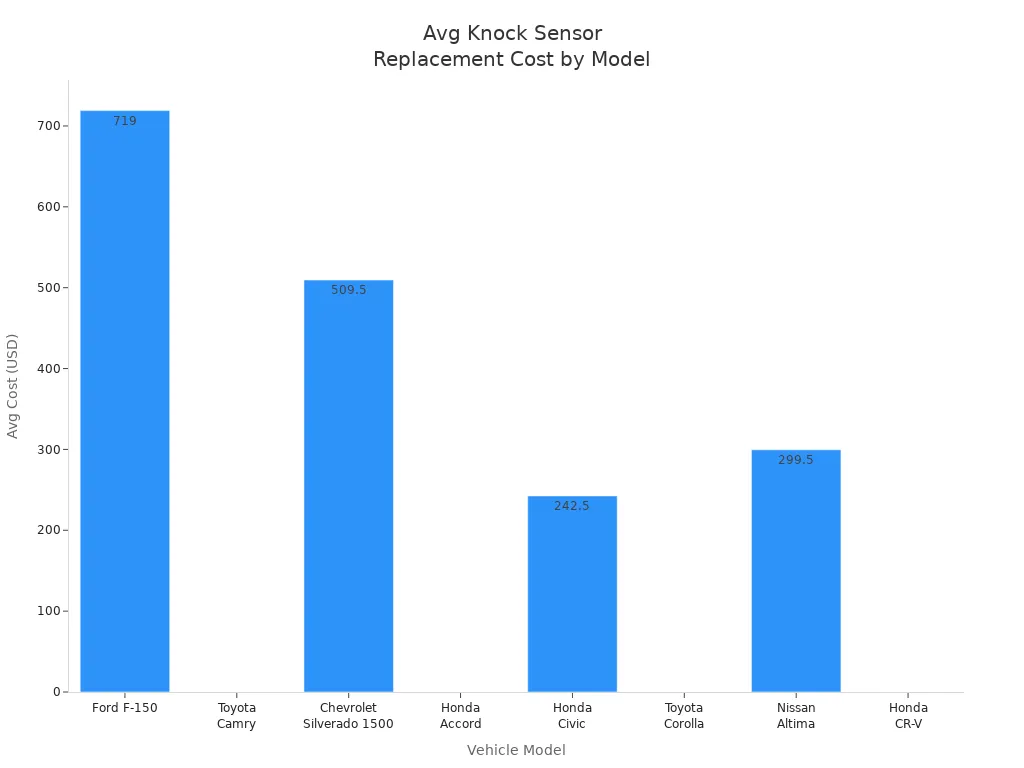
If you prefer professional help, most shops can handle diagnosis and repair. Costs depend on your vehicle. Here is a table showing average replacement costs for common models:
| Vehicle Model | Cost Range (USD) |
|---|---|
| Ford F-150 | $589 - $849 |
| Toyota Camry | $385 - $634 |
| Chevrolet Silverado 1500 | $203 - $282 |
| Honda Accord | $225 - $374 |
| Honda Civic | $281 - $415 |
| Toyota Corolla | $297 - $513 |
| Nissan Altima | $359 - $608 |
| Honda CR-V | $235 - $379 |
Regular engine maintenance, such as oil changes and keeping the engine clean, helps prevent the causes of a faulty knock sensor.
When to Get Help
You should seek professional help if the knock sensor is hard to reach or if you do not feel comfortable with diagnosis and repair. Mechanics have the right tools and experience to fix the problem safely. Delaying repair of a faulty knock sensor can lead to engine knocking, poor fuel efficiency, and serious engine damage. Early diagnosis and repair protect your engine and save you money in the long run.
Note: If you hear knocking sounds, notice a loss of power, or see the check engine light, do not wait. Prompt action prevents bigger problems.
The knock sensor protects your vehicle by catching early signs of engine knock. Timely detection and repair keep your car running smoothly and prevent costly damage. If you ignore a faulty knock sensor, you risk power loss, higher fuel use, and strange noises. To keep your vehicle in top shape, follow these tips:
- Use high-quality fuel.
- Get regular tune-ups.
- Inspect the knock sensor and wiring during routine service.
Regular care helps you enjoy better performance and a longer-lasting car.
FAQ
What happens if you ignore a bad knock sensor?
You risk engine damage if you ignore a faulty knock sensor. Your engine may knock more often. This can harm pistons and valves. You might also notice poor fuel economy and higher emissions.
Can you drive with a faulty knock sensor?
You can drive for a short time, but it is not safe. Your engine may lose power or run rough. Long-term driving with a bad sensor can cause serious engine problems.
How often should you replace a knock sensor?
Most knock sensors last over 100,000 miles. You should check your owner’s manual for your car’s schedule. Replace the sensor if you notice symptoms or get a trouble code.
Does a knock sensor affect fuel economy?
Yes, a faulty knock sensor can lower your fuel economy. Your engine may use more fuel because it cannot adjust timing correctly. You might need to fill up your tank more often.
Tip: If you see a check engine light or hear knocking, check your knock sensor soon! 🛠️