Exploring the Role of Resonators in Smoother Exhaust Notes

You might wonder, what does a resonator do for your car? A resonator changes the exhaust sound by tuning and smoothing out harsh noises. Many drivers value a smoother exhaust note because it makes every experience behind the wheel more pleasant, especially on long drives. Automotive research shows that resonators use special shapes and chambers to target unwanted frequencies, which helps quiet the exhaust and create a more refined sound.
| Study & Year | Resonator Type | Acoustic Effect | Mechanism | Key Finding |
|---|---|---|---|---|
| Yasuda et al. (2013) | Helmholtz resonator | Low-pass acoustic characteristic | Frequency-dependent impedance | Attenuates noise at specific frequencies |
| Denia et al. (2012) | Various resonators | Modified sound wave propagation | Reflection, interference | Influences transmission loss and sound waves |
| Wang et al. (2009) | Resonators with absorbent | Targeted frequency noise reduction | Reactive acoustic effects | Improves noise attenuation in specific bands |
When you choose a vehicle with a resonator, you improve your experience and enjoy a more controlled exhaust sound.
Key Takeaways
- Resonators improve your car’s exhaust sound by reducing harsh noises and smoothing the tone for a more pleasant driving experience.
- They work by canceling specific sound frequencies using chambers and tubes, which helps eliminate annoying drone and high-pitched sounds.
- Resonators are placed between the catalytic converter and muffler to target problem sounds early and work together with mufflers for balanced noise control.
- Adding or upgrading a resonator can enhance engine performance slightly and give your exhaust a deeper, refined tone without making it too loud.
- Regular maintenance and proper installation of resonators keep your exhaust system working well and help you avoid legal issues related to noise.
What Does a Resonator Do?
Resonator Function
When you look at your car’s exhaust system, you might wonder, what does a resonator do? The resonator acts as a special chamber that changes the way sound moves through the exhaust. Its main purpose is to reduce or cancel out certain unwanted sound frequencies that come from the engine and exhaust parts. You can think of the resonator as a filter for sound. It uses chambers and tubes to create sound waves that cancel out harsh noises. This process helps reduce engine noise and vibration, making your drive smoother and quieter.
The function of an exhaust resonator is different from a muffler. While a muffler lowers the overall noise level, the resonator targets specific problem sounds that the muffler cannot handle alone. The resonator works by creating a space where sound waves bounce and interact. Some frequencies get canceled out, while others pass through. This tuning effect shapes the exhaust sound, giving you a more pleasant exhaust note and helping your car meet noise rules.
Tip: If you want a smoother ride and less noise, a resonator can make a big difference in your driving experience.
Resonators come in different designs, such as straight-through, chambered, and multi-tube. Each type offers a unique way to reduce noise and vibration. For example, chambered resonators use special chambers to swirl the exhaust gases, which helps dampen sound and can even improve engine performance. Multi-tube resonators use several small pipes inside a larger case to provide even better sound control. These designs show how resonators use smart engineering to make your exhaust system work better.
Exhaust Sound Control
You might ask, what does a resonator do to control exhaust sound? The answer lies in how it targets and reduces certain sound frequencies. Exhaust resonators use a process called destructive interference. This means the resonator creates sound waves that are out of phase with unwanted noise, so they cancel each other out. The result is a smoother, more refined exhaust note.
Here’s how exhaust resonators help control sound:
- They use chambers and tubes to bounce sound waves around, which cancels out high-pitched noises and exhaust drone.
- The resonator sits between the catalytic converter and the muffler, so it can target the most annoying engine sounds before they reach your ears.
- Inside, you’ll find perforated tubes and sound-dampening materials. These parts help the resonator focus on the exact frequencies that cause harsh or unpleasant sounds.
- By removing these problem frequencies, the resonator gives you a more pleasant exhaust note and a better driving experience.
Resonators also work closely with mufflers. The resonator fine-tunes the exhaust sound by shaping which frequencies get through. The muffler then lowers the overall noise level. Together, they give you a balanced exhaust sound that is both smooth and quiet. This teamwork helps your car meet noise laws and gives you a more enjoyable ride.
Note: If you want to eliminate drone or annoying sounds in your car, adding or upgrading a resonator is one of the best ways to do it.
When you consider exhaust system modification, remember that resonators not only improve exhaust sound quality but can also help with engine performance. By smoothing the flow of exhaust gases, they can make your engine run more efficiently. Many performance vehicles use resonators to get a sporty yet refined exhaust note. If you want to upgrade your car’s sound, aftermarket resonators offer many options to match your style.
How Exhaust Resonators Work
Sound Frequency Tuning
You might wonder how exhaust resonators actually change the exhaust sound. The answer lies in the science of sound waves. When exhaust gases leave your engine, they create pressure waves that travel through the exhaust system. These waves carry both high and low frequencies. Some of these frequencies sound harsh or cause an annoying exhaust drone.
A resonator uses acoustic resonance and destructive interference to target these unwanted frequencies. Inside the resonator, chambers and tubes force sound waves to bounce and reflect. The design of these chambers is not random. Engineers use Helmholtz resonance theory to calculate the exact size and shape needed. When sound waves enter the resonator, some waves reflect back out of phase with the incoming waves. This process cancels out certain frequencies, especially those that make the exhaust sound harsh or raspy.
The function of an exhaust resonator is like tuning an instrument. You get a smoother, more pleasant exhaust note because the resonator filters out the rough edges. The result is improved exhaust sound quality and a better driving experience. Many performance vehicles use this technology to balance power and sound.
Tip: If you want to eliminate drone or reduce harsh tones, consider how the resonator tunes your exhaust system.
Placement in the Exhaust System
The placement of the resonator in the exhaust system is just as important as its design. You will usually find the resonator between the catalytic converter and the muffler. This spot allows the resonator to target and remove unwanted sounds before they reach the muffler.
By working early in the exhaust flow, the resonator smooths out the exhaust sound and helps eliminate drone. This placement also means the resonator can filter out high-pitched noises and hums, making the exhaust note more refined. The muffler then finishes the job by lowering the overall noise level.
Exhaust resonators play a key role in exhaust system modification. If you want to upgrade your exhaust sound, you should pay attention to both the type of resonator and where it sits in the system. Aftermarket resonators give you even more control over your exhaust sound and can help you achieve the perfect balance between performance and comfort.
Note: Proper placement of the resonator improves both exhaust sound quality and engine performance, making your driving experience more enjoyable.
Benefits for Exhaust Note
Smoother and Deeper Tone
When you add a resonator to your exhaust system, you notice a smoother and deeper exhaust note right away. Resonators use special chambers to shape the sound waves that move through your exhaust. These chambers help reduce high-pitched noise and smooth out raspy tones. You get a more pleasant exhaust note, especially if you drive a smaller or turbocharged engine.
- Resonated exhaust tips contain small internal chambers that reduce high-pitched noise and smooth out raspy tones.
- These tips create a slightly deeper and smoother exhaust note, especially noticeable on smaller or turbocharged engines.
- The effect is subtle but noticeable, refining tone rather than dramatically changing volume or aggressiveness.
Resonators work by enhancing lower frequencies and smoothing the sound profile. Unlike mufflers, which mainly lower the overall noise, resonators focus on shaping the exhaust sound. This selective tuning gives you a deeper and more refined exhaust note. Without a resonator, your exhaust system can sound louder and more aggressive, which may not be as enjoyable for daily driving. You improve exhaust sound quality and enjoy a more pleasant exhaust note every time you drive.
A user who installed an X-pipe on an OEM exhaust reported a measurable improvement in exhaust tone and smoothness of exhaust pulses. The user noted that the drone was eliminated, showing a clear reduction in unwanted sound irregularities.
Reducing Drone and Unwanted Noise
Resonators play a key role when you want to eliminate drone and reduce unwanted noise in your car. Exhaust drone happens when certain sound frequencies build up inside your cabin, making long drives uncomfortable. Many drivers look for ways to eliminate drone, and resonators offer one of the best solutions.
Resonators use destructive interference to cancel out these problem frequencies. Some drivers install J-pipes or branch resonators to target specific drone frequencies, such as those between 99-135 Hz. By tuning the length of these resonators, you can eliminate drone in the cabin. While some users report new noises like rasp, most agree that resonators help reduce unwanted sound.
You can compare resonators to other noise reduction methods:
| Noise Reduction Method | Mechanism | Effectiveness on Cabin Drone | Performance Impact | Cost Range (USD) | Notes |
|---|---|---|---|---|---|
| Resonators | Cancel specific frequencies via destructive interference | High (8-12 dB reduction) | Minimal | $50 - $150 | Installed mid-pipe before muffler; preserves exhaust sound quality; cost-effective |
| Chambered Mufflers | Disrupt standing waves with internal chambers | High | Slight (2-3 HP loss) | $200 - $600 | Excellent drone control; slightly more restrictive; higher cost |
| Sound Dampening Materials | Block sound transmission into cabin | Moderate (6-10 dB reduction) | None | $150 - $400 | Targets noise entering cabin, not drone source; DIY installation possible |
| Active Noise Cancellation | Electronic generation of opposing sound waves | Variable, best for consistent drone | None (electronic) | $800 - $2,000 | Advanced tech; expensive; professional install; less effective with variable drone |
| Professional Custom Tuning | Acoustic modeling and tailored exhaust design | Very High | Variable | $500 - $2,500 | Customized solutions; highest cost and complexity; best for challenging drone issues |

Resonators give you the best value for reducing exhaust drone with minimal impact on engine performance. You can combine resonators with other methods for even better results. If you want a more pleasant exhaust note and a quieter ride, resonators are a smart choice for exhaust system modification.
Resonator vs. Muffler
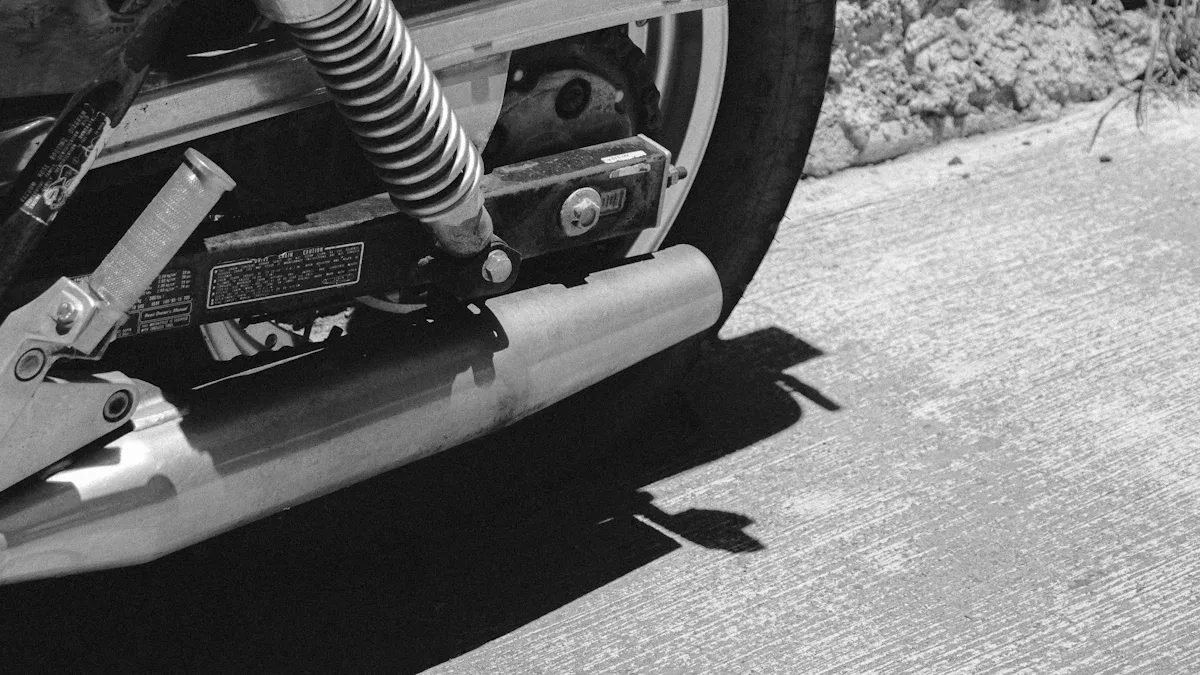
Key Differences
You might wonder how a resonator compares to a muffler in your exhaust system. Both parts help control exhaust sound, but they work in different ways. Here are the main differences:
- Mufflers reduce the overall noise from your exhaust system. They use chambers, baffles, and sound-absorbing materials to trap and deaden sound waves. This makes your car much quieter.
- Resonators do not lower the total volume much. Instead, they target specific unwanted frequencies. The resonator creates destructive interference to cancel out high-pitched or raspy noises. You get a more pleasant exhaust note without losing the character of your car’s sound.
- Mufflers can go almost anywhere in the exhaust system. Resonators need precise placement, usually between the catalytic converter and the muffler, to work best.
- Mufflers often create more backpressure because of their complex design. Resonators have a simpler structure and usually allow better exhaust flow, which can help engine performance.
- Resonators fine-tune the exhaust note, while mufflers focus on making the car quieter.
The internal structure also sets them apart. A resonator acts like a tuning chamber. It vibrates at certain frequencies to filter out unwanted sounds. Mufflers use baffles and sound-absorbing materials to reduce noise across a wide range. This difference means resonators are popular in performance vehicles where you want to shape the exhaust sound, not just make it quiet.
Tip: If you want to improve engine performance and exhaust sound quality, consider both the resonator and muffler in your exhaust system.
Working Together for Better Exhaust Sound
When you combine a resonator and a muffler in your exhaust system, you get the best of both worlds. The resonator removes harsh tones and drone by canceling out specific frequencies. The muffler then lowers the overall noise level, making your ride quieter and more comfortable.
Many drivers notice that adding a resonator before the muffler gives a lower, smoother exhaust note. For example, Jeep Wrangler owners report that this setup makes the exhaust sound more pleasant without making it too loud. Even if you already have a muffler, a resonator can still refine the tone and eliminate drone.
Here is a quick comparison:
| Component | Role in Exhaust System | Effect on Sound Quality and Noise Reduction |
|---|---|---|
| Muffler | Reduces overall noise by absorbing, reflecting, and expanding sound waves | Provides a quieter driving experience by lowering overall noise level |
| Resonator | Targets specific sound frequencies using destructive interference | Cancels high-pitched noises, drone, and hums, refining exhaust tone without greatly reducing volume |
| Combined | Muffler reduces overall noise; resonator eliminates specific frequencies mufflers can't | Results in smoother, more pleasant exhaust sound and improved noise attenuation, enhancing driving comfort |
Performance vehicles often use both parts to achieve a sporty yet refined exhaust sound. This combination helps you enjoy better engine performance and a more enjoyable driving experience. If you want to upgrade your exhaust system, using both a resonator and a muffler is one of the best ways to improve exhaust sound quality and eliminate drone.
Practical Tips for Resonators
Installation and Maintenance
When you install a resonator, you improve your exhaust system and driving experience. Start by choosing a resonator that matches your vehicle’s exhaust system. Always check the manufacturer’s guidelines to confirm compatibility. Gather all the parts you need, such as mounting brackets, gaskets, nuts, bolts, and washers.
Follow these steps for a smooth installation:
- Disconnect the exhaust pipes or hangers from the muffler and tailpipe.
- Attach the resonator between the muffler and tailpipe using the correct hardware.
- Use extra gaskets or washers to make an airtight seal.
- Reconnect any other exhaust system parts.
- Start your engine and test the resonator’s function.
After installation, regular maintenance keeps your resonator working well. Use this table to guide your routine:
| Maintenance Task | Frequency | What to Look For |
|---|---|---|
| Visual Inspection | Monthly | Rust, cracks, loose parts |
| Cleaning | Every 3 months | Dirt buildup, blockages |
| Professional Check | Annually | Full system inspection |
Check seals, hooks, and metal rings often. Listen for strange noises. Fix problems quickly to extend the life of your exhaust system. Regular care helps your resonator last longer, improves fuel efficiency, and keeps your exhaust sound quality high. You can do basic maintenance yourself, but ask a professional if you find serious issues.
Tip: Aftermarket resonators offer many choices for upgrades. Choose quality parts for better results and longer life.
Effects of Removal or Modification
If you remove or modify your resonator, you change your exhaust system in several ways. Many drivers notice a louder and deeper exhaust sound. Some say the tone becomes fuller but not too aggressive. You may also see a small boost in engine performance, especially if you use better materials like T304 stainless steel. The process is simple and affordable, often needing only basic tools.
However, removing the resonator can make your car louder, which may break local noise laws. Rules about exhaust sound differ by region. If you ignore these laws, you could get fines or other penalties. Always check local rules and talk to a professional before making changes.
Aftermarket resonators let you fine-tune your exhaust system without risking legal trouble. They help you balance sound, performance, and comfort. If you want to try exhaust system modification, aftermarket resonators are a smart choice for most drivers.
Note: Removing the resonator may not affect emissions or trigger warning lights, but it can make your car too loud for some areas. Always consider your local laws and your own comfort.
You can enhance your exhaust sound and enjoy a more pleasant exhaust note by choosing the right resonator. Resonators let you tune your exhaust system for deeper tones and help eliminate drone, making every drive more comfortable. When you compare resonators to mufflers, you find resonators offer a cost-effective way to improve exhaust sound quality and engine performance. Before any exhaust system modification, think about your sound goals, legal limits, and long-term needs.
| Aspect | Resonator | Muffler |
|---|---|---|
| Sound Tuning | Customizes tone, reduces drone | Lowers overall noise |
| Cost | More affordable | Often more expensive |
| Driving Comfort | Smoother, refined sound | Quieter, less focus on tone |
Tip: Aftermarket resonators give performance vehicles a unique sound and help you achieve your ideal exhaust note.
FAQ
What does a resonator do in your exhaust system?
You use a resonator to change the exhaust sound. The resonator targets harsh frequencies and helps you get a smoother, more pleasant exhaust note. It works with the muffler to improve exhaust sound quality and make your driving experience better.
Can a resonator help eliminate drone in my car?
Yes, exhaust resonators can eliminate drone by canceling out certain sound frequencies. You notice less cabin noise and a more comfortable ride. Many drivers use resonators as one of the best ways to eliminate drone during exhaust system modification.
Will installing a resonator affect engine performance?
A resonator usually does not hurt engine performance. In some cases, it can help exhaust gases flow better. Performance vehicles often use resonators to balance power and exhaust sound. You get a refined tone without losing performance.
What happens if I remove the resonator from my exhaust system?
If you remove the resonator, your exhaust note becomes louder and sometimes harsher. You may notice more exhaust drone. Some drivers like the sound, but others find it less pleasant. Always check local laws before making changes to your exhaust system.
Are aftermarket resonators a good choice for exhaust system modification?
Aftermarket resonators give you more control over your exhaust sound. You can tune your exhaust note and improve exhaust sound quality. Many drivers use aftermarket resonators to get a pleasant exhaust note and a better driving experience.