The Unseen Engine How Transistors Power Our Digital Lives
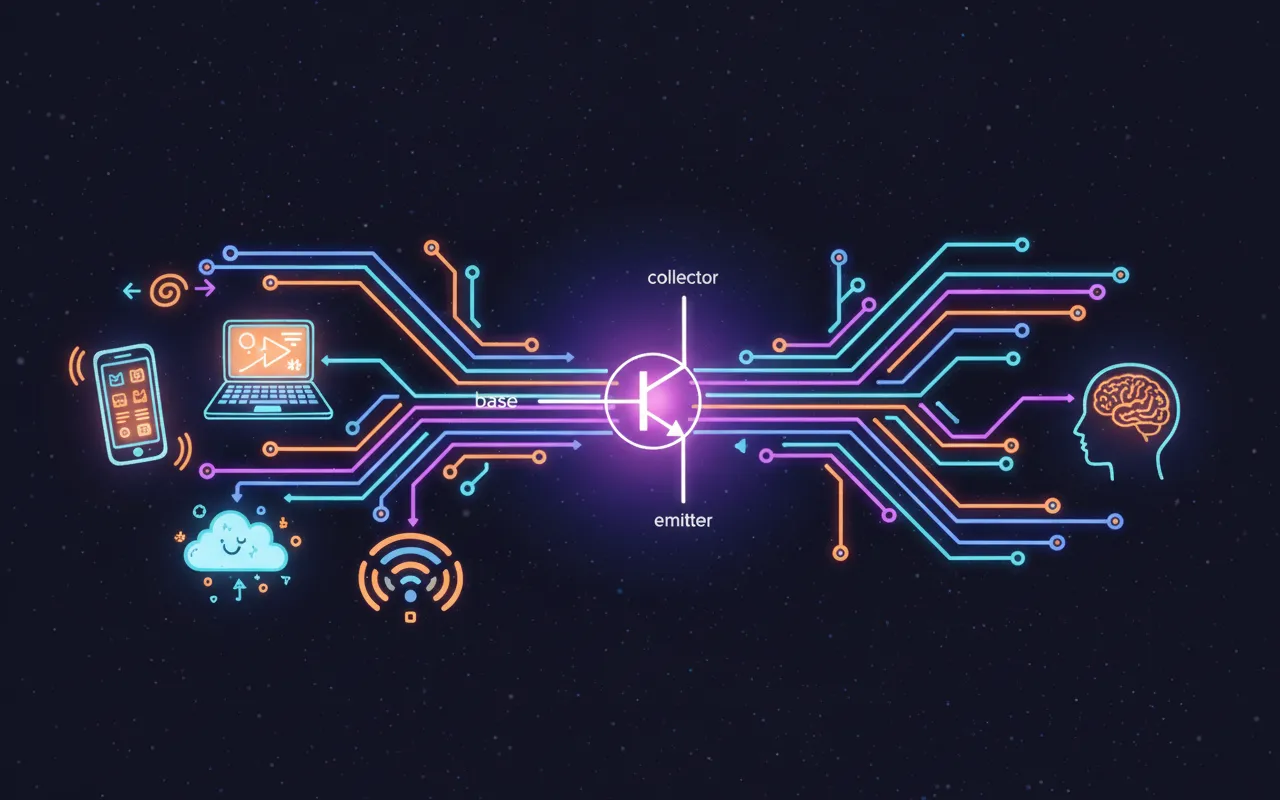
Every digital device, from smartphones to computers, runs on billions of microscopic switches. These switches are called transistors. People often wonder, what do transistors do? A transistor acts like a tiny gate, turning on and off billions of times per second to process information. The scale of production is immense; manufacturers produce hundreds of quintillions of this tiny transistor each year. This incredible number powers the modern world of computing.
Feature | Apple A17 Pro |
|---|---|
Transistor Count |
Key Takeaways
Transistors are tiny switches. They turn on and off very fast. This helps computers process information.
Transistors replaced old, big vacuum tubes. This made computers smaller and more powerful.
Moore's Law helped make transistors smaller. This put billions of transistors on one chip.
Transistors power all our digital devices. This includes smartphones, computers, and the internet.
Engineers are finding new ways to build transistors. This will make future computers even better.
What Do Transistors Do
A transistor has two primary jobs: switching and amplifying. These functions are the building blocks of all modern electronics. Understanding what do transistors do begins with seeing them as simple, controllable switches that form complex digital circuits.
The Microscopic Light Switch
At its core, a transistor acts like a tiny, fast light switch. It has two main states: on and off. A small electrical signal applied to a control terminal, called the gate, determines the state.
When a voltage is applied, the switch turns 'on', allowing a larger electric current to flow through. This 'on' state represents a binary '1'. When the voltage is removed, the switch turns 'off', blocking the current. This 'off' state represents a binary '0'.
Computers perform all their tasks by rapidly flipping billions of these transistor switches between 1s and 0s.
A Simple Faucet Analogy
Another way to understand what do transistors do is to imagine a water faucet. A transistor has three terminals that work together in electronic circuits.
Terminal | Function in a Faucet Analogy |
|---|---|
The handle you turn. A small effort controls the flow. | |
The main water pipe supplying the water. | |
Emitter | The spout where the controlled water flows out. |
A small turn of the handle (a small current to the base) can control a large gush of water (a large current from the collector to the emitter). This demonstrates how a transistor can amplify a signal. A tiny input signal controls a much larger output signal.
The Role of Silicon Semiconductors
A transistor is made from a special material called a semiconductor. Silicon is the most common semiconductor for many reasons. It is abundant, inexpensive, and very stable at high temperatures. Pure silicon does not conduct electricity well. Scientists modify it through a process called doping. Doping adds impurities to the silicon to create two types of semiconductors.
N-type: Extra electrons are added, creating negative charge carriers.
P-type: Electrons are removed, creating positive "holes."
Layering these N-type and P-type materials together creates the switching mechanism. This fundamental process is the key to modern transistor technology and enables the creation of powerful and efficient devices.
The Evolution of Transistors
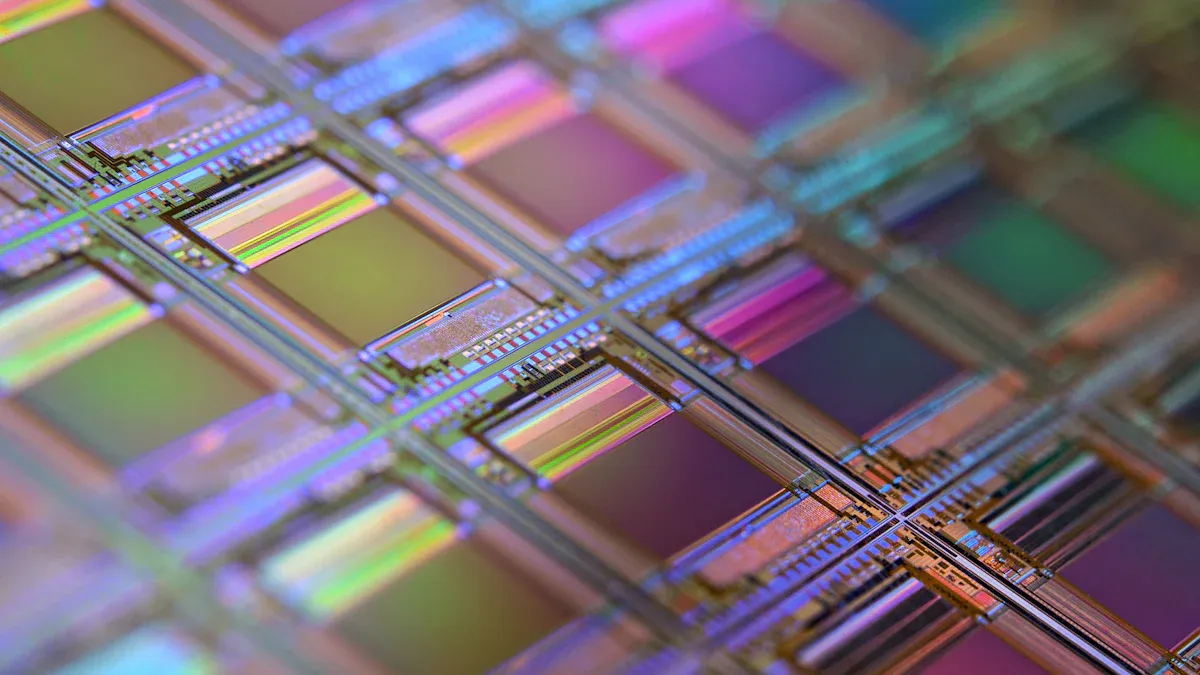
The evolution of transistors marks a pivotal moment in the history of computing. This journey from vacuum tubes to modern semiconductors transformed electronics from bulky, unreliable machines into the sleek devices we use today. The transistor revolution began by solving the critical flaws of its predecessor.
Replacing Unreliable Vacuum Tubes
Before the transistor, early computers like the ENIAC relied on vacuum tubes. These components were the foundation for the birth of electronic computing, but they had major problems. The evolution of transistors was necessary because vacuum tubes were inefficient and unreliable.
They used huge amounts of power, with the ENIAC consuming 150 kilowatts.
They produced intense heat, requiring large, noisy cooling systems.
They failed often, with a tube burning out every couple of days.
Their large size and high cost limited a computer's memory and power.
This transition from vacuum tubes to modern semiconductors was essential for progress.
The Bell Labs Breakthrough
The solution arrived in 1947. Three scientists at Bell Labs—John Bardeen, Walter Brattain, and William Shockley—created the first transistor. This tiny device changed everything. The first transistor was a solid piece of semiconductor material that could switch and amplify electronic signals. It used far less power, generated little heat, and was much smaller and more durable than a vacuum tube. The invention of the transistor quickly led to new products, including the first commercial transistor radio, the Regency TR-1, in 1954. This shift from vacuum tubes to modern semiconductors started a new era in electronics.
Moore's Law and the Integrated Circuit
The evolution of transistors accelerated with the rise of integrated circuits. In 1958, engineers Jack Kilby and Robert Noyce independently developed the integrated circuit. This breakthrough placed multiple transistors and other components onto a single chip. These new integrated circuits made electronics even smaller and more powerful.
In 1965, Gordon Moore observed this rapid progress. He predicted that the number of components on an integrated circuit would double approximately every year. This observation became known as Moore's Law.
This principle guided the entire semiconductor industry. It pushed transistor technology forward, leading to the powerful and complex computing devices we have today. The journey from vacuum tubes to modern semiconductors was complete, paving the way for the digital age.
The Invention of the Transistor and Its Impact on Computing

The invention of the transistor started a revolution in modern electronics. This tiny component's ability to shrink in size while growing in power created the era of modern computing. The impact of the transistor is visible in every digital device we use. Its journey from a lab curiosity to the engine of our digital world shows an incredible story of innovation. The impact of transistors on society has been profound, reshaping industries and daily life.
Powering Your Smartphone and PC
The invention of the transistor directly powers your personal devices. Early computers were massive. Modern computers are small and powerful. This change happened because engineers could fit more transistors onto a single chip. The first microprocessor, the Intel 4004, contained thousands of transistors. A modern computer chip contains billions.
Processor | Transistor Count |
|---|---|
Intel 4004 (1971) | 2,300 |
Intel Core i9 (Modern) |
This massive increase in transistor density has a huge impact.
More transistors allow for more processing cores.
More cores mean computers can perform more tasks at once.
Smaller distances between transistors reduce heat and power use.
This efficiency is why your smartphone has a long battery life and your computer can run complex software. Even data storage relies on this progress. Solid-state drives (SSDs) use a special type of transistor to store your files, offering faster access than old hard drives. This progress in transistor technology makes modern computing possible.
Driving the Internet and Cloud Data Centers
The internet and cloud services depend on massive data centers. These data centers are filled with powerful computers that run 24/7. The transistor is the heart of these systems. Server processors use advanced transistor designs to handle huge amounts of work efficiently. This transistor technology helps data centers manage more computing tasks without using much more power.
These specialized transistors generate less heat. Lower heat reduces the need for expensive cooling systems. This makes data centers more reliable and lowers their environmental footprint.
Graphics Processing Units (GPUs) in these centers also show this trend. A single GPU used for artificial intelligence can contain over 100 billion transistors. This immense computing power enables everything from streaming movies to training complex AI models. The microprocessor revolution that started with a single computer now powers a global network.
Enabling Modern Digital Features
The power of billions of transistors enables features that feel like magic. Your phone's camera is a great example. It uses advanced sensors and processors to create stunning images. These components are part of the world of modern electronics.
Computational Photography: A modern chip uses its integrated circuits to analyze a scene in real time. It adjusts lighting, focus, and color instantly.
Facial Recognition: Your phone projects an invisible grid of dots onto your face. A sensor captures the reflection. The phone's microprocessor analyzes this pattern to unlock your device securely.
Apple's 16-core Neural Engine is a specialized processor that performs trillions of operations per second. This integrated power allows for features like real-time video editing and augmented reality. These capabilities are a direct result of packing more and more transistors into a small space, turning our devices into intelligent assistants.
The Future of Computing and the Transistor
The future of computing depends on the evolution of the transistor. For decades, Moore's Law predicted rapid progress. This observation is now slowing down. Engineers face immense challenges as they push the limits of physics. The industry is now exploring new designs and materials to power the next generation of computers.
Approaching the Physical Limits of Silicon
Modern semiconductor technology is reaching a physical wall. Transistors are now only a few nanometers wide, approaching the size of atoms. This tiny scale creates major problems.
One significant issue is quantum tunneling. At this size, electrons can "leak" through the thin barriers inside a transistor. This leakage wastes power and makes the chip less reliable.
Another problem is heat. Packing more components onto a semiconductor chip generates intense heat. Managing this heat is a critical engineering challenge for modern computers. These physical limits mean the historical pace of shrinking the transistor is no longer possible.
Building Upwards with 3D Transistors
Engineers found a clever solution to the shrinking problem. They started building the transistor upwards instead of just making it smaller. This created 3D transistor technology. Early transistors were flat, or planar. Modern designs like FinFET use a three-dimensional fin. The gate wraps around three sides of this fin.
This 3D structure gives the gate better control over the flow of electricity. It reduces leakage and allows for faster switching. The next step is the Gate-All-Around (GAA) design.
This complete control further boosts performance.
It enables more powerful and efficient integrated circuits.
This vertical approach allows for more complex integrated designs without shrinking to impossible sizes.
Exploring Next-Generation Technologies
Scientists are also looking beyond silicon for the future of computing. New materials and concepts promise to redefine transistor technology. Carbon nanotube transistors are a leading candidate. They use a single carbon nanotube as the channel. This material could operate faster and use less power than silicon. Another exciting field is spintronics. Traditional electronics use an electron's charge. Spintronics uses both the charge and a quantum property called "spin." This could lead to devices that are faster and more energy-efficient than today's semiconductors. These new technologies may one day power our devices.
The transistor's journey started a technology revolution. It evolved from a simple switch into the foundation of the era of modern computing. This unseen engine shrank room-sized computers into handheld devices. The future of computing relies on the continued progress of the transistor. People who ask what do transistors do can see its impact everywhere. The next generation of computers will depend on its successor.
FAQ
What is the main job of a transistor?
A transistor has two primary jobs. It can switch an electrical signal on or off. It can also amplify a small signal into a larger one. These two functions are the foundation of all modern digital electronics.
Why do transistors use silicon?
Scientists use silicon because it is an excellent semiconductor. This means its ability to conduct electricity can be controlled. Silicon is also very common and inexpensive, making it perfect for mass production of computer chips.
What is Moore's Law?
Moore's Law was an observation made by Gordon Moore in 1965. He predicted the number of transistors on an integrated circuit would double about every two years. This prediction guided the computer industry's progress for many decades.
How many transistors are in a modern device? 📱
Modern devices contain billions of transistors. The number continues to grow with each new generation of technology.
Device Component | Approximate Transistor Count |
|---|---|
Modern CPU | 10-50 Billion |
High-End GPU | Over 100 Billion |
Smartphone Chip | 15-20 Billion |
This incredible density gives our devices their amazing speed and power.