What Are Electromagnetic Waves A Simple Guide
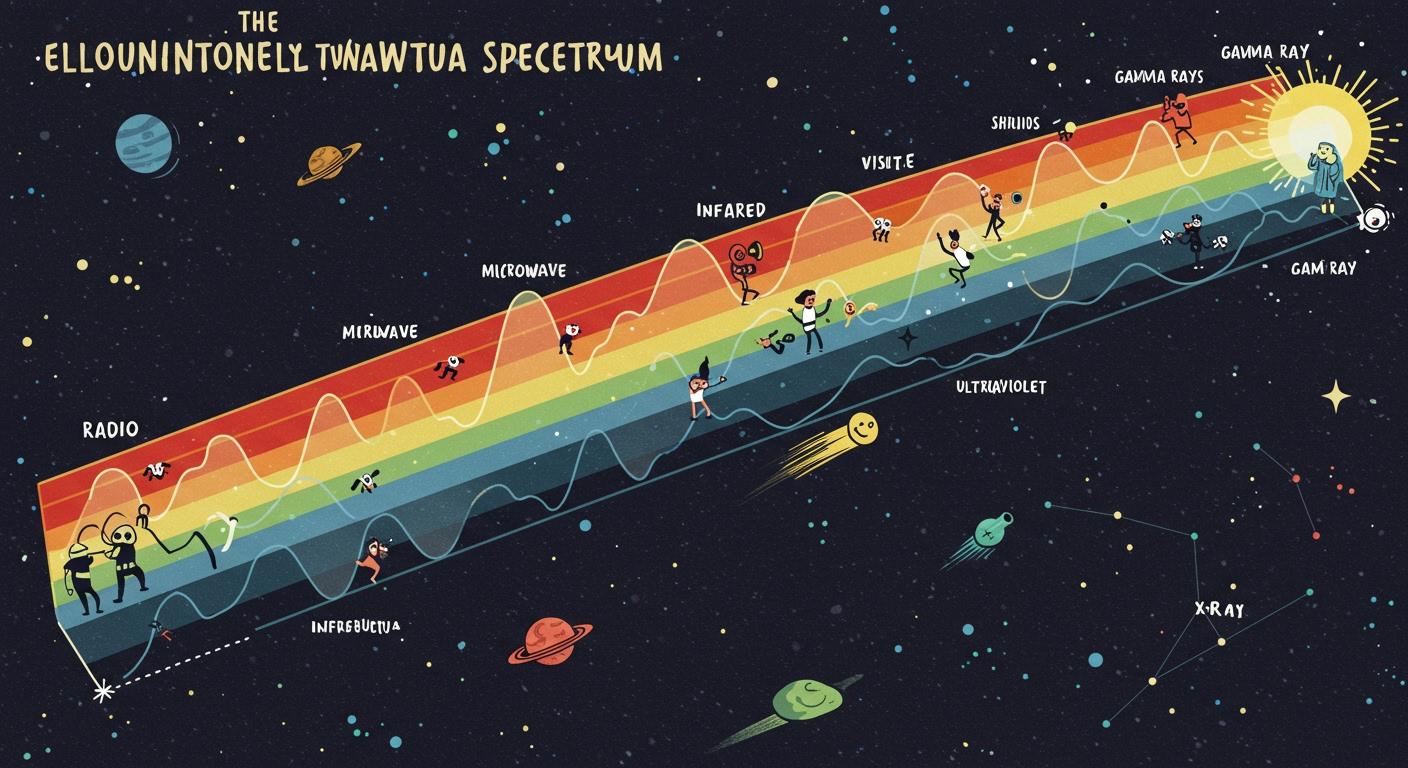
So, what are electromagnetic waves? They are self-propagating waves of energy, made of coupled electric and magnetic fields. Think of them as invisible energy ripples traveling at the speed of light. This unique form of electromagnetic radiation does not need a medium to travel. It allows electromagnetic waves to move through the vacuum of space.
The electromagnetic principle is vital. It powers a wireless market projected to hit $373 billion by 2034 and carries over 95% of global internet data through fiber optics.
Key Takeaways
- Electromagnetic waves are energy ripples. They travel at the speed of light. They do not need a medium to move.
- These waves form when charged particles move. Changing electric and magnetic fields create each other. This makes the wave move forward.
- The electromagnetic spectrum shows all types of these waves. They range from low-energy radio waves to high-energy gamma rays. Each type has different uses.
- Wavelength, frequency, and energy define each wave. High-energy waves like X-rays can pass through things. Low-energy waves like radio waves travel far.
- Most electromagnetic waves are safe. Only very high-energy waves can be dangerous. Your eyes see only a small part of this spectrum.
What Are Electromagnetic Waves and How Are They Formed?
You now know the basics of what are electromagnetic waves. Let's dive deeper into how they are born. The secret lies in a fascinating partnership between electricity and magnetism. A brilliant 19th-century physicist named James Clerk Maxwell first uncovered this connection. In 1865, he published a set of elegant equations. These equations unified electricity and magnetism, predicting the existence of the very waves we are discussing.
The Link Between Electric and Magnetic Fields
At the heart of every electromagnetic wave is a simple action: an accelerating charged particle. Think of an electron wiggling back and forth. This movement is the trigger that creates the wave. Here is how you can picture the process:
- A charged particle, like an electron, accelerates. This means it changes its speed or direction.
- This acceleration creates ripples in both the electric field around it and the magnetic field created by its motion.
- Here is the magic: the changing electric field generates a new magnetic field.
- In turn, that new changing magnetic field generates a new electric field.
This perpetual cycle of creation is what forms a self-propagating wave of electromagnetic radiation. You can imagine the electric and magnetic fields as partners in a perfectly synchronized dance. They are always perpendicular to each other and to the direction they are traveling. As one field reaches its peak strength, the other does too. They are always "in phase," moving together through space.
Maxwell's Equations: The Rules of the Dance 📜 Maxwell's work summarized the fundamental laws of the electromagnetic field. These four key principles explain exactly how this dance works:
- Gauss's Law for Electricity: Describes how electric fields start and end on electric charges.
- Gauss's Law for Magnetism: Shows that magnetic field lines are always closed loops. They have no start or end point.
- Faraday's Law of Induction: Explains how a changing magnetic field creates an electric field. This is a core part of the wave's engine.
- Ampère-Maxwell Law: Details how a magnetic field is created by either an electric current or a changing electric field.
How Electromagnetic Waves Travel
The self-renewing cycle between the electric and magnetic fields gives electromagnetic waves a unique superpower. They do not need any material to carry them along. This is the key difference that answers the question of what are electromagnetic waves and how they differ from other waves you might know.
Mechanical waves, like sound or ocean waves, need a medium. They transfer energy by causing molecules to bump into each other. Without air, you have no sound. Without water, you have no ocean waves. Electromagnetic radiation, however, builds its own path as it goes.
| Feature | Mechanical Waves (e.g., Sound) | Electromagnetic Waves (e.g., Light) |
|---|---|---|
| Medium Required | Yes, they need a medium like air or water. | No, they do not need a medium. |
| Travel in a Vacuum | Cannot travel through the vacuum of space. | Can travel perfectly through a vacuum. |
| Propagation | Energy moves by vibrating particles. | Energy moves via self-propagating fields. |
This ability to travel through a vacuum is why light from distant stars can reach us. All electromagnetic waves travel through the vacuum of space at the same incredible speed: the speed of light.
The speed of light in a vacuum is exactly 299,792,458 meters per second (about 186,282 miles per second). This value is so fundamental that we now define the meter based on it.
While Maxwell predicted all of this with math, it was a German physicist named Heinrich Hertz who proved it. Starting in 1887, Hertz conducted a series of brilliant experiments. He successfully generated and detected electromagnetic waves in his lab, confirming they traveled at the speed of light. His work proved that what are electromagnetic waves was no longer just a theory but a physical reality, paving the way for all modern wireless technology.
The Electromagnetic Spectrum Explained

You can think of all electromagnetic waves as members of one giant family: the electromagnetic spectrum. While they all travel at the speed of light and share the same fundamental nature, they have very different personalities. Their energy and wavelength determine their name and what they can do. Some are gentle and carry music, while others are powerful enough to see through solid objects.
A Rainbow of Invisible Light
The visible light you see is just a tiny sliver of the full electromagnetic spectrum. Most of it is completely invisible to our eyes. Scientists organize the different types of electromagnetic waves by their frequency and energy, from lowest to highest. This orderly arrangement gives us a clear map of all electromagnetic energy.
The seven primary regions of the electromagnetic spectrum are:
- Radio waves
- Microwaves
- Infrared radiation
- Visible light
- Ultraviolet radiation
- X-rays
- Gamma rays
The key difference between these types is their energy. Radio waves have very low energy, while gamma rays have the highest. This energy level creates an important dividing line. Higher-energy electromagnetic radiation, starting with some ultraviolet waves, becomes "ionizing." This means it has enough energy to knock electrons out of atoms.
Ionizing vs. Non-Ionizing ⚡ The boundary where radiation becomes ionizing is not perfectly sharp because different atoms require different amounts of energy. However, a common rule of thumb considers radiation with photon energies above 10 electronvolts (eV) to be ionizing. This powerful radiation includes UV, X-rays, and gamma rays.
Everyday Examples on the Spectrum
You interact with the electromagnetic spectrum every single day. Let's explore some familiar examples, traveling up the spectrum from lowest to highest energy.
1. Radio Waves: The Long-Distance Communicators These are the longest waves in the electromagnetic spectrum. They are perfect for broadcasting information over vast distances. You use them when you listen to your favorite radio station. AM and FM radio encode sound differently onto these waves.
| Feature | AM (Amplitude Modulation) | FM (Frequency Modulation) |
|---|---|---|
| Encoding Method | Varies the amplitude (strength) of the carrier wave. | Varies the frequency of the carrier wave. |
| Audio Quality | More susceptible to static and interference. | Offers superior audio quality with less noise. |
The FM radio band you tune into typically operates from 88 to 108 MHz. Because so many technologies rely on radio waves, their use is carefully managed.
Who Manages the Airwaves? 📡 The International Telecommunication Union (ITU) creates global rules called the ITU Radio Regulations. These regulations define which frequency bands can be used for different services, like mobile phones, broadcasting, and satellite communications. This prevents your phone call from interfering with a pilot's radio.
2. Microwaves: More Than Just Ovens You probably know microwaves from the appliance that heats your food. But these waves also power modern communication. Your home's Wi-Fi network and your Bluetooth headphones both use microwaves to send data wirelessly, typically in the 2.4 GHz or 5 GHz frequency bands.
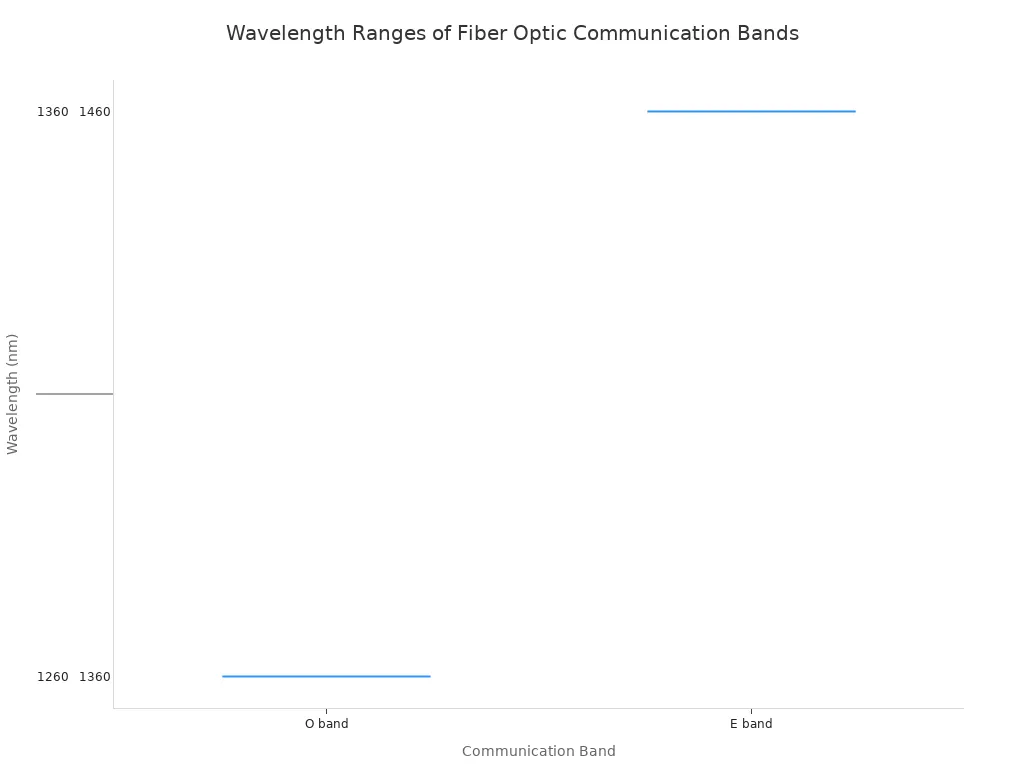
3. Infrared (IR): The Energy of Heat You feel infrared radiation as heat. Your TV remote control also uses short pulses of infrared light to send commands. A fascinating use for this electromagnetic energy is in fiber optic communications. Pulses of infrared light carry huge amounts of data through thin glass fibers. This technology is the backbone of the global internet.
4. Visible Light: The Colors We See This is the very narrow, visible part of the electromagnetic spectrum that human eyes can detect. The wavelength of visible light determines the color you perceive. The range spans from approximately 400 nanometers (violet) to 700 nanometers (red). When you see a rainbow, you are seeing visible light split into its different wavelengths.
5. Ultraviolet (UV) Light: The Sun's Powerful Rays Just beyond violet light lies ultraviolet light. It has more energy than visible light, which is why it can cause a sunburn. Scientists divide UV light into three main categories based on its wavelength.
| UV Type | Wavelength Range (nm) |
|---|---|
| UV-A | 315 to 400 |
| UV-B | 280 to 315 |
| UV-C | 100 to 280 |
6. X-rays: Seeing the Invisible With even more energy, X-rays can pass through soft tissues like skin but are stopped by denser materials like bone. This makes them invaluable in medicine. You also encounter them in airport security. Scanners use X-rays to look inside your luggage.
Here is how a modern airport scanner works:
- A stream of X-rays passes through the luggage.
- Detectors on the other side measure how much radiation gets through different objects.
- A computer analyzes the data to create a 3D image.
- The system color-codes the image, often showing organic materials (like food or explosives) in shades of orange and metals in shades of blue or green.
7. Gamma Rays: The Most Energetic Waves At the very top of the electromagnetic spectrum are gamma rays. They are generated by the most energetic events in the universe, like supernova explosions and the decay of radioactive materials. In medicine, this incredible electromagnetic power is harnessed for cancer treatment. In a procedure called Gamma Knife surgery, doctors use highly focused beams of gamma rays to destroy brain tumors with surgical precision, without ever making an incision.
Properties of Electromagnetic Radiation
All electromagnetic waves share a family name, but their individual properties make them act very differently. You can understand these differences by looking at three connected traits: wavelength, frequency, and energy. Another key property is polarization, which describes the direction the wave's electric field oscillates.
Wavelength, Frequency, and Energy
Wavelength and frequency have an inverse relationship. Think of it like a seesaw. When one goes up, the other must come down.
- Wavelength (λ) is the distance between two consecutive wave peaks.
- Frequency (f) is the number of waves that pass a point each second.
All forms of electromagnetic radiation travel at the same speed in a vacuum—the speed of light (c). The equation c = λf shows their relationship. A long wavelength means a low frequency, and a short wavelength means a high frequency.
Energy is directly tied to this relationship. The energy of electromagnetic radiation is inversely proportional to its wavelength. A shorter wavelength packs a more powerful punch. You can calculate a photon's energy with the equation E = hc/λ, where 'h' is a constant value. This means high-frequency, short-wavelength electromagnetic radiation has the highest energy.
Why X-rays and Radio Waves Behave Differently
The energy of an electromagnetic wave determines how it interacts with the world. This is why X-rays and radio waves have such different jobs.
X-rays have very short wavelengths and high energy. This high energy allows them to pass through materials that block lower-energy visible light. An X-ray photon has enough power to penetrate soft tissue, which is why doctors use this electromagnetic radiation for medical imaging.
Did You Know? 📻 Radio waves have very long wavelengths and low energy. This property allows them to travel long distances. They can bounce off a layer of our atmosphere called the ionosphere in a process known as skywave propagation. This lets radio signals travel over the curve of the Earth.
The energy difference also explains why some waves are hazardous. High-energy waves like gamma rays are a form of ionizing radiation. They have enough energy to damage cells in your body. Low-energy waves, from radio to visible light, are non-ionizing and much safer.
You now see that electromagnetic waves are coupled energy fields traveling everywhere. They all belong to the vast electromagnetic spectrum. Their unique properties come from their wavelength and energy. From radio waves bringing you music to the visible light you see, they are all the same fundamental electromagnetic phenomenon.
You now understand a core electromagnetic principle of how our universe works! 🚀
FAQ
What is the main difference between electromagnetic waves and sound waves?
Sound waves need a medium like air or water to travel. They cannot move through a vacuum. You know electromagnetic waves are different. They travel perfectly through the empty vacuum of space, which is why you can see starlight.
Are all electromagnetic waves dangerous?
No, most are perfectly safe. Your body interacts with low-energy waves like radio waves and visible light without any harm. Only very high-energy waves, such as X-rays and gamma rays, have enough power to be potentially dangerous.
Why can't we see all electromagnetic waves?
Your eyes are built to see only a tiny slice of the spectrum called visible light. You can think of it like a radio. Your eyes are tuned to one "station" (visible light) and cannot detect the others, like radio waves or infrared.
Do electromagnetic waves ever stop?
An electromagnetic wave travels forever through empty space. It only stops when it interacts with an object. The object can absorb the wave's energy, which is how sunlight warms your skin. The wave's journey ends when its energy is transferred.