Enhancing Industrial Equipment Reliability with Vibration Sensors
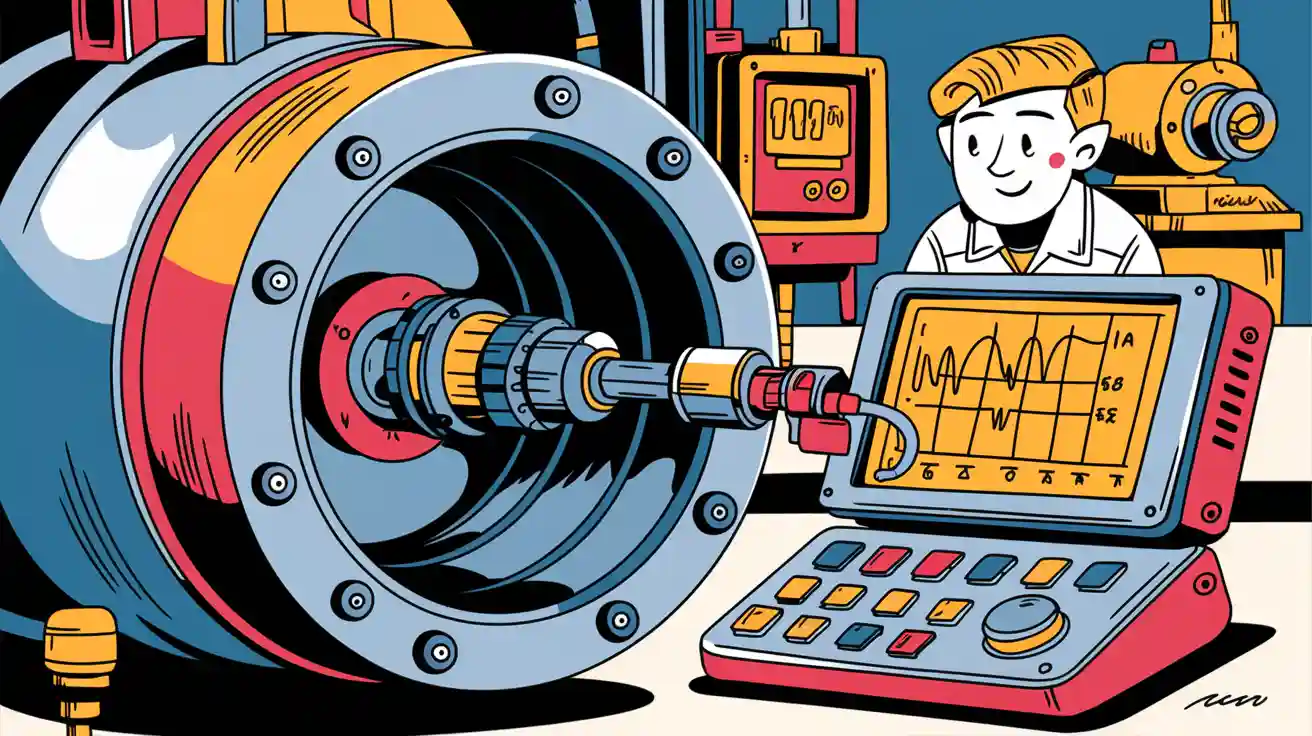
A single unexpected equipment failure can halt production for hours, causing major losses. Companies use vibration sensor technology for early detection of hidden issues. This approach shifts maintenance from fixing breakdowns to preventing them. Vibration sensors help identify problems before they grow. The benefits are clear:
| Metric | Improvement Range | Description |
|---|---|---|
| Bearing service life | 200-300% increase | Proactive vibration management extends bearing durability. |
| Unplanned failure reduction | 70% decrease | Vibration monitoring prevents unexpected breakdowns. |
| Uptime increase | 70-75% increase | Equipment availability greatly improves. |
Key Takeaways
- Vibration sensors detect early signs of machine problems, helping prevent costly breakdowns and extend equipment life.
- Using real-time vibration data allows maintenance teams to plan repairs proactively, reducing downtime and improving safety.
- Wireless vibration sensors simplify installation and enable continuous monitoring, even for older machines.
- Integrating vibration sensors with AI and maintenance software boosts fault detection accuracy and speeds up response times.
- Companies using vibration sensor technology see significant cost savings, higher productivity, and longer-lasting equipment.
Vibration Sensors in Predictive Maintenance
Early Fault Detection
Vibration sensors play a key role in predictive maintenance by identifying problems in machines before they become serious. These sensors track vibration patterns in real-time, allowing maintenance teams to spot changes that signal trouble. Machines often show early signs of failure through abnormal vibrations. Vibration monitoring helps detect these signs quickly.
Common faults detected early by vibration sensors include:
- Bearing faults, such as lubrication issues, design defects, and mounting problems
- Lubrication problems, including overgreasing, under-lubrication, and contamination
- Gear mesh defects, like misalignment affecting gear contact
- Unbalance in rotating parts
- Misalignment of machine components
- Looseness in mounts or parts
- Wear in bearings, gears, and belts
These issues cause unique vibration patterns. Vibration sensors pick up these patterns, making it possible to act before a breakdown happens. Real-time monitoring gives constant updates on machine health. Wireless MEMS vibration sensors make installation easier and provide regular health checks without the need for complex wiring.
Modern systems use AI-driven software to process vibration sensor data. This software can find anomalies faster and more accurately than manual inspections. AI platforms learn from data, adapting to new types of machine faults. This approach reduces the time between when a problem starts and when it gets noticed. Real-time monitoring with AI also means that maintenance teams can respond quickly, keeping machines running smoothly.
Tip: Continuous vibration monitoring with AI can reduce unplanned downtime by up to 50% and cut maintenance costs by 40%.
Proactive Maintenance
Predictive maintenance powered by vibration sensors shifts the focus from reacting to failures to preventing them. Maintenance teams no longer wait for a machine to break down. Instead, they use data from vibration monitoring to plan repairs before problems grow.
Vibration analysis gives early warnings of abnormal machine conditions. This allows teams to schedule maintenance at the best time, reducing unplanned downtime. Machines last longer and work more efficiently when teams address issues early. Proactive maintenance also improves safety for workers by preventing dangerous failures.
| Benefit | Description |
|---|---|
| Early Fault Detection | Vibration sensors spot problems before they cause breakdowns. |
| Planned Maintenance | Teams can schedule repairs, avoiding costly emergency fixes. |
| Increased Equipment Life | Machines run longer with fewer failures. |
| Improved Safety | Early detection prevents accidents and injuries. |
| Higher Productivity | Machines spend more time running and less time being repaired. |
Vibration sensors support proactive maintenance by providing real-time data and alerts. Even simple alert systems can help teams act before a failure. This approach keeps machines working, reduces repair costs, and supports reliable output in industries like power generation and manufacturing.
Vibration sensors also work well with other predictive maintenance tools. They connect to maintenance management systems, asset management platforms, and analytics software. These connections help teams manage work orders, track parts, and optimize maintenance schedules. AI and automation tools use vibration sensor data to improve detection and response, making predictive maintenance even more effective.
Vibration Monitoring for Machinery Health

Identifying Anomalies
Vibration monitoring helps maintenance teams spot problems in machines before they cause failures. A vibration monitoring system tracks changes in vibration amplitude, frequency, and phase. These changes often signal issues like unbalance, misalignment, or loose parts. Teams use vibration monitors to check for abnormal patterns in rotating machinery, bearings, gears, and pumps.
- Unbalance in rotating parts
- Misalignment of shafts or couplings
- Loose bolts or structural elements
- Bearing faults and wear
- Gear mesh defects
- Resonance issues
Vibration analysis lets teams find these problems early. Real-time condition monitoring gives instant feedback on machine health. This approach allows maintenance teams to act before a small issue becomes a big failure. Condition monitoring also helps track the health of engines, compressors, and other critical equipment. By using a vibration monitoring system, teams can collect equipment health data and make better decisions.
Continuous Assessment
Continuous monitoring keeps machines running smoothly. Real-time condition monitoring uses wireless vibration monitors to check machine health around the clock. Remote monitoring sends data to teams, even if they are not on site. This setup allows for quick action when a problem appears.
A vibration monitoring system supports predictive maintenance. It reduces unplanned downtime and extends equipment life. For example, a mid-sized manufacturer saw a 40% drop in downtime after adding real-time condition monitoring. Maintenance costs fell by 30% because teams fixed problems early. Remote monitoring also improves safety by catching hazards before they cause harm.
- Real-time alerts help teams respond fast
- Remote monitoring allows access to machine data from anywhere
- Continuous monitoring supports condition-based monitoring and predictive maintenance
- Vibration monitors automate work orders when they detect abnormal vibrations
Vibration monitoring systems help companies follow safety standards. They provide real-time data to prove compliance and avoid legal issues. Machine condition monitoring with continuous assessment leads to higher uptime, lower costs, and safer operations.
Predictive Maintenance Strategies
Data Analysis
Vibration analysis forms the backbone of predictive maintenance strategies for rotating machines. Maintenance teams use sensors to monitor vibration frequencies and patterns in real time. They measure displacement, velocity, and acceleration along three axes. This process helps them spot abnormal vibration patterns that signal wear in bearings, shafts, or other machine parts. Teams compare current data with known failure modes and historical baselines. When a machine shows a 'red flag' vibration signature, they can act quickly.
- Frequency analysis and pattern recognition detect issues like bearing wear, shaft misalignment, and unbalanced components.
- Advanced methods, such as vibration signature analysis, help teams find the root cause of problems.
- Integration with maintenance management software combines real-time data analysis with historical records for better decision-making.
Continuous monitoring allows algorithms to compare live machine data with failure patterns. This approach supports condition-based maintenance, which means teams only service machines when needed. Real-time data analysis helps prevent unnecessary repairs and keeps machines running longer.
Optimizing Repair Schedules
Predictive maintenance strategies use vibration analysis to shift from fixed schedules to condition-based maintenance. Teams no longer guess when a machine needs service. Instead, they rely on real-time sensor data to plan repairs at the best time. This predictive maintenance strategy extends machinery lifespan and reduces costs.
A case study in automotive manufacturing showed a 25% drop in maintenance costs after optimizing repair schedules with vibration sensor data. Industry reports confirm that predictive maintenance strategies can save 25% to 30% on maintenance costs. These savings come from fewer breakdowns, better resource use, and less emergency work.
- Early fault detection allows timely intervention before failures occur.
- Optimized maintenance planning reduces disruptions and maximizes efficiency.
- Condition-based maintenance improves equipment reliability and safety.
By using predictive maintenance strategies, teams prevent minor issues from becoming major failures. Machines last longer, and companies spend less on equipment maintenance. Real-time data analysis and condition-based maintenance together create a powerful approach for keeping machines healthy and productive.
Benefits of Vibration Sensor Technology
Reduced Downtime
Vibration sensor technology helps companies keep machines running longer. Many manufacturers report a 30-50% reduction in machine downtime after using vibration monitoring. Teams can spot problems early and fix them before a breakdown happens. An automotive plant saw unplanned downtime drop by 83% after starting predictive maintenance with vibration and electrical current monitoring. Companies using condition monitoring programs also see a 45% decrease in unexpected failures within the first year. These improvements mean more production and fewer delays.
- Teams respond faster to issues.
- Machines spend less time out of service.
- Production lines run smoothly.
Note: Best-in-class maintainers using condition monitoring reach 89% Overall Equipment Effectiveness (OEE), compared to 69% for traditional maintenance.
Cost Savings
Vibration monitoring helps companies save money in several ways. Early detection of equipment issues prevents expensive repairs. Teams use accurate data to make smart decisions about maintenance. Planned repairs cost less than emergency fixes. Companies also spend less on replacement parts because machines last longer. Vibration sensor technology supports predictive maintenance, which lowers operational costs and improves safety.
| Benefit | Description |
|---|---|
| Lower repair costs | Fixing problems early costs less than major repairs. |
| Fewer replacements | Machines last longer, so fewer new parts are needed. |
| Less downtime | Production stays on track, reducing lost revenue. |
| Improved safety | Early warnings prevent accidents and injuries. |
Vibration monitoring maximizes uptime and reduces asset lifecycle costs. Companies see savings of 10-40% on maintenance costs and realize strong returns on investment.
Extended Lifespan
Condition monitoring with vibration sensors helps equipment last longer. Preventive maintenance can increase equipment lifespan by 20-40%. Teams catch faults early and address them before they cause serious damage. Vibration sensor technology forms part of a system that supports real-time monitoring and early intervention. Machines run more efficiently and safely, which boosts their longevity.
- Equipment stays in service for more years.
- Fewer breakdowns mean less wear and tear.
- Companies get more value from their investments.
Organizations measure return on investment by tracking reduced downtime, lower maintenance costs, and longer asset lifespan. Real-world examples show ROI ratios from 5:1 to 10:1, proving the value of vibration monitoring in predictive maintenance programs.
Implementing Vibration Sensors
Sensor Selection
Choosing the right vibration sensors for industrial equipment requires careful planning. Each machine has unique needs based on its vibration frequency, environment, and size. Maintenance teams look at several factors before making a decision.
| Frequency Range | Recommended Sensor Type | Typical Application |
|---|---|---|
| High-frequency | Piezoelectric accelerometers | Detecting bearing faults and high-speed faults |
| Medium-frequency | Velocity transducers | General machinery vibration monitoring |
| Low-frequency | Displacement sensors (eddy current probes) | Shaft displacement and position monitoring |
Teams also consider the sensor’s measurement range, sensitivity, and resolution. Sensors must match the machine’s vibration frequency to avoid missing important data. Environmental conditions matter too. Sensors with 316L stainless steel cases resist corrosion and work well in harsh settings. The sensor’s form factor, such as side or top exit, helps fit tight spaces or improve frequency response.
MEMS sensors offer benefits for compact machines. Their small size, low power use, and high sensitivity make them ideal for battery-powered devices and IoT applications. Low-cost options allow companies to monitor more machines without high expenses.
Tip: Install sensors close to vibration sources on clean, flat surfaces for the best results.
Integration Challenges
Integrating vibration sensors into existing systems can be difficult. Compatibility issues with current maintenance software often slow down progress. Data silos prevent smooth data sharing between departments. Many companies need extra hardware or software to connect sensors to their networks. Handling and merging IoT data is a major challenge, with most companies reporting problems.
Wireless sensor technology helps reduce wiring complexity and supports remote monitoring. Long-range gateways connect multiple sensors and allow real-time data transfer. Edge processing and third-party app integration make systems more flexible and scalable.
| Environmental Challenge | Effective Solutions |
|---|---|
| Extreme Temperatures | Use temperature compensation and rated components |
| Moisture & Corrosion | Waterproof casings, desiccants, hydrophobic coatings |
| Dust & Debris | Protective enclosures |
| Vibration & Mechanical Stress | Shock-absorbing mounts and robust designs |
Security is important for reliable condition monitoring. Companies use frameworks like NIST and ISA/IEC 62443 to protect data and networks. Training staff on device authentication and network segmentation helps keep systems safe. Regular evaluation and adjustment of sensor setups maintain effectiveness.
Note: Wireless vibration sensors and AI-driven analytics make integration easier and improve asset reliability.
Vibration sensors and predictive maintenance strategies help companies keep equipment running longer and safer. These tools detect problems early, reduce unnecessary repairs, and boost uptime. Industries see lower costs, fewer breakdowns, and longer asset life.
- Sensors monitor vibration changes and spot faults before failures happen.
- Predictive maintenance uses real-time data to plan repairs and prevent downtime.
- Wireless sensors and analytics improve safety and efficiency.
| Future Trends | Description |
|---|---|
| Built-in sensors | Machine builders add sensors to new equipment for easier monitoring. |
| AI and machine learning | Advanced analytics predict failures and automate maintenance scheduling. |
| IoT integration | Real-time data collection improves asset management and reliability. |
FAQ
What is a vibration sensor?
A vibration sensor measures movement or shaking in machines. It helps maintenance teams find problems early. These sensors track changes in vibration and send data for analysis.
How do vibration sensors improve equipment reliability?
Vibration sensors detect small issues before they become big failures. Teams use this data to fix problems early. This process keeps machines running longer and reduces downtime.
Can vibration sensors work with older machines?
Yes, many vibration sensors fit older machines. Teams can add wireless sensors without changing the machine. This upgrade helps monitor equipment health and prevent breakdowns.
How often should teams check vibration data?
Teams should check vibration data regularly. Many systems send real-time alerts. This approach allows fast action when a problem appears.
Are vibration sensors hard to install?
Most vibration sensors are easy to install. Wireless models need less wiring. Teams can place sensors close to key machine parts for the best results.