The Ultimate Guide to A, B, C, and D Circuit Breakers
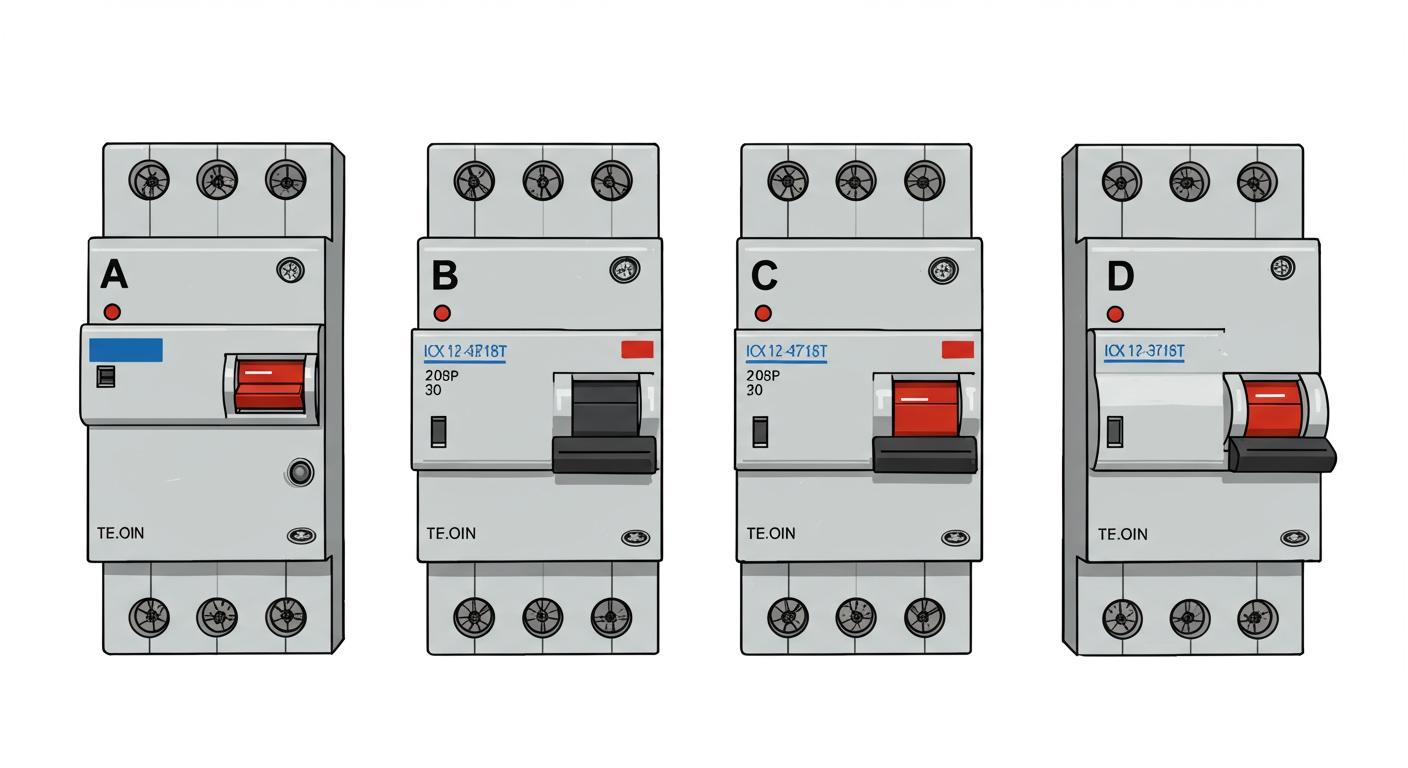
The letters A, B, C, and D on different types of circuit breakers define their tripping characteristics. This rating shows how fast a breaker responds to an overcurrent. Matching circuit breaker types to the correct load is vital for electrical safety and proper equipment protection.
📝 Note: These letters represent the most common options people encounter. Each type provides a specific level of protection against a dangerous overcurrent, ensuring the system works correctly.
Key Takeaways
- Circuit breakers have letters like A, B, C, and D. These letters show how fast the breaker reacts to too much electricity.
- Type B breakers are for homes. They protect lights and regular outlets. Type C breakers are for stores and small factories. They handle bigger machines. Type D breakers are for heavy industry. They work with very large machines.
- Picking the right circuit breaker is important. A wrong breaker can cause problems. It can trip too often or not protect against danger.
- Always hire a professional electrician for circuit breaker work. This keeps your home and equipment safe.
Understanding the Main Types of Circuit Breakers
Different types of circuit breakers exist to handle specific electrical demands. Their primary difference lies in their "tripping curve." This curve defines how quickly a breaker will interrupt a circuit when it detects an overcurrent. The choice of breaker depends on the load's potential for "inrush" current—a brief, high surge of electricity that occurs when some devices first turn on. Matching the breaker to the load prevents unnecessary trips while ensuring robust circuit protection. These letter ratings are most commonly found on miniature circuit breakers.
An Overview of Miniature Circuit Breakers (MCBs)
Miniature circuit breakers (MCBs) are automatic switches designed to protect low-voltage electrical circuits from damage caused by excess current. They offer a reliable and reusable alternative to fuses. An MCB provides protection through two distinct mechanisms:
- A delayed thermal tripping mechanism provides overload protection.
- A magnetic tripping mechanism delivers short-circuit protection.
This dual system ensures the MCB can distinguish between a harmless, temporary inrush and a dangerous, sustained overcurrent or a sudden short-circuit. International standards govern the design and performance of these devices. The certification "IEC/EN 60898-1" on a breaker's nameplate confirms its compliance.
🌍 Key Global Standards for MCBs
- IEC 60898-1: This standard applies to a low-voltage circuit breaker for household and similar settings, like offices and shops. It covers devices with a maximum rated current of 125A.
- IEC 60947-2: This standard addresses circuit breakers for industrial use by skilled persons. It has a broader scope, covering higher voltage ratings and adjustable parameters for specific machinery.
- UL 489: This is a North American standard for miniature circuit breakers used in branch protection circuits, often in commercial buildings.
Type A: For Sensitive Semiconductor Protection
Type A circuit breakers are the most sensitive among the common types. They are engineered for specialized circuit protection where even minor current spikes can cause damage.
| Breaker Type | Tripping Current (Times Rated) | Primary Use |
|---|---|---|
| Type A | 2–3 times | Semiconductor and delicate electronic device protection |
These breakers trip when the current reaches just two to three times their rated value. This rapid response makes type A circuit breakers ideal for safeguarding circuits with semiconductors and other highly sensitive electronic components that cannot withstand a significant overcurrent.
Type B: The Residential Standard
Type B circuit breakers are the most common choice for residential applications. They provide excellent protection for general-purpose circuits with primarily resistive loads, which do not produce high inrush currents.
A Type B breaker trips instantaneously when the operating current is 3 to 5 times its rated current. This characteristic makes it perfectly suited for:
- Lighting circuits (incandescent and LED)
- General-use socket outlets
- Appliances with minimal current surges
Because of its sensitivity, a Type B breaker might experience nuisance tripping if connected to loads with higher startup currents, such as large motors. This makes it the standard for predictable household loads, offering reliable protection against an overload and short-circuits.
Type C Circuit Breakers: Commercial & Inductive Loads
Type C circuit breakers are designed for commercial and light industrial environments. They can handle higher inrush currents than Type B breakers without tripping unnecessarily. This makes them a versatile choice for circuits with mixed or inductive loads.
Type C circuit breakers trip at 5 to 10 times their rated current. This moderate delay accommodates the brief startup surge from equipment like:
- Small motors
- Fluorescent lighting
- Transformers
- Control circuits
The Type C breaker strikes a balance, offering robust short-circuit protection while tolerating the normal operating characteristics of common commercial equipment. This makes it a workhorse for applications beyond standard residential wiring.
Type D: For High-Impact Industrial Use
Type D circuit breakers provide the least sensitive overcurrent release, making them suitable for heavy industrial applications with extremely high startup currents. These breakers are built to withstand the massive inrush associated with large machinery, preventing nuisance trips that would otherwise halt production.
A Type D breaker has an instantaneous tripping current of 10 to 20 times its rated current. This high fault current rating is necessary for reliably powering equipment that generates powerful surges, including:
- Large winding motors
- Industrial transformers
- Welding equipment
- Compressors and large pumps
Using a Type D breaker ensures that heavy machinery can start up without interruption while still providing essential short-circuit protection against a major fault.
Matching Circuit Breaker Types to Applications
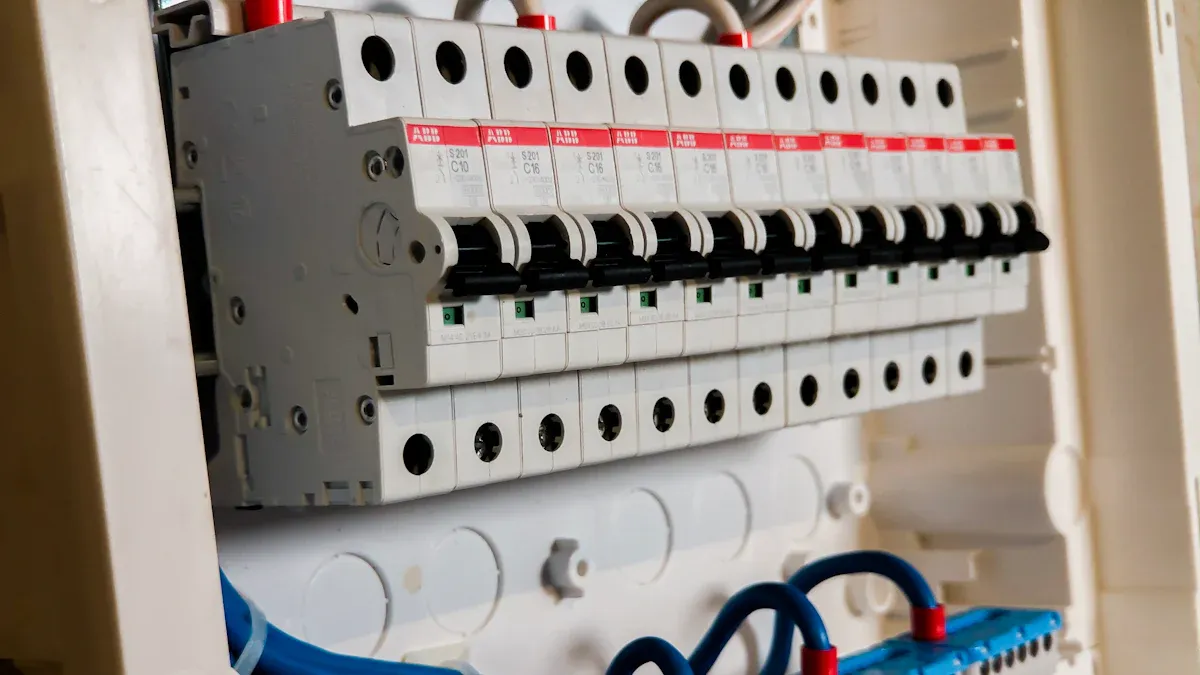
Selecting the correct circuit breaker is essential for both safety and functionality. A mismatched breaker can lead to frequent, unnecessary trips or fail to provide adequate protection against a dangerous overcurrent. The key is to align the breaker's tripping characteristic with the electrical load's demands.
Residential Applications
Homes primarily use Type B circuit breakers. These breakers are designed for the predictable loads found in most domestic applications. They offer excellent circuit protection for general-use circuits.
- Lighting and General Outlets: Most lighting circuits and standard outlets in bedrooms or living rooms use 15-amp breakers. While some electricians debate using 5-amp or 10-amp breakers for low-wattage LED lighting, a 15-amp breaker remains the common standard. A Type B breaker works perfectly here, providing instant short-circuit protection without being overly sensitive.
- Dedicated Appliance Circuits: The National Electrical Code (NEC) advises that large appliances should have their own dedicated circuits. This practice prevents an overload on general-use circuits. Appliances like refrigerators, dishwashers, and washing machines often require a dedicated 15-amp or 20-amp circuit. This isolation ensures they receive consistent power and prevents an overcurrent event from affecting other parts of the home.
💡 Safety Tip: A dedicated circuit is crucial for preventing electrical overloads. An overload can cause wires to overheat and create a serious fire hazard. Always ensure major appliances have the right circuit protection.
Commercial and Light Industrial Applications
Commercial environments feature a mix of resistive and inductive loads. This variety requires more robust circuit breaker types than a typical home. Type C circuit breakers are the standard for these settings.
Type C circuit breakers tolerate the moderate inrush current from equipment like small motors, fluorescent lighting, and control circuits. They trip at 5 to 10 times their rated current. This characteristic prevents nuisance trips when equipment starts up. They provide reliable short-circuit protection for a wide range of commercial equipment.
For specific equipment like HVAC systems, special considerations apply.
- HVAC Systems: Commercial heating, air conditioning, and refrigeration (HVAC) systems need breakers with an HACR (Heating, Air Conditioning, and Refrigeration) rating. Modern UL-listed molded-case circuit breakers (MCCBs) automatically meet this requirement. These breakers handle the high inrush current of a motor starting up while still offering fast protection from a sustained overload or a short-circuit.
- Refrigeration Units: Commercial refrigerators and freezers also benefit from breakers that can handle moderate motor loads. While a Type B breaker may be suitable in some cases, a Type C is often a better choice for its ability to manage startup surges without compromising protection. Key selection criteria include the breaker's voltage rating, current rating, and interrupting capacity.
Heavy Industrial Applications
Heavy industrial applications involve powerful machinery with extremely high startup currents. These settings demand the most robust types of circuit breakers available. Type D circuit breakers are built for this purpose.
A Type D breaker has a high magnetic overcurrent release, tripping at 10 to 20 times its rated current. This tolerance is necessary for equipment that generates a massive power surge upon startup.
- Large Winding Motors
- Industrial Transformers
- Welding Equipment
- Large Compressors and Pumps
Using Type D circuit breakers ensures that these machines can start without causing a trip, preventing costly downtime. At the same time, they provide essential short-circuit protection against a major fault.
The NEC has specific rules for industrial applications with multiple motors. For example, a feeder circuit supplying several motors must be sized carefully. The calculation involves taking 125% of the largest motor's full-load current and adding the full-load currents of all other motors. This ensures the main breaker can handle the combined load while individual protection devices safeguard each motor from a short-circuit.
The Consequences of an Incorrect Choice
Choosing the wrong circuit breaker can cause significant problems. An incorrect choice undermines electrical safety and system reliability. It can lead to constant interruptions or, far worse, a failure to provide protection when it is needed most.
Nuisance Tripping from a Sensitive Breaker
Nuisance tripping occurs when a circuit breaker trips without a genuine fault. This often happens when a breaker is too sensitive for the connected load. For example, using a Type B breaker on a circuit with a motor is a common cause of this issue.
- A motor's startup current can be six times its normal operating current.
- A Type B breaker's magnetic overcurrent release trips at three to five times its rating.
This mismatch causes the breaker to trip every time the motor starts. While a brief inrush current is normal, a genuine overcurrent is a dangerous fault.
| Feature | Inrush Current (Normal) | Overcurrent Fault (Dangerous) |
|---|---|---|
| Cause | Equipment startup (e.g., motors) | Short-circuit or circuit overload |
| Duration | Milliseconds | Sustained until protection trips |
| Impact | Harmless, expected surge | Can cause fire and equipment damage |
These unnecessary trips are a major inconvenience. Service companies report that a significant number of service calls are for non-existent faults, simply because the circuit protection is mismatched.
Fire Hazards and Equipment Damage
Using a breaker that is not sensitive enough is even more dangerous. A breaker that is too slow to react to an overcurrent or a short-circuit fails its primary duty. This failure exposes the circuit and connected devices to serious harm.
🔥 Critical Safety Warning: A breaker that fails to trip during a short-circuit allows massive amounts of current to flow. This can melt wire insulation, destroy equipment, and ignite a fire in seconds.
A sustained overload or a short-circuit generates intense heat. Without proper circuit protection, this heat can damage sensitive electronics beyond repair. A slow-acting breaker allows a dangerous overcurrent to persist, creating a severe fire risk. The breaker's job is to provide immediate protection from a short-circuit. A delayed response defeats the purpose of this essential safety device and compromises the entire electrical system's protection.
The A, B, C, and D ratings on different types of circuit breakers are vital for electrical safety and system reliability. These ratings ensure the device's response time matches the load's needs, providing correct protection. A Type B breaker is standard for homes, while Type C suits commercial settings, and Type D handles heavy machinery. This proper matching offers robust protection.
⚠️ Always Hire a Professional Incorrect installation can lead to denied insurance claims and fire hazards. For your protection, always consult a licensed Journeyman or Master Electrician for any circuit breaker work.
FAQ
Can I use a Type C breaker in my home?
A Type C breaker is generally not recommended for standard home circuits. It may not trip fast enough to protect typical residential wiring during a fault. Electricians reserve them for specific loads like workshop tools. Always consult a professional before changing breaker types.
What does the number on the breaker switch mean?
The large number on a breaker shows its amperage (amp) rating. This value defines the maximum current a circuit can safely carry. The letter (A, B, C, or D) indicates the breaker's tripping characteristic, or how fast it responds to a fault.
Example: A breaker marked C20 is a Type C breaker with a 20-amp rating.
Why does my circuit breaker keep tripping?
A breaker trips to prevent damage from an overload or a short-circuit. If it trips often, the circuit may have too many devices connected. It could also indicate a wiring problem or a breaker that is too sensitive for an appliance, causing nuisance trips.
How can I identify my breaker's type? 💡
You can find the breaker's type printed on its front face. Look for a capital letter, usually right before the amperage number. This letter—A, B, C, or D—is the key to understanding its correct application and response time.