The Top PMIC Suppliers for IoT Devices This Year
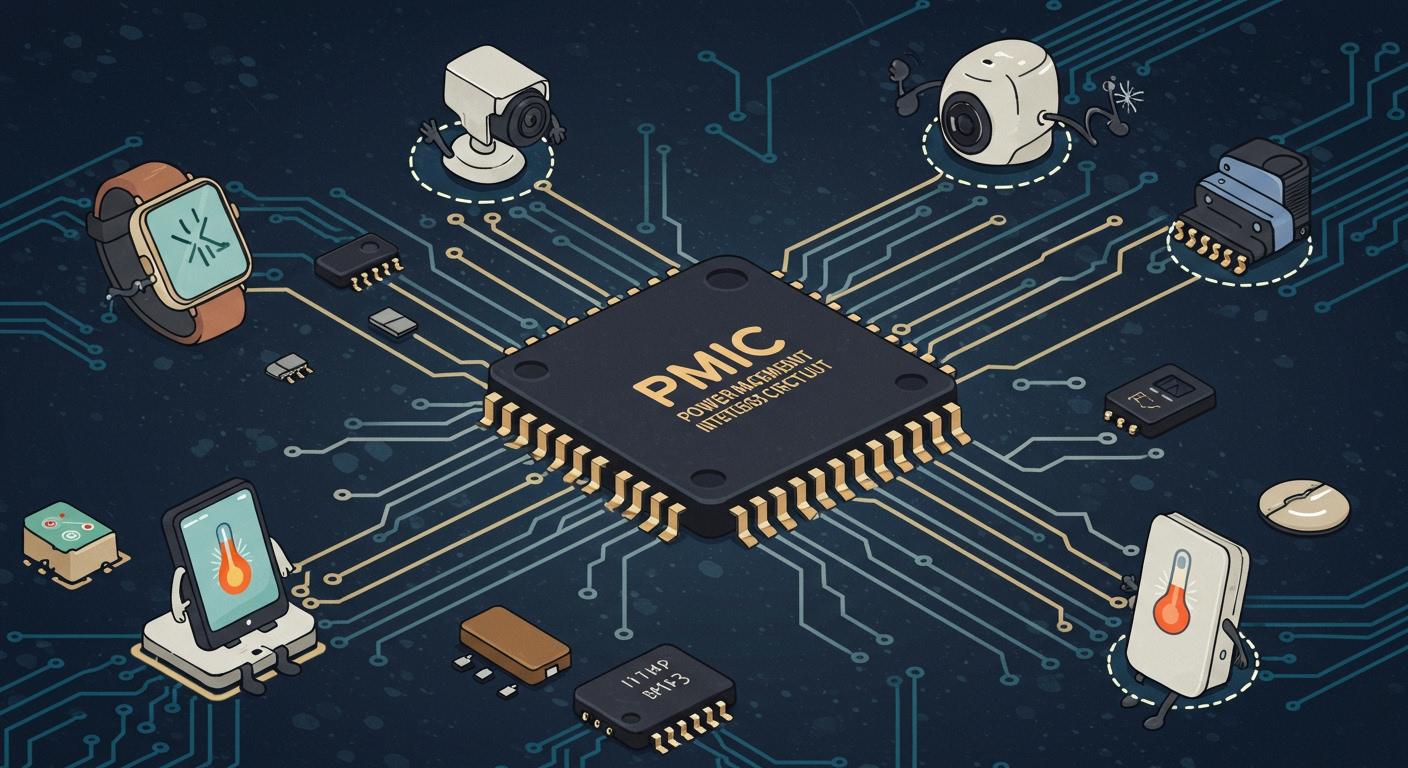
The key players setting IoT power management trends this year are Texas Instruments, Analog Devices, STMicroelectronics, Infineon, and Renesas. These notable companies drive technological innovation with their power management solutions. An optimal power management IC provides efficient power for devices. The right PMIC choice is essential for extending battery life and managing power consumption. A clear analysis of these top power management ICs helps engineers select the best option.
Key Takeaways
- PMICs are single chips that manage all power for a device. They help IoT devices save power and make batteries last longer.
- Texas Instruments (TI) offers many power solutions. Their chips combine many functions into one, saving space and cost.
- Analog Devices (ADI) makes very precise power chips. These chips use very little power when devices are not active, which helps batteries last a long time.
- STMicroelectronics (ST) makes power chips that work well with their microcontrollers. This helps engineers build IoT devices faster and use less power.
- Infineon and Renesas make strong and reliable power chips. Infineon focuses on security, and Renesas helps save money and power in designs.
Texas Instruments (TI)
Texas Instruments stands out with one of the industry's most extensive portfolios. The company provides comprehensive power solutions for nearly any application. Its components are known for high integration, which is a major advantage for engineers designing compact connected devices.
Key Strengths
TI excels at creating a highly integrated power management ic. Many of its products combine multiple functions into a single chip. For example, models like the TPS650250RHBR include several power rails and integrated battery charging. This integration reduces the number of external components, saving board space and cost. This approach improves overall system efficiency. Engineers also benefit from TI's excellent design tools.
Design Tip: Use TI's WEBENCH® Power Designer to simulate and optimize your power supply design. This tool helps accelerate the development process and ensures your circuit meets performance targets.
Top PMIC Series
TI offers two flagship series for IoT power management. Each series provides unique solutions for managing energy.
- BQ Series: This family focuses on battery management. These ICs handle charging, fuel gauging, and protection. They are essential for creating reliable and long-lasting battery-powered products. The BQ series is a top choice for robust battery management.
- TPS Series: This series provides general power regulation. The TPS power management ic family is known for its low quiescent current, which conserves energy when a device is in standby mode. This feature is critical for extending battery life and achieving high energy efficiency.
Ideal Applications
The versatility of TI's PMIC offerings makes them suitable for a wide range of IoT devices. The company delivers powerful and energy-efficient solutions for many sectors. The low power consumption of its components makes them perfect for applications where every bit of energy counts. A popular pmic like the TPS62840 is ideal for:
- Wearables and fitness trackers
- Smart home devices (thermostats, smoke detectors)
- Industrial battery-powered sensors
- Medical wearables
Analog Devices (ADI)
Analog Devices (ADI) earns its place on this list through its high-performance and high-precision power management solutions. The company is a leader in creating components for applications where accuracy and reliability are non-negotiable. Its acquisition of Linear Technology and Maxim Integrated further strengthened its portfolio, offering engineers a vast selection of robust power solutions.
Key Strengths
ADI's primary strength lies in its precision engineering. The company delivers best-in-class power management IC products that ensure stable and accurate power delivery. This precision is vital for sensitive IoT applications, such as industrial automation, medical wearables, and high-fidelity sensing nodes. ADI’s components help maintain signal integrity and system stability, which are critical for reliable data collection in connected devices.
Power Management IC Focus
A major focus for ADI is achieving ultra-low quiescent current to extend battery life. This commitment to energy efficiency is clear in its power management IC designs. Many of its solutions consume minimal power when the main system is in a sleep state, preserving precious energy.
Did You Know? 💡 Some ADI components showcase remarkable energy efficiency. For instance, the MAX20344 pmic operates with a typical quiescent current of just 3.5µA. Individual regulators within its ICs can be even more frugal, with some LDOs drawing as little as 0.55µA of power.
This low power consumption makes ADI's products excellent energy-efficient solutions for battery-powered devices that must operate for months or years on a single charge.
Recommended Series
ADI offers several powerful series for IoT designs. Each provides unique advantages for managing energy and system power.
- Power by Linear™ (LTC): This series is renowned for its high performance, robustness, and exceptional efficiency. LTC products are ideal for harsh industrial environments where reliability is paramount.
- MAX Series: Following the acquisition of Maxim Integrated, the MAX series has become a cornerstone of ADI's offerings for compact devices. These ICs are perfect for space-constrained applications like medical wearables. The series includes advanced battery management and integrated solutions that combine power control with health-sensing front-ends for ECG and SpO2 monitoring.
STMicroelectronics (ST)
STMicroelectronics is a major player in the microcontroller world, especially with its popular STM32 family. The company leverages this strength by offering power management solutions that integrate seamlessly into its ecosystem. This synergy provides a streamlined development path for engineers building complex IoT devices. ST delivers robust power solutions for a variety of applications.
Key Strengths
ST's primary advantage is the deep integration between its PMICs and STM32 microprocessors. The company designs its power components to work perfectly with its processors. This approach offers several key benefits for developers:
- It optimizes power consumption for superior energy ratings.
- It maximizes the runtime of battery-powered applications.
- It saves on bill-of-materials costs compared to discrete solutions.
- It reduces engineering effort and shortens design time.
- It minimizes the printed circuit board (PCB) footprint.
Recommended Series
The flagship series for ST's IoT power offerings is the STPMIC family. The STPMIC1 is a highly integrated power management ic designed specifically as a companion chip for STM32 MPUs. This pmic consolidates numerous power functions into a single package.
Inside the Chip ⚙️ The
STPMIC1is a versatile power hub. It features an input voltage range of 2.8 V to 5.5 V and includes four buck converters, a boost converter, and multiple low-dropout regulators (LDOs). This high integration provides stable power for the processor, memory, and peripherals from one component, boosting system efficiency.
This series gives designers a complete set of power rails and controls through a simple I²C interface. It simplifies the power architecture significantly.
Ideal Applications
The tight coupling with the STM32 ecosystem makes ST's power solutions ideal for processor-intensive IoT applications. These components provide the necessary power and control to achieve excellent energy efficiency. The efficient use of energy is critical for modern connected products. Common applications include:
- Industrial IoT gateways
- Smart city infrastructure (e.g., smart lighting, meters)
- Advanced wearables and personal electronics
- Home automation and building control systems
Infineon Technologies
Infineon Technologies has a strong reputation for creating robust and reliable semiconductors. The company brings its expertise from the demanding automotive and industrial sectors to the IoT market. This background ensures its components deliver high performance and durability. Infineon provides excellent power solutions for connected systems that must operate in harsh conditions.
Key Strengths
Infineon's main advantage is its focus on high-quality, dependable components. The company designs its products for long-term reliability and superior efficiency. This makes its solutions ideal for critical applications where failure is not an option. The company offers a complete ecosystem, including sensors, microcontrollers, and security components that work together seamlessly.
Security First! 🔒 Infineon integrates advanced security features into its hardware. This approach helps protect devices from cyber threats at the core level, a crucial factor for connected industrial and automotive systems.
Recommended Series
Infineon offers several series that provide comprehensive power management and control. Each series delivers unique benefits for system designers.
- OPTIGA™ Family: While primarily known for security, this family includes a
pmicwith advanced power management features. It provides a secure and efficient foundation for IoT nodes. - EiceDRIVER™ Series: This series of gate driver ICs offers precise control over power transistors. Excellent driver control is essential for achieving high energy efficiency in power conversion.
- General-Purpose Power Management IC: Infineon also provides a broad portfolio of regulators and converters. This power management ic lineup gives engineers flexible options to manage system power.
Ideal Applications
Infineon's focus on robustness and security makes its products a great fit for demanding IoT environments. The company provides energy-efficient solutions that conserve energy while delivering stable power. These components help manage energy consumption effectively. The low power needs of these devices make them perfect for:
- Industrial IoT (IIoT) and factory automation
- Smart building controls (HVAC, lighting)
- Automotive connectivity and telematics
- Secure point-of-sale (POS) terminals
Renesas Electronics
Renesas Electronics offers complete system solutions by pairing its powerful microcontrollers with optimized power management components. The company designs its power management ic products to work seamlessly with its popular RA and RZ microcontroller families. This synergy creates a powerful and efficient platform for developing complex iot devices. Renesas provides excellent power solutions that simplify the design process.
Key Strengths
Renesas focuses on delivering both power efficiency and cost savings. The company achieves this through smart design and advanced manufacturing.
- Advanced Process Technology: Renesas uses a 110nm process optimized for low power operation. This technology balances performance with energy consumption, leading to longer battery life and reduced heat. It also allows for more components on a single chip, which lowers manufacturing costs.
- System Cost Reduction: The high integration of a Renesas pmic reduces the total number of parts on a board. For example, the
RAA215300enables the use of less expensive four-layer circuit boards, directly cutting down system costs. Fewer components also increase overall system reliability.
This integrated approach provides designers with robust and economical power solutions.
Recommended Series
The RAA series is a standout choice for managing system power. These components are highly configurable and flexible, making them adaptable to many different designs. They provide a complete set of power rails for a processor and its peripherals.
RAA Series Highlights ⚙️ The RAA series is known for its excellent efficiency and small footprint. It integrates power MOSFETs and current sensing, supports high switching frequencies, and includes full supervision functions for system stability. This makes it ideal for compact devices where space is limited but performance cannot be compromised.
Ideal Applications
The tight integration with its microcontroller ecosystem makes Renesas a strong choice for systems built around the RA and RZ families. The company's focus on low power consumption helps conserve energy in battery-operated products. These components deliver stable power and help manage energy effectively. Ideal applications include:
- Industrial automation and control systems
- Consumer electronics
- Smart home appliances
- General-purpose embedded systems
Quick Comparison Summary

Choosing the right supplier depends on your specific project needs. This summary breaks down each company's strengths to help you make a quick decision. Current industry trends show a move toward higher integration and lower energy use.
Best For
- Texas Instruments (TI): Engineers who need a vast portfolio and excellent design tools for a wide range of applications.
- Analog Devices (ADI): Projects requiring high-precision and ultra-low power performance, especially in medical or industrial fields.
- STMicroelectronics (ST): Developers already using the STM32 ecosystem who want seamless integration and a faster design cycle.
- Infineon Technologies: Applications demanding high reliability and robust security, such as industrial and automotive systems.
- Renesas Electronics: Cost-sensitive projects that need a complete system solution with both a microcontroller and a matching power management ic.
Key Product Series
- Texas Instruments: BQ Series (battery management), TPS Series (general regulation)
- Analog Devices: Power by Linear™ (LTC) Series, MAX Series
- STMicroelectronics: STPMIC Series
- Infineon Technologies: OPTIGA™ Family, EiceDRIVER™ Series
- Renesas Electronics: RAA Series
Primary IoT Focus
Each supplier targets specific markets. Their power management ics provide the necessary power and control to save energy. The table below outlines their primary focus areas. A good power management ic is key to efficient solutions.
| Supplier | Primary IoT Focus | Key Markets |
|---|---|---|
| Texas Instruments | Broad Market Enablement | Industrial, Automotive, General Consumer |
| Analog Devices | High-Precision Systems | Industrial Automation, Medical, Instrumentation |
| STMicroelectronics | Consumer & Smart Devices | Wearables, Smart Homes, Industrial Sensors |
| Infineon Technologies | Secure & Robust Systems | Automotive, Industrial, Secure Terminals |
| Renesas Electronics | Consumer & Health | Smart Homes, Wearables, Connected Health |
Selecting the right PMIC depends on project needs like power budget and cost. The five suppliers featured drive technological innovation in IoT power design. Their solutions offer excellent efficiency to manage energy and extend battery life. This careful use of energy ensures optimal device performance.
Next Steps 🚀 Use this guide as a starting point. Visit manufacturer websites for detailed datasheets to find the perfect power solution.
FAQ
What is a PMIC?
A Power Management Integrated Circuit (PMIC) is a single chip that manages all power functions for a device. It handles tasks like voltage conversion, battery charging, and power distribution. This integration saves space and improves efficiency in electronic designs.
Why is a PMIC important for IoT devices?
IoT devices often run on batteries and need to last a long time. A PMIC helps them use power very efficiently. It extends battery life and ensures the device operates reliably. This makes PMICs essential for creating successful connected products.
What are the current trends in PMIC technology?
Current PMIC technology trends focus on higher integration and better efficiency. Manufacturers are combining more power functions into smaller chips. These new trends help designers build more compact and longer-lasting IoT devices. Future trends will likely continue this path.
How does the IoT market's growth affect PMIC development?
The rapid growth of the IoT market drives demand for better power solutions. This pushes manufacturers to create smaller, more efficient, and lower-cost PMICs. The market's expansion fuels innovation in power management technology for connected devices.