The Top 10 Laser Diode Applications Shaping Our World
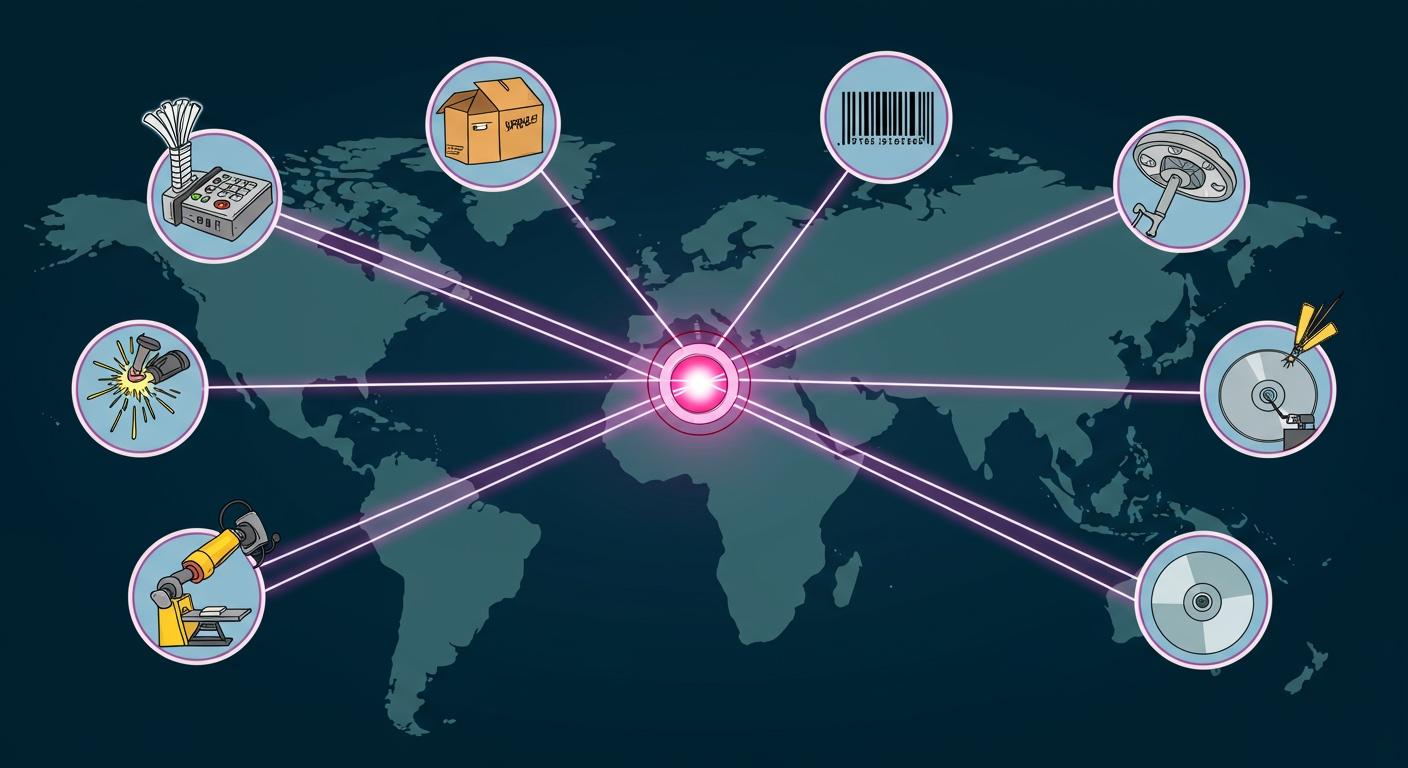
The laser diode is an unsung hero of modern technology. Laser diodes power many devices we use daily. Diode laser technology drives a significant market, projected to hit USD 8.37 Billion in 2025 with a 13.5% growth rate. Here are the top applications of laser diodes shaping our world:
- Telecommunications and Fiber Optics
- Digital Data Storage
- Barcode Scanners and Retail
- Laser Printing Technology
- Key Medical Applications
- The Industrial Market
- 3D Sensing and LiDAR
- Pumping Solid-State Lasers
- Entertainment and Stage Lighting
- The Everyday Laser Pointer
Key Takeaways
- Laser diodes power many everyday devices. They help with internet, data storage, and barcode scanners.
- These lasers are important in medicine. They help with surgeries and vision correction like LASIK.
- Industries use laser diodes for cutting and welding materials. They also help with 3D sensing in self-driving cars.
- Laser diodes make entertainment better. They create amazing light shows and are in common gadgets like laser pointers.
1. Telecommunications and Fiber Optics
The modern internet relies heavily on laser diodes. These tiny components are the engines of global telecommunications. They convert digital information into light signals for transmission across vast distances. This process forms the foundation of our connected world.
High-Speed Data Transmission
A laser diode is essential for high-speed data transfer. It works by turning on and off billions of times per second. Each flash of laser light represents a piece of digital data. These light pulses travel through thin strands of glass called fiber-optic cables. The laser beam moves at nearly the speed of light inside the cable. This method sends enormous amounts of information with incredible speed and minimal signal loss.
How it Works:
- An electrical signal (data) is sent to the laser diode.
- The laser diode rapidly flashes, creating light pulses.
- These pulses travel down a fiber-optic cable.
- A detector at the other end reads the pulses and converts them back into data.
This efficiency is crucial for modern optical communication applications. It allows for smooth video streaming, fast downloads, and clear online calls.
Global Communication Backbone
Countless laser diodes power the world's communication systems. They are the heart of the global fiber-optic networks that connect cities and continents. Undersea cables packed with optical fibers span the oceans. A powerful laser sends signals through these cables, linking the entire planet. These networks carry the bulk of international internet traffic and phone calls. Without the precise and reliable laser, this massive infrastructure would not be possible. The entire global communication backbone depends on this technology.
2. Digital Data Storage
Long before cloud storage became common, laser diodes brought digital media into our homes. A laser diode is the key component in optical disc systems that read CDs, DVDs, and Blu-ray discs. These devices use a focused beam of light to interpret vast amounts of stored data.
Reading CDs, DVDs, and Blu-ray
An optical drive uses a laser to read data from a spinning disc. The disc's surface contains billions of microscopic bumps, called "pits," and flat areas, called "lands." The laser scans a spiral track of these pits and lands.
How it Works: Pits vs. Lands 🔎 When the laser hits a flat 'land,' the light reflects directly back to a sensor. The system reads this strong reflection as a binary '1'. When the laser hits a 'pit,' the light scatters and does not reflect back as strongly. The sensor sees this weak reflection and reads it as a binary '0'. This rapid reading of ones and zeros translates into the music, movies, or software stored on the disc.
Wavelength and Data Density
The amount of data a disc can hold depends directly on the wavelength of the laser used to read it. A shorter wavelength allows the laser to focus on a much smaller spot. This enables manufacturers to create smaller pits and place the data tracks closer together, packing more information onto the same-sized disc.
This is the main difference between DVDs and Blu-ray discs.
- CDs and DVDs use a red laser with a longer wavelength (around 650-780 nm).
- Blu-ray uses a blue-violet laser diode with a much shorter wavelength (405 nm).
This shift to a blue laser is what gives Blu-ray its name and its significantly higher storage capacity. It can hold high-definition movies and large video games, a task impossible for the red laser systems of DVDs.
| Disc Type | Laser Color | Wavelength |
|---|---|---|
| CD | Infrared | ~780 nm |
| DVD | Red | ~650 nm |
| Blu-ray | Blue-Violet | ~405 nm |
3. Barcode Scanners and Retail
The humble barcode scanner is a fixture of modern retail, making checkout lines faster and more accurate. At the core of this everyday device is a laser diode, which translates the simple pattern of black and white lines into useful data with incredible speed. This technology is fundamental to how stores manage products and sales.
Barcode Reading
A barcode scanner works by reflecting light off a product's barcode. The scanner projects a thin laser beam, which a moving mirror or rotating prism scans rapidly across the striped pattern. The process of reading the code is based on a simple principle of light absorption and reflection.
How a Scanner Reads a Barcode 🛒
- A laser diode emits a focused beam of red light.
- The black bars of the barcode absorb the laser light, while the white spaces reflect it back.
- A light-sensitive sensor, called a photodiode, detects the reflected light.
- The photodiode converts the varying light patterns into a digital electrical signal.
- The scanner's internal software decodes this signal to identify the product.
This entire operation happens almost instantly, allowing cashiers to scan dozens of items per minute. The precision of the laser ensures that codes are read correctly on the first try.
Inventory and Logistics
The impact of barcode scanners extends far beyond the checkout counter. They are the backbone of modern inventory management and logistics. Each time an item is scanned and sold, the information is sent directly to the store’s inventory systems. This real-time data tracking allows managers to know exactly what is on the shelves and what needs to be restocked.
In warehouses and distribution centers, workers use handheld scanners powered by laser diodes to track packages from arrival to departure. This laser-based tracking ensures that products move through the supply chain efficiently, reducing errors and minimizing delays. From the factory floor to the customer's shopping cart, barcode technology provides a seamless flow of information that keeps the world of retail moving.
4. Laser Printing Technology
Laser printers are a staple in offices and many homes, known for producing sharp text and graphics quickly. A precise laser is the core component that makes this technology possible. It works not by spraying ink, but by using light and static electricity to place toner on a page.
Electrostatic Printing Process
The magic of a laser printer happens through an electrostatic process. The printer uses a focused laser beam to "draw" an image of the page onto a light-sensitive, rotating cylinder called a drum. This process creates a static electricity blueprint for the print.
How a Laser Printer Works 🖨️
- A laser diode projects a beam onto the drum, creating areas with a positive electrical charge.
- The drum rotates past a container of toner, which is a fine, negatively charged powder.
- The toner sticks only to the positively charged areas drawn by the laser.
- A sheet of paper rolls under the drum, and the toner image is transferred to it.
- Finally, the paper passes through a hot fuser, which melts the toner and permanently bonds it to the page.
Speed and Precision
Laser printers are valued for their speed and precision. Speed is measured in pages per minute (PPM), while precision is measured in dots per inch (DPI). Higher numbers mean faster printing and sharper images. Modern office laser printers offer impressive performance.
- Printing Speed (PPM): Most models print between 20-40 PPM, with high-end systems exceeding that.
- Print Resolution (DPI): A standard of 600-1200 DPI ensures crisp text and clear graphics.
These performance features make laser printers a strong choice in many settings. While inkjet printers lead in overall unit sales, laser diodes power a multi-billion dollar market, especially in professional environments.
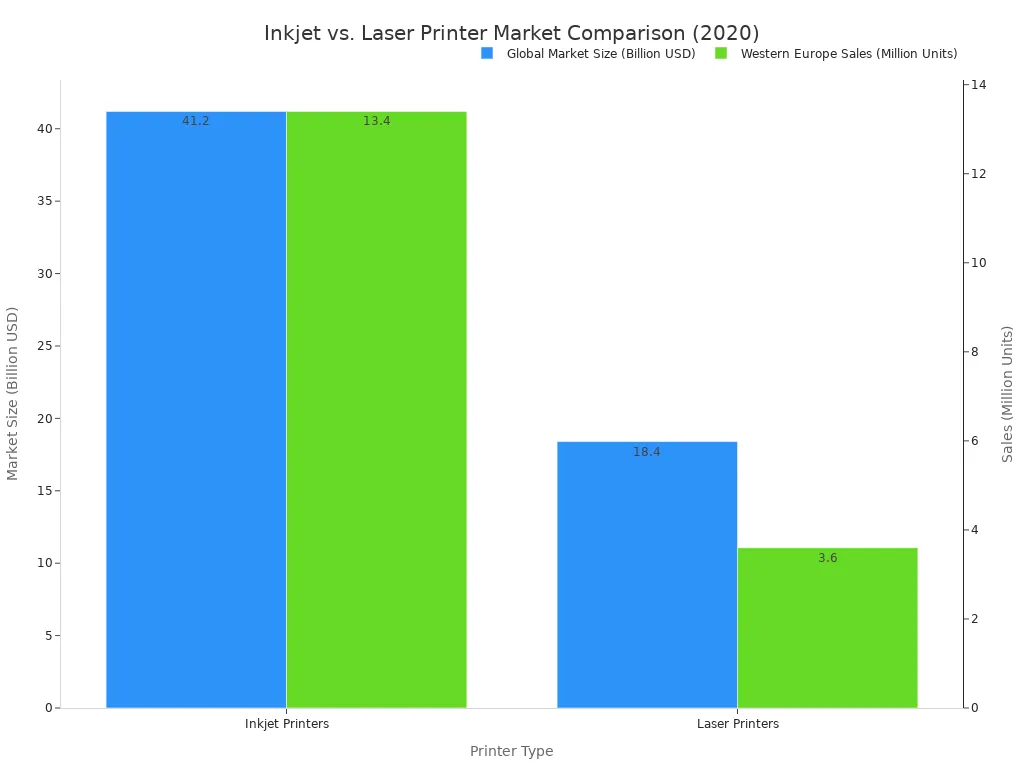
The following table shows a comparison of the two technologies in key markets.
| Metric | Inkjet Printers | Laser Printers |
|---|---|---|
| Global Market Size (2020) | >$41.2 billion | $18.4 billion |
| Western Europe Sales (2020) | 13.4 million units | 3.6 million units |
| US Market Value (2022) | ~$8 billion | $5 billion (2020) |
5. Key Medical Applications of Laser Diodes
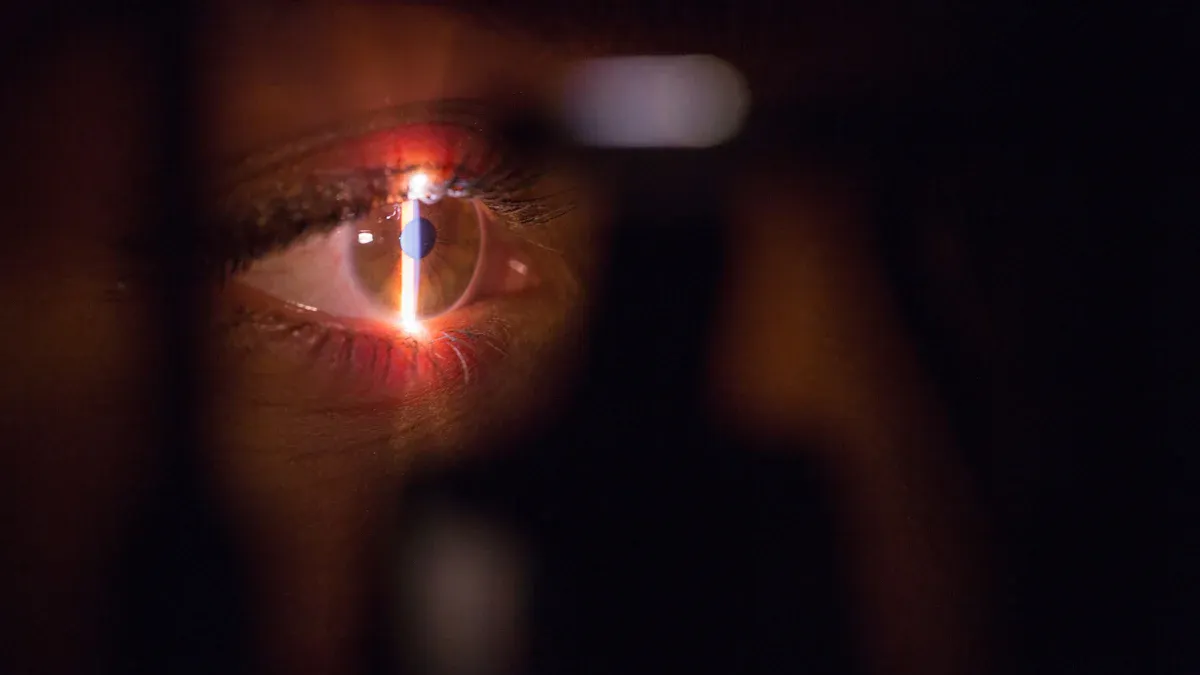
Laser diodes are transforming modern healthcare. These tiny components are crucial in a wide range of medical procedures, from surgery to diagnostics. The global market for the diode laser is growing rapidly, with projections reaching an estimated US$18.3 billion by 2030. This growth highlights their importance in many medical fields. Key application areas include dermatology, ophthalmology, and dentistry, where precision is essential. Advanced medical imaging and biomedical imaging systems also rely on this technology for accurate medical diagnostics.
Surgical and Aesthetic Procedures
Doctors use a focused laser beam for delicate surgical and cosmetic work. The intense light from laser diodes can cut, vaporize, or seal tissue with remarkable precision. This minimizes damage to surrounding areas and often leads to faster healing. Their small size makes them a preferred choice for many medical systems.
Common Laser Procedures 🩺
- Hair Removal: A popular cosmetic treatment.
- Dental Work: Used for gum procedures and treating soft tissue tumors.
- Blood Vessel Sealing: Helps control bleeding during surgery.
- ENT Procedures: Used for nasal polypectomy and reducing turbinates.
- Laser-Assisted Lipolysis: A method for fat reduction.
These applications show the versatility of the laser in both functional and aesthetic medical treatments. The use of a laser diode in diagnostics and treatment continues to expand.
Vision Correction
Laser diodes play a vital role in vision correction, most famously in LASIK surgery. During this procedure, a highly precise laser reshapes the cornea, the clear front part of the eye. This corrects refractive errors like nearsightedness and farsightedness. The procedure's accuracy is enhanced by detailed maps created through medical imaging. This level of detail helps guide the laser for optimal results.
The success of this medical procedure is exceptionally high.
- Over 90% of patients achieve 20/20 vision or better.
- 99% of patients achieve at least 20/40 vision.
- Patient satisfaction rates are over 96%, among the highest for any elective procedure.
Modern technology makes the process extremely safe, with complications being very rare. This powerful application of laser technology has improved the quality of life for millions of people. The combination of advanced imaging and precise laser control is a cornerstone of modern medical diagnostics.
6. The Industrial Laser Diode Market
The industrial laser diode market is a powerhouse of modern manufacturing. High-power laser diodes drive automation and precision work, offering high efficiency in demanding environments. This segment of the laser diode market is crucial for producing everything from cars to electronics. The growth of the industrial laser diode market reflects its importance in advanced production.
Material Cutting and Welding
A powerful laser can cut and weld materials with incredible accuracy. Industries rely on these systems for tasks that demand both speed and strength. The automotive and aerospace sectors heavily use this technology. The laser diode market serves these industries by enabling:
- Automotive: Welding car bodies, battery housings for electric vehicles, and engine parts.
- Aerospace: Joining turbine blades and airframe structures where low weight is critical.
- Electronics: Micro-welding tiny sensors, connectors, and circuit boards.
This technology also fuels additive manufacturing, or 3D printing with metal. Processes like Laser Metal Deposition use a laser to melt metal powders, creating strong, precise components. Other methods use arrays of low-power laser diodes to build parts layer by layer. This part of the laser diode market offers high performance for creating complex metal objects. The overall laser diode market benefits from these innovations.
Marking and Engraving
Manufacturers use a focused laser beam to permanently mark products. This process is essential for adding serial numbers, logos, and barcodes. The laser diode market provides solutions for a huge variety of materials. A single laser diode can create detailed engravings on many surfaces. The versatility of the laser diode market is clear from the materials it can handle.
Materials for Laser Marking ⚙️ A laser can permanently mark everything from tough metals to delicate glass. Engravers can customize natural stone like marble and granite for signs or crafts. They also work on ceramic tiles, wood, and even wine bottles.
These high-performance laser diode systems offer a reliable way to label parts for tracking and branding. The capability to work on diverse materials makes this a vital segment of the laser diode market.
7. 3D Sensing and LiDAR
Laser diodes are the eyes for many smart devices, enabling advanced 3D sensing and imaging. This technology, known as LiDAR (Light Detection and Ranging), creates detailed three-dimensional maps of the world. It powers everything from self-driving cars to the facial recognition on your phone.
Autonomous Vehicle Navigation
LiDAR systems are crucial for autonomous vehicle sensors. They provide the car with a real-time, 360-degree view of its surroundings. The technology works by sending out thousands of laser pulses per second. These pulses bounce off objects and return to a detector.
- A laser diode emits a rapid pulse of light.
- The light travels, hits an object, and reflects back.
- A sensor measures the exact time it took for the light to return.
- The system calculates the distance to the object.
- This process repeats millions of times to build a precise 3D "point cloud" map.
The automotive LiDAR market is growing quickly, with a projected growth rate of nearly 30% annually. Major automotive companies like Mercedes-Benz and BMW are adding LiDAR to support higher levels of vehicle autonomy. However, the high cost of these systems and competition from advanced radar sensors present challenges to wider adoption.
Facial and Gesture Recognition
The same 3D sensing principle is used in many consumer electronics. The largest single application for laser diodes is in smartphones for secure facial recognition. These devices use a tiny laser to project an invisible grid of dots onto a user's face. A sensor reads the distorted grid to create a unique 3D map for unlocking the phone. This form of 3D imaging provides a high level of security.
This sensing technology also changed the world of gaming.
- Gaming consoles use laser systems to enable body tracking.
- Players can control games using gestures and body movements.
- This creates an immersive experience without a traditional controller.
From automotive safety to personal security, the laser provides powerful sensing capabilities that are shaping how we interact with technology.
8. Pumping Solid-State Lasers
Sometimes, a laser diode is not the final source of light. Instead, it acts as a highly efficient engine to power even stronger lasers. This process, known as optical pumping, uses the light from laser diodes to energize a solid material, like a crystal, causing it to produce its own powerful laser beam.
An Energy Source for Powerful Lasers
A laser diode provides a precise and efficient energy source for solid-state laser systems. Researchers have long recognized that diode pumping is the key to achieving high power with maximum efficiency. This modern method has replaced older technologies.
Old vs. New Technology 💡 Older systems used bright flashlamps, similar to a camera flash, to pump lasers. This method was very inefficient, converting only a few percent of electricity into light. It also produced a great deal of waste heat, requiring large cooling equipment. Today, compact diode-pumped devices have largely superseded these bulky flashlamp systems.
The focused light from a laser diode directly energizes the target material with minimal waste. This results in a more powerful and stable final laser beam, making it ideal for demanding applications.
Scientific and Research Use
Scientists use diode-pumped solid-state lasers (DPSSLs) for a wide range of research and technical tasks. The initial pump laser determines the final output, allowing for the creation of many different colors and power levels. Common examples include:
- Nd:YAG Lasers: An infrared laser diode pumps a Neodymium-doped Yttrium Aluminium Garnet (Nd:YAG) crystal. The crystal then emits its own light, which a second crystal often converts into a bright green laser beam.
- Nd:YVO4 Lasers: These work similarly to Nd:YAG and are also used to create powerful green light from an infrared pump source.
- Blue and Yellow Lasers: More complex setups can produce other colors. Creating blue or yellow light involves pumping special crystals to generate multiple light beams that are then combined into the final color.
This technology provides the foundation for many advanced scientific instruments and high-power industrial tools.
9. Entertainment and Stage Lighting

A laser diode brings dazzling energy to concerts, clubs, and live events. These components are the heart of modern entertainment lighting, creating brilliant beams and complex patterns that captivate audiences. The technology transforms a stage into a dynamic visual experience.
Laser Light Show Projectors
Laser show projectors use red, green, and blue (RGB) laser diodes to generate a full spectrum of color. The systems combine the light from these individual sources to produce a single, vibrant beam. This mixing process allows artists to create almost any color imaginable.
How RGB Lasers Make Colors 🎨 Projectors mix the primary laser colors—red, green, and blue—in different ratios. Combining all three at full power creates a brilliant white-light laser. Adjusting the power of each color individually produces secondary colors like yellow, cyan, and magenta, along with countless other shades.
This method of using pure light sources results in a wider range of colors than traditional lighting. The laser produces extremely saturated and pure hues that can exceed industry color standards.
Vibrant Visual Displays
The creative potential of a laser projector depends on its modulation technology. Modulation controls how the laser turns on and off, which determines the number of available colors. There are two main types: TTL and Analog.
| Feature | TTL Modulation | Analog Modulation |
|---|---|---|
| Color Options | 7 basic colors | Thousands of colors |
| Power Control | On or Off only | Variable power (fading) |
| Best For | Entry-level displays | Professional shows |
| Creative Control | Limited | High |
Analog modulation is the industry standard for professional light shows. It gives lighting designers precise control over the power of each laser. This allows for smooth color transitions and fading effects, enabling much more complex and artistic show programming.
10. The Everyday Laser Diode: Consumer Gadgets
A laser diode is not just for high-tech industries; it is a key part of many gadgets we use at home. These small components bring precision and advanced features to common consumer electronics, from office tools to home improvement devices.
Laser Pointers and Mice
The simple laser pointer is one of the most recognized consumer applications. However, the technology plays a more complex role in computer mice. A laser mouse offers superior tracking accuracy compared to a standard optical mouse. This is because it uses a different light source.
Many other familiar devices also rely on this technology. The widespread use of laser diodes is clear when looking at common electronics.
- CD, DVD, and Blu-ray players
- Data projectors
- Barcode readers
Construction and Leveling Tools
A laser diode brings professional accuracy to home improvement and construction tasks. Tools like laser levels and tape measures make jobs easier and more precise. These devices project a bright, straight line of light onto a surface.
This visible guide helps with many projects. Someone hanging a series of pictures can ensure they are all perfectly aligned. A contractor installing kitchen cabinets can use the laser line to set them at the correct height. The accuracy of these systems removes guesswork, ensuring that floors are level and walls are straight. This application of the laser has become an essential tool for both DIY enthusiasts and professional builders.
Laser diodes shape our world in countless ways. This article explored ten key areas where these components are essential.
- Global communications and data storage
- Retail, printing, and industrial manufacturing
- Medical procedures and 3D sensing
A powerful laser can cut steel, while a different laser reads a movie disc. The versatile laser diode is a fundamental building block. Diode laser technology continues to drive innovation, making laser diodes an indispensable part of modern life.
FAQ
What is the main difference between a laser diode and an LED?
An LED (Light Emitting Diode) produces broad, unfocused light. A laser diode creates a narrow, concentrated beam of light. This focused beam makes the laser's light more intense and coherent, which is useful for precise tasks like reading a Blu-ray disc or scanning a barcode.
Are laser diodes dangerous? ⚠️
The danger of a laser diode depends on its power. Low-power diodes in barcode scanners are safe for normal use. High-power industrial lasers can cause serious injury.
Safety Tip: People should never look directly into any laser beam, as even low-power light can damage the eyes.
Why are some lasers red and others blue or green?
The color of a laser depends on the semiconductor material used to make the diode. Different materials emit light at specific wavelengths. For example, a gallium nitride diode produces blue light, while an aluminum gallium arsenide diode produces red light. The material determines the final color.
How long do laser diodes last?
Laser diodes are very reliable components. Many can operate for tens of thousands of hours under normal conditions. Their exact lifespan depends on factors like operating temperature and power level. High heat or power can shorten their life, while proper cooling extends it significantly.