SMT Pros and Cons A Comprehensive 2025 Guide
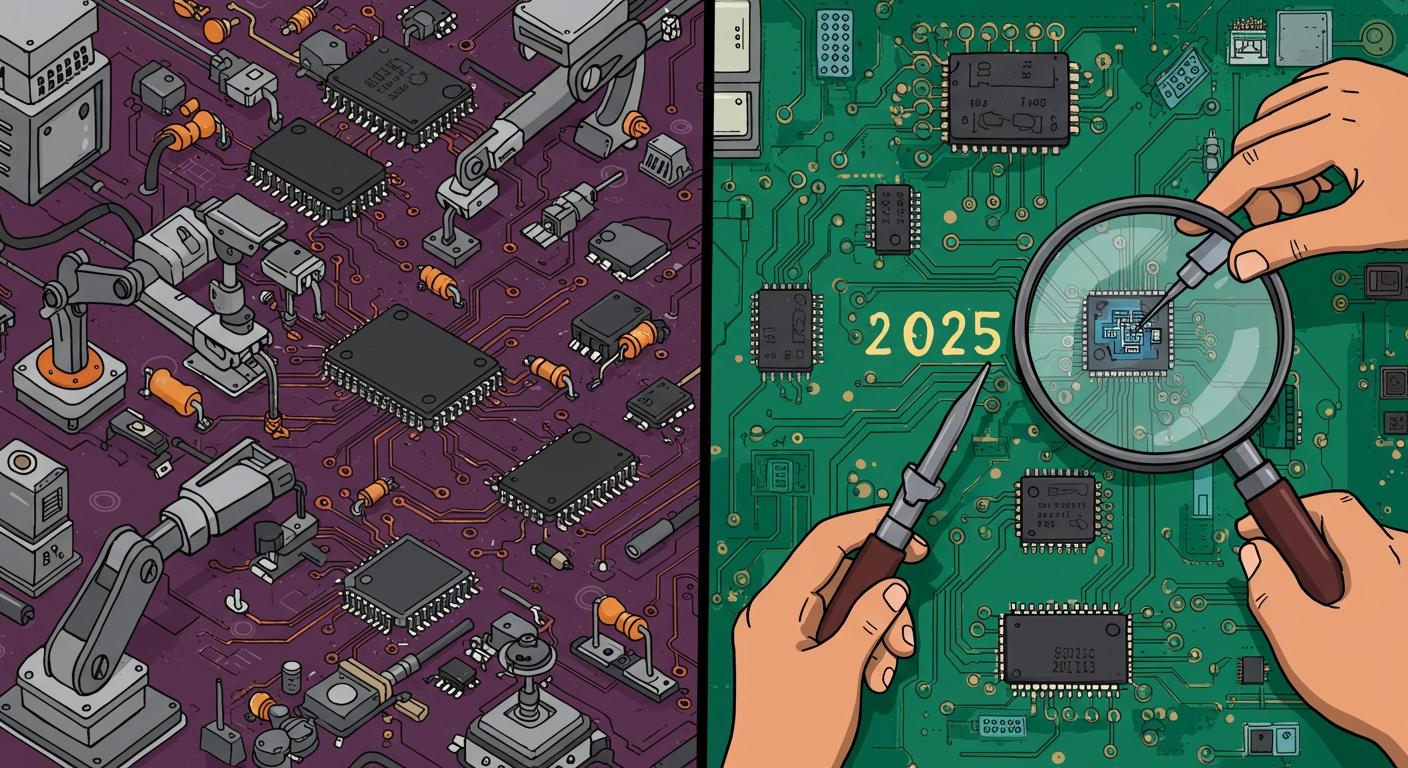
Modern electronics like smartphones get smaller and more powerful each year. Surface mount technology makes this possible. The SMT process allows engineers to build complex circuits in tight spaces. Understanding SMT involves weighing its benefits against its drawbacks.
SMT Quick Facts 💡
- Key advantages: Miniaturization, manufacturing efficiency, and enhanced performance.
- Key disadvantages: Difficult repairs, thermal stress concerns, and high initial costs.
This guide details these pros and cons. It helps you decide if SMT is the correct choice for your project.
Key Takeaways
- SMT makes electronics smaller and more powerful. It helps build complex circuits in tight spaces.
- SMT allows fast and automated production. This makes manufacturing efficient and reduces errors.
- SMT parts are hard to fix. They need special tools because they are very small.
- SMT costs a lot to set up. But it saves money for making many products.
- Choose SMT for small, high-tech products. Use older methods for simple projects or strong parts.
Key Advantages of SMT
Surface mount technology (SMT) offers significant advantages in modern electronics. These benefits make it the standard for most applications. SMT enables smaller products, faster manufacturing, and better performance. The main advantages of SMT fall into three key areas.
Compact Design and High Density
One of the primary advantages of SMT is its ability to create smaller, lighter electronics. Surface-mount devices (SMDs) are much smaller than their older through-hole counterparts. This miniaturization allows engineers to design more compact products. SMT also allows component placement on both sides of a printed circuit board (PCB). This technique dramatically increases component density. Using a surface mount device can reduce the overall board size by 60% to 70%. This space saving is critical for portable electronics like smartwatches and medical implants.
In contrast, through-hole technology requires drilling holes in printed circuit boards. These holes take up valuable space and limit how closely components can be placed. The leads of through-hole parts must pass through the board, preventing the use of that space on the other side. This makes through-hole technology less suitable for devices where size is a major constraint. SMT overcomes these limitations, making it essential for modern, high-density designs.
Automated and Efficient Production
Automation is a core strength of surface mount technology. The SMT process uses robotic pick-and-place machines for pcb assembly. These machines achieve incredible speed and precision. This assembly automation leads to greater manufacturing efficiency.
Modern SMT machines offer remarkable production speeds.
- Typical chip shooters can place around 53,000 components per hour (CPH).
- The fastest machines can reach speeds of up to 200,000 CPH.
- Even multifunctional machines deliver speeds over 50,000 CPH with high accuracy.
This high-speed automatic production drastically reduces assembly time. It also lowers the chance of human error. Automated assembly ensures consistent quality across thousands of units. For example, automated stencil printing is crucial for high-end pcb assemblies with fine-pitch components. Manual methods struggle with consistency, but automation keeps defect rates low.
| Method | Defect Rate (Rework Rate) |
|---|---|
| Manual Stencil Printing | 5-10% |
| Semi-Automated Stencil Printing | 2-5% |
| Fully Automated Stencil Printing | Under 1% |
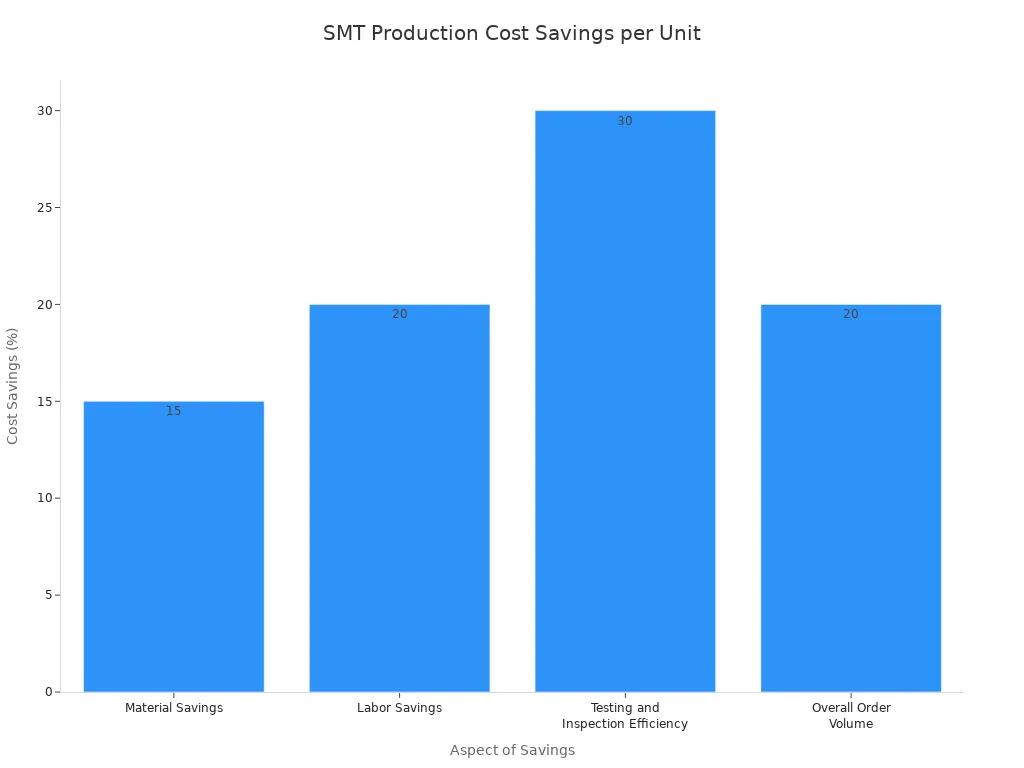
This improvement in production efficiency translates directly to cost savings, especially in high-volume production. As production scales, the per-unit cost drops significantly. Economies of scale reduce material waste, labor hours, and testing time, making SMT highly cost-effective for mass-produced goods.
Superior Electrical Performance
SMT provides better electrical performance compared to through-hole technology. Surface-mounted devices have very short or no leads at all. This design minimizes parasitic inductance and capacitance. These unwanted electrical properties can interfere with signals, especially at high frequencies. Shorter signal paths result in cleaner signals and improved performance. This is a key reason SMT is preferred for high-frequency applications.
The reduction in parasitic effects leads to better signal integrity and high signal transmission speed. This makes SMT essential for devices that process data quickly. Many modern technologies rely on the superior performance that SMT enables.
Devices That Depend on SMT Performance 🚀
- Communication Devices: Routers, modems, and base stations need SMT for fast data transfer.
- Automotive Electronics: Engine control units and infotainment systems require reliable, high-speed performance.
- Medical Devices: Patient monitoring systems and diagnostic equipment depend on SMT for accuracy.
- Gaming Consoles: Consoles like PlayStation and Xbox use SMT to handle complex graphics and processing.
- Wearable Technology: Smartwatches and fitness trackers need the compact, efficient circuits that SMT provides.
Ultimately, the electrical advantages of SMT allow for the creation of faster, more powerful, and more reliable electronic products. The pcb assembly process for SMT is optimized for performance from the ground up.
Key Disadvantages of SMT
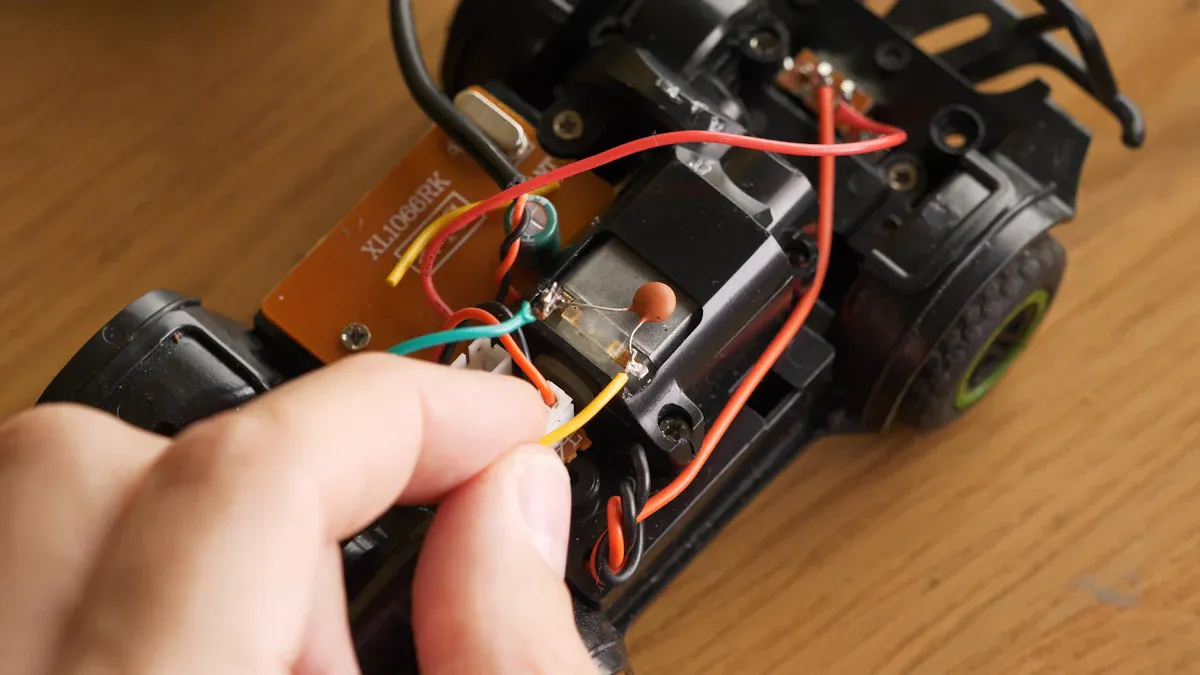
While surface mount technology is the engine of modern electronics, it comes with notable disadvantages. These challenges relate to repair, durability, and cost. Understanding these drawbacks is crucial for any project considering SMT. The main disadvantages involve specialized labor and high initial expenses.
Difficult Repair and Prototyping
The small size of surface-mount devices makes manual repair and prototyping very difficult. Unlike through-hole components with long leads, SMDs are tiny and have minimal connection points. This makes them hard to handle without specialized equipment. A steady hand is not enough for SMT work.
Technicians need a specific set of tools for manual SMT repair. The process requires precision and control that general-purpose tools cannot provide.
Specialized Tools for SMT Rework 🛠️
- Heating Tools: Hot air guns, infrared heaters, and pre-heaters to melt solder without damaging the board.
- Handling Tools: Fine-tipped SMT tweezers and vacuum pickup tools to manage tiny components.
- Soldering Supplies: Fine-tipped soldering irons, solder paste, flux, and desoldering braid or a solder vacuum.
- Inspection Aids: A magnifying glass or microscope is essential for seeing the small solder joints.
- Safety Gear: ESD protection like an anti-static wrist strap is necessary to prevent damage to sensitive electronics.
Because of these complexities, repairing an SMT board is often more expensive than replacing it entirely, especially in consumer electronics. Prototyping with SMT is also challenging for hobbyists and small-scale developers who may lack access to this equipment.
Mechanical and Thermal Stress
Solder joints in SMT assemblies are vulnerable to mechanical and thermal stress. Since SMDs are soldered directly to the surface of the board, the solder joints bear the brunt of any physical force. This can be a significant issue in products that experience vibration or shock.
Vibration fatigue is a common failure mode. Constant movement or shaking induces cyclic loading on solder joints, which can lead to micro-cracks and eventual failure. This is a major concern in automotive and industrial electronics. Other mechanical stresses can also cause problems.
- Mechanical Overload: A sudden high strain rate, like bending the board, can cause a brittle fracture at the solder joint.
- Creep Rupture Failure: Continuous stress on a solder joint can cause it to deform slowly over time until it breaks.
Thermal stress is another major reliability concern for SMT. Electronic components and the printed circuit board expand and contract at different rates when the temperature changes. This difference is measured by the Coefficient of Thermal Expansion (CTE). A CTE mismatch creates mechanical stress on solder joints. Studies show that temperature-related factors contribute to as many as 55% of electronic equipment failures.
| PCB Material | CTE (ppm/°C) | SMT Assembly Impact |
|---|---|---|
| FR-4 | 14-17 | Standard choice, but CTE mismatch can be a concern in high-reliability applications. |
| Ceramic Substrates | 6-8 | Offers better stability due to a lower CTE that more closely matches components. |
| High-Tg FR-4 | >170°C (Tg) | Resists deformation at the higher temperatures needed for lead-free soldering. |
| Polyimide | >250°C (Tg) | Flexible and highly resistant to thermal stress, ideal for aerospace and wearables. |
To combat these issues, SMT assemblies undergo rigorous testing based on industry standards. These tests ensure the final product is reliable.
- Thermal Cycling Test (IEC 60068-2-14): Evaluates how joints handle repeated temperature swings.
- Mechanical Stress Test (IEC 60068-2-21): Assesses joint strength under physical force like bending or vibration.
- Humidity and Heat Test (IEC 60068-2-67): Simulates harsh environments to check for corrosion.
- Solderability Test (IEC 60068-2-58): Ensures components and pads will bond correctly during pcb assembly.
High Initial Investment
Setting up a production line for surface mount technology requires a significant financial investment. The automated machines needed for component placement, soldering, and inspection are expensive. This high upfront cost is one of the biggest disadvantages of SMT, especially for startups and small businesses.
A basic, cost-effective SMT line can still cost tens of thousands of dollars. The total investment depends on the desired level of automation and production speed.
| Equipment | Purpose | Approximate Cost |
|---|---|---|
| Manual Stencil Printer | Solder paste application | $250–$2,000 |
| Pick-and-Place Machine | Component placement | $4,000–$15,000 |
| Reflow Oven | Soldering components | $1,270–$6,000 |
| Auxiliary Tools | Various support tasks | $500–$1,500 |
A fully automated, high-volume line with equipment like stencil printers, conveyors, and inspection systems can easily exceed $100,000. While this investment is substantial, it is important to consider the return on investment (ROI). For most manufacturers, the SMT equipment pays for itself over time through lower labor costs and higher efficiency. The typical ROI timeline is between 1.5 and 3 years, with high-volume operations often seeing a return in as little as 12 to 18 months.
Is Surface Mount Technology Right for You?
Choosing between surface mount technology and an alternative depends on project goals. Factors like production volume, product size, and performance needs are critical. A careful evaluation of these areas helps determine the best approach for a pcb assembly.
When to Choose SMT
Engineers should choose SMT for projects that demand miniaturization and high performance. The SMT process is ideal for creating compact products like smartphones, wearables, and IoT sensors. It allows for a high density of components on a printed circuit board. This manufacturing efficiency is essential for modern electronics. SMT also offers superior electrical performance for high-frequency applications.
The decision to use SMT often comes down to production volume. SMT becomes more cost-effective than through-hole technology at volumes between 500 and 1,000 units. The initial setup costs are offset by lower per-unit costs in high-volume production.
| Production Volume | SMT Cost per Board | Total SMT Cost | Through-Hole Cost per Board | Total Through-Hole Cost |
|---|---|---|---|---|
| 500 units | $1.50 | $750 | $2.00 | $1,000 |
| 10,000 units | $0.80 | $8,000 | $1.50 | $15,000 |
This table shows how SMT provides significant savings as production scales, making it the standard for mass-produced goods that use cost-effective components.
When to Consider Alternatives
Alternatives like through-hole technology (THT) are better for certain applications. THT is the preferred choice for prototyping and small production runs. Its components are larger and easier to handle, which simplifies manual pcb assembly and repairs. This makes the development process faster and less expensive for hobbyists or small-scale projects.
Through-hole components also offer superior mechanical strength. Their leads pass through the board and are soldered on the other side, creating a very strong bond. This makes them ideal for products that experience vibration or physical stress.
Industries That Rely on Through-Hole Durability ⚙️
- Aerospace and Military: For flight control units and communication gear in harsh environments.
- Automotive: In engine control units that must withstand constant vibration.
- Industrial Machinery: For power supplies and control devices requiring robust connections.
These applications prioritize reliability and durability over the miniaturization benefits of SMT. The improved production efficiency of SMT is less important in these low-volume, high-stress scenarios.
Surface mount technology presents a clear trade-off. It offers unmatched miniaturization and performance for modern pcb assembly. However, SMT involves high initial costs and difficult repairs. Engineers must weigh production volume against durability needs.
For most commercial products in 2025, the benefits of SMT make it the standard. The high-volume efficiency of SMT helps it command a 57% market share. While alternatives exist for niche pcb assembly, SMT remains the top choice for modern electronics. The future of SMT is bright.
FAQ
What is the main difference between SMT and through-hole?
Surface mount technology (SMT) solders components directly onto the PCB surface. Through-hole technology (THT) inserts component leads through holes in the board. This makes SMT components smaller and allows for denser circuit designs.
Why is SMT better for smartphones? 📱
SMT enables the creation of small, lightweight devices. Its components are tiny, allowing engineers to pack more features into a compact space. This miniaturization is essential for modern electronics like smartphones and wearables.
Can I use SMT for a small hobby project?
Hobbyists can use SMT, but it is challenging. The small components require special tools for handling and soldering. Through-hole technology is often easier for manual assembly and prototyping on a small scale.
What is a reflow oven used for in SMT?
A reflow oven is a machine that melts solder paste in a controlled way. The PCB with components and paste passes through the oven. The heat melts the solder, creating strong electrical connections for all components at once.