How Steering Angle Sensors Act as Your Car’s Guardian

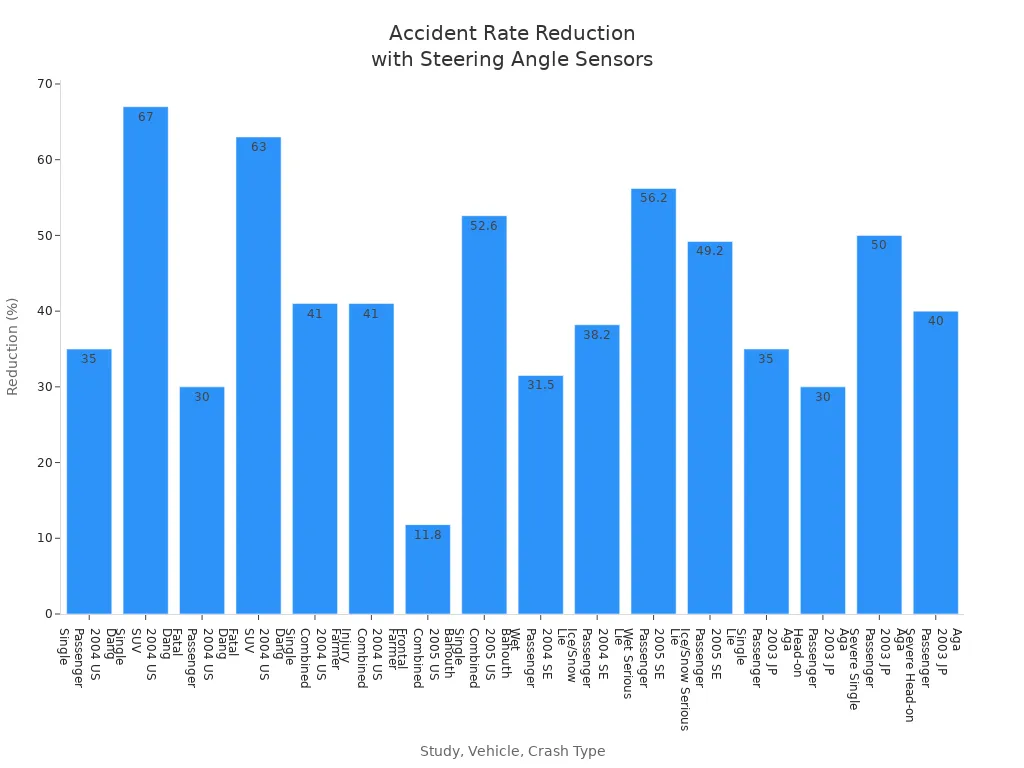
Imagine you drive down a winding road, music playing, and your car seems to handle every turn with ease. You might not notice, but a small device called a steering angle sensor works hard behind the scenes. This sensor constantly checks your steering wheel’s position and helps your car respond quickly to keep you safe. Thanks to the steering angle sensor, modern vehicle safety features can prevent many types of accidents. Studies show that cars with this technology experience up to a 67% reduction in single-vehicle crashes for SUVs, and similar improvements for other vehicles.
You trust your car every day. The steering angle sensor quietly acts as a guardian, making sure vehicle safety always comes first.
Key Takeaways
Steering angle sensors measure your steering wheel’s position and help your car stay stable and safe during turns and slippery conditions.
These sensors work with safety systems like electronic stability control and lane keeping assist to prevent accidents and keep you in control.
Accurate steering angle sensor data is essential for advanced driver assistance systems (ADAS) to function properly and protect you on the road.
If the steering angle sensor fails or is not calibrated after repairs, your car’s safety features may not work correctly, increasing the risk of accidents.
Regular calibration and prompt repairs keep the steering angle sensor accurate, ensuring your car’s safety systems and ADAS work as intended.
Steering Angle Sensor Basics
What Is a Steering Angle Sensor
You might wonder how your car knows exactly where you want to go. The steering angle sensor is the answer. This small device measures the position and movement of your steering wheel every time you drive. When you turn the wheel, the sensor tracks the angle and direction of your steering input. It works as the main link between your hands and your car’s safety systems.
Tip: The steering angle sensor does more than just measure the wheel’s position. It also helps your car understand how quickly and how far you turn the wheel.
Here are some key functions of the steering angle sensor:
Sends this data to your car’s computer for real-time analysis.
Supports systems like electronic stability control and lane keeping assist.
Helps with advanced features such as autonomous driving and steer-by-wire systems.
How It Works
The steering angle sensor uses advanced technology to detect every steering input you make. Most sensors use magnets, light, or changes in resistance to measure the wheel’s position. For example, a magnetic sensor uses a magnet ring and a non-contact sensor to create signals. These signals show the angle, speed, and direction of your steering input.
Sensor Type | How It Works |
|---|---|
Uses a magnet ring and sensor to track angle and direction | |
Optical Sensor | Uses light patterns to measure steering wheel position |
Inductive Sensor | Measures changes in coil inductance as the wheel turns |
Your car’s computer receives real-time data from the steering angle sensor. It uses this information to adjust steering, stability, and safety systems. If you make a quick steering input, the sensor sends that data instantly. The car then reacts to keep you safe, even during sharp turns or sudden moves.
Steering Angle Sensors and Vehicle Safety
Stability and Control
You rely on your car to keep you safe, especially when roads get slippery or you take a sharp turn. Steering angle sensors play a key role in vehicle safety by helping your car understand exactly how you want to steer. These sensors work with vehicle safety systems like electronic stability control and traction control to keep your car stable.
When you turn the steering wheel, the steering angle sensors measure the angle and speed of your movement. Your car’s computer compares this information with data from other sensors, such as yaw and acceleration sensors. If your car starts to slide or does not follow your steering input, electronic stability control steps in. The system can apply brakes to individual wheels or reduce engine power. This happens many times per second, much faster than any driver could react. The steering angle sensor acts as the main guide for these corrections, making sure your car stays on the path you choose.
Note: Proper calibration of the steering angle sensor is essential. If the sensor gives wrong data, electronic stability control may not work as intended.
Steering angle sensors also help during understeer or oversteer. Understeer happens when your car turns less than you want. Oversteer means your car turns more than you expect. In both cases, the sensors help the car’s safety systems detect the problem and correct it quickly. This keeps you in control, even in tough driving conditions.
Accident Prevention
Steering angle sensors do more than just keep your car stable. They also help prevent accidents before they happen. These sensors send real-time data about your steering to vehicle safety systems like traction control and the anti-lock braking system. When your car senses a loss of traction or a risk of skidding, these systems use the sensor’s data to respond right away.
For example, if you turn the wheel sharply on a wet road, the steering angle sensors notice the quick movement. The anti-lock braking system and traction control work together to adjust braking and engine power. This helps prevent your wheels from locking up or spinning out. The sensors act as the “eyes and ears” of your car’s accident prevention technology.
Steering angle sensors connect with other sensors through the car’s network. This allows the vehicle safety systems to share information and make fast decisions. By working together, these systems help you avoid dangerous situations and keep your car steady.
Steering angle sensors provide:
Integration with electronic stability control, traction control, and the anti-lock braking system.
Quick detection of skidding, understeer, or oversteer.
Fast corrective actions like individual wheel braking or engine power changes.
You may not see these sensors, but they work every time you drive. They help your car react to sudden changes and keep you safe on the road. Steering angle sensors are a vital part of modern vehicle safety, making sure you stay in control and avoid accidents.
ADAS and Advanced Driver Assistance Systems

Lane Keeping Assist
You may have noticed your car gently steering you back into your lane when you drift too close to the line. This is lane keeping assist, a feature powered by steering angle sensors and ADAS. Steering angle sensors measure the steering wheel’s angle, speed, and direction. These sensors send real-time signals to your car’s computer. Lane keeping assist uses this information to understand your steering input and the car’s position on the road.
When your car starts to drift, lane keeping assist checks the data from steering angle sensors and other ADAS sensors. The system then makes small steering corrections to keep you centered. This helps prevent unintentional lane departures and reduces the risk of accidents. Studies show that lane keeping assist can cut lane departure accidents by up to 50%. You get a safer drive, especially on highways or during long trips.
Tip: Lane keeping assist depends on accurate steering angle sensors. Even a small misalignment can cause the system to react too late or make the wrong correction.
Integration with ADAS
ADAS uses steering angle sensors as a core part of its safety features. These sensors work with other ADAS components like cameras, radar, and lidar. Your car’s computer combines all this data to make quick decisions. For example, steering angle sensors help ADAS systems like lane departure warning, collision avoidance, and adaptive cruise control.
Steering angle sensors provide:
Real-time updates on steering direction and speed.
Data for electric power steering and stability control.
Support for AI-driven steering adjustments in challenging conditions.
ADAS relies on precise information from steering angle sensors. If the sensors are not accurate, ADAS features may give false warnings or fail to keep you safe. Even a one-degree error can cause your car to drift out of its lane. Automakers recommend calibrating ADAS and steering angle sensors after any wheel alignment or repair. This ensures your advanced driver assistance systems work as intended and keep you protected.
Sensor Failure Risks
Safety System Impact
When your steering angle sensor fails, your car’s safety systems lose a key source of information. This sensor tells your car’s computer how you turn the steering wheel. If it sends wrong data, your electronic stability control, traction control, and anti-lock braking system may not work as they should. You might notice your car feels harder to steer or does not respond the way you expect. Sometimes, the anti-lock brakes might activate when you do not need them. This can surprise you during normal driving.
A faulty sensor can also cause your car to lose stability, especially on sharp turns or slippery roads. Your car’s computer may not know when to help you regain control. This increases the risk of accidents. If you have lane keeping assist or electronic power steering, these features may stop working or act strangely. After a wheel alignment, failing to reset the sensor can make these problems worse. Always check your car’s systems after repairs to stay safe.
⚠️ Note: Prompt diagnosis and repair of steering angle sensor issues help keep your vehicle’s safety features working correctly.
Warning Signs
You can spot problems with your steering angle sensor by watching for certain warning signs. These alerts often show up on your dashboard or in the way your car handles.
Common symptoms of a failing steering angle sensor include:
Check Engine Light appears after a wheel alignment or repair.
Steering wheel feels loose or does not respond as usual.
Stability control or traction control systems act up or stop working.
Dashboard shows the wrong steering wheel angle.
Unusual steering effort, such as heavy or imprecise steering.
If you see any of these signs, schedule a checkup with your mechanic right away. Quick action can prevent bigger problems and keep you safe on the road.
Calibration and Diagnostics
Importance of Calibration
You need to calibrate your steering angle sensor after any wheel alignment, suspension repair, or replacement. Calibration keeps your car’s safety systems working as they should. When you get an alignment or fix suspension parts, the steering wheel position can change. This change can make the sensor readings wrong, even if the sensor itself works fine.
The steering angle sensor checks the direction of your steering wheel and helps control features like lane keep assist, blind spot detection, and adaptive lighting.
Alignment or repairs can move the steering wheel or change sensor readings, causing the sensor to lose sync with the wheels.
Without calibration, your car’s safety systems may get the wrong data and act in unsafe ways.
Calibration resets the sensor to a “straight ahead” position using a scan tool. Most cars need this done on an alignment rack.
Proper calibration makes sure your car’s computer gets the right data and keeps all safety features working.
If you skip calibration, your car may not warn you about problems, making it unsafe to drive.
Manufacturers have special steps for calibration. You may need to center the steering wheel, turn the ignition on, and move the wheel fully left and right. Some cars need a scan tool, while others self-calibrate after driving straight for a short time. Always follow your car’s instructions for best results.
Diagnostic Alerts
Your steering angle sensor helps with more than just steering. It also sends diagnostic trouble codes when something goes wrong. The sensor checks its own data and tells your car’s computer if it finds a problem. You might see warning lights on your dashboard or get fault codes from a scan tool.
The car’s computer can store fault codes, like C1306 or U0428, to help find the problem.
You may notice odd steering, loss of power steering, or strange noises.
Sometimes, your car may skid or pull to one side.
Technicians use scan tools to read these codes and check live sensor data. They may also test wires and connections to find the cause. If you want to learn more, a troubleshooting and repair guide can help you understand what each code means and what steps to take next. Keeping your sensor calibrated and watching for alerts helps you stay safe on the road.
You depend on steering angle sensors every time you drive. These sensors measure your steering wheel’s angle and rate of turn, sending data to your car’s ECU. They help adas features like lane keeping assist, traction control, and adaptive cruise control keep you safe. You benefit from adas systems that use sensor data to prevent skidding and maintain stability. Reliable sensors ensure adas works in harsh conditions. As adas technology grows, you will see smarter sensors with AI and IoT integration. Future adas advancements will make your drive even safer.
FAQ
What does a steering angle sensor do in adas?
You use a steering angle sensor to help adas understand your steering input. The sensor sends real-time data to adas. This helps adas keep your car stable and safe. You get better control and more accurate adas responses.
Why does adas need accurate steering angle sensor data?
You need accurate data for adas to work well. If the sensor gives wrong information, adas may not keep your car in the lane or help you avoid danger. You stay safer when adas gets the right steering angle data.
How often should you calibrate the steering angle sensor for adas?
You should calibrate the sensor after any wheel alignment or repair. This keeps adas working as designed. If you skip calibration, adas may not respond correctly. Always check your car’s manual for the best advice.
What happens if the steering angle sensor fails in adas?
If the sensor fails, adas may stop working or give false warnings. You might lose lane keeping assist or stability features. You should fix the sensor quickly to keep adas and your car’s safety systems working.
Can adas work without a steering angle sensor?
No, adas needs the steering angle sensor to track your steering. Without it, adas cannot make safe decisions. You may lose important features like lane keeping assist and stability control. Always keep your sensor in good shape for adas to protect you.