Understanding Spade Terminals and Their Varieties in 2025
A spade terminal lets you connect electrical wires quickly and safely. In 2025, you face more choices than ever because the global spade terminals market is expected to reach over USD 1.25 billion, fueled by growth in electric vehicles, smart factories, and renewable energy. Picking the right spade connector matters. You need the best fit for safety, performance, and modern technology. As you work on your next project, understanding spade types and their uses helps you keep up with changing technology and ensures reliable connections.
Key Takeaways
- Spade terminals connect wires quickly and safely with a forked design that fits under screws without removing them.
- Choose the right spade terminal type and insulation based on your wire size, environment, and vibration needs for reliable connections.
- Heat shrink insulation offers the best protection against water, dust, and harsh conditions, ideal for outdoor or marine use.
- Match spade terminals to wire gauge and amperage using color codes to prevent overheating and ensure safety.
- Use proper crimping tools and test connections after installation to avoid loose wires and electrical hazards.
Spade Terminal Basics
What Is a Spade Terminal?
A spade terminal is a type of electrical terminal that helps you make secure wire connections. You will notice its flat, U-shaped or forked design. This shape lets you slide the terminal under a screw or bolt without removing the fastener completely. You often see spade terminals made from copper or brass, which gives you strong electrical conductivity. Some versions use gold plating to resist corrosion and improve signal quality, especially in audio systems.
You can find spade terminals in many sizes. This variety helps you match the terminal to your wire gauge and bolt size, making sure your electrical connection is safe and efficient. Manufacturers offer insulation options like PVC, nylon, or heat-shrink materials. These protect your connection from short circuits and harsh environments. You can install a spade connector by crimping or soldering, but you must use the right technique to avoid loose connections.
Tip: Always choose a spade terminal that matches your wire size and application. This step keeps your connections safe and reliable.
Common Uses
You will use spade terminals in many places where quick and easy connections matter. In homes, you often find them in appliances, control panels, and electrical panels. In commercial settings, spade terminals help connect wires in machinery and equipment. Their design lets you connect and disconnect wires fast, which is helpful when you need to do maintenance or replace parts.
Spade terminals work well in automotive wiring, too. You can use them in car audio systems, lighting, and engine controls. Their quick-connect feature saves you time and effort. However, if you need a very secure connection in a high-vibration area, you might choose a different terminal type.
You will see spade terminals used across many industries because they make wire connections simple and efficient.
Spade Connector Types

Standard and Flanged Spade Terminals
You will often see standard spade terminals in many electrical projects. These terminals have a simple fork or U-shape. You can easily slide them under a screw or bolt, which makes installation and removal quick. Standard spade terminals come in different insulation types, such as heat shrink, nylon, vinyl, or non-insulated. This variety lets you pick the right terminal for your environment and durability needs.
Flanged spade terminals look similar but include a flange, or a small edge, around the fork. This flange adds extra stability to your connection. If you work in places with vibration or movement, such as cars or machines, flanged terminals help keep wires secure. You can find flanged terminals with vinyl insulation and in sizes like 16-14 AWG. They also come in designs for low to high voltage, making them useful for many jobs.
Note: Flanged spade terminals give you more mechanical support than standard types. Choose them when you need a secure connection in tough conditions.
Key Differences:
- Standard spade terminals are easy to use and fit many jobs.
- Flanged spade terminals add stability and work better in places with vibration.
Block and Snap Spade Terminals
Block terminals, also called barrier terminal blocks, serve as connection points for several wires. You use them to organize wiring in cars, machines, or control panels. These blocks make testing, troubleshooting, and changing wires much easier. You can mount them under dashboards or in engine bays. Sometimes, you will see them with covers for extra safety.
Snap spade terminals, sometimes called quick-disconnect or push-on terminals, let you attach or remove wires fast. You do not need tools, which saves you time during repairs or upgrades. Their insulation helps prevent short circuits and keeps your connections safe. You can reuse these terminals, which is helpful if you need to change wires often. Many DIYers use snap spade connectors for motorcycles, boats, and home gadgets.
- Block terminals help you manage complex wiring and make future changes simple.
- Snap spade connectors are perfect for projects where you need to connect and disconnect wires quickly.
Fork, Male, and Female Spade Terminals
You will find several spade connector types designed for different tasks. Fork terminals have an open end that fits under a screw or clamp. You can install or remove them without taking the screw out all the way. This design saves you time and makes maintenance easier.
Male and female spade terminals work together as a quick-connect system. The male terminal, also called a blade or faston, slides into the female terminal, which acts as a socket. This system gives you a secure and stable connection. You can use these in cars, appliances, and industrial machines. They handle high amperage loads and work well in places where you need to connect and disconnect wires often.
| Terminal Type | Connection Reliability | Ease of Installation |
|---|---|---|
| Fork Terminal | Reliable, secure under vibration and movement | Quick to install or remove without fully loosening screws |
| Male Spade Terminal | Secure fit, good for frequent connect/disconnect | Simple push-on, easy to use |
| Female Spade Terminal | Stable connection, holds male blade firmly | Quick connection, easy to disconnect |
Tip: Use fork terminals when you want fast installation. Choose male and female spade connectors for quick, reliable connections in systems that need regular maintenance.
Specialty Spade Terminals
Specialty spade terminals offer extra features for tough jobs. Heat-shrink spade terminals have a special tube that shrinks and seals when heated. This creates a waterproof and dustproof seal, perfect for outdoor or marine use. The tinned copper core resists corrosion, so your connection lasts longer in harsh places.
Self-soldering or solder-seal connectors make installation even easier. These have a ring of solder inside and adhesive tubing outside. When you heat them, the solder melts and joins the wire, while the tubing seals out moisture. You do not need a soldering iron, which saves you time and tools. These connectors give you a strong, low-resistance joint that stands up to vibration.
You will also find commercial-grade and extreme-duty terminals. These use better materials and thicker insulation. They handle higher currents and last longer in demanding jobs. Many specialty terminals use color codes to help you match them to the right wire size.
- Waterproof spade connectors keep out water and dust (often rated IP67).
- Self-soldering types make strong, sealed joints with just a heat gun.
- Commercial and extreme-duty terminals work well in heavy equipment and smart grid systems.
Innovation Alert: In 2025, you can find spade connector types with features like easy inspection windows, modular designs, and even smart monitoring for predictive maintenance. Many new connectors use eco-friendly materials and support higher current loads for electric vehicles and smart factories.
Insulation and Materials
Insulated vs Non-Insulated Spade Terminals
When you choose between insulated spade terminals and non-insulated types, you need to think about safety and durability. Insulated spade terminals have a protective layer that keeps you safe from electrical shock and prevents short circuits. Non-insulated terminals do not have this layer, so you must handle them with care and sometimes add extra insulation. The table below shows the main differences:
| Aspect | Insulated Spade Terminals | Non-Insulated Spade Terminals |
|---|---|---|
| Safety | Protective insulating layer reduces risk of electrical shock and short circuits; prevents accidental contact | No insulation, higher risk of shorts; requires careful handling and additional insulation measures |
| Durability | Better environmental resistance; protects against corrosion and moisture, suitable for harsh environments | More prone to corrosion due to exposure; durable in normal conditions but less resistant in harsh environments |
| Cost | Generally more expensive due to insulating materials | More cost-effective, budget-friendly |
| Size/Space | Bulkier due to insulation layer | More compact, space-saving |
| Application Suitability | Ideal for safety-critical applications like automotive, household, industrial | Suitable where insulation is not critical or space is limited; requires extra safety precautions |
You often see insulated ring terminals used in places where safety matters most, like cars or home wiring. Non-insulated types work well when you need a compact fit, but you must take extra steps to keep connections safe.
Vinyl, Nylon, and Heat Shrink Insulation
You can pick from several insulation materials for spade and bootlace ferrules. Vinyl insulation costs less and gives you basic protection, but it does not last as long in tough conditions. Nylon insulation offers better flexibility and resists oils and fluids, so it lasts longer. Heat shrink insulation stands out because it forms a tight seal when heated. This keeps out water, dust, and chemicals, making it a top choice for outdoor or harsh environments. Bootlace ferrules with heat shrink insulation protect wires from damage and extend their life.
| Insulation Material | Temperature Resistance | Longevity and Durability Characteristics |
|---|---|---|
| Vinyl | Limited temperature resistance; lower than nylon and heat shrink | Lower cost; provides good dielectric strength but limited encapsulation; less durable and less protective against environmental damage |
| Nylon | Better than vinyl; more flexible and elastic | More resistant to oils and combustible fluids; less prone to cracking; offers longer longevity and better protection against damage |
| Heat Shrink | Superior temperature resistance (e.g., polyolefin: -55°C to 125°C) | Forms a tight, sealed barrier protecting against moisture, chemicals, abrasion, and outdoor elements; considered more reliable and longer-lasting; designed as a permanent solution if properly applied |
Tip: Heat shrink insulation on bootlace ferrules gives you the best protection for wires in extreme temperatures.
Materials and Plating
You will find that most spade and bootlace ferrules use 99.9% pure copper for high conductivity. Tin plating covers copper to stop corrosion and keep connections strong. Some terminals use bronze or beryllium copper for extra strength. Silver and nickel plating also appear in high-performance or harsh environments. Silver plating gives you the best conductivity and oxidation resistance, while nickel plating adds extra protection from corrosion. The chart below compares conductivity and corrosion resistance for common metals and platings:
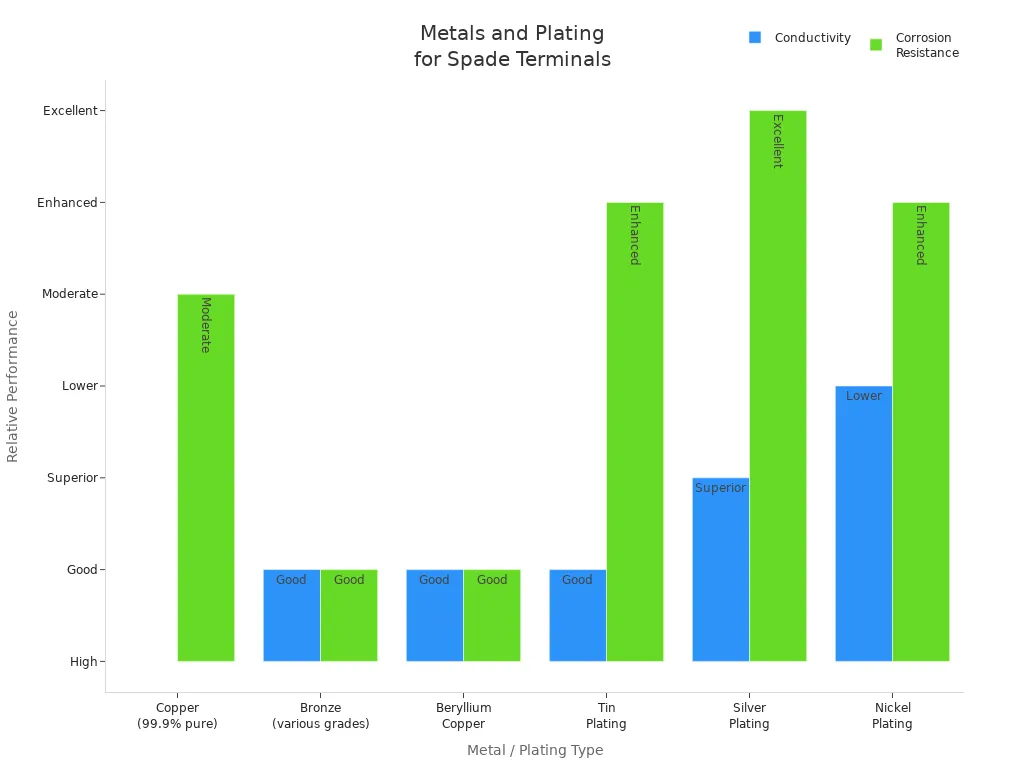
Bootlace ferrules and insulated ring terminals made with these materials last longer and keep your connections safe, even in tough outdoor or industrial settings. Environmental rules in 2025 also push manufacturers to use safer materials and coatings, which helps protect both your projects and the planet.
Choosing a Spade Terminal
Wire Size and Amperage
You need to match the spade terminal to your wire size and amperage. Most spade terminals fit wire gauges like 22-18, 16-14, and 12-10 AWG. Manufacturers use color coding to help you pick the right size for your electrical connection. Red, blue, and yellow colors show which wire gauge fits each terminal. Always check the amperage rating. Most spade terminals work best up to 15 or 20 amps. If you use more current, the contact can heat up and fail. Bootlace ferrules also follow these standards. You should crimp the ferrules tightly so all wire strands form a solid mass. This step keeps your wire connections safe and reliable. Avoid soldering after crimping because it can weaken the wire over time.
Tip: Always check the wire gauge and amperage before choosing spade terminals or bootlace ferrules. This step prevents overheating and keeps your system safe.
Application and Environment
You must consider where you will use the terminals and ferrules. Wet or humid places need waterproof connectors with heat shrink insulation. These keep out water and stop corrosion. High temperatures require terminals made from heat-resistant materials. If you work in areas with vibration, use locking spade terminals or bootlace ferrules with strain relief. Vinyl insulation gives basic protection, but nylon and heat shrink work better in tough conditions. Bootlace ferrules with heat shrink insulation protect wire connections from dust, chemicals, and moisture. For corrosive environments, pick terminals made from stainless steel or tinned copper.
- Use heat shrink insulation for outdoor or marine jobs.
- Choose locking spade terminals for cars or machines with lots of movement.
- Pick bootlace ferrules with extra protection for harsh environments.
Color Coding and Identification
Color coding helps you identify the right spade terminal or bootlace ferrule quickly. You see red for larger wires, blue for medium wires, and yellow for smaller wires. Green is for grounding. This system makes electrical installations safer and faster. You avoid mistakes and reduce the risk of using the wrong terminal. Bootlace ferrules also use color codes to match wire sizes. Always check the color before you start your project.
| Color | Wire Gauge (AWG) | Typical Use |
|---|---|---|
| Red | 22-18 | Small appliances, lighting |
| Blue | 16-14 | Home wiring, control panels |
| Yellow | 12-10 | Heavy-duty, automotive |
| Green | Grounding | Ground wire connections |
Note: Color coding makes it easy to match spade terminals and bootlace ferrules to the right wire size and application.
You should also look for certifications like UL Listed, ISO 9001, and ANSI C119.4. These show the terminals and ferrules meet safety and quality standards. Certified products give you peace of mind for industrial and commercial jobs.
Spade Terminal Installation
Tools and Techniques
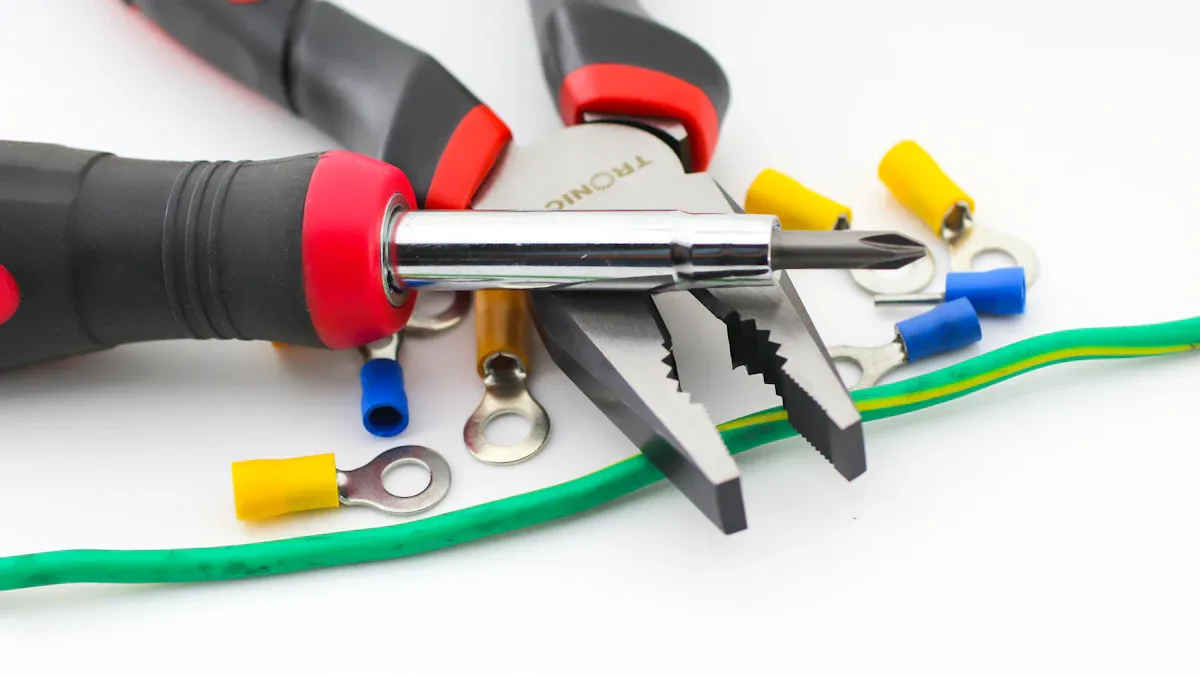
You need the right tools and techniques to make a strong electrical connection with spade terminals. Start by choosing a crimping tool that matches your terminal type. Manual crimpers work well for uninsulated connectors, while ratcheting crimpers give you consistent pressure for insulated ones. Always check the wire gauge stamped on the connector and match it to your wire. Strip the insulation to the correct length so no extra wire sticks out. Place the terminal in the crimper with the seam facing away from the tool’s tooth. This step helps you avoid weak crimps.
Follow these steps for reliable installation:
- Select the correct wire gauge for your spade terminal.
- Strip the wire insulation to the proper length.
- Insert the wire fully into the terminal.
- Align the terminal in the crimping tool and apply firm, even pressure.
- Make sure a small part of the wire extends past the crimp (about 1/16 inch).
- Inspect the crimp for gaps or stray wires.
- Test the connection with a multimeter to confirm it works.
Professionals use high-quality tools and follow strict standards. They often add heat shrink tubing for waterproofing and inspect each connection carefully. DIYers focus on simple, safe methods and avoid mistakes like nicking wire strands. Both groups want secure, long-lasting results.
Tip: Always test your electrical connection after crimping to catch problems early.
Safety Tips
You must protect yourself and your project during installation. Vibration can loosen spade terminals over time. Thermal changes may cause loss of contact pressure. Incorrect crimping or partial insertion can lead to overheating or fire hazards.
Use these safety tips:
- Use locking spade terminals or lock washers in areas with vibration.
- Choose copper or coated terminals for better conductivity and corrosion resistance.
- Seal connections with heat-shrink tubing to block moisture and dust.
- Mount terminals away from heat, water, or places where they might get damaged.
- Inspect connections regularly for signs of wear, corrosion, or loosening.
- Test continuity and resistance to find faulty connections before problems start.
⚡ Safety Alert: Never skip inspection or testing. A secure spade terminal keeps your electrical connection safe and reliable.
You now know how to choose the right spade terminal for your project. Pick the correct type, insulation, and size for safe, reliable connections. Many brands, like IDEAL Industries and Metra Electronics, offer a 1-year limited warranty on spade terminals. You can contact support by phone or email during business hours if you need help. Use this knowledge to make your electrical work safer and more dependable.
- Warranty covers defects if you notify the seller within the period.
- Customer support is available Mon-Fri, 9am-5pm EST.
FAQ
What is the main difference between a spade terminal and a ring terminal?
A spade terminal has an open end shaped like a fork. You can slide it under a screw without removing the screw. A ring terminal forms a closed loop. You must remove the screw to attach it.
Can you reuse spade terminals after removing them?
You should not reuse spade terminals. Crimping weakens the metal. Reusing them can cause loose connections or electrical problems. Always use a new terminal for each installation.
How do you know which spade terminal size to use?
Check your wire gauge and the screw size. Use the color code on the terminal as a guide. Red fits small wires, blue fits medium, and yellow fits large wires. Always match the terminal to your wire for safety.
Are spade terminals safe for outdoor use?
For outdoor use, pick spade terminals with heat shrink insulation or waterproof ratings. These keep out water and dirt. Standard terminals may rust or fail outside. Always check the product label for outdoor or marine approval.