RJ11 and RJ45: Key distinctions and their impact on modern networks
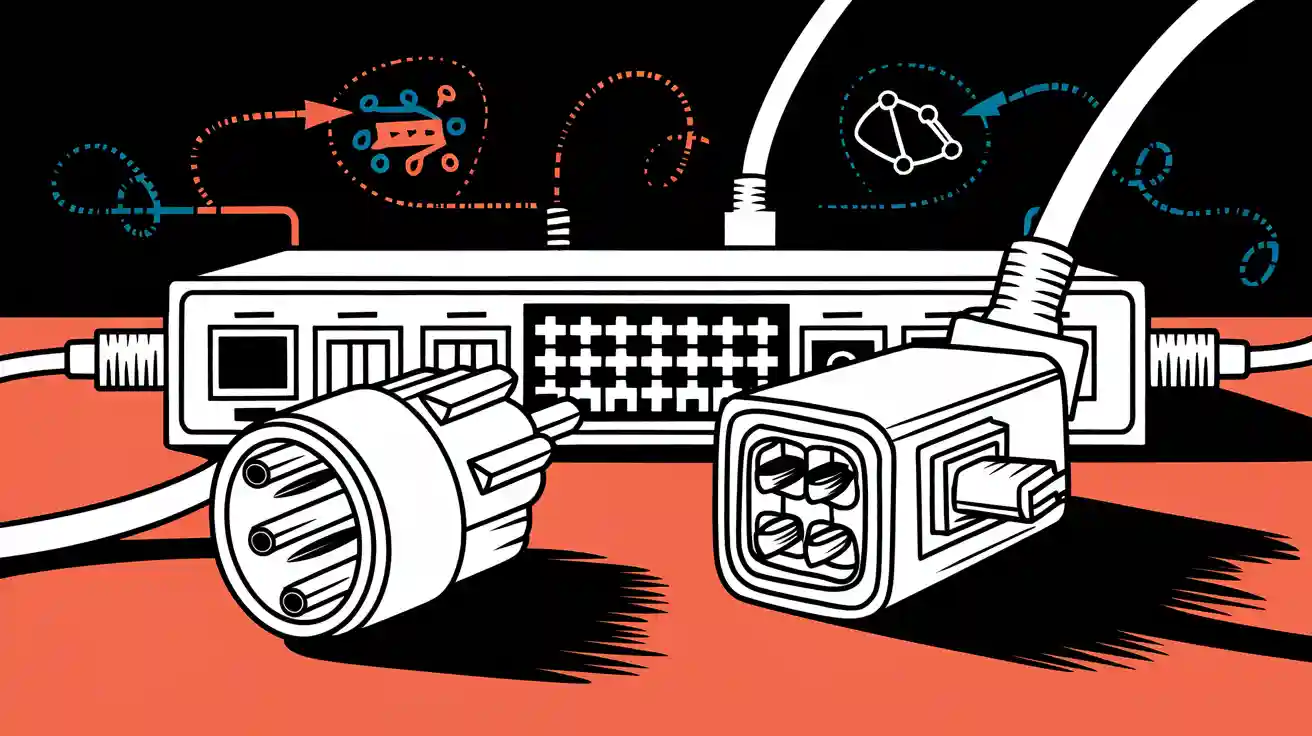
Anyone working with modern networking must understand rj11 vs rj45. These connectors play different roles in network setups. RJ11 often connects telephones, while rj45 links computers and devices in high-speed networking. The main differences between rj11 vs rj45 affect network performance and device compatibility.
| Feature | RJ45 Connector | RJ11 Connector |
|---|---|---|
| Wire Positions | 8 positions | 4 positions |
| Number of Conductors | 8 | 2 or 4 |
| Physical Size | Larger, rectangular | Smaller, compact square |
| Primary Use | Ethernet networking | Telephony, DSL |
Choosing the right connector helps prevent equipment damage and ensures reliable networking. Understanding rj11 vs rj45 keeps a network running smoothly.
Key Takeaways
- RJ11 connectors are smaller and mainly used for telephones and basic internet, while RJ45 connectors are larger and designed for high-speed Ethernet networking.
- RJ45 connectors have 8 pins to support fast data transfer, making them ideal for computers, servers, and modern digital devices.
- Using the correct connector prevents equipment damage and ensures reliable network performance; RJ11 and RJ45 are not interchangeable.
- RJ11 remains useful for legacy telephone and DSL systems, but RJ45 is essential for today’s high-speed internet and expanding network needs.
- Proper installation and matching connectors to devices keep networks safe, stable, and ready for future technology growth.
rj11 vs rj45
Physical differences
The physical differences between rj11 and rj45 connectors are easy to spot. RJ11 connectors look smaller and more compact, while rj45 connectors appear larger and rectangular. RJ11 connectors usually have a square shape and fit easily into telephone jacks. RJ45 connectors, on the other hand, have a broader, rectangular design that fits into Ethernet ports for networking.
Note: The physical size of each connector helps prevent accidental misuse. An rj11 connector can sometimes fit into an rj45 port, but this can cause damage or poor connections.
The table below highlights the main physical differences between rj11 and rj45:
| Feature | RJ11 | RJ45 |
|---|---|---|
| Connector Shape | Smaller, compact, square-shaped | Larger, rectangular, eight-position |
| Number of Pins | 4 or 6 pins | 8 pins |
| Wire Pairing | Two or three pairs (4 or 6 wires) | Four pairs (8 wires) |
| Typical Use | Telephone lines, modem cables | Ethernet networking, network cables |
| Signal Type | Analog voice signals | Digital data transmission |
RJ11 connectors work best for analog voice signals and basic digital services. RJ45 connectors support digital data transmission and high-speed networking. The physical differences between rj11 and rj45 affect how each connector fits into devices and what kind of cables they use.
Pin count
Pin count is another key factor in the physical differences between rj11 and rj45. RJ11 connectors usually have 4 or 6 pins, but most telephone systems use only 2 or 4 of these. RJ45 connectors always have 8 pins, which matches the 8 wires inside Ethernet cables.
| Feature | RJ11 | RJ45 |
|---|---|---|
| Pin Count | 4 pins (6 positions, 4 contacts used) | 8 pins (8 positions, 8 contacts) |
| Typical Use | Analog voice telephone lines, DSL | Ethernet networking, high-speed data transmission |
| Supported Applications | Residential and small office telephony | Computers, servers, switches, IP cameras, IoT devices, multimedia streaming |
| Bandwidth Capability | Limited, suitable for voice and low-speed data | High bandwidth, supports up to 10GbE and beyond |
| Compatibility | Incompatible with RJ45 due to different pinouts and electrical specs | Designed for digital data packets and modern networking standards |
The higher pin count in rj45 connectors allows them to carry more data and support faster network speeds. This is one reason why the purpose of rj45 connectors centers on modern networking and high-speed data transfer. RJ11 connectors, with fewer pins, cannot handle the demands of Ethernet or other advanced network applications.
Size comparison
Size plays a big role in how these connectors work in real-world installations. RJ11 connectors measure about 6mm by 9.5mm, making them easy to use in tight spaces for telephony. RJ45 connectors are slightly larger, about 6mm by 11mm, and need more room in network panels and devices.
| Connector | Size (mm) | Positions | Contacts | Typical Use | Installation Impact |
|---|---|---|---|---|---|
| RJ11 | 6 x 9.5 | 6 | 2 or 4 | Telephone wiring, ADSL/VDSL | Smaller size fits voice applications; incompatible with RJ45 ports despite sometimes fitting physically, risking damage |
| RJ45 | 6 x 11 | 8 | 8 | Ethernet networking (Cat5 to Cat8) | Larger size requires more space; supports higher data rates; careful installation needed to avoid damage |
- RJ11 connectors are best for telephone wiring and basic digital services.
- RJ45 connectors, also called rj45 cable connectors, are designed for Ethernet networking and can handle much higher data speeds.
The physical differences between rj11 and rj45, including size and pin count, help prevent mistakes during installation. Using the wrong connector can cause network problems or even damage equipment. Installers must always match the connector type to the device and cable to ensure safe and reliable networking.
Tip: Always check the connector type before plugging in a cable. RJ11 and rj45 connectors are not interchangeable, even if they look similar.
The rj45 connector supports more wires and higher data rates, making it the standard for modern networking. RJ11 connectors remain useful for telephony but cannot meet the needs of today’s high-speed network environments.
rj11 applications
Telephony
RJ11 connectors play a major role in telephone systems. Many homes and offices use rj11 to connect landline telephones to wall jacks. The rj11 cable connector supports basic analog voice services. People rely on rj11 for clear voice communication. Fax machines also use rj11 to send and receive documents. The connector links modems to telephone lines, making dial-up internet possible. Most telephones use rj11 because it fits easily into standard jacks and supports reliable connections.
Note: RJ11 connectors typically use 4 out of 6 pins, which makes them ideal for voice communication and simple telephone wiring.
The following list highlights common rj11 applications in telephony:
- Connecting traditional landline telephones to wall outlets.
- Linking fax machines for document transmission.
- Supporting analog modems for dial-up internet access.
- Providing reliable voice communication over analog phone lines.
- Merging voice and data services in some telephone setups.
RJ11 remains a dependable choice for telephone systems. Its design makes installation easy and cost-effective. Many people still use rj11 for basic telephone needs, even as digital technology grows.
DSL and legacy systems
RJ11 connectors continue to serve important functions in DSL and legacy communication systems. Many homes use rj11 to connect DSL modems to telephone jacks. This application allows internet access over existing telephone lines. RJ11 is common in areas with limited broadband options. The connector supports both voice and internet signals in DSL setups. Legacy systems also depend on rj11 for connecting telephones, fax machines, and analog modems.
Tip: RJ11 connectors offer simplicity and compatibility with older telephone infrastructure, making them valuable in legacy applications.
Key rj11 applications in DSL and legacy systems include:
- Connecting DSL modems to telephone outlets for basic internet service.
- Transmitting internet data signals over voice lines in DSL setups.
- Linking integrated DSL modems in routers or gateways to telephone jacks.
- Supporting analog modems and fax machines in older communication networks.
- Providing a cost-effective solution where telephone service is the main requirement.
RJ11 cannot support high-speed digital data or Ethernet networking. However, it remains useful for telephone and internet applications in legacy environments. Many people rely on rj11 for dependable service where advanced digital networks are not available.
rj45 applications
Ethernet networking
RJ45 connectors play a central role in ethernet networking. They serve as the standard interface for wired LAN connections. Most computers, switches, and routers use rj45 to connect to ethernet networks. The connector features 8 pins that match the 8 wires inside twisted-pair cables. This design allows for fast and reliable data transmission. Ethernet cabling with rj45 supports high-speed internet access in homes, schools, and businesses.
Ethernet networking uses rj45 to link many devices. These include desktop computers, servers, printers, and network-attached storage. The connector’s latch keeps the cable secure in the port. RJ45 connectors also help reduce electromagnetic interference through shielding. This ensures stable digital communication across the network.
Tip: RJ45 connectors follow strict wiring standards, such as T-568A and T-568B, to ensure compatibility and easy installation in all ethernet networking environments.
A table below shows common ethernet networking applications for rj45:
| Device Type | Typical Use in LAN |
|---|---|
| Computer | Wired internet access |
| Switch | Connecting multiple devices |
| Router | Gateway to the internet |
| Printer | Network printing |
| Server | Data storage and sharing |
IP phones and devices
RJ45 connectors support a wide range of digital devices beyond computers. Many modern offices use IP phones that rely on rj45 for both power and data. This is possible through Power over Ethernet (PoE) technology. PoE allows a single ethernet cable to deliver both high-speed internet and electrical power to devices like IP phones, security cameras, and wireless access points.
RJ45 connectors provide a secure and standardized interface for these devices. The 8-pin design ensures stable connections and fast data transfer. Features such as shielding and keying help protect against interference and incorrect insertion. Ruggedized rj45 connectors allow use in industrial settings, making them suitable for diverse networking applications.
- RJ45 connectors enable reliable, high-speed internet for IP phones and digital devices.
- They support ethernet networking in offices, schools, and factories.
- Devices such as VoIP phones, network cameras, and smart sensors depend on rj45 for connectivity.
The purpose of rj45 connectors centers on enabling digital communication and powering devices over ethernet networks. RJ45 applications continue to expand as more devices join the network and require fast, stable connections.
rj45 connector and bandwidth
Data speed
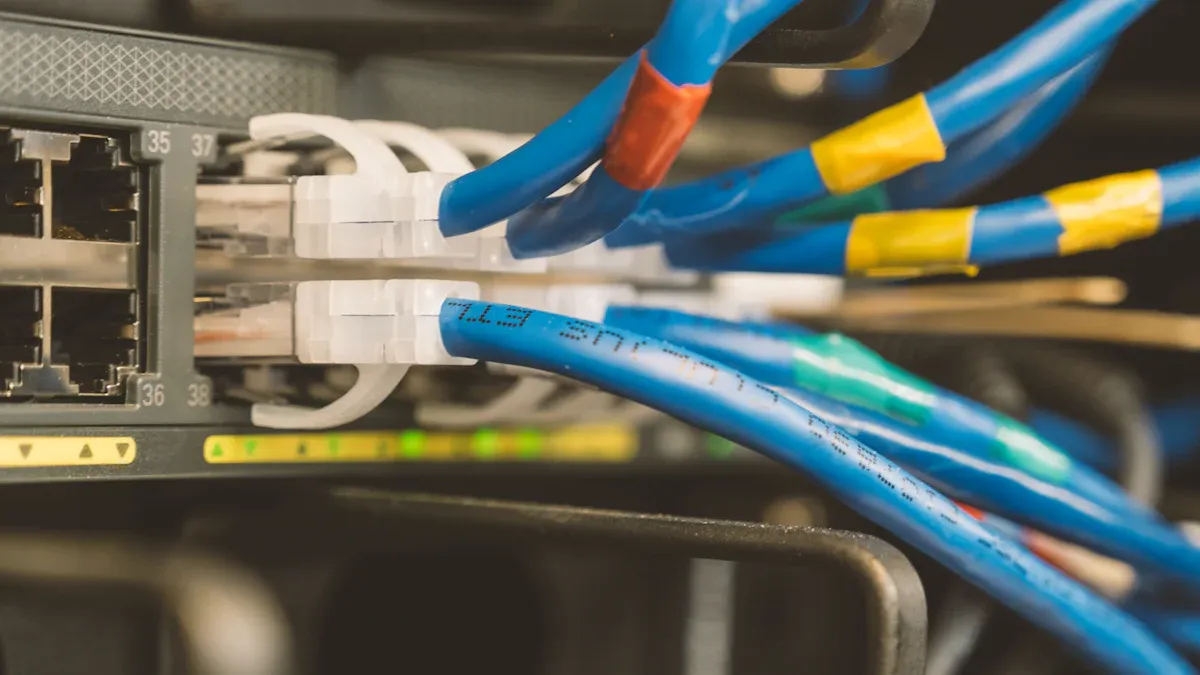
RJ45 connectors play a vital role in supporting high-speed data transmission across modern networking environments. They enable digital data transmission for ethernet networks, allowing devices to communicate quickly and efficiently. The maximum data speed depends on the cable category used with the rj45 connector. Cat5e cables support up to 1 Gbps, which meets the needs of most home and small business networking. Cat6 and Cat6a cables allow speeds up to 10 Gbps, making them suitable for high speed data networking in larger offices and data centers. Cat8 cables push the limits even further, reaching up to 40 Gbps for short distances in specialized applications.
| Cable Category | Maximum Data Speed | Frequency | Notes |
|---|---|---|---|
| Cat5e | Up to 1 Gbps | N/A | Common in enterprise and home networks |
| Cat6 | 10 Gbps | 250 MHz | Suitable for high-speed networks, gold-plated contacts reduce signal loss |
| Cat6a | 10 Gbps | 500 MHz | Enhanced reliability, favored in data centers and corporate environments |
| Cat8 | Up to 40 Gbps | 2000 MHz | 30 meters max, used for switch-to-switch communications |
RJ45 connectors ensure stable data transmission by matching the cable type to the required speed. High-speed data transmission relies on precise termination and quality components. Proper installation prevents signal loss and maintains reliable data flow. The rj45 connector remains the standard for ethernet networking, supporting everything from basic LAN setups to advanced digital infrastructure.
Network reliability
Network reliability depends on the design and quality of rj45 connectors. These connectors provide a standardized interface for data transmission, supporting speeds up to 10 Gbps over 100 meters with shielded cables. Industrial rj45 connectors offer increased mechanical strength and 360° shielding, protecting against electromagnetic interference. Spring shielding resists shock and vibration, keeping connections stable in busy environments. Waterproof and ruggedized designs, such as IP67-rated connectors, allow use in harsh conditions.
Tip: Proper strain relief and correct pin alignment help prevent connection failures and maintain high-speed data transmission.
Key features that improve network reliability include:
- Keyed design prevents incorrect mating, ensuring proper connections.
- Twisted-pair cabling cancels electromagnetic interference, enabling long-distance, high-bandwidth data transmission.
- Compact size fits tight enclosures and control panels.
- Ruggedized formats with locking flanges and strain reliefs maintain signal integrity in challenging conditions.
- Field-wireable and preassembled options make installation easier and more reliable.
RJ45 connectors balance performance, cost, and usability for commercial and industrial networking. Their reliable electrical contacts and ease of installation contribute to consistent network performance. High-frequency performance depends on precise termination and quality components, which help avoid impedance mismatches and maintain gigabit speeds. RJ45 connectors support the demands of digital data transmission in modern ethernet networks.
Choosing the right connector
Performance impact
Selecting the correct connector affects how well devices communicate and how fast information moves. RJ45 connectors support high-speed data transmission. They use eight wires and follow T568A or T568B standards. This design reduces interference and allows speeds up to 10Gbps or more with the right cables. RJ45 connectors work best for modern Ethernet environments. They help computers, servers, and other devices share information quickly and reliably.
RJ11 connectors are smaller and use fewer wires. Most telephone systems use rj11 for voice calls or fax machines. RJ11 supports data transmission at much lower speeds, usually up to 24Mbps. This makes rj11 suitable for basic telephone and DSL connections. Using rj11 instead of rj45 limits bandwidth and slows down data transmission. Devices may not work as expected if the wrong connector is used. RJ45 is the preferred choice for stable, high-speed connections. RJ11 remains important for legacy telephone and low-bandwidth applications.
Tip: Always match the connector to the device and service. RJ45 enables fast data transmission for computers and networks. RJ11 works best for telephone and fax systems.
Safety
Safety matters when installing connectors. RJ11 and RJ45 have different pinouts and wiring. Mixing them can damage equipment or cause faults. RJ11 fits into some RJ45 ports, but this can lead to electrical mismatches. Devices may stop working or suffer permanent damage.
Key safety steps include:
- Use RJ11 only for telephone systems and RJ45 only for Ethernet networking.
- Check connector type before installation to avoid mistakes.
- Follow wiring standards like T568A or T568B for RJ45 to reduce interference.
- Never interchange RJ11 and RJ45 connectors. They are not compatible.
- Make sure each connector is terminated correctly to prevent safety issues.
Proper identification and careful installation keep devices safe. Following these steps ensures reliable data transmission and protects equipment from harm.
Future of rj11 and rj45
Trends in ethernet
Ethernet technology continues to change how people build and use networks. RJ45 connectors play a key role in these changes. Many companies now use higher data rates, such as 10GBASE-T, which allow speeds up to 10 Gbps over copper cables. RJ45 connectors support these speeds and help keep costs low. They also make installation easy and work well with existing infrastructure. This makes RJ45 a popular choice compared to fiber optics and wireless solutions.
New designs and materials improve signal quality and durability. These upgrades help reduce latency and support better performance. The demand for reliable, high-speed connectivity grows because more devices connect to the internet. IoT devices, cloud computing, and virtualization all need strong ethernet routing. RJ45 connectors help future-proof networks by meeting current standards and reducing interference. The global market for ethernet connectors, including RJ45, is expected to grow each year.
RJ45 connectors continue to evolve. Shielded versions reduce electromagnetic interference and support higher speeds. Hybrid solutions combine RJ45 with fiber optics for better performance in complex networks.
Evolving network needs
Network needs change as technology advances. RJ11 connectors, designed for analog voice telephony, now serve mostly legacy and niche uses. Their low bandwidth limits them to basic telephony, rural areas, and special equipment like alarm systems. RJ45 connectors have become the standard for modern networking. They support ethernet connections with speeds up to 10 Gbps. This is important for high-speed internet, data centers, smart technologies, and IoT devices.
New installations favor RJ45 connectors. They meet the demands of cloud computing, big data, video streaming, and smart environments. RJ45 connectors also play a key role in hybrid infrastructures. They manage local wired connections while fiber optics handle long-range, high-speed transmission. RJ45 supports the growing IoT ecosystem by providing reliable wired connections for smart homes, businesses, and cities.
RJ45 connector technology shapes future communication infrastructure. Single Pair Ethernet (SPE) standards extend transmission distances and speeds. These standards support industrial applications that need robust, high-speed communication. RJ45 connectors now offer higher data rates and increased Power over Ethernet (PoE) wattage. They use eco-friendly materials and come in specialized designs for different industries, such as healthcare and telecommunications.
The future of networking relies on RJ45 connectors. They provide stable, high-speed connections for routers, switches, and digital devices. RJ11 connectors remain useful in limited roles, but RJ45 leads the way in modern and future networks.
Key differences between RJ11 and RJ45 shape network compatibility and performance. RJ45 connectors use eight pins and support high-speed Ethernet, while RJ11 serves analog telephone lines with lower bandwidth. Choosing the correct connector ensures reliable data transmission and protects equipment from damage. As digital transformation accelerates, RJ45 remains essential for modern networks, supporting new technologies and higher speeds in homes, businesses, and industry.
FAQ
What happens if someone plugs an RJ11 connector into an RJ45 port?
An RJ11 connector may fit into an RJ45 port, but this can damage the port or cause poor connections. Devices may not work correctly. Always use the correct connector for each port.
Can RJ45 cables carry telephone signals?
RJ45 cables can carry telephone signals if wired for telephony. Most networks use RJ45 for Ethernet data. Telephone systems usually use RJ11. Mixing them can cause confusion or equipment issues.
Why do Ethernet networks use RJ45 instead of RJ11?
Ethernet networks use RJ45 because it supports more wires and higher data speeds. RJ45 connectors handle digital data and provide reliable connections for computers and network devices.
Is it possible to convert RJ11 to RJ45?
Adapters exist to connect RJ11 devices to RJ45 ports, but this does not increase speed or performance. The connection still works at RJ11’s lower capacity. Always check device requirements before using adapters.