Resettable Circuit Breakers Help Prevent Downtime in Modern Electrical Networks
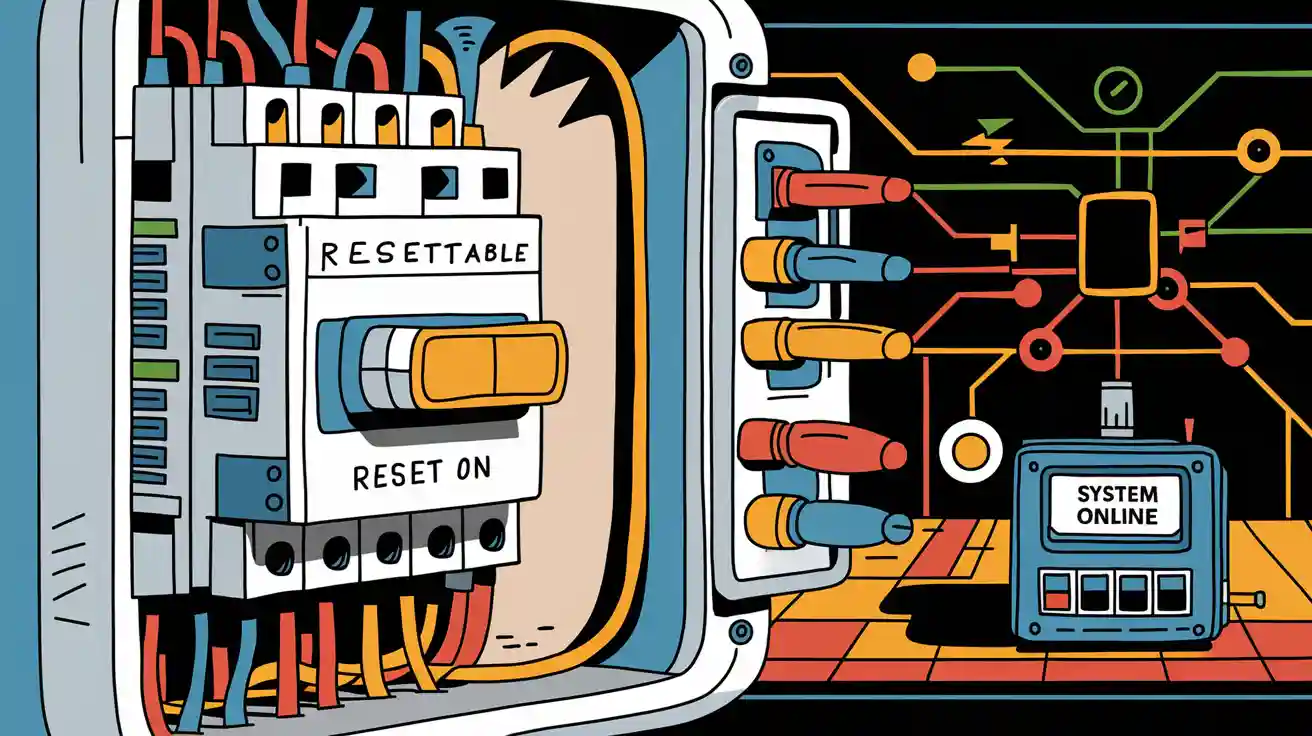
You want your electrical systems to run smoothly, especially when every minute of downtime costs you money. A resettable circuit breaker lets you restore power quickly after a fault, so you avoid replacing blown fuses. Miniature circuit breakers respond fast to overcurrent, which protects your equipment and boosts safety. Advanced models even monitor branches without complicated installation. Check this comparison:
| Feature | Fuses | Circuit Breakers |
|---|---|---|
| Breaking Capacity | Lower breaking capacities | Higher breaking capacities |
| Resetability | Not resettable | Resettable and reusable |
| Handling Overloads | Effective but limited | More effective in high loads |
You get reliable protection for today’s higher electrical loads and less maintenance in your electrical network.
Key Takeaways
- Resettable circuit breakers allow for quick power restoration after faults, minimizing downtime and keeping your business running smoothly.
- Unlike fuses, circuit breakers are reusable and require less maintenance, saving you time and money on replacements.
- Modern circuit breakers offer advanced safety features, including overload and ground fault protection, ensuring your electrical systems remain safe.
- Investing in resettable circuit breakers can lead to significant long-term cost savings by reducing maintenance and repair expenses.
- Upgrading to circuit breakers helps you comply with safety standards, protecting your investment and enhancing the reliability of your electrical network.
What Is a Resettable Circuit Breaker
Basic Operation
You rely on a resettable circuit breaker to keep your electrical systems running safely. This device acts as a guardian for your circuits. When the current gets too high, the breaker interrupts the flow, stopping damage before it starts. You do not need to replace anything—just reset the breaker and restore power.
Take a look at the main parts that make a resettable circuit breaker work:
| Component | Function |
|---|---|
| Terminals | Entry and exit points for the electrical flow. |
| Stationary Contact | A fixed endpoint allowing current to continue its path. |
| Mobile Contact | Engages with the stationary contact to permit electrical flow. |
| Catch | A triggering mechanism for the switch. |
| Simple Switch | Governs the connection between contacts. |
| Electromagnet/Copper Coil | Activates due to high current levels. |
| Bimetallic Strip | Heats and bends in response to excessive current, leading to circuit interruption. |
You get two main protective mechanisms. The thermal overload protection uses a bimetallic strip that bends when overheated, breaking the circuit. The magnetic short-circuit protection uses an electromagnet to disconnect the circuit during dangerous spikes. These features help you avoid costly downtime and keep your electrical equipment safe.
Types
You can choose from several types of resettable circuit breakers, each designed for specific electrical needs:
| Circuit Breaker Type | Application | Description |
|---|---|---|
| Miniature Circuit Breaker (MCB) | Residential and Commercial | Protects circuits from overloading and short-circuiting, typically for loads under 100 amps. |
| Molded Case Circuit Breaker (MCCB) | Industrial, Residential, and Commercial | Protects systems with currents from 15 amps to 1000 amps, can be reset without restarting. |
| Ground Fault Circuit Interrupter (GFCI) | High-risk areas (bathrooms, kitchens) | Protects against electrical shock by detecting ground faults. |
| Arc Fault Circuit Interrupter (AFCI) | Residential | Protects against electrical fires caused by arc faults, commonly installed in living spaces. |
You find circuit breakers in manufacturing plants, data centers, and homes. In industrial settings, air circuit breakers and MCCBs protect large circuits and prevent failures. You can trust a resettable circuit breaker to interrupt current flow when it exceeds safe levels, keeping your electrical network reliable and secure.
Circuit Breakers vs. Fuses
Downtime Prevention
You want your electrical system to recover quickly after a fault. Circuit breakers give you this advantage. When a fault happens, circuit breakers trip and stop the flow of electricity. You can reset them with a simple switch. Power comes back in seconds. Fuses work differently. They break when overloaded, and you must replace them before your system works again. This process takes time and can leave your equipment offline.
Consider these differences:
- Circuit breakers are resettable. You restore power fast after a fault.
- Fuses are single-use. You must replace them every time they blow.
- Circuit breakers minimize downtime. You avoid waiting for new parts.
- Fuses increase downtime. You need to find and install a replacement.
Circuit breakers offer better protection for your electrical network. You keep your business running and avoid costly interruptions. Their performance stands out in environments where every minute counts.
Maintenance Needs
You want low maintenance for your electrical protection. Circuit breakers help you achieve this goal. Modern circuit breakers come with self-diagnostic features. You spend less time on routine checks. If a circuit breaker needs replacement, you can do it easily. Fuses require more attention. Every time a fuse blows, you must replace it. This task adds up, especially in busy electrical networks.
Here is a quick comparison:
| Feature | Circuit Breakers | Fuses |
|---|---|---|
| Maintenance Frequency | Low (self-diagnostics) | High (replace after use) |
| Replacement Process | Simple | Time-consuming |
| Long-Term Costs | Testing and calibration | Frequent replacements |
Circuit breakers save you time and effort. You avoid constant replacements and keep your electrical protection strong. You also reduce the risk of mistakes during maintenance. Your network stays reliable, and you focus on what matters most.
Resettable Circuit Breaker Benefits
Rapid Restoration
You want your electrical system to recover instantly after a fault. Resettable circuit breakers give you this advantage. When circuit overloads, short circuits, or ground faults occur, these devices trip and stop the flow of electricity. You restore power with a simple reset, so your equipment returns to operation within seconds. This rapid restoration keeps your business running and prevents costly downtime.
Tip: Quick resets mean less waiting and fewer interruptions. You maintain consistent performance in your electrical network, even during unexpected faults.
Circuit breakers deliver extended protection by automatically interrupting dangerous currents. You avoid equipment damage and reduce the risk of fire hazards. In critical environments like hospitals, data centers, and malls, circuit breakers ensure operational continuity by protecting sensitive electrical systems. You benefit from greater functionality and reliable fault current limitation, which keeps your infrastructure safe and productive.
Cost Savings
You save money with resettable protection. Unlike fuses, circuit breakers do not need replacement after every fault. You simply reset them, which lowers your maintenance costs and reduces labor expenses. Over time, the savings add up.
| Aspect | Circuit Breakers | Traditional Fuses |
|---|---|---|
| Initial Investment | Higher | Lower |
| Reusability | Yes | No |
| Downtime | Minimal (quick reset) | Significant (requires replacement) |
| Maintenance Costs | Lower (no replacements needed) | Higher (frequent replacements) |
| Lifespan | 15-20 years | Shorter lifespan |
For an average household, you might spend $10 to $20 each year replacing fuses. Over a decade, that’s $100 to $200. Circuit breakers last much longer, so you eliminate these recurring expenses. You also reduce downtime, which increases productivity and lowers operational costs. The convenience of resetting circuit breakers means you spend less time and money on repairs.
Note: Resettable circuit breakers help you comply with safety standards, which reduces legal liabilities and protects your investment.
Longevity
You want your electrical protection to last. The life expectancy of a circuit breaker often reaches 15 to 20 years, far outpacing traditional fuses. Circuit breakers deliver reliable protection through thousands of operating cycles. Industry studies show reliability improvements from 61.76% to 98.17% over 20,000 cycles when using advanced designs.
- Regular lubrication and inspections extend the lifespan of your circuit breakers.
- Cleaning and mechanical checks keep your electrical system running smoothly.
- Visual inspections help you spot damage or overheating before problems occur.
The market for circuit breakers continues to grow, reaching $16.11 billion in 2024 and projected to hit $24.35 billion by 2032. This growth reflects the demand for reliable electrical protection and greater functionality in modern networks. You benefit from ground fault protection, overload protection, and short circuits prevention, all in one device.
Block Quote: “Modern circuit breakers offer enhanced safety, energy savings, and better monitoring. You get consistent performance and reliability for years.”
You protect your equipment, reduce waste, and support sustainable practices. Manufacturers now use recycled plastics and eco-friendly materials, making circuit breakers a smart choice for long-term electrical protection.
Enhanced Safety Features
Overload Protection
You want your electrical system to handle heavy loads without risk. Resettable circuit breakers give you overload protection by tripping when the current goes beyond safe limits. This feature prevents overheating and stops fires before they start. You get peace of mind knowing your modern homes stay safe, even when you use high-draw appliances.
Here is how different circuit breakers provide overload protection:
| Type of Circuit Breaker | Function |
|---|---|
| Thermal circuit breakers | Provide overload protection |
| Thermal-magnetic circuit breakers | Provide overload and short-circuit protection |
| Electronic circuit breakers | Protect against overload, short circuit, and more |
You see the benefit in real life. For example, in office buildings, circuit breakers manage power for lighting and data centers. They trip instantly during a fault, keeping your equipment and people safe. Farms and dairies rely on these breakers to protect heavy machinery from fluctuating electrical loads. You avoid costly repairs and downtime.
Tip: Upgrading to modern circuit breakers means you meet the safety needs of today’s electrical systems and keep your home or business protected.
Equipment Damage Prevention
You want your devices to last longer. Resettable circuit breakers help prevent equipment damage more effectively than fuses. You can adjust these breakers to handle temporary overloads, so you avoid unnecessary interruptions. Unlike fuses, which you must replace after every fault, circuit breakers let you restore power with a simple reset. This feature saves you time and money.
Modern homes use more electronics than ever before. High-draw appliances put extra stress on your electrical network. Circuit breakers respond quickly to faults, stopping dangerous currents before they reach your devices. You protect your investment and keep your equipment running at peak performance.
Block Quote: “Resettable circuit breakers minimize downtime and reduce the costs of frequent replacements. You get reliable protection for all your electrical devices.”
Safety in Modern Networks
You need enhanced safety in your electrical network. Modern circuit breakers offer advanced features that go beyond basic protection. You get short circuit protection, ground fault protection, arc fault protection, and even under voltage and overvoltage protection. These features keep your modern homes safe from electrical hazards.
Here are some safety features you find in today’s resettable circuit breakers:
- Overload protection
- Short circuit protection
- Ground fault protection
- Arc fault protection
- Under voltage protection
- Overvoltage protection
- Remote monitoring and control
- Mechanical interlocks
- Dual rating for AC and DC
- Diagnostic and testing features
You see the impact in real-world scenarios. Hospitals use specialized breakers to ensure zero downtime for life-support systems. Municipal facilities rely on circuit breakers to keep water treatment plants running. Hotels manage high electrical loads to guarantee guest safety and comfort.
Modern homes demand more from electrical systems. The National Electrical Code now requires circuit breakers in new buildings for better protection. International standards like IEC 61008 and IEC 61009 set strict rules for design and safety. You must follow local codes to keep your installation safe and reliable.
Note: Enhanced safety is critical for modern homes. Older breakers may not handle today’s electrical loads, increasing fire and shock risks. Upgrading to resettable circuit breakers gives you better protection and peace of mind.
You keep your electrical system safe and efficient when you choose resettable circuit breakers. You get quick resets, less maintenance, and better protection for high electrical loads. Take a look at the key differences:
| Benefit | Fuse Box | Circuit Breaker Panel |
|---|---|---|
| Safety Features | No AFCI/GFCI | Arc-fault and ground-fault protection |
| Electrical Capacity | 60–100 amp | 100–200 amp or more |
| Reset Method | Replace fuse cartridges | Flip a switch |
| Code Compliance | Often non compliant | Meets NEC standards |
Tip: Smart circuit breakers now offer digital monitoring and eco-friendly designs. You prepare your network for solar and wind energy with these new solutions.
| Emerging Trend | Description |
|---|---|
| Smart Circuit Protection | Sensors and digital monitoring for predictive maintenance |
| Eco-friendly Products | Sustainable devices with low energy use |
| Renewable Energy Integration | Protection for solar and wind systems |
You boost reliability and protect your investment when you upgrade to resettable circuit breakers.
FAQ
What makes resettable circuit breakers better for electrical systems?
You get fast power restoration with resettable circuit breakers. You avoid replacing blown fuses. This keeps your electrical systems running longer and safer. You also save money on maintenance and repairs.
Can I use resettable circuit breakers in all electrical systems?
Yes, you can use them in almost all electrical systems. They work in homes, offices, and factories. You protect your equipment and reduce downtime. You also meet modern safety standards.
How do resettable circuit breakers improve safety in electrical systems?
You get advanced protection from overloads, short circuits, and ground faults. Resettable circuit breakers trip before damage happens. You keep your electrical systems safe and prevent fires or equipment loss.
Do resettable circuit breakers work with electrical distribution systems?
Yes, you can install them in electrical distribution systems. You improve reliability and safety for large networks. You also make it easier to restore power after faults.
Will resettable circuit breakers lower my long-term costs?
Absolutely! You avoid buying new fuses every time there is a fault. You spend less on repairs and maintenance. Your electrical systems last longer, so you save money year after year.