Beyond the Hype 10 Practical Uses for FPGAs Today
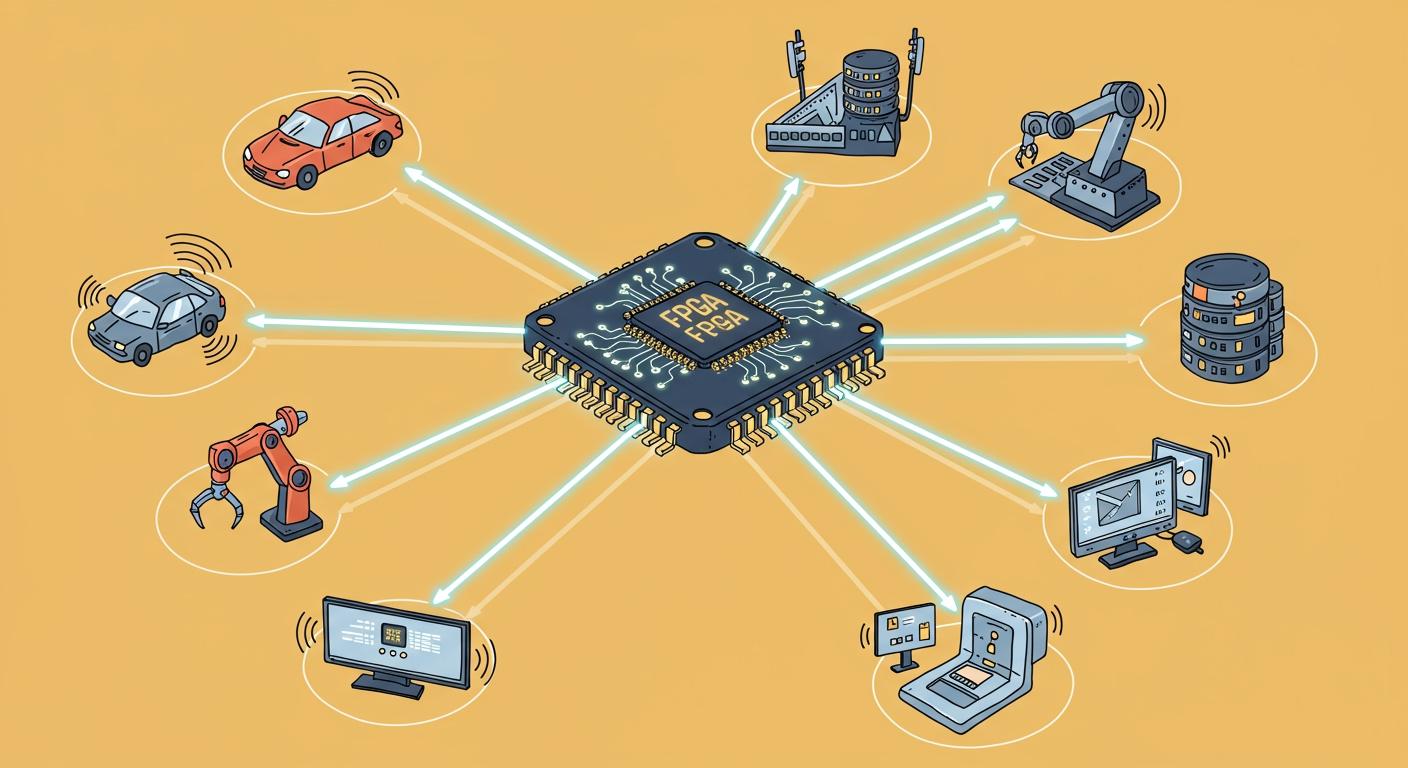
A field programmable gate array is a special chip. Engineers can reconfigure this FPGA after its creation to perform custom hardware tasks. The FPGA finds use in many modern applications. Its core value lies in its unique position between two other technologies.
An FPGA provides the speed of custom hardware with the adaptability of software.
This capability makes the FPGA vital for demanding applications. It delivers flexible hardware solutions where both high performance and adaptability are necessary for success.
Key Takeaways
- FPGAs are special chips. Engineers can change them after they are made. They perform custom hardware tasks.
- FPGAs make data centers faster. They help with tasks like data compression and AI. This makes computers work better.
- FPGAs are important for 5G networks. They help process signals quickly. This gives us fast internet.
- FPGAs help self-driving cars. They combine information from many sensors. This helps cars make safe decisions fast.
- FPGAs make factories smarter. They help robots move precisely. They also check products for flaws very quickly.
1. Data Center Acceleration: A Key FPGA Application
Modern data centers face enormous computing demands. An FPGA provides a powerful solution for data center acceleration. It takes on specialized workloads, which allows the main processors to work more efficiently. This approach is changing how large-scale applications operate.
Use Case: Computational Offloading
An FPGA excels at computational offloading. It takes over repetitive and parallel tasks from a server's central processing unit (CPU). This frees the CPU to handle more complex, sequential instructions. Common offloaded tasks include:
- Data compression and encryption
- Database filtering and sorting
- Genomic sequencing analysis
- AI and analytics workloads
By dedicating hardware to these specific functions, the entire system becomes faster and more responsive. This is especially true for real-time data processing for AI.
Benefit: Reduced Latency and Increased Throughput
Offloading tasks to an FPGA delivers two major benefits: lower latency and higher throughput. The FPGA processes data directly on its reconfigurable hardware. This minimizes data movement between different components, which is a primary cause of delays. The result is a significant boost in machine learning acceleration and overall system speed.
An FPGA can execute certain functions, like feature extraction for a search engine, over 100 times faster than a traditional CPU.
Furthermore, FPGAs offer superior energy efficiency, a critical factor in massive data centers. This makes them a cost-effective choice for sustained acceleration.
| Feature | CPU | GPU | FPGA |
|---|---|---|---|
| Energy Efficiency | Moderate | Relatively low | High |
Example: Hyperscale Cloud Providers
Industry leaders demonstrate the power of the FPGA. Microsoft’s Project Catapult integrated FPGAs directly into its servers to support the Bing search engine. This move doubled the throughput for its ranking service and cut latency by nearly 30%. It allowed Microsoft to manage the workload with half the number of servers. Similarly, Amazon Web Services (AWS) offers F1 instances. These cloud servers provide developers with direct access to FPGAs for building and deploying custom hardware acceleration for their own AI and big data workloads.
2. Telecommunications: Core 5G Applications
The rollout of 5G technology places extreme demands on telecommunications infrastructure. An FPGA offers the perfect blend of performance and adaptability for these new challenges. Its role is critical for the success of 5G network development and other advanced communication systems.
Use Case: Real-Time Signal Processing
Modern 5G base stations use a technology called Massive MIMO (Multiple-Input, Multiple-Output). This involves hundreds of antennas sending and receiving signals at once. An FPGA is essential for processing these complex signals in real time. It performs several key tasks:
- It handles all antenna signals and data streams on a single board.
- It enables "beamforming," which directs radio signals to specific users. This reduces interference and saves power.
- It decodes signals from mobile devices as they move, ensuring a stable connection.
This processing power makes the FPGA a cornerstone of modern wireless communication applications.
Benefit: High Bandwidth and Low Latency
The 5G network promises incredibly fast speeds and near-instant responses. This requires high bandwidth and extremely low latency. FPGAs help network equipment meet these strict targets.
The 5G standard demands a maximum one-way latency of just 100 microseconds (µs) for its fronthaul network. An FPGA helps achieve this speed.
FPGAs also solve a major bandwidth problem. They can process huge amounts of data very efficiently. For example, a system that would normally need a massive 260-gigabaud optical interface can run on a much smaller 10-gigabaud interface with an FPGA. This makes the network more cost-effective.
Example: 5G Network Infrastructure
Major technology companies rely on FPGAs for 5G network development. Companies like VVDN Technologies design and build 5G radio units using custom FPGA hardware. At the same time, chip manufacturers like Intel create powerful FPGAs, such as the Stratix 10 family, specifically for 5G tasks. These chips accelerate packet processing and other key functions inside the network equipment that powers our mobile connections.
3. Autonomous Vehicles and ADAS
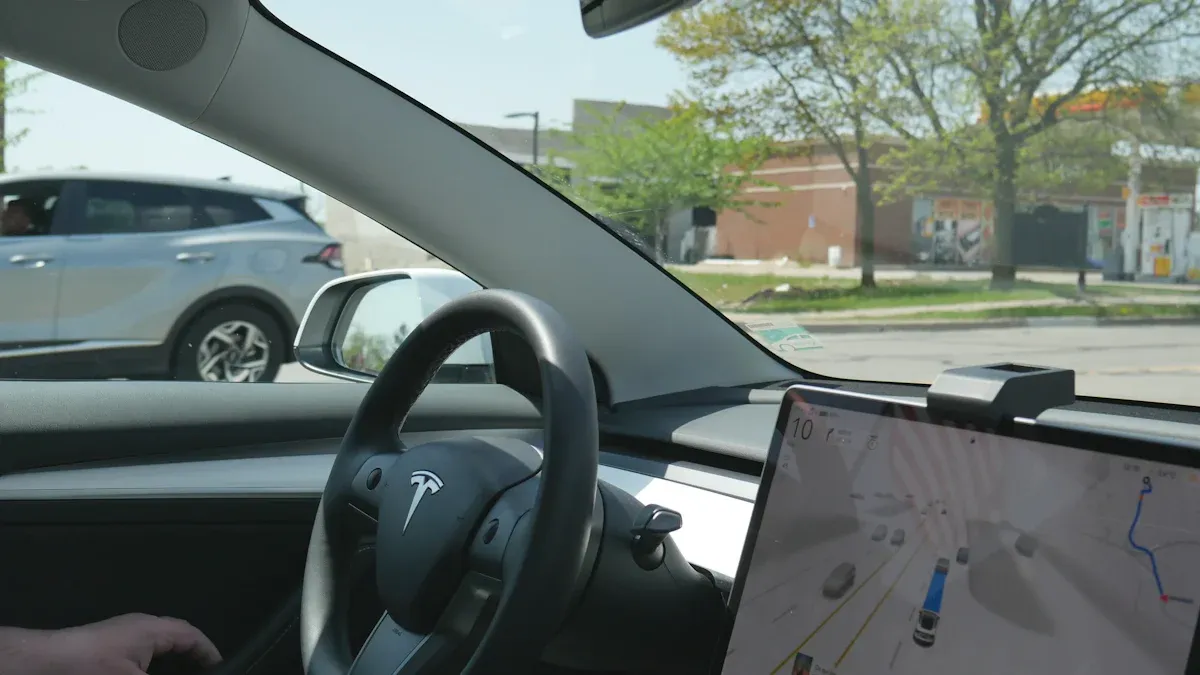
The automotive industry is rapidly advancing toward self-driving cars. Advanced Driver-Assistance Systems (ADAS) and autonomous vehicles rely on powerful electronics to see and react to the world. The FPGA is a key component in these complex automotive applications.
Use Case: Real-Time Sensor Fusion
Autonomous vehicles use a variety of sensors to understand their surroundings. These include cameras, LiDAR, and radar. Each sensor creates a massive, continuous stream of data. An FPGA excels at sensor fusion, which is the process of combining all this data into a single, accurate model of the environment. Its parallel architecture allows it to process all data streams at the same time. This offloads heavy work from the main processor and ensures no information is lost.
Benefit: Critical Safety Decision-Making
Safety is the most important goal in automotive design. A vehicle must react to hazards in milliseconds. The low-latency processing of an FPGA is essential for this task. It enables the split-second decision-making needed for features like automated emergency braking and collision avoidance.
The consistent, low-latency performance of an FPGA is a non-negotiable requirement for meeting strict automotive safety standards.
This rapid processing allows the vehicle's AI to detect objects, plan a safe path, and respond to changing road conditions with extreme reliability.
Example: Automotive Compute Modules
Leading autonomous vehicle systems use FPGAs in their central computing modules. Companies like Waymo and Pony.ai integrate these chips to manage the high-speed data from their sensors. These powerful automotive modules act as the brain of the car. They use the FPGA to accelerate perception algorithms and transfer data efficiently to other processors. This design ensures the entire system responds quickly and safely, making self-driving technology a reality.
4. Industrial Automation with a Field Programmable Gate Array
Modern factories require extreme precision and speed. The field programmable gate array is a core technology driving the next wave of industrial automation. It provides the computational power needed for complex robotics and quality control systems. These demanding applications benefit from the chip's unique ability to perform many tasks at once.
Use Case: Machine Vision and Motion Control
An FPGA excels at machine vision and motion control. Its parallel architecture is ideal for high-speed image processing. For example, a quality inspection system can use an FPGA to run a sequence of image filters. This helps it find defects on a car dashboard in real time. This rapid processing reduces costs on the assembly line. For motion control, the chip enables precise timing for multi-axis robots. It latches position data directly in the hardware, ensuring every movement is perfectly synchronized.
Benefit: Deterministic, High-Speed Operations
The main benefit of an FPGA in industrial automation is its ability to deliver deterministic, high-speed operations. Determinism means that tasks always take the same amount of time to complete. This predictability is essential for safe and reliable real-time control systems.
In robotics, an FPGA can enable communication between components in under 2.5 microseconds. This speed remains stable even under heavy workloads, providing absolute consistency.
This level of performance is thousands of times faster than older standards. It ensures that a robot's actions are immediate and accurate, which is critical for both safety and product quality.
Example: Smart Factories and Robotics
Smart factories use FPGAs to power their most advanced robots. Companies like Yaskawa build their robot controllers with these chips to manage high-speed assembly and welding tasks. Other systems, like Veo Robotics' FreeMove, use them to create 3D safeguarding systems for human-robot collaboration. The technology is found in many types of smart factory equipment:
- Collaborative robots (cobots)
- Autonomous Mobile Robots (AMRs)
- High-speed pick-and-place machines
This widespread use shows how FPGAs are fundamental to modern industrial automation.
5. Medical Imaging and Diagnostics
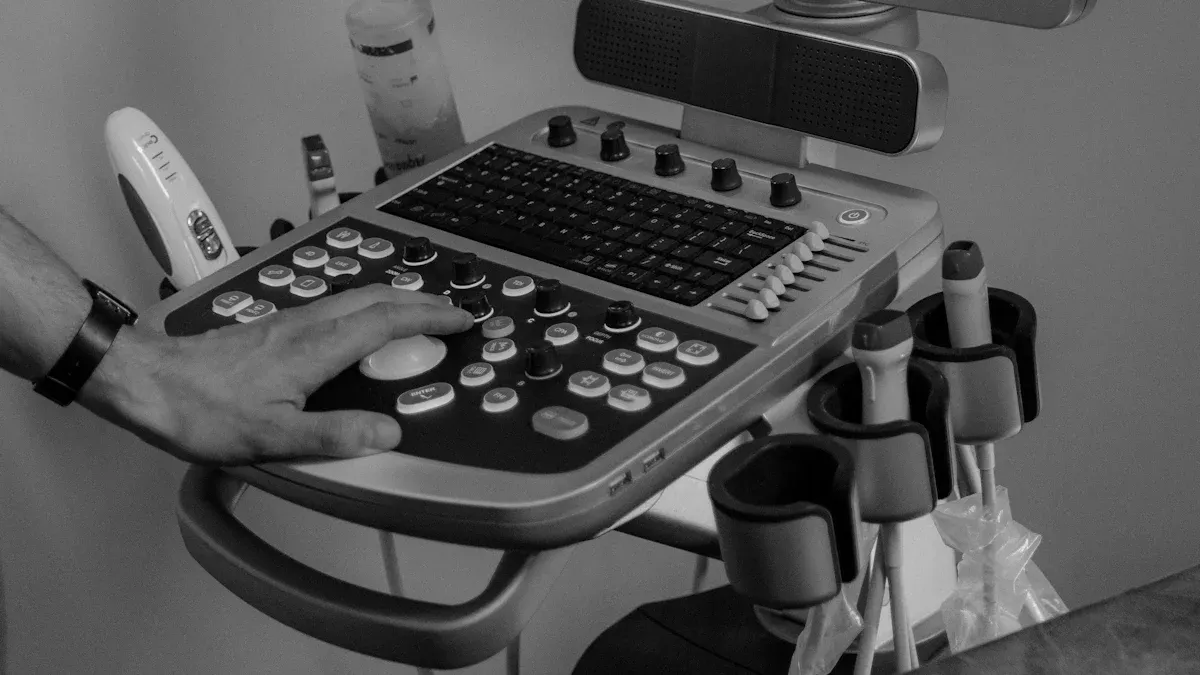
The field of medical imaging demands incredible precision and speed. Advanced medical imaging solutions generate vast amounts of data that must be processed quickly to create useful images for doctors. The fpga is a key technology in these advanced applications, helping to turn raw scan data into clear diagnostic pictures.
Use Case: Image Reconstruction Acceleration
Medical scanners like MRI and CT machines do not capture images directly. They collect raw signal data. A powerful computer must then reconstruct this data into a detailed 2D or 3D image. This process requires intense computation. An FPGA provides powerful acceleration for this task. It uses a parallel structure with many dedicated computational engines. These engines process data simultaneously in a continuous flow. This method avoids storing large temporary files, which greatly increases speed and efficiency.
Benefit: Faster Scans and Higher Resolution
The primary benefit of this speed is a better patient experience and more accurate diagnoses. Faster image reconstruction leads to shorter scan times. This reduces patient anxiety and discomfort. It also minimizes errors caused by patient movement.
Faster processing allows doctors to use higher-resolution scan settings without making patients wait for long periods. This results in clearer images that can reveal diseases earlier.
This capability helps medical professionals make more confident decisions. The technology directly improves the quality of patient care.
Example: Advanced Imaging Systems (MRI, CT)
Modern MRI and CT systems rely on this technology to deliver results quickly. The performance gains are significant compared to other processors. In MRI reconstruction, for example, an FPGA-based system can be dramatically faster than both CPU and GPU approaches.
| Comparison | Speed-up Factor |
|---|---|
| vs. CPU-based GRAPPA reconstruction | 121x |
| vs. GPU-based GRAPPA reconstruction | 9x |
This massive speed improvement is why FPGAs are essential components in today's most advanced medical imaging solutions. They provide the power needed to handle complex imaging techniques, making cutting-edge medical diagnostics possible.
6. Aerospace and Defense Systems
Aerospace and defense systems operate in high-stakes environments. They require electronics that are powerful, reliable, and adaptable. The FPGA is a critical component in many of these advanced applications. It provides the flexibility needed to respond to changing mission requirements.
Use Case: Software-Defined Radio and Radar
An FPGA is essential for creating Software-Defined Radios (SDRs) and advanced radar systems. An SDR allows engineers to define radio functions like modulation and frequency hopping in software. This capability lets a single radio device adapt to different waveforms and protocols. This flexibility is vital for advanced communication systems in the military. The chip's small size and low power use are also important. They help reduce the size, weight, and power (SWaP) of man-portable radios.
Benefit: Reconfigurable Mission-Critical Processing
The main benefit of an FPGA in defense is its ability to be reconfigured for mission-critical tasks. This allows military systems to adapt quickly to new electronic threats in the field. This operational agility is a significant advantage. Key benefits include:
- Rapid Adaptation: Algorithms can be updated swiftly to counter evolving threats.
- Low-Latency Performance: It processes data directly on the chip, reducing delays for tasks like signal decryption and jamming.
- Parallel Processing: It handles multiple data streams at once, which is ideal for detecting and analyzing complex signals.
This reconfigurability ensures that communication remains secure and reliable even in contested environments.
Example: Modern Avionics and SIGINT
Modern aircraft like the F-35 fighter jet use FPGAs in their core avionics. The jet's central computer, the Integrated Core Processing (ICP) system, uses these chips to run sensor software and manage cockpit displays. This design improves the aircraft's flexibility and reduces long-term costs. In Signal Intelligence (SIGINT), FPGAs enable the real-time analysis of electronic signals. They can filter large amounts of data, storing only signals of interest. This helps intelligence missions gather information with greater speed and accuracy.
7. High-Frequency Trading
In the world of finance, speed equals profit. High-frequency trading firms compete to execute trades faster than anyone else. The FPGA gives these firms a critical edge. It allows them to build trading systems that operate at nearly the speed of light.
Use Case: Ultra-Low-Latency Algorithms
An FPGA implements trading algorithms directly on the chip's hardware. This approach is much faster than running software on a standard processor. The chip performs complex mathematical calculations for tasks like statistical arbitrage and risk management. It handles many steps in the trading process:
- Parsing incoming market data
- Performing pre-trade checks for price and volume
- Monitoring the value of financial portfolios
- Generating and sending trade orders to an exchange
These hardware-based applications give traders a significant speed advantage.
Benefit: Nanosecond-Level Execution Speed
The primary benefit of an FPGA in finance is its incredible speed. It reduces the time it takes to make a trade, a measurement known as latency. This technology has enabled a major shift in performance.
FPGA-based systems achieve trade execution in the tens of nanoseconds. This is a huge improvement over older, slower systems.
This sub-microsecond performance is simply not possible with CPUs. The nanosecond-level execution speed allows trading firms to react to market changes before their competitors. This speed advantage can lead to greater profits.
Example: Financial Trading Platforms
Many proprietary trading firms build their own custom trading platforms using FPGAs. These platforms give them a unique competitive advantage. They design the hardware to run their specific trading strategies with maximum efficiency. Technology companies also create specialized products for this market. For example, AMD offers the Alveo FinTech Accelerator card. This card is an FPGA-based device designed specifically to deliver nanosecond-speed performance for financial firms, making advanced trading technology more accessible.
8. Consumer Electronics and Image Processing
Modern consumer electronics deliver amazing visual experiences. High-resolution displays are now common in many homes. The fpga plays a quiet but important role in powering these advanced screens. It helps make the picture on your television look its best.
Use Case: Real-Time Video Upscaling
Many people watch older content on new, high-resolution TVs. A 4K or 8K television needs to fill its screen with millions of pixels. When the video source has a lower resolution, like 1080p, the TV must "upscale" the image. This process uses complex algorithms to intelligently add new pixels. The chip's parallel architecture is perfect for this job. It processes huge amounts of video data in real time, ensuring a smooth and sharp picture without any delay.
Benefit: Enhanced Visual Quality for Displays
The main benefit of this technology is a dramatically better viewing experience. Upscaling does more than just make the picture bigger. It improves the overall quality.
- It sharpens edges and enhances details.
- It reduces digital noise and artifacts.
- It improves color accuracy and contrast.
This advanced processing makes older movies and TV shows look crisp and clear on a modern screen. It brings new life to classic content.
This enhancement ensures that viewers get the most out of their high-resolution displays, no matter what they are watching.
Example: Smart TVs and 8K Displays
High-end smart TVs are a prime example of this technology in action. Manufacturers of 8K displays use powerful video processing engines to handle upscaling. These engines often rely on custom hardware to perform their tasks. A modern smart TV can analyze each frame of video. It then applies a series of improvements to create a stunning final image. This powerful processing is what makes the picture on a premium television look so vibrant and lifelike.
9. Test and Measurement Equipment
Engineers need powerful and adaptable tools to test modern electronics. The fpga is a key component inside advanced test and measurement equipment. It provides the flexibility required to keep up with rapidly changing technologies.
Use Case: Flexible Signal Generation and Analysis
Test equipment must often handle many different communication protocols. An fpga allows a single instrument to perform custom signal processing. For example, a user-programmable chip inside an oscilloscope can run specific algorithms. This enables the device to perform inline protocol decoding and advanced triggering without missing any data. Engineers can analyze various signals in real time, which helps them find rare errors quickly.
Benefit: Reconfigurable Hardware Instrumentation
The main benefit of this technology is reconfigurable hardware. Engineers can change the core function of an instrument by loading a new configuration file. This process takes only a fraction of a second.
This capability can transform a general-purpose oscilloscope into a specialized protocol analyzer. It allows one piece of hardware to perform many different jobs.
This flexibility reduces the need for multiple expensive devices. It also allows engineers to create custom triggers and processing functions tailored to their specific needs.
Example: Oscilloscopes and Protocol Analyzers
Many leading test instruments use this technology for its adaptability. These devices help validate the latest communication standards.
- The NI PXIe-5164 oscilloscope has a user-programmable chip for creating custom measurement algorithms.
- Altera FPGAs power high-performance testers for PCIe, 5G, and next-generation Ethernet up to 800GE.
- These platforms perform real-time traffic generation, error injection, and protocol validation for the most advanced digital interfaces.
This hardware enables the rapid prototyping and testing of complex electronic systems, from advanced radar to high-speed networking equipment.
10. Emerging Applications of FPGA Technology
The field programmable gate array is finding new roles in the latest technological advancements. These emerging applications of FPGA technology push the boundaries of what is possible. They bring powerful computing capabilities to devices outside the traditional data center. This trend is changing how industries approach complex problems.
Use Case: AI at the Edge
A major new use case is AI at the edge. This involves running artificial intelligence models directly on devices like drones or smart cameras. An FPGA excels at this task. Its parallel structure allows it to be configured to match an AI model's exact needs. This customization enables efficient real-time data processing for AI. The chip processes information locally, which reduces delays and improves security. This capability is vital for edge computing applications that require instant responses.
Benefit: Low-Power, Local AI Processing
The main benefit of using an FPGA at the edge is its low power consumption. It provides powerful performance without draining a device's battery. This makes it ideal for edge computing applications where energy is limited.
FPGAs deliver superior performance per watt compared to other processors. This makes them perfect for energy-sensitive devices operating at the edge.
These energy-efficient designs allow complex AI tasks to run on small, portable equipment. This local processing moves heavy computing work away from the cloud and closer to the data source.
Example: Next-Generation CXL and IoT Devices
These emerging applications of FPGA technology are already appearing in new hardware. The technology is a key part of the Internet of Things (IoT) ecosystem. It provides machine learning acceleration for many devices. Examples include:
- Autonomous drones that need to navigate without a network connection.
- Industrial sensors that detect faults on the factory floor.
- Next-generation servers using Compute Express Link (CXL) to connect processors and accelerators with high speed and low latency.
This flexibility makes the FPGA a foundational component for the future of AI at the edge.
The field programmable gate array is not a technology of the future. It is a foundational component in today's most demanding industries. An fpga provides a unique advantage. It delivers the high speed of custom hardware with the flexibility to adapt to new challenges.
Wherever performance, low latency, and adaptability are critical, a field programmable gate array is likely powering the solution. The fpga remains essential for innovation across many sectors. 🚀
FAQ
What is the main difference between an FPGA and a CPU?
A CPU processes instructions one after another. It is very flexible for general tasks. An FPGA performs many tasks at the same time on custom hardware circuits. This parallel structure makes it much faster for specific, repetitive jobs like signal processing.
Are FPGAs difficult to program?
Programming an FPGA is different from writing software. It requires special hardware description languages (HDLs) like Verilog or VHDL. New tools now allow engineers to use higher-level languages like C++. This makes FPGA development more accessible to a wider range of developers.
Why not just use an ASIC for everything?
An ASIC is a chip built for a single purpose. It cannot be changed. An FPGA offers valuable flexibility. Engineers can reconfigure it after manufacturing to adapt to new standards or fix bugs.
This reconfigurability lowers risk and development costs compared to the permanent design of an ASIC.
Will FPGAs be replaced by GPUs?
No, FPGAs and GPUs serve different needs. GPUs are excellent for graphics and large-scale parallel computing. FPGAs provide superior performance for tasks requiring extremely low latency and high energy efficiency. The two technologies often complement each other in complex systems. 💡