How PCB Repair Supports Sustainable Electronics
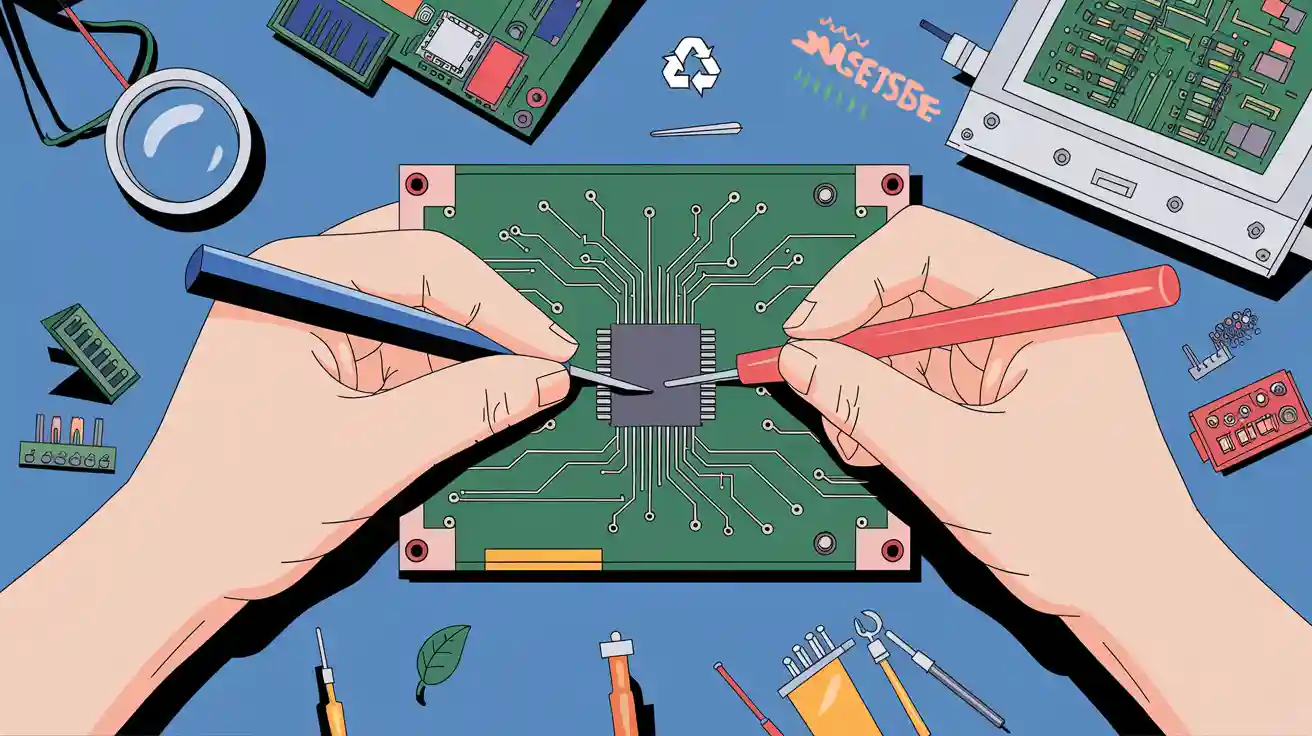
Printed circuit board repair plays a crucial role in making electronics more sustainable. PCBs act as the nervous system of most electronic devices, carrying signals and power throughout the system. When a PCB fails, the whole device often stops working. Many failures in electronics come from PCB issues such as manufacturing defects, microcracks, and bubbles. The table below shows how often these problems can happen:
| PCB Defect Type | Approximate Failure Rate (%) |
|---|---|
| Manufacturing defects | Up to 20% |
| Microcracks | Up to 15% |
| Bubbles | Up to 10% |
| Delamination | Around 5% |
| Wet weaving | 8-12% |
Repairing these boards extends device life, reduces waste, and saves valuable resources. As PCBs become more complex, skilled repair becomes even more important.
Key Takeaways
- Repairing printed circuit boards extends the life of electronic devices and reduces electronic waste.
- PCB repair saves valuable materials like gold and copper, helping conserve natural resources.
- Choosing repair over replacement lowers costs and prevents costly downtime for businesses and consumers.
- Regular maintenance and skilled repair improve device reliability and prevent future failures.
- Repair supports a circular economy by keeping devices in use longer and reducing the need for new materials.
Printed Circuit Board Repair
What Is PCB Repair?
Printed circuit board repair is the process of restoring both the mechanical support and electrical connections of electronic components on a PCB. Technicians address defects such as open circuits, solder bridges, solder balls, and poor wetting. These problems often result from issues during solder paste printing, component placement, or soldering. The repair process uses tools like soldering irons, hot air reflow stations, and flux. Careful temperature control prevents further damage to the board. Preheating and secondary cooling help ensure strong and reliable solder joints. Printed circuit board repair is not just a way to fix problems. It also acts as a form of maintenance that can improve product quality and manufacturing efficiency. Specialized repair equipment and testing systems help detect defects and improve processes.
Common faults that require printed circuit board repair include:
- Physical damage from drops, impacts, heat, or exposure to water, dust, or insects.
- Component failure due to wear, malfunction, or poor design.
- Manufacturing errors such as poor solder joints or misaligned parts.
- Design flaws like incorrect component placement or trace routing.
Why Is PCB Repair Needed?
PCBs are essential for the function and reliability of electronic devices. They hold all the parts together and allow signals to move between components. If a PCB fails, the device often stops working. Dirt and flux residues can build up on PCBs after soldering. These residues may cause corrosion and reduce device performance. Cleaning with a soft brush and isopropyl alcohol helps prevent corrosion and keeps the device reliable. Proper maintenance and printed circuit board repair extend the lifespan of electronics.
Modern PCBs have become much more complex. Surface Mount Technology allows for very small components and compact designs. Machines can now place thousands of parts per hour, making production faster and more accurate. Multilayer boards and microvia technology improve signal speed and reduce interference. 3D printing enables quick prototyping and custom designs. Mixed-signal technology and the rise of IoT have made PCBs even more advanced and adaptable.
Because of this complexity, skilled technicians are needed for printed circuit board repair. They must read schematics, use diagnostic tools, and perform advanced soldering. Many technicians hold certifications like IPC 7711/7721, which shows they have the right skills for rework and repair. These certifications require training and regular renewal. Technicians also need experience in PCB assembly and troubleshooting.
Note: Skilled repair not only fixes faults but also helps prevent future failures, supporting the reliability and sustainability of electronic devices.
Environmental Impact

Reducing Electronic Waste
Electronic waste, or e-waste, has become a major problem worldwide. Many old devices end up in landfills, where they can release harmful chemicals into the environment. Printed circuit board repair helps reduce electronic waste by making devices last longer. When technicians fix a faulty board, the device does not need to be thrown away right away. This delay in disposal keeps more electronics out of landfills.
About 42% of electronic waste comes from waste printed circuit boards. These boards often contain toxic substances like brominated flame retardants. They also hold valuable metals such as copper and silver. Repairing these boards prevents the early release of harmful materials and saves precious resources. By choosing repair, people help reduce the demand for new raw materials and cut down on hazardous waste.
Tip: Repairing electronics instead of replacing them keeps dangerous chemicals out of the soil and water.
Resource Conservation
Printed circuit boards use important materials like copper, gold, and rare earth elements. These metals are not easy to find and require a lot of energy to mine. Printed circuit board repair helps conserve these raw materials. When people repair and reuse boards, they do not need to extract as many new metals from the earth.
Urban mining and recycling can recover metals from old PCBs at much higher rates than traditional mining. For example, gold recovery from e-waste can reach 250–350 grams per ton, while regular mining only gets 1–5 grams per ton. By extending the life of PCBs, repair reduces the need for new mining. This saves copper, gold, and rare earth elements, lowers energy use, and supports a more sustainable future.
Key benefits of resource conservation through repair:
- Less mining for new metals
- Lower energy use and emissions
- Protection of natural resources
Lower Carbon Footprint
Repairing PCBs also helps lower the carbon footprint of electronics. Manufacturing new boards uses a lot of energy and produces greenhouse gases. When people repair a board, they avoid the need to make a new one. This saves energy and reduces pollution.
A longer device lifespan means fewer new products need to be made and shipped. This cuts down on transportation emissions and the energy used in factories. By choosing repair, people help slow climate change and protect the planet for future generations.
Note: Every repaired PCB means less carbon released into the air.
Economic Benefits
Cost Savings
Printed circuit board repair offers major cost savings for both consumers and businesses. Repairing a PCB usually costs about 10% of the price of buying a new one. This means people can save around 90% by choosing repair instead of replacement. For example, the Sao Paulo Metro saved nearly 50 million dollars over ten years by repairing circuit boards in-house. The US Army National Guard also saved about 10 million dollars by fixing a mobile command post's HVAC system rather than replacing it. These real-world cases show how repair can protect budgets and keep equipment running longer.
- Repairing PCBs can save about 70% of the cost compared to rebuilding a product from scratch.
- Quality repair services can restore boards to like-new condition, avoiding expensive redesigns or new purchases.
- Repair is usually much cheaper than replacement, especially for devices with long expected lifespans.
- Repair also helps reduce electronic waste.
Tip: Even when some boards are damaged beyond repair, repair remains the more economical choice in most situations.
Avoiding Downtime
PCB repair helps organizations avoid costly downtime. When equipment stops working, production can halt, leading to lost time and money. Quick repairs allow businesses to restore equipment faster than waiting for new parts or devices. This is especially important for expensive or custom equipment.
- Repair extends equipment life and keeps operations running smoothly.
- Fast repairs minimize production disruptions and help recover unique or obsolete functions.
- Skilled technicians use specialized tools to diagnose and fix failures, preventing unsafe conditions and long outages.
- Repairing legacy equipment avoids delays from sourcing rare parts.
| Aspect | Explanation | Economic Impact |
|---|---|---|
| Definition of Downtime | Period when equipment is non-operational due to malfunctions | Expensive production disruptions |
| Impact on SMT Lines | Automated lines stop if any process fails | Severe productivity loss |
| Manual Substitution | Manual work is slower and less efficient | Risk of failing quality standards |
| Financial Example | Company lost over $1,000,000 annually from downtime | Significant direct financial loss |
| Downtime vs Utilization | Downtime reduces operational time and increases costs | Higher financial impact |
| Preventative Maintenance | Cutting maintenance increases downtime and economic losses | Increased downtime, higher costs |
Supporting a Circular Economy
PCB repair supports the circular economy by reducing electronic waste and conserving resources. Repairing and reusing boards keeps devices out of landfills and lowers the demand for new materials by up to 32%. This approach encourages manufacturers to design products for longevity and repairability.
- PCB repair extends device life and recovers valuable components.
- Repair reduces the need for costly replacements and prevents early disposal.
- This process aligns with circular economy goals: reuse, repair, and refurbishment.
- Repair and refurbishment services create jobs and stimulate economic growth.
Note: By choosing repair, people help build a more sustainable and resilient electronics industry.
Reliability and Longevity
Maintaining Device Performance
Regular printed circuit board repair and maintenance keep devices running smoothly. Technicians use several practices to maintain optimal performance:
- Routine cleaning removes dust and debris that can cause short circuits.
- Lubrication of moving parts reduces wear and prevents overheating.
- Periodic inspections help spot early signs of damage or corrosion.
- Accurate diagnosis ensures technicians find and fix problems quickly.
- Proper component replacement, with careful desoldering and precise soldering, keeps the board working as designed.
- Clean assembly, including securing all components, prevents signal loss.
These steps help prevent overheating, reduce wear, and maintain electrical integrity. Early detection of issues extends device lifespan and improves reliability. Preventive maintenance also lowers operational costs by reducing the need for frequent replacements.
Tip: Regular maintenance keeps devices efficient and reliable, saving money and resources over time.
Preventing Failures
Proactive repair helps prevent device failures and extends product lifespan. Technicians identify and fix minor or hidden issues before they cause bigger problems. This approach keeps the printed circuit board working at its best and avoids unexpected interruptions. Timely repairs restore boards to near-original condition, which reduces downtime and maintenance costs.
Proper storage, regular cleaning, and control of humidity and temperature protect PCBs from corrosion and stress. Inspections of connections and the use of protective coatings help prevent solder joint fatigue. Michael Ingham, a manager at L3Harris Technologies, explains that early identification and repair of small issues minimize downtime and maintain high performance. Preventative maintenance supports sustainability by reducing electronic waste.
Adapting to New Technologies
Printed circuit board repair continues to evolve with new technologies. Technicians now use AI and machine learning to improve diagnostics and enable predictive maintenance. 3D printing allows for on-demand fabrication of spare parts, which helps repair obsolete devices. Advanced repair tools and software increase accuracy and expand the range of repairable boards.
- Continuous education and specialized training prepare technicians for modern microelectronics and robotics.
- Sustainability trends, such as the right-to-repair movement, promote access to parts and repair information.
- Modular product designs make repairs easier and support longer product lifecycles.
Technicians face challenges with advanced or miniaturized boards. Dense packing of components leaves little room for error. Multilayer boards make fault diagnosis harder, as defects may hide in inner layers. Careful handling and precision are essential to avoid further damage during repairs. Despite these challenges, skilled repair work helps electronics adapt to new demands and last longer.
Printed circuit board repair plays a key role in building sustainable electronics. Repair extends device life, reduces e-waste, and conserves valuable resources like gold and copper. Businesses and consumers benefit from lower costs and less downtime. Experts recommend prioritizing repair, using advanced tools, and adopting circular manufacturing models. Choosing repair over replacement helps protect the environment and supports a more resilient electronics industry.
- Repair extends product lifespan and reduces waste.
- Cost savings and operational efficiency benefit everyone.
- Circular practices and new materials make electronics greener.
FAQ
What is the main benefit of repairing a PCB instead of replacing it?
Repairing a PCB extends the life of electronic devices. This process reduces electronic waste and saves valuable materials. People also save money by choosing repair over replacement.
Can any electronic device have its PCB repaired?
Most devices can have their PCBs repaired if the damage is not too severe. Skilled technicians use special tools to fix many types of faults. Some very old or badly damaged boards may not be repairable.
How does PCB repair help the environment?
PCB repair keeps devices out of landfills. This action prevents harmful chemicals from entering the soil and water. Repair also reduces the need for new raw materials, which helps protect natural resources.
Is PCB repair safe for the device?
Yes, trained technicians follow safety steps to protect the device. They use proper tools and methods to avoid causing more damage. Careful repair helps keep the device working well.
What skills do PCB repair technicians need?
Technicians need to read schematics, use diagnostic tools, and perform precise soldering. Many hold certifications like IPC 7711/7721. These skills help them fix complex boards and ensure reliable repairs.