Precision Electronics in the Age of AI and IoT

Precision electronics now stands at the center of a technological revolution. Manufacturers across the globe rely on technological advancements to improve electronics, with 62% adopting IoT in their processes and 76% planning further investment despite economic challenges.
- Connected IoT devices are set to reach 18.8 billion by the end of 2024 and 40 billion by 2030.
- Wi-Fi holds the largest market share, while 5G drives rapid expansion.
- Asia-Pacific leads in adoption due to urbanization and smartphone growth.
Advanced technology integration, including blockchain and quantum computing, boosts data security and real-time monitoring. Industry 4.0 leverages IoT, automation, and analytics, making electronics systems more efficient and adaptive. Miniaturization and advanced materials support sustainability and drive ongoing technological advancements.
Emerging technologies, such as edge AI, enable faster data processing and reinforce the shift toward intelligent, connected electronics. By leveraging IoT and AI, the industry embraces new paradigms in precision electronics.
Key Takeaways
- AI and IoT are transforming precision electronics by improving design, manufacturing, and maintenance processes.
- Smart manufacturing uses AI-driven tools and automation to boost quality, reduce defects, and increase efficiency.
- Connected devices and edge intelligence enable real-time data processing and faster decision-making in electronics systems.
- Advanced materials and additive manufacturing support miniaturization, sustainability, and innovative product designs.
- Businesses must embrace digital transformation, invest in R&D, and build partnerships to stay competitive in the evolving electronics industry.
Precision Electronics Today
Industry Challenges
Precision electronics faces several challenges as the industry evolves. Companies must achieve extremely low voltage ripple and tight regulation in power supply design. Careful component selection remains critical to meet precision requirements, especially in sectors like medical devices where regulatory compliance drives higher standards. The semiconductor industry must manage complex, outsourced supply chains, which increases points of failure and complicates quality control. Electronics manufacturing now relies on advanced robotics, simulations, and custom automation to maintain precision. Manufacturers must also control signal integrity, power distribution, and electromagnetic interference in high-density designs. The need for micron-level tolerances demands advanced inspection tools and close collaboration between design and manufacturing teams. As the industry shifts toward ecosystem building, companies must invest in new equipment and process controls to remain competitive.
The distinction between precision and accuracy in measurement systems directly impacts quality control and product reliability.
Key Drivers
Key trends in electronics manufacturing include miniaturization, advanced materials, and organic electronics. Miniaturization drives innovation in semiconductor packaging, with technologies like fan-out wafer-level and 3D packaging enhancing device performance. Advanced materials such as organic substrates and polyimide-based layers support smaller, high-performance devices. Organic electronics, known for flexibility and cost-efficiency, find applications in consumer electronics, healthcare, and automotive sectors. OLEDs and organic photovoltaics lead the way in energy-efficient displays and devices.
The semiconductor industry benefits from power semiconductor devices that improve conversion efficiency and reduce energy loss. Materials like silicon carbide and gallium nitride enable high-temperature operation and better thermal management. In electric vehicles, precision electronics enhances motor efficiency, battery management, and regenerative braking. Manufacturing innovations, including additive manufacturing and AI-driven quality control, further boost performance and sustainability.
Government investments, such as the U.S. CHIPS and Science Act, support the semiconductor industry and electronics manufacturing. Industry 4.0, IoT integration, and automation improve efficiency and product quality. Sustainability initiatives and new materials drive ongoing growth, making precision electronics a foundation for future advancements.
AI and Automation
Artificial intelligence and automation now drive a new era in electronics manufacturing. These technologies boost efficiency, accuracy, and reliability across the industry. Companies see increased automation as a way to meet rising demands for quality and speed. By investing in automation, manufacturers reduce errors, lower costs, and deliver better products.
AI in Design
AI transforms the design process for precision electronics. Designers use AI-driven tools to optimize printed circuit board (PCB) layouts and routing. Techniques like reinforcement learning and graph neural networks help minimize crosstalk and impedance mismatches. AI tools automate trace routing, anticipate design constraints, and co-optimize objectives such as thermal safety and electromagnetic shielding. These tools also simulate manufacturing tolerances and predict assembly risks early, improving yield and reducing defects.
Generative AI creates multiple design options quickly. This speeds up development and reduces time-to-market. Platforms like Autodesk Fusion 360, Cadence Cerebrus, and Synopsys DSO.ai show how AI integrates into PCB design workflows. These platforms enable faster prototyping, higher reliability, and lower costs.
AI-driven design also improves manufacturing accuracy and quality control. Companies like Tesla use real-time data analytics to enforce strict quality standards in battery production. Boeing employs AI-driven robotics for high-precision drilling and riveting. Siemens uses AI to reduce defects in programmable logic controllers by detecting anomalies early. AI-powered computer vision systems, such as those used by BMW and Hyundai Transys, increase defect detection accuracy and reduce costly recalls.
AI-driven design tools automate complex tasks like electrical design, PCB layout, and simulation. This reduces human error and accelerates project timelines.
Some real-world examples of AI applications in electronics design and simulation include:
- Automated schematic generation for faster circuit blueprint creation.
- Layout optimization that places components efficiently while managing power and thermal constraints.
- Predictive failure analysis to anticipate circuit failures before construction.
- AI-enhanced simulation for adaptive testing under various conditions.
- Intelligent error detection to identify design anomalies early.
| Company | Location | AI Application in Precision Electronics Design and Simulation |
|---|---|---|
| JITX | USA | Automates circuit board design by converting high-level system diagrams into detailed PCB layouts, reducing design time and effort. |
| Celus | Germany | Provides drag-and-drop interface with AI algorithms for PCB layout optimization, simplifying complex electronics design for broader users. |
| Flux AI | Global | Browser-based design tool with AI assistant "Copilot" aiding schematic wiring, component selection, and built-in simulation features. |
| CADY | Global | Cloud-based AI schematic inspection and verification software that detects errors and inconsistencies to reduce redesign cycles. |
| CircuitMind | UK | AI-powered compiler that autonomously generates optimized PCB designs from input requirements, streamlining the design workflow. |
| InstaDeep | UK | DeepPCB platform offers AI-driven PCB routing optimization, accelerating development and improving design efficiency. |
| Zuken | Japan | Researches AI integration to automate design tasks, optimize routing, and enhance PCB design efficiency. |
| Gumstix Geppetto | USA | Online platform using AI to automate board layout and component placement, providing quick turnaround for custom PCBs. |
AI models optimize complex circuit parameters, such as power consumption and clock speed, to achieve the best performance. Machine learning algorithms analyze large datasets to find optimal solutions in complex integrated circuit designs. AI-driven simulations accelerate verification and improve accuracy. These advances help the industry create advanced hardware for growing computational needs.
Smart Manufacturing
Smart manufacturing uses artificial intelligence and automation to enhance productivity in electronics manufacturing. AI-powered computer vision inspects components in real time, identifying issues like misaligned chips or soldering defects. This immediate detection allows for quick removal of defective items and alerts workers, improving product quality and reducing waste.
- AI uses computer vision and machine learning for real-time defect detection.
- AI monitors and optimizes energy consumption, lowering costs and environmental impact.
- Workforce management improves as AI analyzes employee data to optimize shifts and productivity.
- AI-driven robots and collaborative robots (cobots) automate repetitive tasks with precision and speed.
- Digital twins simulate and optimize production processes by analyzing sensor and machine data.
- AI optimizes supply chains and predicts equipment failures for predictive maintenance.
- Integration with IoT, edge computing, and 5G enables real-time data analysis and decision-making.
Leading companies like GE, Siemens, and Tesla adopt these AI-driven technologies to enhance productivity in electronics manufacturing. Matroid's AI-powered quality control solutions reduce failure analysis time by up to 90%, pinpointing root causes in minutes instead of days. Their adaptable AI models improve defect detection by learning from thousands of images, leading to faster remedial actions and reduced material waste.
| Company | Improvement Area | Measurable Outcome |
|---|---|---|
| BMW | Defect rate reduction | 30% reduction in defect rates within 1 year |
| Samsung Electronics | Customer return rates | 31% reduction in returns within 18 months |
| Medtronic | Defect detection accuracy | Higher detection rates with fewer false positives |
| General AI Systems | Inspection speed | 100% inspection at speeds up to 10,000 parts/hour |
| General AI Systems | Root cause analysis speed | Up to 90% faster failure analysis |
| General AI Systems | Customer satisfaction | 15% increase reported by BMW customers |
These improvements show that AI-powered manufacturing processes significantly enhance quality control by reducing defects, improving detection accuracy, accelerating analysis, and increasing customer satisfaction.
Predictive Maintenance
Predictive maintenance uses AI to reduce downtime and maintenance costs in precision electronics manufacturing. AI detects deviations from normal equipment baselines, such as increased vibration or abnormal heat, signaling imminent failure. Predictive models estimate the likelihood and timing of component failure, enabling timely and cost-effective interventions.
- AI predictive maintenance uses real-time IoT sensor data to monitor equipment condition continuously.
- Machine learning algorithms detect subtle anomalies and predict failures before they occur.
- Automated maintenance scheduling ensures service occurs at optimal times, avoiding disruption and extending asset life.
- For precision electronics manufacturing, AI monitors CNC mills, lathes, and 3D printers by evaluating tool wear, cutting force, and thermal behavior to prevent tolerance drift and defects.
- This approach maximizes tool life, maintains consistent product quality, and improves scheduling by minimizing unexpected changes.
AI algorithms commonly used in predictive maintenance include supervised learning, unsupervised learning, reinforcement learning, regression analysis, time series analysis, deep learning, and natural language processing. These methods analyze real-time and historical data, such as temperature, vibration, and operational logs, to predict failures, prioritize maintenance, and optimize schedules. This reduces costly outages and improves equipment reliability.
The integration of artificial intelligence and machine learning in predictive maintenance shifts manufacturers from reactive to predictive strategies, maximizing efficiency and profitability.
IoT and Connectivity

Connected Devices
Connected devices form the backbone of the internet of things. These devices collect and transmit real-time data, which supports advanced electronics applications in many industries. In electronics manufacturing, connected sensors and controllers enable remote monitoring and control of production lines. This capability allows operators to adjust processes instantly, improving efficiency and reducing downtime.
- Connected devices support wireless communication in industrial, healthcare, and smart city environments.
- They enable remote monitoring, such as tracking patient vital signs or adjusting manufacturing equipment from afar.
- High-quality wireless components, like advanced radio transceivers and microcontrollers, maintain reliable communication even in challenging environments.
- Real-time sensor data helps managers make quick decisions and respond to issues before they cause problems.
Electronics in manufacturing environments must operate reliably despite obstacles like radio frequency interference and environmental changes. Companies use robust components to ensure data integrity and communication stability. For example, advanced microcontrollers and radios improve receiver sensitivity and resist interference, which is critical for precision electronics. Real-time monitoring through IoT sensors also improves system performance by allowing early detection of issues and proactive planning. This approach reduces unplanned downtime and increases the reliability of electronics systems.
However, the use of connected devices brings challenges. Increased power consumption and battery use can affect sustainability. Manufacturers must balance the benefits of real-time data with the need for energy-efficient electronics.
Edge Intelligence
Edge intelligence combines artificial intelligence with edge computing to process data close to its source. This approach is essential for electronics in industries that require fast, reliable decision-making. In electronics manufacturing, edge devices analyze sensor data locally, which reduces latency and improves response times.
- Edge computing enables instant decisions, such as detecting security breaches or optimizing smart grids.
- In manufacturing, edge analytics provide immediate diagnostics and maintenance alerts, preventing equipment failures.
- Local data processing reduces the risk of data breaches and improves privacy, which is important for sensitive applications.
Edge intelligence helps electronics handle the massive data generated by billions of IoT devices. By processing information at the edge, electronics reduce network traffic and avoid delays caused by cloud computing. This method supports applications with strict timing needs, such as industrial automation and autonomous vehicles. AI at the edge allows devices to recognize patterns and detect anomalies without sending all data to the cloud. This capability improves operational efficiency and system reliability.
Manufacturers design edge devices to meet strict requirements for size, power, and durability. These devices must operate in harsh environments and maintain high performance. Edge intelligence also supports predictive maintenance and condition-based monitoring, which helps prevent failures and extends equipment life. By enabling real-time analysis and decision-making, edge intelligence strengthens the role of electronics in modern manufacturing.
Security Challenges
Security remains a major concern for IoT-enabled precision electronics. The rapid growth of connected devices increases the risk of cyberattacks and data breaches. Electronics manufacturing faces unique challenges due to the diversity and scale of devices in use.
- Poor management of data acquisition can create vulnerabilities, making it easier for attackers to steal information.
- Each device needs a unique identity, but managing these identities becomes difficult as the number of devices grows.
- Trust and privacy are critical, especially when electronics handle sensitive user data.
- The massive volume of data generated by IoT devices complicates secure transmission and storage.
- Weak authentication, outdated security protocols, and limited device management increase the risk of unauthorized access.
- Firmware and software updates are often neglected, leaving devices exposed to threats.
- Supply chain risks can introduce malware during production, compromising device security.
Manufacturers address these challenges by using strong passwords, regular updates, and secure communication protocols like MQTTS and HTTPS. They implement access controls, network segmentation, and secure server infrastructure. Firewalls, system backups, and routine security audits help protect electronics systems. Companies also use AI and machine learning to detect threats and respond quickly. Blockchain technology and zero-trust architectures offer new ways to secure data transfer and device authentication.
Despite these efforts, maintaining security in electronics manufacturing remains complex. The industry must continue to develop new strategies to protect devices, data, and users. As the internet of things expands, strong security practices will become even more important for reliable and safe electronics.
Innovations in Precision Manufacturing
CNC Machining
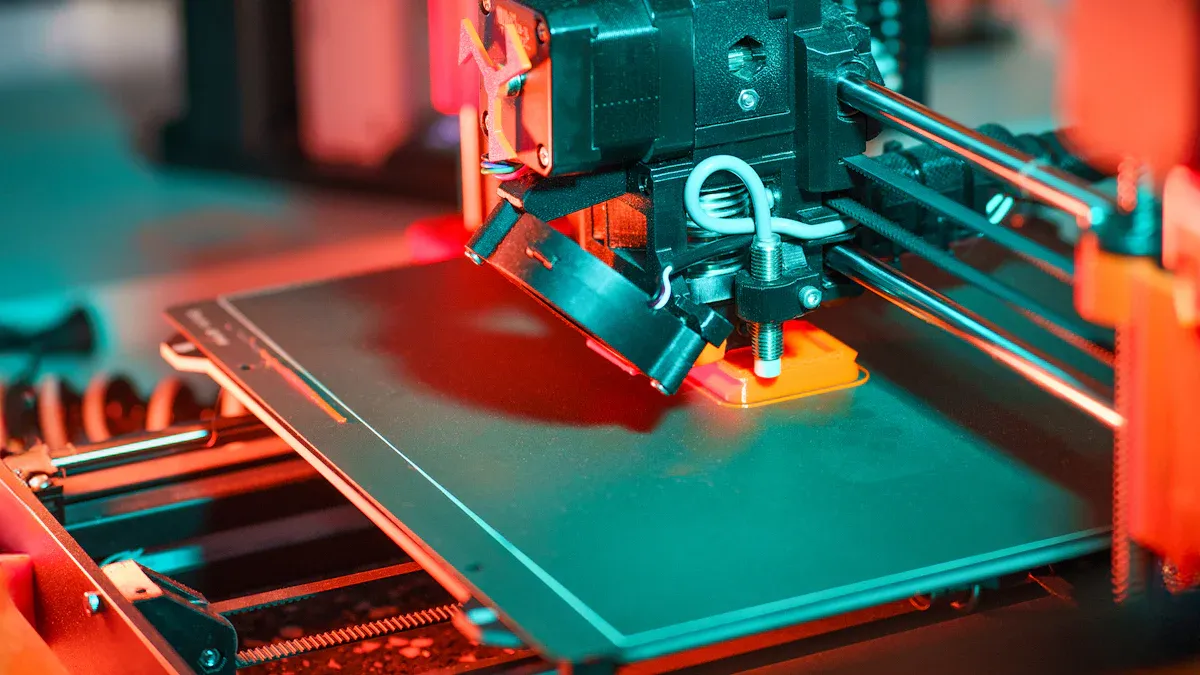
CNC machining stands at the core of precision manufacturing. Recent innovations include multi-axis machining centers, such as 5-axis and 6-axis machines. These systems create complex shapes and achieve micron-level precision. Manufacturers use AI and machine learning to optimize tool paths and predict tool wear. Digital twin technology allows virtual simulations, helping engineers refine designs before production. IoT-enabled monitoring systems collect real-time data for maintenance and quality control. Advanced CAD/CAM software streamlines the workflow from design to finished parts. Cutting-edge tools made from carbide, ceramic, and diamond coatings improve durability and speed. Cryogenic machining uses liquid nitrogen to reduce heat and extend tool life. Micromachining supports the production of ultra-small components for wearables and IoT devices. These innovations ensure speed, repeatability, and scalability in precision manufacturing.
Advanced Materials
Advanced materials drive innovation in precision manufacturing. Low dielectric laminates reduce signal loss in high-frequency PCBs. Thin substrates enable multi-layer stacking, which is vital for compact IoT sensors. Conductive inks allow printed electronics on flexible surfaces. Graphene offers excellent electrical and thermal properties, making components smaller and more efficient. Silicon carbide provides high thermal stability and power efficiency. Nanotechnology, such as atomic layer etching, creates ultra-small, precise parts. Carbon nanotubes and nano-printing support faster, energy-efficient devices. These materials help manufacturers achieve miniaturization and improve performance.
Additive Manufacturing
Additive manufacturing brings new innovation to precision manufacturing. Designers gain freedom to create complex geometries and rapid prototypes. This process supports customization and faster iteration cycles. Additive manufacturing reduces waste by depositing material only where needed. It also enables just-in-time inventory and lowers logistics costs. However, material constraints and high initial investment limit its use. Scalability remains a challenge for mass production. Quality standards require rigorous testing to ensure reliability. The table below summarizes the benefits and limitations:
| Benefits | Limitations |
|---|---|
| Rapid on-site manufacturing | Build volume and feature size constraints |
| Customization and complex geometries | Material property uncertainties |
| Reduced waste and setup times | Need for support structures and potential defects |
| Supply chain advantages | Scalability and cost challenges |
Organic Electronics
Organic electronics lead innovation in precision manufacturing by enabling eco-friendly, flexible, and lightweight devices. Manufacturers use these materials for foldable displays, smart clothing, and portable energy generators. Organic field-effect transistors support touch-sensitive sensors. Roll-to-roll printing and hybrid organic-inorganic systems improve scalability and integration. Organic electronics expand possibilities in consumer products, healthcare, and IoT devices. Advances in organic semiconductors enhance charge transport and stability. By 2035, organic electronics will drive new applications such as smart textiles and interactive packaging, supporting sustainable innovation in precision manufacturing.
Future of Electronics Manufacturing
Industry 4.0
Industry 4.0 is changing the future of electronics manufacturing. Companies use smart manufacturing, IIoT, and automation to improve efficiency and quality. Less than 30% of manufacturers have fully adopted Industry 4.0 technologies, but the trend is growing. Asian manufacturers, who play a large role in electronics manufacturing, show lower adoption rates than North America and Europe. However, they lead in using collaborative robots. Dallas is becoming a hub for electronics manufacturing, with strong investments in IoT and smart manufacturing. Partnerships between universities and industry leaders help train workers and drive innovation. The use of predictive maintenance and smart systems shows a positive direction for the future of electronics manufacturing.
- Industry 4.0 adoption remains below 30% for extensive rollout.
- Asian manufacturers have lower adoption but lead in collaborative robots.
- Dallas stands out as a center for smart manufacturing and workforce training.
Customization Trends
Customization shapes the future of electronics manufacturing. Printed electronics allow lighter, thinner, and more flexible products. These trends help reduce weight by up to 60% and cut component counts by 70%. Design cycles become shorter, and manufacturing becomes more efficient. The table below shows the impact of printed electronics:
| Aspect | Impact |
|---|---|
| Weight Savings | Up to 60% reduction, improving fuel efficiency |
| Component Reduction | Up to 70% fewer parts, less complexity |
| Design Cycle Time | 25% shorter cycles |
| Flexibility and Form Factors | Enables thin, flexible designs |
| Manufacturing Efficiency | Less waste, simpler processes |
Continuous innovation in materials and printing technologies brings new features. The demand for flexible, personalized electronics grows. Advanced tools like Altium Designer help engineers create precise 3D designs. Additive manufacturing and organic electronics support miniaturization and sustainability. Big data and analytics improve decision-making in manufacturing.
Customization trends drive flexible, cost-effective, and sustainable production methods for the future of electronics manufacturing.
Sustainability
Sustainability and green manufacturing are now top priorities in electronics manufacturing. Companies use CNC machining and laser cutting to reduce waste and improve accuracy. Coordinate measuring machines help detect errors early, lowering scrap rates. Additive manufacturing builds parts layer by layer, using only what is needed. Many companies use recycled metals and biodegradable lubricants. Advanced filtration and water conservation methods protect the environment. The semiconductor industry uses renewable energy, energy-efficient equipment, and dry processing to save power and water. Waste reduction programs aim for zero waste and better material recovery. Green packaging and logistics further reduce environmental impact. By focusing on sustainability, companies gain cost savings, meet regulations, and build stronger client relationships. Emerging technologies like AI and nanotechnology will help reduce waste and energy use even more in the future of electronics manufacturing.
Business Strategies and Innovation
Adapting to Change
Businesses in precision electronics must adapt quickly to new technology and shifting markets. Leaders overhaul operations and processes to embrace digital transformation. They foster a culture of innovation and collaboration. Companies invest in research and development to stay ahead of innovation trends. Agile frameworks help teams respond rapidly to disruptions. Many organizations use data analytics to engage customers and improve products. They invest in automation and robotics to boost productivity and reduce costs. IoT and AI power process optimization and predictive maintenance. Sustainable manufacturing practices, such as using eco-friendly materials and energy-efficient technologies, are now standard. Customization and rapid prototyping through 3D printing allow companies to meet unique customer needs. Businesses balance technological innovation with sustainability and customer responsiveness to maintain competitiveness.
- Embrace digital transformation and agile frameworks
- Invest in automation, robotics, and AI-powered solutions
- Adopt sustainable manufacturing and eco-friendly materials
- Use data analytics for customer engagement and product improvement
Building Partnerships
Strategic partnerships drive innovation in precision electronics. Collaborations between toolmakers and software companies, such as Kyocera SGS Precision Tools Europe and Dassault Systèmes’ DELMIA, combine expertise to solve complex manufacturing challenges. These partnerships integrate virtual and physical processes, improving precision and productivity. Joint efforts focus on continuous improvement and client success. Real-time monitoring and advanced software tools optimize machining, bridging the gap between simulation and production. By combining strengths, partners set new benchmarks and power sector-wide advancements. Partnerships with educational institutions also help develop specialized training programs and hands-on experience with advanced technologies.
Investing in R&D
Investment in research and development powers long-term growth. Leading companies like TSMC, Qualcomm, Intel, and Apple allocate between 7% and 28% of revenue to R&D. This commitment supports new product development and process improvement. The table below shows recent R&D investments:
| Company | R&D Investment as % of Revenue | Year |
|---|---|---|
| TSMC | 7.2% | 2022 |
| Qualcomm | 19-21% | 2020-2022 |
| Intel | 28% | 2022 |
| Apple | ~7% | 2022 |
Talent development is also critical. Companies invest in training, foster continuous learning, and create inclusive work environments. Partnerships with schools and industry-sponsored labs bridge academic learning and industry needs. These strategies power a resilient workforce and support ongoing innovation.
AI and IoT have reshaped precision electronics, driving smarter manufacturing, cleaner processes, and faster innovation. Companies that embrace Industry 4.0, additive manufacturing, and sustainable practices gain a clear edge.
- AI-driven logistics and smart warehouses reduce waste and boost efficiency.
- Specialized expertise and advanced fabrication meet rising demand in key sectors.
Professionals should adopt digital manufacturing tools, invest in upskilling, and stay connected with industry trends. The future belongs to those who innovate, prioritize sustainability, and adapt quickly to new challenges.
FAQ
What is precision electronics?
Precision electronics refers to electronic components and systems designed for high accuracy and reliability. These products often support critical applications in medical devices, automotive systems, and industrial automation.
How does AI improve electronics manufacturing?
AI helps manufacturers detect defects, optimize production, and predict equipment failures. Companies use AI-driven tools to automate design, monitor quality, and reduce downtime.
Why is IoT important in modern electronics?
IoT connects devices and systems, enabling real-time data collection and control. This connectivity improves efficiency, supports predictive maintenance, and enhances product performance.
What are the main security risks in IoT-enabled electronics?
IoT devices face risks like unauthorized access, data breaches, and malware. Manufacturers address these threats with strong passwords, regular updates, and secure communication protocols.
How do advanced materials impact electronics innovation?
Advanced materials, such as graphene and silicon carbide, enable smaller, faster, and more energy-efficient devices. These materials support miniaturization and improve performance in next-generation electronics.