Piezoelectric Sensors Shaping Technology Across Industries
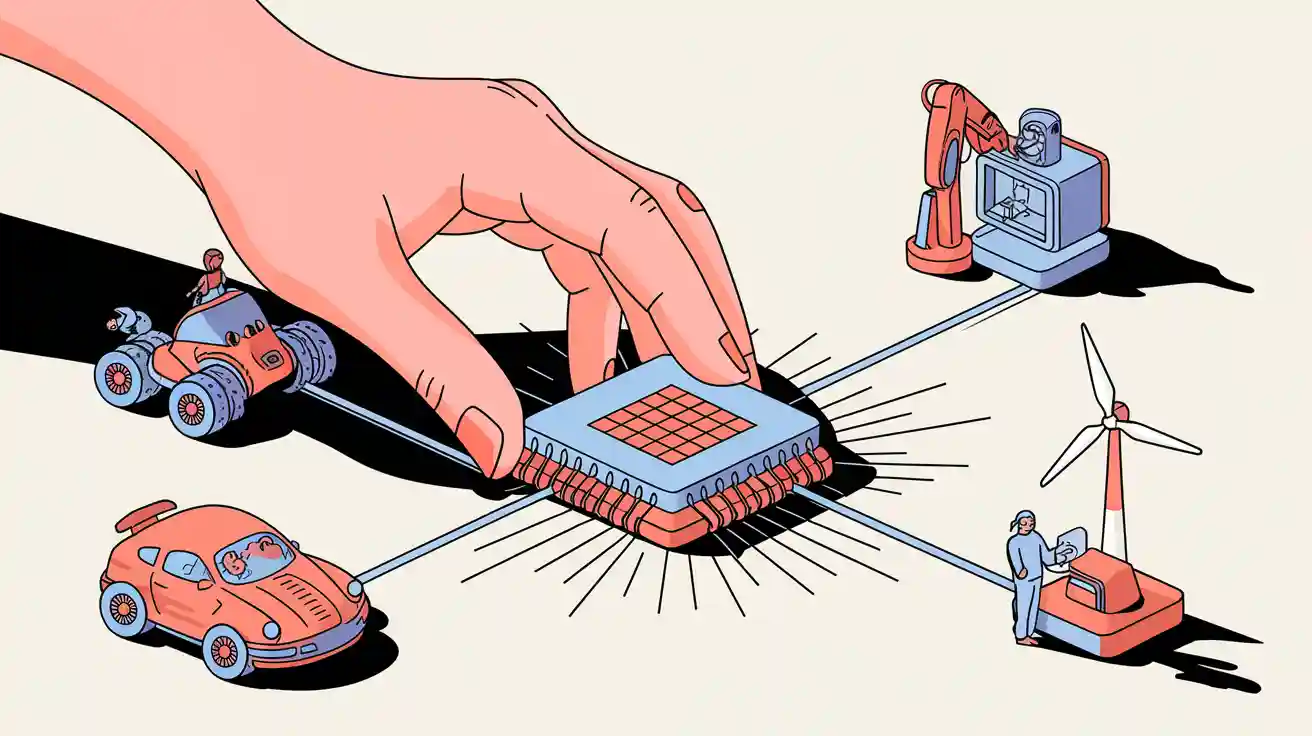
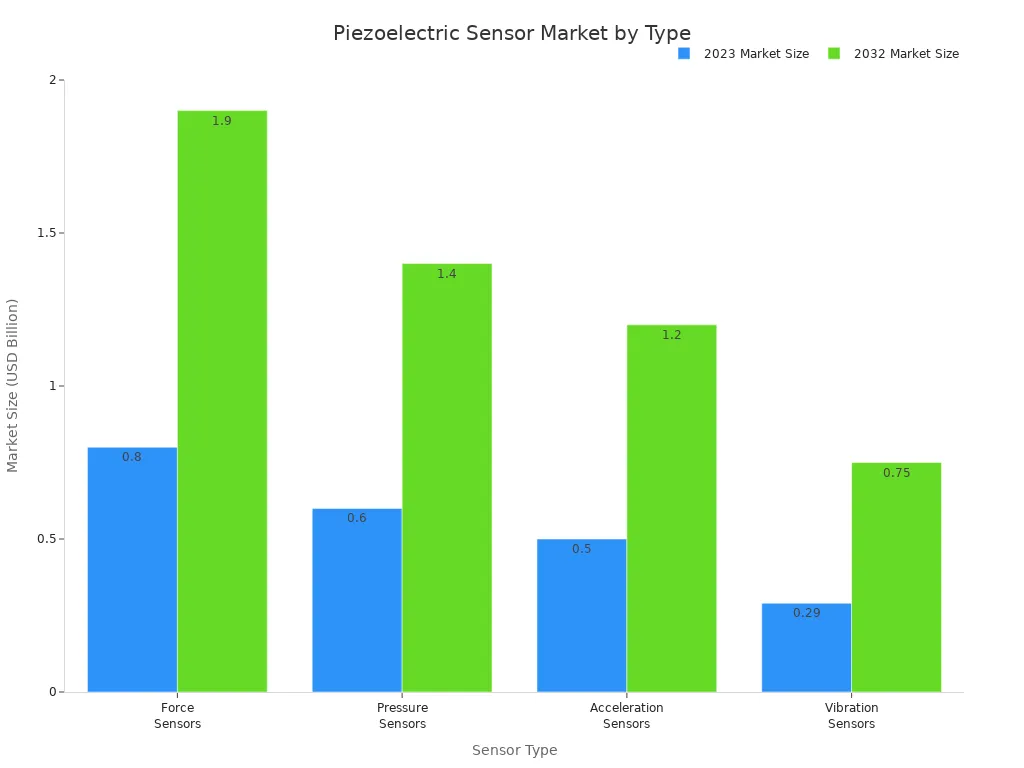
Piezoelectric sensors play a vital role in modern technology. These sensors change mechanical energy into electrical signals, which allows precise monitoring and control in many devices. Industries such as healthcare, automotive, and manufacturing rely on piezoelectric sensor technology for tasks like diagnostics, structural health monitoring, and automation. The table below shows the rising market value and broad use of piezoelectric sensors across regions and industries.
| Metric/Aspect | Data/Insight |
|---|---|
| Global Market Valuation 2024 | USD 32.37 billion |
| Projected Market Valuation 2032 | USD 57.98 billion |
| CAGR (2025-2032) | 7.7% |
| Regional Market Share 2024 | Asia Pacific: 52.33% |
| Industry Segment Dominance 2024 | Manufacturing (largest share) |
| Industry Segment with Highest CAGR | Consumer Electronics (forecast period) |
Key Takeaways
- Piezoelectric sensors convert pressure, force, or vibration into electrical signals, enabling precise and fast measurements.
- These sensors use materials like quartz, ceramics, and polymers, each offering unique benefits such as flexibility or high sensitivity.
- Industries including healthcare, consumer electronics, automotive, aerospace, and manufacturing rely on piezoelectric sensors for monitoring, control, and energy harvesting.
- Energy-harvesting piezoelectric sensors power self-sustaining devices, reducing battery use and enabling sensors in hard-to-reach places.
- Ongoing research improves sensor durability, miniaturization, and eco-friendly materials, driving innovation and expanding applications across many fields.
Piezoelectric Sensor Basics
How Piezoelectric Sensors Work
A piezoelectric sensor detects changes in pressure, force, or vibration. It uses the property of piezoelectricity, which means some materials can create an electric charge when squeezed or bent. When a person presses on a piezoelectric sensor, the material inside changes shape. This movement causes the atoms in the material to shift. The shift creates a small electrical signal. Devices can read this signal and use it for measurements.
Piezoelectricity allows sensors to turn simple movements into useful data. This process happens very quickly, so piezoelectric sensors respond almost instantly. Engineers use these sensors in many fields because they give accurate and reliable results.
Key Piezoelectric Materials
Piezoelectric materials are the heart of every piezoelectric sensor. These materials include both natural and man-made types. Quartz is a common natural example. Engineers also use ceramics like lead zirconate titanate (PZT) because they show strong piezoelectricity. Some plastics, such as polyvinylidene fluoride (PVDF), also work well as piezoelectric materials.
| Type of Piezoelectric Material | Example | Main Property |
|---|---|---|
| Natural | Quartz | Stable and reliable |
| Ceramic | Lead zirconate titanate | High sensitivity |
| Polymer | PVDF | Flexible and lightweight |
Piezoelectric materials must have a special crystal structure. This structure lets them generate electricity when they change shape. Different piezoelectric materials offer different strengths. Ceramics often give strong signals, while polymers bend easily and fit into flexible devices. Scientists keep searching for new piezoelectric materials to improve sensors. These discoveries help make sensors more useful in medicine, industry, and daily life.
Applications in Sensors and Devices

Piezoelectric sensors have a wide range of applications across many industries. Their ability to convert mechanical energy into electrical signals makes them essential in modern devices. These sensors offer high sensitivity, fast response, and reliability, which supports their use in everything from wearable technology to advanced aerospace systems.
Consumer Electronics
Consumer electronics rely on piezoelectric sensors for many functions. These sensors detect touch, pressure, and movement in devices such as smartphones, tablets, and smartwatches. Flexible substrate materials, like polymers and thin films, allow engineers to create bendable sensors that fit curved surfaces. Companies use materials such as PVDF and ceramics in thin-film or nanofiber forms to maintain flexibility while detecting pressure or vibration.
- Wearable technology, including fitness trackers and smartwatches, uses piezoelectric sensors for step tracking and heart rate monitoring. These sensors improve device functionality and user experience.
- Flexible electronics now include piezoelectric sensors embedded in thin films or nanowires, making them suitable for wearable and biomedical applications.
- Leading research institutions, such as MIT, have developed ultrathin, conformable piezoelectric devices. Industry leaders like Sony and Lockheed Martin continue to advance sensor technology, showing strong commercial interest.
A recent patent for a smart ring uses piezoelectric sensors as pressure sensors around the ring's interior. These sensors help detect gestures and user input, making interaction more intuitive. Piezoelectric sensors in wearable devices also harvest energy from human movement, which can recharge batteries or power wearable sensors directly. This feature increases device autonomy and reduces the need for frequent charging.
Medical and Healthcare
Piezoelectric sensors play a vital role in healthcare and medical equipment. They support health monitoring by providing real-time data on vital signs. Wearable health monitoring devices, such as smart bands, use these sensors to track heart rate and respiratory patterns. This continuous monitoring improves patient care and treatment planning.
- Robotic surgical instruments use piezoelectric sensors to give real-time feedback on tissue tension and pressure. This feedback increases surgical precision and patient safety.
- Diagnostic devices use these sensors to detect biochemical markers in bodily fluids, allowing for quick identification of pathogens and faster medical interventions.
- Clinical studies show that these applications lead to better patient outcomes, including improved monitoring, surgical accuracy, and faster diagnostics.
Piezoelectric sensors also appear in ultrasound equipment, stethoscopes, and sleep study tools. In ultrasound machines, they enable less invasive procedures, such as pregnancy monitoring and breaking up kidney stones. Stethoscopes with piezo sensors offer higher sensitivity, improving the accuracy of heart and lung sound detection. For sleep studies, these sensors detect subtle muscle movements to identify sleep disorders. They also help measure anesthesia effectiveness and improve cochlear implants by mimicking the ear's natural frequency response.
Industrial Monitoring
Industrial monitoring systems depend on piezoelectric sensors for vibration monitoring, predictive maintenance, and structural health monitoring. In 2023, manufacturers in North America received over 12 million piezoelectric sensors, showing strong adoption in Industry 4.0 and smart factory initiatives. The automotive industry alone accounted for 25% of this demand.
Piezoelectric sensors provide ultrahigh sensitivity and integrate with IoT and AI systems for dynamic, real-time measurement. Structural health monitoring systems in aerospace use polymer-based piezoelectric sensors embedded in composite materials. These in-situ sensors collect high-quality data for fault detection and identification. Advanced machine learning techniques help analyze this data, confirming the effectiveness of these systems in identifying damage.
- Integrated Electronics Piezo-Electric (IEPE) accelerometers measure machine vibration and diagnose health conditions automatically. These sensors reduce the need for manual maintenance.
- Vibration sensors, often piezoelectric, detect early signs of machine problems, enabling timely predictive maintenance and improving reliability and safety.
- The integration of piezoelectric sensors within intelligent sensor networks supports data-driven maintenance strategies, making machines more reliable and cost-effective.
Automotive and Aerospace
Automotive and aerospace industries use piezoelectric sensors for safety, monitoring, and control. In vehicles, these sensors act as strain and pressure detectors, monitoring driver posture, body movements, fatigue, and respiration. They provide critical data for detecting driver fatigue, discomfort, drowsiness, and distraction, which improves safety.
- Advanced filtering techniques reduce noise from vehicle vibrations, making sensor signals more accurate.
- Multiple sensors and artificial intelligence help separate physiological signals from noise, allowing real-time dynamic noise cancellation and robust monitoring.
Experimental studies show that piezoelectric sensors can detect real-time damage and monitor vehicle systems reliably. New sensor configurations, such as non-bonded and reusable designs, improve durability and adaptability in harsh environments.
| Application Area | Description | Documented Advantages Over Alternatives |
|---|---|---|
| Active Flaps on Helicopter Blades | Use of amplified-piezoelectric actuators for control | High power density, fast response, no electromagnetic noise, compactness |
| Helicopter Rotor Control | Piezoelectric benders for precise rotor adjustments | High efficiency, adaptability, and ability to operate at high frequencies |
| Inlet Guide Vanes | Linear inchworm piezoelectric actuators for positioning | Improved displacement resolution and driving force compared to electromagnetic actuators |
Aerospace applications in sensors include morphing structures, advanced sensing, and energy harvesting. Piezoelectric sensors offer improved efficiency, adaptability, and compactness compared to electromagnetic technologies. They do not produce electromagnetic interference and are available in many forms, making them easy to integrate into different designs. However, challenges such as material aging, temperature limits, and brittleness require ongoing research and development.
Piezoelectric sensors demonstrate versatility and reliability across a wide range of applications. Their integration into consumer electronics, healthcare, industrial monitoring, and automotive and aerospace systems continues to drive innovation and improve outcomes in each field.
Energy-Harvesting Solutions
Piezoelectric sensors have changed the way engineers design self-powered technology. These sensors use energy-harvesting techniques to convert vibrations, pressure, or motion into electrical energy. This process, called piezoelectric energy harvesting, allows devices to work without batteries. The main mechanism uses piezoelectric transduction, which has a high electromechanical coupling factor. This makes it more effective than other energy harvesting techniques like electromagnetic or triboelectric methods. Advances in micro- and nanoscale materials have improved the flexibility and integration of energy-harvesting devices. These improvements help create new solutions for wearable electronics, biomedical devices, and industrial systems.
Self-Powered Devices
Self-powered devices use piezoelectric energy harvesting to collect energy from their environment. These devices can operate in places where changing batteries is hard or impossible. For example, wearable health monitors use self-powered technology to track heart rate and movement. Industrial machines use self-powered sensors to monitor vibrations and detect problems early. Energy-harvesting solutions also power sensors in smart homes and cities. Engineers design these solutions to work in remote or harsh locations, such as deep inside machinery or on bridges. Self-powered devices reduce maintenance needs and increase reliability. They help create sustainable systems that work for long periods without human help.
Wireless Sensor Networks
Wireless sensor networks benefit greatly from piezoelectric energy harvesting. These networks use self-powered sensors to collect and send data without relying on batteries. The following points show how energy-harvesting solutions improve wireless sensor networks:
- Piezoelectric energy harvesting removes the need for battery replacement, lowering maintenance costs.
- Energy-harvesting techniques allow sensors to work in remote or dangerous places, such as bridges, railroad wagons, or industrial sites.
- Arrays of piezoelectric transducers can power low-energy IoT nodes, sending data every few minutes.
- Engineers can connect many small transducers to harvest more energy and adapt to different vibration frequencies.
- These solutions extend the life of sensors and make networks more reliable.
- LoRaWAN technology works well with energy-harvesting devices, supporting long-range, low-power communication.
- Hybrid energy harvesting solutions, which combine piezoelectric and thermoelectric generators, can meet higher power needs.
- Mounting transducers with different properties helps sensors collect energy in many environments.
Self-powered technology and energy-harvesting solutions make it possible to deploy sensors in places that were once out of reach. These advances support the growth of smart infrastructure and the Internet of Things.
Advanced Piezoelectric Materials
Flexible Composites
Flexible composites represent a major step forward in the field of piezoelectric materials. Scientists have developed lead-free options, such as biodegradable polymers and bismuth sodium titanate, to replace traditional lead-based piezoelectric materials. These new materials help protect the environment and reduce e-waste. Engineers often mix inorganic fillers into polymer matrices to boost piezoelectric performance while keeping the material flexible. This flexibility is important for wearable technology and biomedical devices.
- Lead-free piezoelectric materials support sustainable energy harvesting.
- Biodegradable polymers and bismuth sodium titanate offer safer alternatives to older piezoelectric materials.
- Inorganic fillers improve power density and chemical oxygen demand removal rates in microbial fuel cells.
Research shows that flexible piezoelectric materials can convert mechanical energy from movement into electricity. These materials help create self-sustaining systems that do not need traditional power sources. Flexible piezoelectric materials also allow for real-time monitoring of muscle motion and vital signs. For example, sensors made from piezoelectric materials can track finger bending or wrist movement. Nanocomposites with high flexibility and low cost provide clear signal patterns for patient monitoring. The use of MXene with piezoelectric polymers increases electrical conductivity and biocompatibility, making these sensors even more effective.
| Aspect | Explanation |
|---|---|
| Miniaturization | Smaller piezoelectric materials fit into wearable and IoT devices. |
| Enhanced Sensitivity | Improved sensor accuracy for better measurements. |
| Improved Durability | Flexible piezoelectric materials resist damage from the environment. |
| Energy Harvesting | Self-powered sensors use piezoelectric materials to collect energy. |
| Application Fields | Healthcare, automotive, consumer electronics, environmental sensing. |
| Market Drivers | Demand for wearable technology, IoT, and healthcare solutions. |
| Challenges | High production cost and reliability, but new piezoelectric materials offer solutions. |
| Sustainability | Eco-friendly piezoelectric materials reduce environmental impact. |
Tactile and Haptic Sensors
Tactile and haptic sensors use piezoelectric materials to sense touch, pressure, and vibration. These sensors help robots and prosthetic devices feel and respond to their environment. Recent innovations include self-powered tactile systems that use piezoelectric materials to turn mechanical stress into electrical signals. Engineers have created porous dielectric frameworks and TiO2 microporous materials to make sensors more stable and durable. Silver nanowires combined with PVDF improve sensor performance.
- Prosthetic devices with layered electronic skin allow users to feel touch and pain, recognize object shapes, and sense sharpness.
- Smart prosthetic fingers use triboelectric sensing and machine learning to identify materials and surface roughness with high accuracy.
- Neuromusculoskeletal prostheses combine neural control and sensory feedback, improving motor control and reducing pain.
- Closed-loop prosthetic hands provide tactile and position feedback, helping users discriminate objects and improve movement.
A new rigid-in-soft piezoelectric tactile sensor uses PVDF films and combines two working modes to achieve high sensitivity. This sensor detects forces from 1 to 11 newtons and shows sensitivity 1.7 times higher than older designs. Engineers have mounted these sensors on robotic grippers to detect slip and monitor grasping in real time. Piezoelectric tactile sensors are key to electronic skin technologies, giving robots human-like touch. These sensors work with soft robotics and edge AI for fast data processing and better sensitivity. Advances in piezoelectric materials have led to tactile perception that can surpass human levels, supporting prosthetics, rehabilitation, and robotics.
Piezoelectric materials continue to expand the possibilities for motion monitoring, electronic skin, and user interaction. Their flexibility, sensitivity, and durability make them essential for the next generation of wearable technology and smart devices.
Advantages and Challenges
Benefits of Piezoelectric Sensors
Piezoelectric sensors offer several important advantages that make them valuable in many fields. These sensors provide high sensitivity and fast response, which helps engineers achieve precise measurements in real time. Their broad measuring range allows them to detect both small and large changes in force or vibration. Overload protection ensures that the sensors can handle sudden impacts without damage. Many piezoelectric sensors show long-term stability, making them reliable for continuous use.
- Energy-harvesting is a key feature. These sensors efficiently convert mechanical energy, such as vibration or pressure, into electrical signals. This ability supports self-powered devices and reduces the need for batteries.
- Durability and ruggedness allow piezoelectric sensors to work in harsh environments, including aerospace and industrial settings.
- Lightweight designs make them suitable for wearable and portable devices.
- Immunity to electromagnetic interference means they can operate near other electronics without signal problems.
- Versatility and affordability help engineers use them in medical, industrial, and consumer applications.
| Advantage / Feature | Description |
|---|---|
| Energy Conversion Efficiency | Converts mechanical energy into electrical signals efficiently for energy-harvesting. |
| Dynamic Stimuli Suitability | Responds well to dynamic changes like vibration and movement. |
| Mechanical Deflection | Minimal deflection under compression, improving accuracy. |
| Temperature Stability | Works over a wide temperature range, though some sensitivity remains. |
Piezoelectric sensors balance performance and practical usability. They often rank just behind specialized sensors like tonometers in stability, but they do not require special handling or expert operation.
Limitations and Solutions
Despite their strengths, piezoelectric sensors face several challenges. Durability in wearable applications can be a problem, especially with exposure to sweat, washing, and daily use. Some sensors have limited frequency ranges and may not work well for very low-frequency measurements. Temperature changes can affect sensor performance. Material constraints, such as the use of lead in PZT ceramics, raise health and environmental concerns.
Researchers continue to develop solutions for these issues:
- Engineers design new packaging and coatings, such as PDMS and silver-coated nylon, to protect sensors from damage and improve durability.
- New functional materials and synthetic methods increase energy-harvesting efficiency and surface properties.
- Temperature-compensated sensors help maintain accuracy across different environments.
- Standardized testing methods are being created to improve reliability and comparability.
- Integration with machine learning and remote control adds new features for AI and wireless sensor networks.
- Scalable manufacturing, like machine weaving, aims to improve textile-based energy-harvesting devices.
| Limitation | Description | Solutions |
|---|---|---|
| Durability | Wear and tear in real-world use | Improved coatings and packaging |
| Frequency Range | Not suitable for very low-frequency measurements | Ongoing research to extend range |
| Temperature Sensitivity | Performance changes with temperature | Temperature-compensated sensor designs |
| Material Constraints | Cost and health concerns with certain materials | Development of safer, high-quality materials |
Ongoing research and new engineering approaches continue to improve the reliability and performance of energy-harvesting solutions. These advances help piezoelectric sensors meet the needs of modern technology.
Future Trends
Miniaturization and Integration
Researchers continue to make piezoelectric sensors smaller and more efficient. Miniaturization allows engineers to place sensors inside tiny devices, such as wearables and medical implants. These sensors use multilayer actuators and energy harvesters to power low-energy circuits. Many devices now operate without batteries, relying on self-powered systems. This shift increases device autonomy and reduces maintenance.
Industry forecasts show strong growth in the use of piezoelectric sensors in IoT and consumer electronics. Wearable devices, smartphones, and smart home products use these sensors for haptic feedback, acoustic sensing, and compact actuation. Flexible piezoelectric films and polymer-based sensors fit into curved surfaces and lightweight electronics. Ceramic materials remain popular in industrial and automotive sectors because of their stability and high sensitivity.
Companies invest in research and development to improve sensor integration. Strategic partnerships help bring new technology to market faster. Eco-friendly innovations and sustainable materials drive the next wave of sensor applications.
- Piezoelectric transducers harvest vibration energy in wireless sensor networks.
- Autonomous wearables and remote sensors benefit from miniaturized, energy-efficient components.
- Medical devices use integrated sensors for real-time health monitoring.
Expanding Applications
Engineers explore new ways to use piezoelectric sensors in everyday life. One pilot project in Cairo, Egypt, placed piezoelectric flooring tiles in a metro station. These tiles convert foot traffic into electrical energy, helping power the station and reduce CO2 emissions. The project compared different tile types and measured power output during walking, running, and jogging.
| Activity | Power Output per Tile (W) |
|---|---|
| Walking | 0.57 |
| Running | 0.85 |
| Jogging | 1.11 |
| Fast Running | 1.42 |

Piezoelectric flooring offers a green solution for high-density public buildings and transportation hubs. Designers consider passenger flow, occupation density, and electricity needs when choosing tile types. These applications bridge the gap between research and real-world use, especially in developing countries.
Market experts predict rapid growth for piezoelectric sensors. The global market may double by 2035, driven by healthcare, automotive, industrial automation, and IoT. Flexible films and composite materials expand technology into new fields, such as AR/VR, remote healthcare, and predictive maintenance. Major industry players focus on AI integration and advanced materials to solve challenges like signal drift and environmental sensitivity.
Piezoelectric sensors will shape the future of technology. Their expanding applications and ongoing innovation promise smarter, more sustainable solutions for many industries.
Piezoelectric sensors continue to change many industries. They offer reliable performance and work in a wide range of real-world applications. Engineers use these sensors for health care, consumer devices, and industrial monitoring. Ongoing research brings new materials and designs, making sensors smaller and more powerful. Readers who want to learn more can explore these resources:
- "Fundamentals of Piezoelectricity" by Takuro Ikeda
- "Piezoelectric Ceramics" by Jaffe, Cook & Jaffe
- "Ultrasonic Motors, Theory and Applications" by S. Ueha
- "Physical Acoustics, Vol. 1" by Warren Perry Mason
- "Piezoelectric Accelerometer and Vibration Preamplifier Handbook" by Mark Serridge and Torben R. Licht
- Educational pages and downloadable handbooks, such as "Introduction to Piezoelectric Transducers" PDF
Piezoelectric sensor technology will keep growing as new ideas and solutions appear. Students and professionals can find many resources to stay updated.
FAQ
What is a piezoelectric sensor used for?
Piezoelectric sensors measure things like pressure, force, or vibration. Engineers use them in medical devices, cars, factories, and even in wearable gadgets. These sensors help machines and people get important information quickly.
How do piezoelectric sensors create electricity?
When someone presses or bends a piezoelectric material, the atoms inside move. This movement creates a small electric charge. Devices collect this charge and use it to send signals or power small electronics.
Are piezoelectric sensors safe for the environment?
Many new piezoelectric sensors use lead-free or biodegradable materials. These options help protect the environment. Scientists keep working on safer and more eco-friendly sensor designs.
Can piezoelectric sensors work without batteries?
Yes! Some piezoelectric sensors harvest energy from movement or vibration. They can power themselves and send data wirelessly. This feature makes them useful in places where changing batteries is hard.