NAND or NOR Flash Which is Right for Your Project

Choosing the right memory comes down to its main job in a project. The decision between nand flash and nor flash memory is straightforward.
Choose NOR Flash if: A project needs to run code directly from memory. The design of nor flash memory prioritizes high reliability and fast random reads. This makes it perfect for boot loaders and firmware in embedded systems.
Choose NAND Flash if: A project needs to store large amounts of data cheaply. The growing nand flash memory market, projected to exceed $100 billion by 2034, highlights its dominance in high-capacity applications like SSDs and USB drives.
Key Takeaways
Choose NOR flash memory when your project needs to run code directly from memory, like for starting up a device quickly.
Choose NAND flash memory when your project needs to store a lot of data cheaply, such as for pictures, videos, or large files.
NOR flash is good for quick, small reads, while NAND flash is good for storing large amounts of data at a lower cost.
Many devices use both NOR and NAND flash. NOR helps the device start up, and NAND stores the main programs and user data.
NAND flash needs special error correction to keep data safe because it can wear out faster than NOR flash.
Core Attributes of NAND Flash vs. NOR Flash Memory
The choice between NAND and NOR flash memory hinges on their fundamental architectural differences. These differences create distinct performance profiles, affecting everything from cost and density to speed and reliability. Understanding these core attributes is the key to selecting the right non-volatile memory for a specific application.
Architecture: Cell Connection and Access Method
The most significant architectural differences between the two technologies lie in how their memory cells are connected. These connections directly dictate how a system accesses data.
NOR Flash Memory: The nor architecture connects each memory cell in parallel. One end of the cell connects to the source line and the other to the bit line. This structure resembles a NOR logic gate. It allows the system to address and access any individual memory byte directly, a feature known as random access.
NAND Flash Memory: The nand architecture connects memory cells in series, like beads on a string. Typically, a group of cells forms a string connected to a single bit line. This design resembles a NAND logic gate. It prevents direct access to individual cells but makes the overall structure more compact.
What This Means for Your Project: NOR's parallel structure is perfect for applications that need to read small, specific pieces of data quickly, like a bootloader fetching instructions. NAND's serial structure is better for reading or writing large, continuous blocks of data, like saving a photo or video file.
Cost and Storage Density
The physical layout of memory cells directly impacts both the manufacturing cost and the amount of data you can store in a given area.
The nand architecture is inherently denser. Its series connection reduces the number of contact wires and support circuitry. This design results in a much smaller physical cell size. A nand flash cell can require 40% less silicon area than a NOR cell. This higher density allows manufacturers to pack more memory capacity onto a single chip, significantly lowering the cost per gigabyte. For example, consumer-grade QLC nand flash offers the highest storage density at the lowest cost.
In contrast, nor flash memory has a larger cell size due to its parallel wiring. This makes it less dense and more expensive to produce per megabyte. A typical NOR chip might cost around $0.049 per megabyte. This higher cost makes it impractical for mass storage.
Read Performance: Random vs. Sequential Access
Read performance is not a single metric. It depends heavily on how data is being accessed.
NOR flash memory excels at random reads. Its parallel architecture enables access times as fast as 10 nanoseconds for any memory address. This high read speed allows a processor to execute code directly from the chip, a capability called Execute-In-Place (XIP).
NAND flash, on the other hand, is optimized for sequential reads. Because it reads data in pages or blocks, it cannot access a single byte randomly. This makes its random access much slower than NOR. However, when reading large files, modern nand flash memory is incredibly fast. High-end SSDs can achieve sequential read speeds of over 7,500 MB/s, moving massive amounts of data very quickly.
Write and Erase Performance
Writing and erasing data reveals more architectural differences between these two types of non-volatile memory.
NOR flash memory generally has a slower write speed. Writing a single 256-byte page can take between 0.4 and 3 milliseconds. However, it offers more flexibility, as it can erase smaller regions or individual bytes. This granular control is useful for applications that frequently update small configuration settings.
NAND flash offers a much faster write speed for large data sets. However, it has a significant limitation. Before writing new data to a location, the entire block containing that location must first be erased. This "erase-before-write" process happens at the block level, which can introduce latency. This makes NAND less suitable for applications requiring frequent, small data modifications.
Endurance and Data Reliability
Endurance refers to the number of Program/Erase (P/E) cycles a memory cell can withstand before it wears out. This metric is critical for storage reliability.
NOR flash memory is known for its high endurance, often supporting 100,000 P/E cycles or more. This high level of reliability makes it a safe choice for storing critical code like firmware that is rarely updated.
The endurance of nand flash varies widely depending on the specific flash architecture (how many bits are stored per cell).
Single-Level Cell (SLC): Stores one bit per cell and offers the highest endurance, often around 100,000 P/E cycles. It is used in high-reliability industrial applications.
Multi-Level Cell (MLC): Stores two bits per cell with lower endurance.
Triple-Level Cell (TLC) & Quad-Level Cell (QLC): Store three and four bits per cell, respectively. They offer the highest memory capacity but have the lowest endurance, making them best for consumer devices where read operations are more common than writes.
Due to lower endurance and higher bit error rates, NAND systems always require a sophisticated controller with Error Correction Code (ECC) to ensure data integrity.
Feature | NOR Flash | NAND Flash |
|---|---|---|
Cell Architecture | Parallel Connection | Series Connection |
Access Method | Random Byte Access | Page/Block Access |
Primary Strength | Fast Random Reads (XIP) | High-Density, Low-Cost Storage |
Storage Density | Low | High |
Cost per Bit | High | Low |
Write/Erase | Slow, Byte-Level Erase | Fast, Block-Level Erase |
Endurance | High (100k+ P/E Cycles) | Varies (1k to 100k P/E Cycles) |
Common Use Case | Code Execution (Firmware, OS) | Data Storage (SSDs, USB Drives) |
Project Use Cases for NAND Flash and NOR
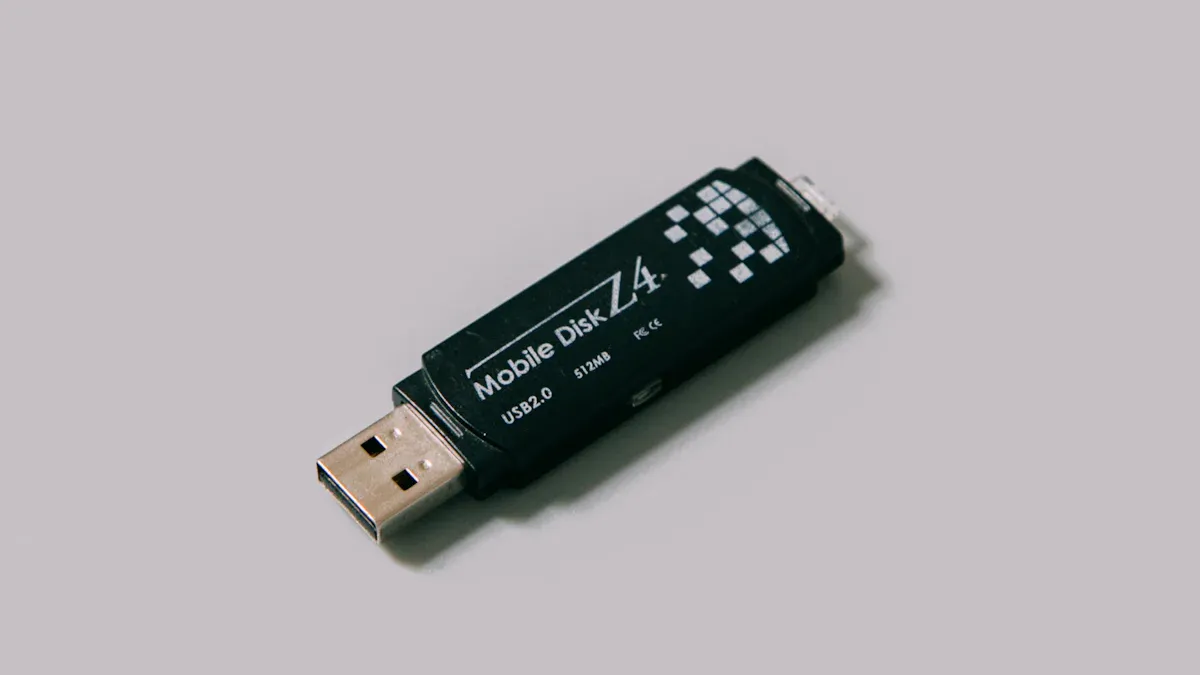
Understanding the core attributes of each memory type helps in theory. Seeing them in action makes the choice clear. The specific job of the memory in a project dictates whether NOR or NAND is the right fit.
Code Storage Applications (NOR)
Projects need nor flash memory when they require instant, reliable code execution. Its fast random access and Execute-In-Place (XIP) capability allow a processor to run programs directly from the chip. This makes boot-up times extremely fast and system operation very stable. This type of non-volatile memory is the bedrock of many embedded systems.
Automotive systems heavily rely on nor flash memory for safety and performance. It stores critical firmware and operates reliably in harsh environments.
Advanced Driver-Assistance Systems (ADAS): Companies like Tesla and Volvo use
nor flash memoryfor firmware, sensor data, and calibration, enhancing safety features.Infotainment Systems: Brands such as BMW and Mercedes-Benz use it for quick boot times and seamless media playback.
Powertrain Control Units: Ford and Toyota depend on it to manage engine performance and emissions, ensuring durability across wide temperature ranges.
EV Battery Management: Nissan and Hyundai use it to store vital firmware for battery safety and longevity.
Industrial controllers and Programmable Logic Controllers (PLCs) also use nor flash memory. Factory automation systems demand high reliability and immediate response. The XIP feature is essential for these industrial controls, enabling processors to run code directly from the memory for maximum efficiency.
Networking hardware provides another key use case. Routers and switches from vendors like Cisco and Juniper employ this non-volatile memory to store firmware and boot code. Its fast read speed ensures quick startups and rapid recovery from failures, which is crucial for maintaining network uptime.
Mass Data Storage Applications (NAND)
Projects choose nand flash when the main goal is storing large amounts of data at a low cost. Its high density and low cost-per-gigabyte make it the standard for mass storage.
Modern digital life runs on nand flash. Smartphones and digital cameras use it to store everything from the operating system to photos, videos, and apps. Early digital cameras used nand flash memory cards, and as capacity grew, its use expanded to nearly every consumer electronic device. Portable storage devices like USB drives and SD cards also use it. They often use Triple-Level Cell (TLC) NAND because it offers a good balance of high storage density and cost-effectiveness for consumer products.
Solid-State Drives (SSDs) are perhaps the most well-known application. They use different types of NAND to balance cost, performance, and endurance.
A Quick Look at Modern NAND Types Storing more bits per cell increases density and lowers cost, but it also reduces endurance (the number of times a cell can be rewritten).
Triple-Level Cell (TLC): Stores 3 bits per cell. It is the standard for most consumer SSDs and smartphones.
Quad-Level Cell (QLC): Stores 4 bits per cell. It offers even lower costs, making it great for budget SSDs and applications where data is read more often than it is written.
Penta-Level Cell (PLC): An emerging technology storing 5 bits per cell. It promises the highest density but has very low endurance, targeting future archival and write-once storage needs.
Hybrid Systems: Using Both Effectively
Many advanced systems do not choose one or the other. They use both. A hybrid approach combines the strengths of each technology to create a robust and efficient design. This is a very common architecture in complex electronics.
A typical hybrid system uses a small, reliable nor flash memory chip to store the initial boot code. When the device powers on, the processor immediately executes this code from the NOR chip. This bootloader initializes the system hardware. Then, it loads the main operating system and application software from a much larger, high-capacity nand flash memory chip into the system's RAM.
This design offers several advantages:
Reliable Booting: The system benefits from the high reliability and fast random access of NOR for a secure and quick startup.
High-Capacity Storage: The system uses low-cost
nand flashfor storing the main OS, user data, and other large files.Failsafe Recovery: Some devices, like network routers, use the NOR chip as a fallback. If the system fails to boot from the primary
nand flashafter several attempts, it can automatically switch to a backup firmware version stored on the NOR chip. This creates a resilient system that can recover from update failures.
Key Technical Considerations for Implementation
Choosing between NAND and NOR involves more than just their primary use cases. Developers must also consider key technical details that affect system design, cost, and long-term performance.
The Role of Error Correction Code (ECC)
NAND flash memory is prone to bit errors. These errors increase as memory cells wear out from use. Storing more bits per cell in technologies like MLC and QLC also raises the bit error rate. This makes Error Correction Code (ECC) essential for data reliability.
An ECC engine is a special controller function. It detects and corrects errors automatically. Simpler SLC NAND might only need basic Hamming ECC for single-bit correction. Denser nand flash requires stronger algorithms like BCH or LDPC to fix multiple bit errors and ensure data integrity.
Understanding Program/Erase (P/E) Cycles
A Program/Erase (P/E) cycle is one instance of writing and erasing data in a memory cell. Each cycle causes a tiny amount of wear. The total number of P/E cycles a chip can handle is its endurance. This metric directly impacts the lifespan of any non-volatile memory.
NOR flash has very high endurance, often exceeding 100,000 cycles. NAND endurance varies by type.
Endurance (P/E Cycles) | |
|---|---|
SLC | ~100,000 |
MLC | ~3,000 – 10,000 |
TLC | ~1,000 – 3,000 |
QLC | ~100 – 1,000 |
This difference also affects data retention. NOR flash can typically hold data for 20 years. Most nand flash manufacturers state a retention time of about 10 years, which decreases as the device nears its P/E cycle limit.
Interface Differences: Serial vs. Parallel
The interface is how the memory chip connects to the processor.
Parallel Interface: This interface uses many wires to transfer data simultaneously. It offers very high read speeds. This makes it ideal for NOR flash in Execute-In-Place (XIP) applications where instant access is critical.
Serial Interface: This interface uses very few wires (pins). It sends data bit by bit. Modern serial interfaces like SPI are becoming standard for both memory types. They reduce board complexity, lower pin counts, and decrease system cost. Advanced serial interfaces like QspiNAND offer high throughput, making them a great choice for high-density applications.
The decision between memory types rests on a core principle. NOR flash ensures reliable code execution, a key reason for its adoption in IoT and automotive systems. In contrast, nand flash offers high-capacity storage at a lower cost. Project designers should evaluate their primary need: running the system or storing its data? The specific application dictates the final choice. Many modern electronics use a hybrid design, leveraging both technologies for the most efficient and robust performance.
FAQ
Why is NAND flash not used for booting?
NAND flash reads data in large blocks, not single bytes. This makes its random access very slow. A processor needs fast random access to fetch boot instructions one by one. NOR flash provides this speed, making it ideal for reliable system startup.
What is Execute-In-Place (XIP)?
Execute-In-Place (XIP) allows a processor to run program code directly from the memory chip. It does not need to copy the code to RAM first. NOR flash supports XIP because of its extremely fast random read speeds. This feature enables instant-on functionality in many devices.
Is NOR flash always more durable than NAND?
NOR flash generally offers high endurance, often over 100,000 P/E cycles. The durability of NAND flash varies greatly.
SLC NAND: Matches NOR's endurance.
TLC and QLC NAND: Have much lower endurance. For critical code storage, NOR provides consistent, high durability.
Can a device work without any NOR flash?
Yes, some simple devices can. However, most complex systems like smartphones, computers, and routers use a hybrid design. They use a small NOR chip for a reliable boot process. Then, they load the main operating system from a larger, cheaper NAND chip.