How Motors and Starters Power Industrial Machinery
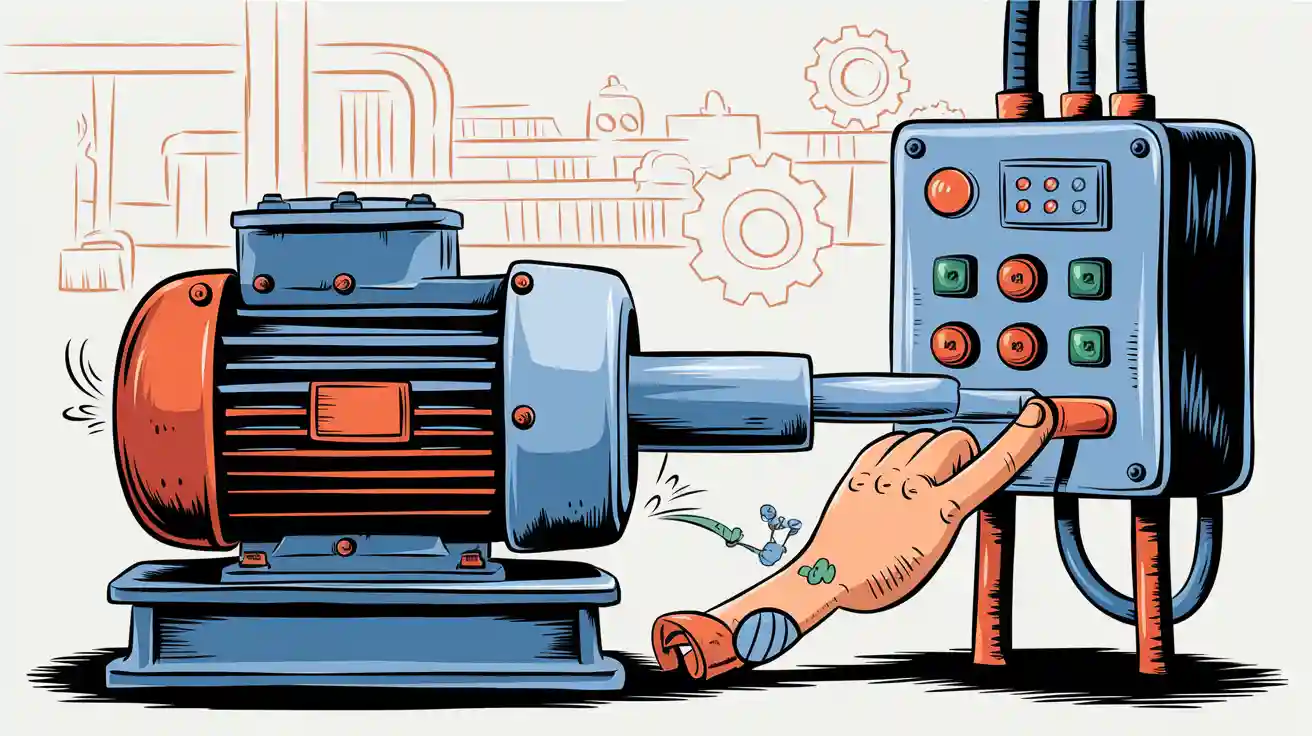
Motors and starters serve as the backbone of industrial machinery. The motor delivers mechanical power, while the starter manages electrical flow and ensures a safe motor start-up. Motors and starters work together to allow precise control, protect equipment, and maintain safety. Reliable motor operation reduces downtime and supports uninterrupted industrial workflows. Industrial professionals benefit from understanding how each starter type protects the motor and extends its lifespan.
Key Takeaways
- Motors convert electrical energy into mechanical power, while starters control and protect motors during startup and operation.
- Different types of starters, like direct-on-line, star-delta, and soft starters, fit various motor sizes and applications to reduce stress and improve safety.
- Proper selection and maintenance of motors and starters prevent damage, reduce downtime, and extend equipment life.
- Modern starters support remote monitoring and automation, enhancing efficiency and enabling predictive maintenance.
- Matching the right starter to the motor and application ensures reliable performance, energy savings, and safer industrial operations.
Motors and Starters Overview
What Are Motors and Starters
Motors and starters play a central role in industrial motor control. The motor converts electrical energy into mechanical energy, driving pumps, conveyors, and other machinery. The starter acts as the gatekeeper, managing the flow of electricity and protecting the motor from damage. Industrial professionals rely on these components to keep equipment running safely and efficiently.
Motors and starters differ in both function and design. The table below highlights their main differences:
| Aspect | Motor | Starter |
|---|---|---|
| Function | Converts electrical energy into mechanical energy to perform work. | Controls the starting, stopping, and protection of motors; manages initial current surge and overload protection. |
| Design | Electromechanical machine. | Electrical control device composed of contactors, overload relays, timers, and sometimes solid-state devices like thyristors. |
| Types (Examples) | N/A | - Direct-On-Line (DOL): Simple, cost-effective, starts motor at full voltage, suitable for small motors (<5 kW). - Star-Delta: Reduces starting current by switching from star to delta connection, suitable for medium motors (5-150 kW). - Soft Starters: Use thyristors for smooth voltage ramp-up, reduce mechanical stress, ideal for large motors. |
| Advantages | Provides mechanical output for various applications. | Protects motor, extends lifespan, reduces electrical/mechanical stress during startup. |
| Disadvantages | N/A | DOL: High inrush current; Star-Delta: Complex installation, limited starting torque; Soft Starter: Higher cost, requires expertise. |
Key characteristics define both the electric motor and the motor starter:
- The electric motor delivers mechanical power for industrial tasks.
- The motor starter includes contactors and overload relays to start, stop, and protect the motor.
- Starters have power and control circuits, enabling remote operation and overload protection.
- Types of starters include manual, magnetic, star-delta, soft starters, autotransformer, and variable frequency drives.
- Each motor starter type offers unique advantages and fits specific applications.
How They Work Together
Motors and starters work together to ensure safe and efficient operation of industrial machinery. The starter controls the initial surge of current when the motor begins to run. This control prevents damage and reduces mechanical stress. The motor starter also stops the motor when needed and protects it from overheating or electrical faults.
Industrial motor control systems use starters to match the motor’s power requirements and environmental conditions. Proper selection and maintenance of the motor starter reduce downtime and extend the life of the motor. Modern motor controls, such as variable frequency drives, adjust energy use based on workload. These systems improve efficiency, reduce maintenance needs, and offer precise control over motor operation.
Motors and starters form the foundation of reliable industrial processes. Their combined action supports productivity, safety, and long-term equipment health.
Electric Motor Basics
Key Components
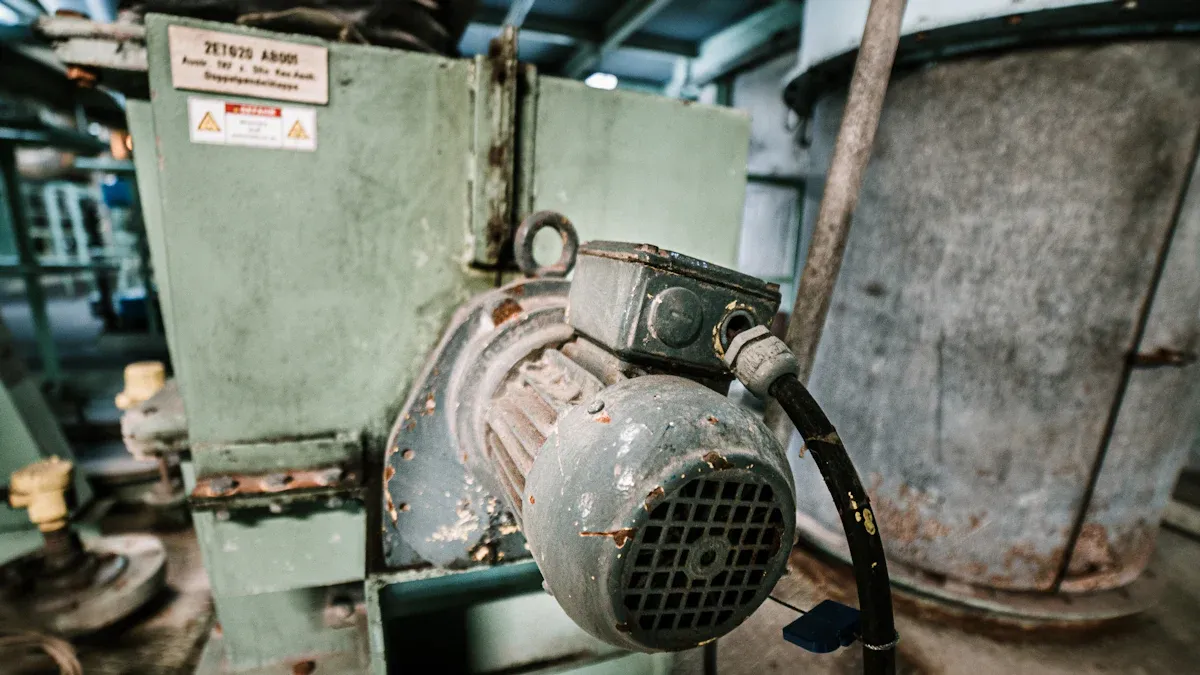
An electric motor contains several essential parts that work together to produce mechanical power. Each component plays a specific role in the motor’s operation and affects its performance and durability. The following table outlines the main components found in most industrial electric motors:
| Component | Description | Key Considerations / What to Look For |
|---|---|---|
| Stator | Creates magnetic fields that move the rotor; made of permanent magnets or windings. | Material quality, insulation quality, efficiency ratings. |
| Rotor | Spins on its axle to generate rotational force; interacts with stator's magnetic field. | Construction quality, balance, rotor type (squirrel cage, wound rotor, permanent magnet). |
| Bearings | Allow rotor to spin smoothly with minimal friction, ensuring longevity and efficiency. | Type of bearings (ball, roller, sleeve), suitability for application, maintenance requirements. |
| Windings | Coils of wire in the stator that create magnetic poles when current flows through them. | Condition (no overheating or damage), material quality (high-grade copper), thermal protection features. |
| Air Gap | Distance between stator and rotor, critical for motor performance. | Small and consistent gap, within manufacturer tolerances, no signs of wear or misalignment. |
| Commutator | Present in DC motors; shifts electric current flow to reverse magnetic polarity and keep rotor spinning. | Inspect for wear, brush condition, and material durability (copper or alloys). |
A well-designed electric motor uses high-quality materials and precise engineering. The stator and rotor must work together efficiently. Bearings reduce friction and extend the life of the motor. Windings need proper insulation and thermal protection. The air gap must remain consistent to avoid performance loss. DC motors also require a durable commutator for reliable operation.
Industrial Applications
Electric motors power many machines in heavy-duty industries. These motors handle tough jobs and run in harsh environments. Their reliability and efficiency make them vital for industrial applications. Mining companies use electric motors in conveyor belts, crushers, and drilling machines. Construction sites rely on motors for cranes, hoists, and mixers. Manufacturing plants depend on motors for assembly lines, robots, and packaging equipment. Agriculture uses motors in irrigation systems, grain augers, and processing machinery. Food and beverage factories need motors for mixers, refrigeration, and bottling lines.
- Mining: Electric motors drive conveyor belts, crushers, ventilation systems, and drilling machines.
- Construction: Motors power cranes, hoists, concrete mixers, and earthmoving equipment.
- Manufacturing: Motors operate assembly lines, conveyors, robots, and processing machines.
- Agriculture: Motors run irrigation systems, feed conveyors, grain dryers, and milling machines.
- Food & Beverage: Motors support mixers, refrigeration, packaging lines, and temperature control systems.
Electric motors provide the force needed for continuous operation in these sectors. Their design allows them to withstand high loads and extreme conditions. Industrial professionals choose electric motors for their durability and consistent performance.
Motor Starter Functions
Startup and Shutdown Control
Motor starters play a critical role in managing the startup and shutdown of industrial motors. The starter controls the flow of electrical current, allowing the motor to begin operation safely and smoothly. During startup, the starter limits the inrush current, which can reach up to 650% of the motor’s full load current in direct-on-line starting. This high current can damage equipment and create safety hazards. Soft starters reduce the inrush current to approximately 350%, protecting the motor and connected systems.
Operators use different control methods to start and stop motors. The table below summarizes the most common control methods used by motor starters:
| Control Method | Description | Key Features / Advantages |
|---|---|---|
| Two-wire control circuit | Uses maintained contact devices to control the magnetic motor starter. | Automatic restart after power failure; low-voltage release; can be dangerous due to automatic restart. |
| Three-wire control circuit | Uses momentary contact devices (start/stop buttons) to control the magnetic motor starter. | Requires operator to restart after power failure; provides low-voltage protection; safer for operators. |
| Primary resistor starter | Uses resistors in series with motor leads during startup to reduce voltage and starting current. | Simple method; timing relay shorts resistors after startup. |
| Reactor starter | Similar to resistor starter but uses reactors instead of resistors. | Less common today. |
| Autotransformer starter | Uses tapped autotransformers to reduce voltage during startup (typically 50%, 65%, or 80% taps). | Reduces line current; no electrical isolation; can be step-up or step-down. |
| Part-winding starter | Starts motor with half the windings energized, then connects the other half after startup. | Requires careful timing; used with dual voltage motors. |
| Wye-delta starter | Starts motor in wye configuration, then switches to delta for running. | Reduces inrush current; starting torque about 33%; open transition can cause momentary disconnection. |
| Solid-state starter | Uses SCRs (silicon-controlled rectifiers) for phase control of current during startup (soft start). | Precise current control; interfaces well with VFDs and PLCs; smooth startup. |
Motor starters enable safe stopping by disconnecting power and preventing electrical surges. This function protects both the motor and the operator. In industrial motor control, reliable startup and shutdown reduce mechanical stress and extend equipment lifespan. Operators select the appropriate starter type based on motor size, application, and required safety features.
Overload and Fault Protection
Motor starters provide essential overload protection and short circuit protection for industrial motors. The starter monitors motor current and detects abnormal conditions. Electromechanical overload relays use thermal elements, such as heaters or bimetallic strips, to sense excess current. When the motor draws too much current, the starter trips contacts and disconnects power, preventing overheating and damage.
Solid-state overload relays offer improved accuracy by measuring current with sensors. These starters activate trips using advanced circuits and provide multiple protective functions. Microprocessor-based starters distinguish between overloads and short circuits, enabling diagnostics and programmable responses. Advanced starters can differentiate between temporary overloads, which allow restart after load normalization, and serious faults, such as short circuits, which require inspection before restarting.
Motor starters also integrate communication modules for remote monitoring. Operators can track motor current, trip causes, and motor health, which helps with troubleshooting and maintenance. Modular starter designs combine contactors, overload relays, and communication capabilities, reducing equipment size and complexity.
Motor starters with type 2 coordination ensure safe operation after short circuits with minimal damage. This feature improves reliability and safety in industrial environments.
Unplanned downtime and maintenance costs decrease when motor starters detect faults early. Real-time diagnostics and fault history support proactive maintenance and faster issue resolution. Monitoring motor current changes predicts pending failures, allowing operators to intervene before malfunctions occur.
Remote and Automated Operation
Modern motor starters support remote and automated operation, transforming industrial motor management. Motor Control Centers (MCCs) integrated with Industrial Internet of Things (IIoT) platforms provide real-time motor performance data, remote monitoring, and proactive maintenance. Programmable Logic Controllers (PLCs) automate control logic, enabling sophisticated motor operation without constant human intervention.
Supervisory Control and Data Acquisition (SCADA) systems work with MCCs and PLCs to deliver remote monitoring and automated control. Operators access and control motor systems from cloud-based platforms, improving operational flexibility and decision-making. Integration of IoT, cloud computing, and predictive analytics with MCCs enhances efficiency, reliability, and troubleshooting capabilities.
- Smart Motor Controllers (SMCs) enable remote monitoring and regulation of motor performance via IoT connectivity.
- Cloud integration allows real-time data access through smartphones, tablets, and PCs.
- Predictive maintenance tools warn of potential issues, reducing unscheduled downtime.
- Historical data logging supports performance benchmarking and compliance.
- SMCs improve energy efficiency, safety, and provide seamless integration with modern automation systems.
Advanced motor starters reduce the need for physical inspections and speed up response times. These features align with Industry 4.0 principles, supporting predictive maintenance and lowering operational costs. Operators benefit from improved safety, reduced labor costs, and enhanced motor operation.
Types of Motor Starters
Direct-On-Line Starters
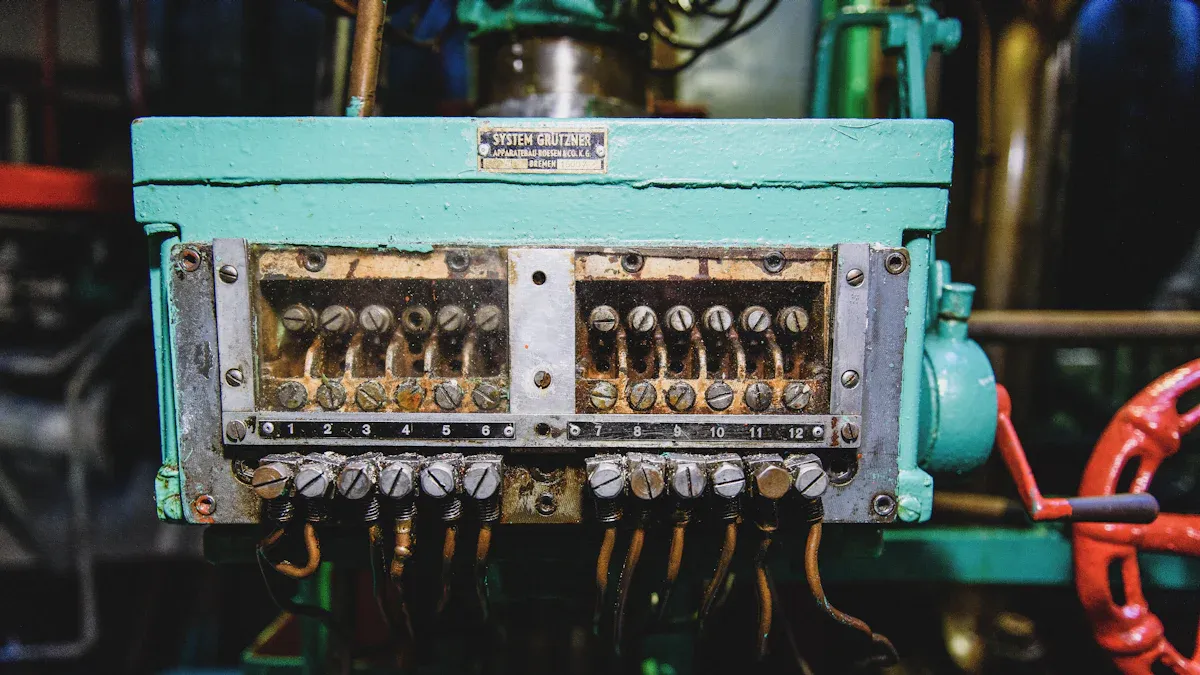
A direct-on-line (dol) starter connects the motor directly to the power supply. This starter is the simplest and most economical option for starting small motors. Operators choose this starter for its easy installation and straightforward control circuit. The direct-on-line starter provides full voltage and maximum starting torque, making it suitable for motors up to 5 HP.
Operators often select direct-on-line starters for applications where simplicity and cost matter most.
The table below highlights the main advantages and disadvantages:
| Advantages of DOL Starters | Disadvantages of DOL Starters |
|---|---|
| Economical and easy to maintain | High starting current (4-6 times full load) |
| Simple control circuit | Causes voltage dips and thermal stress |
| Provides full starting torque | Reduces motor lifespan |
| Easy troubleshooting | Limited to small motors |
Thermal overcurrent protection in this starter helps prevent overheating by disconnecting the motor during excessive current flow. Unlike relays, which only switch circuits, the starter combines switching and protection functions.
Star-Delta Starters
A star-delta starter reduces the starting current to about one-third compared to direct-on-line starting. This starter uses two configurations: star for startup and delta for running. Operators use star-delta starters for three-phase induction motors where low starting current is required.
- Star-delta starters minimize electrical stress on the supply network.
- They suit motors from 5.5 kW to 90 kW and can be assembled for larger motors.
- These starters work best when the motor can reach 80% of full speed before switching to delta.
- Common applications include centrifugal compressors and pumps.
Star-delta starters offer a cost-effective and reliable solution for medium-sized motors. However, they do not provide high starting torque, so they are not suitable for heavily loaded motors.
Soft Starters
Soft starters gradually increase the voltage supplied to the motor during startup. This starter avoids sudden jolts and mechanical strain by using adjustable ramp-up times. Operators can customize acceleration and deceleration, which reduces mechanical stress and prevents damage.
- Soft starters reduce inrush current and mechanical shocks.
- Built-in bypass contactors enable smoother transitions.
- Multiple protection mechanisms safeguard the motor and starter system.
- The gradual ramp-up extends motor lifespan and improves performance.
Soft starters suit applications where minimizing wear and prolonging equipment life are priorities. They offer advanced protection and smooth operation compared to traditional starters.
DC Motor Starters
DC motor starters control the startup of direct current motors. These starters manage the initial surge of current and protect the motor from overloads. Operators use DC motor starters in applications like cranes, hoists, and elevators. The starter includes resistors and contactors to limit current and ensure safe operation. DC motor starters provide reliable protection and precise control for DC motors.
Tip: Variable frequency drive technology offers even greater control and efficiency for both AC and DC motors in modern industrial settings.
Choosing Motors and Starters
Selection Factors
Selecting the right starter for industrial machinery requires careful evaluation of several factors. Operators should consider the following:
- Application Type: Identify if the motor will run at a fixed speed, need frequent starts and stops, or require speed variation.
- Motor Size: Larger motors often need soft starters or autotransformer starters, while smaller motors may use manual or magnetic starters.
- Starter Types: Choose from manual, magnetic, reversing, soft, or variable frequency drive starters based on the application.
- Efficiency and Control: Select starters that improve efficiency and reduce current draw, especially for conveyors or fans.
- Environmental and Operational Needs: Assess if the environment demands reduced speed starting, remote control, or special protection.
- Voltage and Phase: Match the starter and motor voltage to the supply to avoid performance issues.
- Overload Protection: Set overload protection to engage at 10% to 30% above full load current.
- Enclosure Protection: Use enclosures with proper ratings to meet safety standards and protect against harsh conditions.
Consulting manufacturer data and electrical professionals helps ensure the best match for motors and starters.
Matching to Application
Operators must match the starter to the specific needs of the application. The table below compares key considerations for different starter types and variable frequency drives:
| Factor/Consideration | Motor Starters | Variable Frequency Drives (VFDs) |
|---|---|---|
| Load Type | Best for simple, low-support applications | Ideal for fans, pumps, and loads needing speed control |
| Speed Control | Not provided | Precise speed control |
| Starting Torque | High starting torque | Ramped, lower starting torque |
| Energy Efficiency | Less efficient | Significant energy savings |
| Heat Generation | Lower in control cabinet | More heat due to power conversion |
| Panel Space & Cabling | Smaller, simpler cabling | Larger, more complex cabling |
| Application Examples | Agriculture, basic batch processes | Fans, pumps, variable speed processes |
Matching the starter to the load and control requirements ensures reliable operation and long-term cost savings. For example, VFDs allow motors to run at different speeds, which can reduce power use by up to 87.5% at half speed.
Common Mistakes
Operators sometimes make errors when selecting and installing starters. Common mistakes include:
- Failing to assess torque needs, leading to poor startup performance.
- Not matching speed compatibility between the motor and starter.
- Choosing the wrong power source type, such as using an AC starter for a DC motor.
- Incorrect overload protection settings, risking damage or downtime.
- Ignoring environmental factors like temperature and humidity, which can shorten equipment life.
- Selecting an inappropriate starter type for the motor size or load.
- Overlooking the need for proper relay adjustment.
- Neglecting to consult qualified professionals, which can compromise safety and reliability.
Proper selection and regular maintenance of motors and starters help meet safety standards, extend equipment life, and reduce operational costs.
Motors and starters power, control, and protect industrial machinery. Proper selection and maintenance improve workplace safety by reducing arc flash hazards, supporting remote monitoring, and ensuring compliance with standards like UL 508 and NEMA MG 1-2024. Technological advancements increase efficiency and reliability.
- Operators should assess equipment, define retrofit goals, and follow best practices for upgrades.
Applying these steps helps maintain safe, efficient, and reliable operations.
FAQ
What is the main purpose of a motor starter?
A motor starter controls the electrical current to the motor. It ensures safe startup and shutdown. The starter also protects the motor from overloads and faults.
How do motors and starters improve industrial safety?
Motors and starters help prevent electrical hazards. They manage high currents during startup and stop the motor quickly in emergencies. This reduces the risk of equipment damage and injury.
Can one starter type work for all motors?
No. Different motors need specific starters based on size, application, and control needs. Operators must select the right starter to match the motor and its workload.
How often should motors and starters receive maintenance?
Operators should inspect motors and starters regularly. Most facilities schedule checks every three to six months. Routine maintenance helps prevent failures and extends equipment life.
What happens if a starter fails during operation?
If a starter fails, the motor may stop or run without protection. This can cause overheating or damage. Operators should replace faulty starters quickly to avoid downtime.