Why Motor Starters Matter in Today’s Industrial Workplaces
A sudden surge in a factory’s conveyor system can cause unexpected shutdowns, risking both equipment and worker safety. Every industrial workplace depends on the right starter to keep motors running smoothly. A motor starter controls the flow of electricity, starts and stops the motor, and shields equipment from damage. Modern industrial operations rely on advanced starter types to reduce downtime and improve safety. Many facilities use coordinated starters, which offer different levels of protection:
- Basic protection requires replacement after a fault, leading to longer downtimes.
- Enhanced coordination allows quick inspections and faster restarts, lowering maintenance costs.
- Total coordination enables immediate recovery, essential for mission-critical motor-driven systems.
Industrial teams trust these starter systems to prevent electrical hazards and keep vital equipment in motion.
Key Takeaways
- Motor starters safely start and stop industrial motors while protecting them from damage caused by overloads and electrical faults.
- Different types of starters, like direct-on-line, star-delta, soft starters, and auto-transformer starters, fit specific motor sizes and industrial needs to improve efficiency and reduce stress.
- Choosing the right motor starter depends on the motor size, load type, application needs, and environmental conditions to ensure safe and reliable operation.
- Modern motor starters improve safety by preventing electrical hazards, boost energy efficiency by controlling motor speed, and extend equipment life through better protection.
- Regular maintenance and using advanced starter features, such as adjustable settings and smart controls, help reduce downtime and support smooth industrial workflows.
Motor Starter Basics
What Is a Motor Starter
A motor starter is a device that safely starts and stops industrial motors. In many factories, teams use a starter to control large three-phase, 480-volt AC motors. The starter manages the power supply and ensures the motor only runs under safe conditions. It protects the motor from overloads or faults that could cause damage.
A motor starter includes several key parts:
- A contactor, which acts as an electromechanical switch to make or break the circuit to the motor.
- Circuit disconnecting means, which allow workers to isolate the motor for maintenance or emergencies.
- Overload protection, which prevents the motor from overheating or drawing too much current.
Different types of starters exist. These include manual starters, magnetic starters, auto-transformer starters, star-delta starters, soft starters, and variable frequency drives. Each type of starter uses a unique method to control the motor and protect it from harm. The term "motor starter" covers all these devices, while soft starters and variable frequency drives are specific types with special features.
Core Functions
A starter performs several important tasks in industrial motor control. It manages the flow of electricity, starts and stops the motor, and shields the equipment from electrical problems.
| Component | Function/Role |
|---|---|
| Contactor | Electromechanical switch that makes or breaks the electrical connection to the motor. |
| Overload Relay | Protects motor from overheating and overcurrent by monitoring current and disconnecting power if limits are exceeded. |
| Circuit Disconnect | Allows manual isolation of the motor for maintenance or emergencies. |
The starter uses two main circuits. The power circuit passes the main voltage to the motor through the contactor and overload relay. The control circuit operates the contactor coil, which closes the contacts and supplies power to the motor. This setup allows workers to start or stop the motor from a safe distance.
A typical starter controls current flow and provides overload or short-circuit protection in several steps:
- The starter uses a magnetic contactor as a switch to turn the motor on and off.
- A thermal overload relay, often with a bimetallic strip, heats up if the current gets too high. The strip bends and opens the contacts, breaking the circuit and stopping the motor.
- The overload relay protects the motor from damage caused by high current, such as a locked rotor or bearing problems.
- Workers can reset the overload relay manually or automatically, depending on the system.
- Setting the overload device to match the motor’s data ensures reliable protection.
- The combination of the magnetic contactor and overload relay keeps the motor safe by controlling current and guarding against overloads and short circuits.
Motor controllers use these features to keep industrial equipment running smoothly. Proper motor control prevents costly downtime and extends the life of the motor. Teams select the right starter based on the size of the motor, the type of load, and the needs of the application. Reliable starters and controllers form the backbone of safe and efficient industrial motor systems.
Types of Motor Starters
Direct-On-Line Starters
A direct-on-line starter connects the motor directly to the power supply. This starter uses a magnetic contactor and an overload relay. When the operator presses the start button, the contactor closes and applies full voltage to the motor. The motor draws a high inrush current, which can reach up to six times its normal running current. This high current gives the motor strong starting torque but can stress the electrical system and the motor itself.
Direct-on-line starters work best for small motors, usually less than 10 horsepower.
They are simple, cost-effective, and easy to maintain.
Common uses include:
- Pumps and compressors in water treatment and refrigeration
- Conveyor systems that need immediate torque
- Ventilation fans in mining and HVAC
- Crushers and mixers in manufacturing
Star-Delta Starters
A star-delta starter helps reduce the starting current and stress on the motor. The starter begins by connecting the motor windings in a star (Y) configuration. This setup lowers the voltage and current during startup. After a short time, the starter switches to a delta (Δ) configuration, allowing the motor to run at full voltage and deliver maximum torque.
| Aspect | Description |
|---|---|
| Operation Principle | Starts motor in star connection to reduce voltage, then switches to delta for full voltage. |
| Key Components | Three contactors, timer, overload relay |
| Applications | Medium-sized motors (5 kW to 150 kW): compressors, large fans, pumps |
| Advantages | Reduces starting current, improves energy efficiency, increases motor life |
| Disadvantages | More complex, limited starting torque, possible jerking during transition |
Star-delta starters suit motors that start with light loads. They are common in oil and gas, mining, and manufacturing for fans, pumps, and compressors.
Soft Starters
A soft starter gradually increases the voltage to the motor during startup. This smooth ramp-up reduces mechanical stress and prevents sudden power surges. The starter protects the motor, extends its lifespan, and lowers maintenance needs. Soft starters also limit inrush current, which helps prevent voltage dips and keeps the power supply stable.
Industries use soft starters for:
- Conveyor systems in manufacturing and logistics
- Pumping stations in water treatment and mining
- HVAC systems in large buildings
- Crushing and milling equipment in mining
- Industrial mixers in food and chemical plants
Soft starters provide precise control, improve safety, and help reduce downtime.
Auto-Transformer Starters
An auto-transformer starter uses a transformer to supply reduced voltage to the motor during startup. This method lowers the inrush current and mechanical stress. After the motor reaches a certain speed, the starter switches to full voltage.
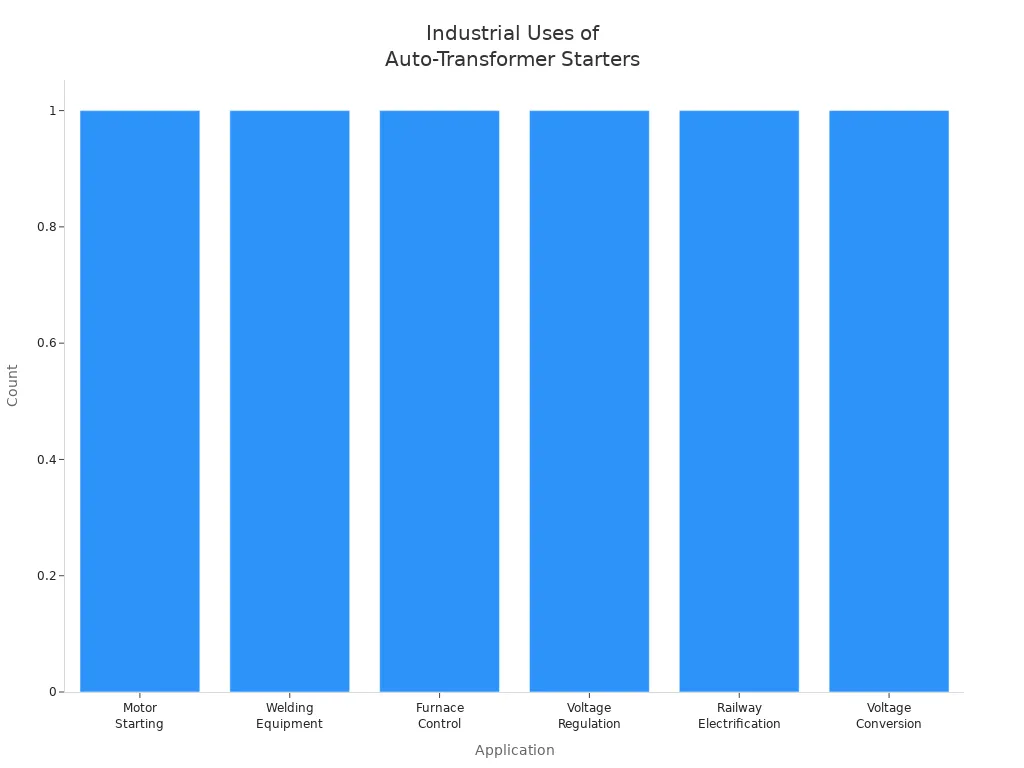
Auto-transformer starters are common in manufacturing for large pumps, blowers, and compressors. They also help with voltage regulation in power distribution and control voltage for welding and furnace equipment. These starters are compact and efficient but may require more space and cost than other types.
Each starter type fits specific motor sizes and industrial needs. Choosing the right starter ensures safe, reliable, and efficient motor operation.
Motor Starters in Industrial Applications
Key Equipment Supported
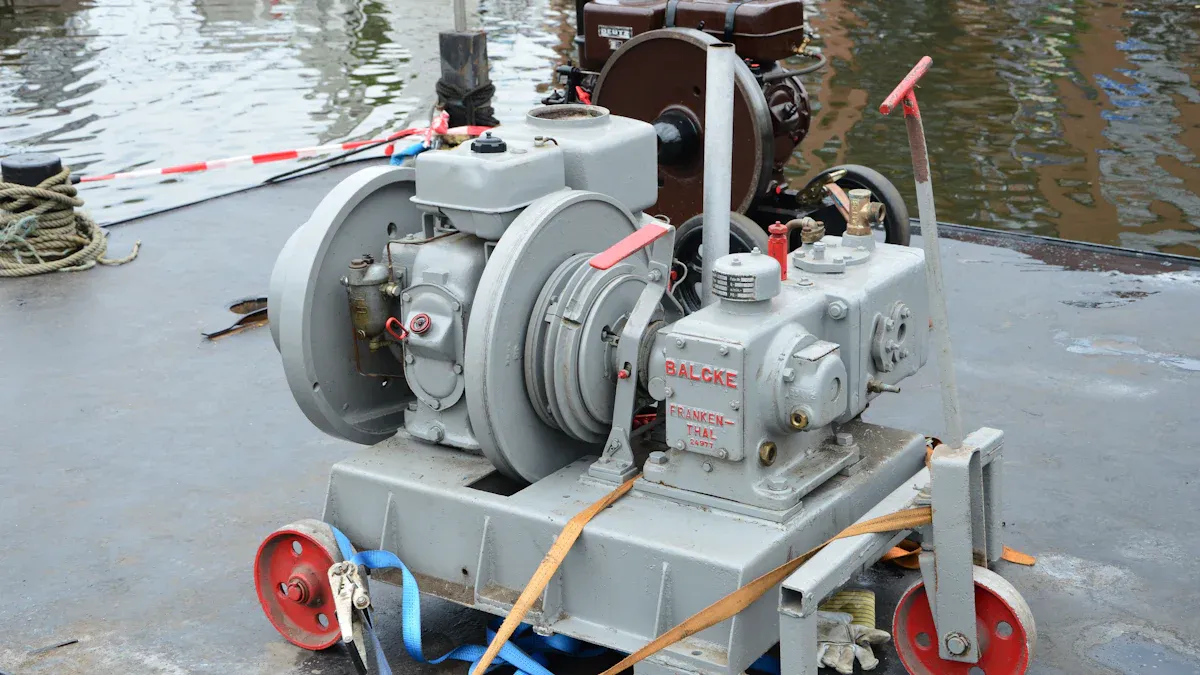
Industrial workplaces rely on starters to control and protect a wide range of equipment. These devices play a vital role in keeping operations safe and efficient. Common equipment that depends on starters includes:
- Pumps that move water, chemicals, or oil in processing plants
- Compressors that supply air or gas for machinery and tools
- Conveyor systems that transport materials across production lines
- Fans and blowers that manage air flow in ventilation and HVAC systems
- Industrial mixers that blend raw materials in food, chemical, or pharmaceutical plants
- Large HVAC units that regulate temperature in factories and warehouses
A starter ensures each piece of equipment starts smoothly and operates within safe limits. Industrial motors in these machines often run for long hours and face heavy loads. Starters help prevent damage from electrical faults or overloads, which keeps equipment running longer.
Workflow and Reliability
Reliable starters support continuous operation in industrial environments. They protect motors from overheating and electrical issues, which reduces the risk of sudden breakdowns. For example, GE motor starters in manufacturing plants drive pumps, compressors, and conveyors. These starters provide protection, improve efficiency, and make maintenance easier. Quick diagnostics and straightforward repairs help teams reduce downtime and keep workflows moving.
Soft starters have become popular because they manage motor startups under different load conditions. By reducing inrush current and mechanical stress, these starters ensure stable operation. This controlled acceleration is important for uninterrupted workflows. Modern starters often include smart features, such as integration with IoT systems. These features allow predictive maintenance and better operational control, which increases equipment reliability.
Tip: Adjustable settings on soft starters let teams fine-tune startup and shutdown times. This flexibility helps match the starter to the specific needs of each application, preventing unexpected stops and improving safety.
Industrial motors need reliable starters to handle sudden load changes and protect against faults. These devices help maintain steady production, reduce maintenance costs, and extend the life of critical equipment.
Motor Controller Selection
Application Needs
Selecting the right motor controller starts with understanding the application. Every industrial process has unique requirements. Some machines need constant speed, while others require variable speed or precise position control. Operators must consider torque needs, speed settings, and how quickly the machine must start or stop.
- Torque requirements: The motor controller must deliver enough force for startup and acceleration.
- Speed compatibility: The controller should match the output speed to the application.
- Power source: Teams must choose between AC and DC controllers based on efficiency and control needs.
- Speed and control: Some applications need fixed speeds, while others require variable speed drives or advanced controllers for torque and speed management.
Physical space and mounting options also matter. The controller must fit the available area and support the type of motor used. Some applications need feedback devices, such as encoders, for accurate position or torque control.
Motor Size and Load
The size of the motor and the load it drives play a big role in controller selection. Large motors need controllers that can handle higher currents and provide strong overload protection. Teams must evaluate load variations and duty cycles to prevent overheating.
| Factor | Why It Matters |
|---|---|
| Motor size | Larger motors draw more current and need robust controllers. |
| Load type | Constant, variable, or shock loads affect controller choice. |
| Overload protection | Prevents damage from heavy loads or faults. |
| Duty cycle | Frequent starts and stops require durable controllers. |
Proper overload protection is essential. Overload relays monitor current and trip the circuit if it exceeds safe levels. Adjustable settings allow customization for different motors and loads. This protection reduces downtime and keeps equipment safe.
Environment Factors
Industrial environments can be harsh. Dust, moisture, chemicals, and extreme temperatures all affect motor controller performance. Choosing the right enclosure protects the starter and controller from these hazards. For example, NEMA 1 enclosures work for indoor use, while NEMA 4 enclosures resist water and dust.
- Teams must check the operating temperature range to ensure reliable function.
- Controllers should meet industry standards, such as IP ratings, for protection.
- Proper enclosure selection extends equipment life and ensures safe operation.
Voltage regulation also impacts performance. Motors should run at the rated voltage and frequency. Voltage surges or imbalances cause overheating and reduce motor life. Clean, balanced power supply conditions help maintain efficiency and prevent damage.
Tip: Always match the motor controller to the application, motor size, and environment. This approach ensures safe, efficient, and reliable motor control.
Benefits of Motor Starters
Safety
Safety stands as a top priority in every industrial setting. Motor controllers help protect workers and equipment from electrical hazards. They use advanced features to prevent overloads, short circuits, and accidental startups. The National Electrical Manufacturers Association (NEMA) sets strict standards for enclosure ratings. These ratings ensure that motor controllers work safely in different environments, from dry indoor spaces to hazardous outdoor locations.
| NEMA Rating | Protection Level and Safety Features | Typical Industrial Application |
|---|---|---|
| NEMA 1 | Indoor use; protects against contact with live parts and falling dirt | Indoor electrical panels or cabinets |
| NEMA 4, 4X | Indoor/outdoor; protects against water ingress and hose-directed water | Outdoor enclosures in wet environments |
| NEMA 7 | Explosion-proof for indoor use in hazardous locations | Facilities with explosive gases or vapors |
| NEMA 12 | General indoor use; protects against dripping/splashing water, rust-resistant | Indoor panels in non-hazardous environments |
Motor controllers must meet these standards to keep people and equipment safe. Only qualified professionals should install or maintain them.
Efficiency
Motor controllers improve energy efficiency in industrial operations. Traditional systems often waste power by running motors at full speed, even when not needed. Modern controllers, such as variable-frequency drives, adjust energy use based on demand. This adjustment saves electricity and lowers operating costs.
- Motor controllers optimize performance to reduce power consumption.
- Smart controllers provide real-time data, helping teams make better decisions.
- Energy-efficient controllers support automation and sustainability goals.
A plant in Mexico upgraded to IoT-integrated controllers and saw a 15% drop in energy use. Smoother starts and stops also reduce wear, which means less wasted energy.
Equipment Protection
Motor controllers protect valuable equipment from damage. They monitor current and temperature, stopping the motor if problems arise. This action prevents overheating and costly repairs. Solid-state controllers and overload relays detect faults quickly, reducing the risk of failure.
Variable-frequency drives allow soft starts and stops, lowering mechanical stress. This feature extends the life of motors and connected machines. NEMA-rated controllers use durable parts that last for millions of cycles. Predictive maintenance tools, such as vibration analysis and thermography, help teams spot issues early. These steps reduce downtime and keep production running smoothly.
Regular maintenance and condition monitoring prevent unexpected breakdowns and save money over time.
Motor starters play a vital role in industrial workplaces by improving safety, efficiency, and equipment life. Teams should regularly review their systems, checking for issues like voltage control and mechanical stress. Consulting with qualified engineers helps match starter types to specific needs, supporting safe and efficient operations. Investing in advanced solutions brings benefits such as predictive maintenance, energy savings, and long-term reliability. 🏭
FAQ
What is the main purpose of a motor starter?
A motor starter controls when a motor turns on or off. It also protects the motor from damage caused by too much current or overheating. This helps keep equipment safe and running smoothly.
How does a soft starter differ from a direct-on-line starter?
A soft starter slowly increases voltage to the motor. This reduces stress and prevents sudden surges. A direct-on-line starter gives full voltage right away, which can cause high inrush current and more wear.
When should a facility use a star-delta starter?
A star-delta starter works best for medium-sized motors that start with light loads. It helps lower starting current and protects the motor from electrical stress. Many factories use it for pumps, fans, and compressors.
Can motor starters help save energy?
Yes. Modern motor starters, like variable-frequency drives, adjust motor speed to match the job. This saves electricity and lowers costs. Teams can also reduce wear and extend equipment life.
What safety features do motor starters provide?
Motor starters include overload relays and circuit disconnects. These features stop the motor if problems occur. They help protect workers and equipment from electrical hazards.