The Rise of Logic Chips and Their Journey Toward Artificial Intelligence
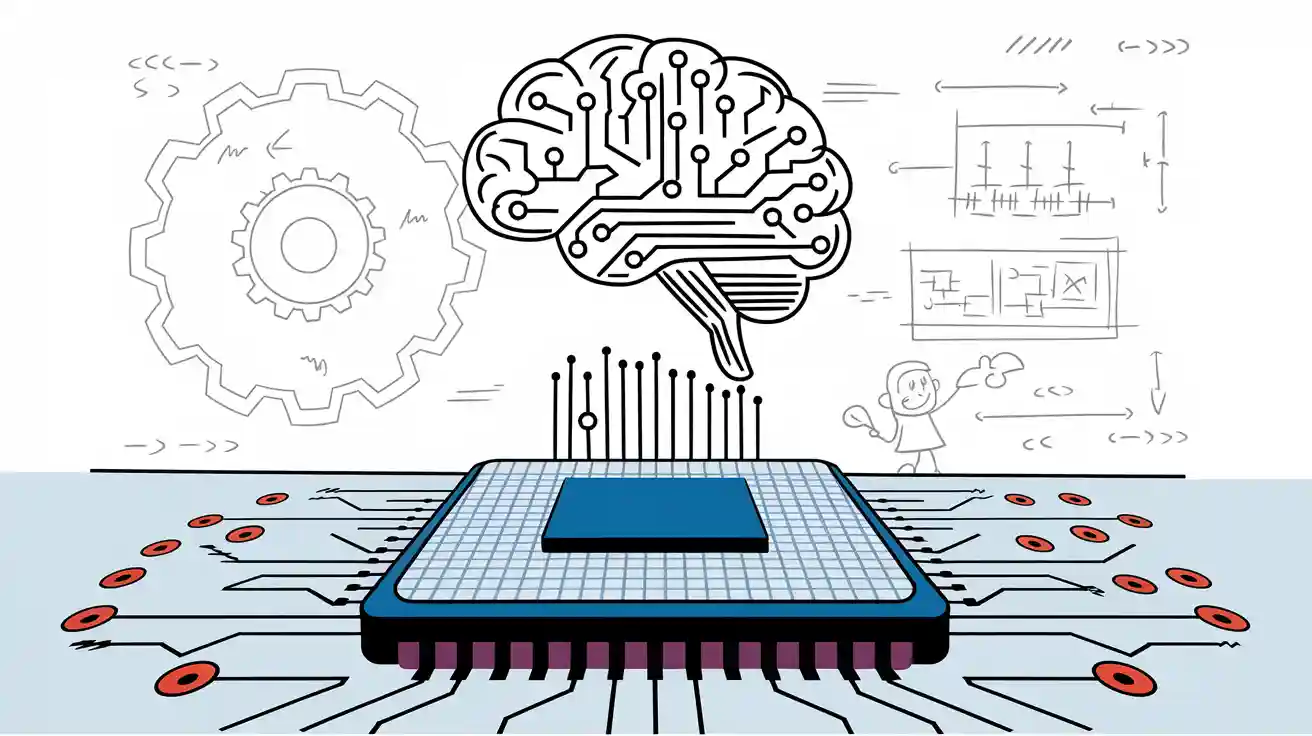
Logic chips have changed the world by moving from simple circuits to devices that now power artificial intelligence. These chips play a key role in making AI technology faster and more efficient. The global market for logic chips is expected to reach over $31.5 billion by 2034, fueled by the growing need for advanced processors in AI, high-performance computing, and smart devices. As intelligence becomes a part of daily life, chips with greater power help drive progress in artificial intelligence and support new ways for machines to learn and solve problems.
Key Takeaways
- Logic chips evolved from simple gates to powerful AI processors, enabling faster and smarter machines.
- Innovations like FinFET and Gate-All-Around transistors help chips run faster, use less power, and support complex AI tasks.
- Specialized AI chips such as GPUs, FPGAs, ASICs, and NPUs process many tasks at once, making AI faster and more efficient than general CPUs.
- AI chips power everyday devices like smartphones, smart speakers, and home systems, improving user experience and privacy.
- Future AI chips will focus on energy efficiency, new designs, and advanced manufacturing to support growing AI needs across industries.
Logic Chips: From Gates to Circuits
Basic Logic Gates
Logic gates form the foundation of all digital circuits. Each gate performs a simple operation, such as AND, OR, or NOT, using electrical signals. Engineers use these gates to build more complex logic chips. In early days, relay logic and vacuum tubes powered these gates, but they consumed a lot of power and worked slowly. As technology advanced, transistors replaced older components, making logic gates faster and more efficient.
Logic gates combine to create digital circuits that process information in computers, phones, and many other devices.
The table below shows how technology improved logic gates over time:
| Technology | Propagation Delay | Power Consumption | Density |
|---|---|---|---|
| Relay Logic | 10-100 ms | High | Low |
| Vacuum Tubes | 1-10 μs | High | Low |
| Transistor Logic | 1-100 ns | Medium | Medium |
| Modern Logic Gates | <1 ns | Low | High |
These improvements allowed engineers to pack more gates into smaller spaces, leading to the rise of integrated circuits.
Early Chip Designs
Early logic chips used simple layouts with fixed channels for connecting gates. This limited how many gates could fit on a chip and wasted valuable silicon. In 1982, channelless gate arrays changed the game. These new designs used the entire chip surface for connections, increasing gate density from about 100,000 to 700,000 gates. This made logic chips faster and more efficient, with delays dropping to just 0.4 nanoseconds.
Engineers first designed these chips by hand, placing each gate and wire. Later, electronic design automation software helped automate the process. Early challenges in chip design showed how complex digital circuits could become. Today, artificial intelligence helps explore millions of design options, making integrated circuits even better for AI tasks. The journey from basic logic gates to advanced integrated circuits has shaped the digital world and continues to drive progress in logic chips.
Transistor Innovations in Logic Chips
Planar to FinFET
Transistor design has changed the way logic circuits work. Early chips used planar MOSFETs, which placed the transistor gate on top of a flat channel. As engineers made transistors smaller, they faced problems like leakage currents and weaker control over the channel. The move to FinFET technology solved many of these issues. FinFETs use a thin, fin-shaped channel with the gate wrapping around three sides. This design gives better control over the flow of electricity and reduces unwanted leakage.
- FinFETs allow logic chips to keep shrinking while boosting performance and efficiency.
- Improved electrostatic control in FinFETs helps circuits run faster and use less power.
- FinFETs support higher transistor density, which is important for running neural networks and deep learning models.
The rise of FinFETs made it possible to build chips with more transistors packed into a small space. This change helped logic circuits handle the heavy demands of artificial intelligence, including deep neural networks that need massive parallel processing.
Gate-All-Around Technology
Gate-All-Around (GAA) technology marks the next step in transistor design. GAA transistors use stacked nanosheets, with the gate surrounding the channel on all four sides. This structure gives even better control over the channel than FinFETs.
- GAA transistors reduce leakage and increase drive current, making circuits more powerful and energy efficient.
- The design allows engineers to adjust nanosheet width, balancing speed and power use for different AI tasks.
- GAA technology supports higher transistor density, which is key for advanced neural networks and deep learning applications.
GAA transistors help logic chips meet the needs of modern AI. They allow chips to run faster and use less energy, which is important for training and running deep learning models. As transistor miniaturization continues, logic circuits become more powerful and reliable. This progress supports the growth of artificial intelligence in devices that use neural networks for learning and decision-making.
Miniaturization of transistors has driven the evolution of logic chips, making AI more accessible and scalable. The journey from planar to FinFET and now to GAA technology shows how innovation in circuits powers the future of deep learning and neural networks.
CPUs and AI Chips
General-Purpose Processors
CPUs, or central processing units, serve as the main brains in most computers and devices. These processors handle many types of tasks, from running operating systems to managing apps. CPUs use a sequential design, which means they process one instruction at a time. This design works well for tasks that need careful control or have lots of decision points.
CPUs offer flexibility and can run many different programs. They support a wide range of instructions and can switch between tasks quickly. However, CPUs do not excel at handling large amounts of data at once. When faced with artificial intelligence workloads, CPUs often struggle to keep up with the speed and power needed for modern ai tasks.
CPUs provide low latency for tasks with lots of decision-making, but they use more energy and process data slower than specialized ai chips.
The table below compares CPUs with other types of chips used in ai:
| Architecture | Key Characteristics | Advantages for AI Workloads |
|---|---|---|
| CPU | Scalar, superscalar, out-of-order execution. Optimized for instruction-level parallelism and sequential code. Sophisticated branch prediction and control. Supports large instruction sets. | Low latency for sequential or branch-heavy code. Ease of development. Good for workloads with complex control flow and smaller data parallelism. |
| GPU | Massively parallel vector processors. Thousands of SIMD cores. High memory bandwidth. In-order execution with SIMT model. Optimized for throughput on large data-parallel workloads. | Excels in large-scale data-parallel ai tasks like deep learning. Efficient execution of vectorized operations. High throughput for large datasets with minimal data dependencies. |
| FPGA | Reconfigurable spatial architecture. Custom pipelines matching software dataflow. Pipeline parallelism combined with SIMD and task parallelism. Custom on-chip memory and I/O topology. | High efficiency by eliminating control overhead. Flexibility to implement custom instructions and bit-level operations. Suitable for specialized ai algorithms with data dependencies or non-standard data types. Low and deterministic latency. |
Specialized AI Chips
Specialized ai chips have changed the way machines learn and solve problems. These chips include GPUs, FPGAs, ASICs, and NPUs. Each type has unique features that help boost ai performance.
- GPUs, or graphics processing units, started as chips for rendering images. Today, they handle massive parallel processing with thousands of small cores. This design makes GPUs perfect for deep learning and other ai tasks that need to process lots of data at once.
- FPGAs, or field-programmable gate arrays, allow engineers to reprogram the chip for specific ai tasks. FPGAs offer flexibility and can run custom ai algorithms with high efficiency.
- ASICs, or application-specific integrated circuits, are built for one purpose. In ai, ASICs like Google's TPU (Tensor Processing Unit) focus on matrix operations and deep learning. These chips deliver top performance and energy efficiency for specific ai workloads.
- NPUs, or neural processing units, are a newer type of ai chip. NPUs use special compute units for multiplication and accumulation, which are key for neural networks. They also use high-speed on-chip memory and a parallel design to handle thousands of operations at once.
Specialized ai chips use parallel processing to perform many calculations at the same time. This approach speeds up ai tasks and reduces energy use. These chips often use low-precision arithmetic, which means they can do more work with less power. By focusing on ai workloads, these chips achieve higher speed and accuracy than general-purpose processors.
Specialized ai chips deliver the power needed for modern intelligence, making deep learning and machine learning possible in everything from phones to self-driving cars.
Some key differences between CPUs and specialized ai chips include:
- CPUs process instructions one after another, while ai chips like GPUs and NPUs handle many tasks at once.
- Specialized ai chips use more efficient transistors and memory designs, which help them save energy and run faster.
- AI chips often work at lower precision, which boosts performance and reduces power use for ai tasks.
- CPUs remain more versatile, but ai chips provide better results for tasks that need lots of parallel processing.
As ai continues to grow, the demand for powerful and efficient ai chips will keep rising. These chips now power many devices and systems that use artificial intelligence to learn, adapt, and make decisions.
Artificial Intelligence Chips: Applications and Challenges
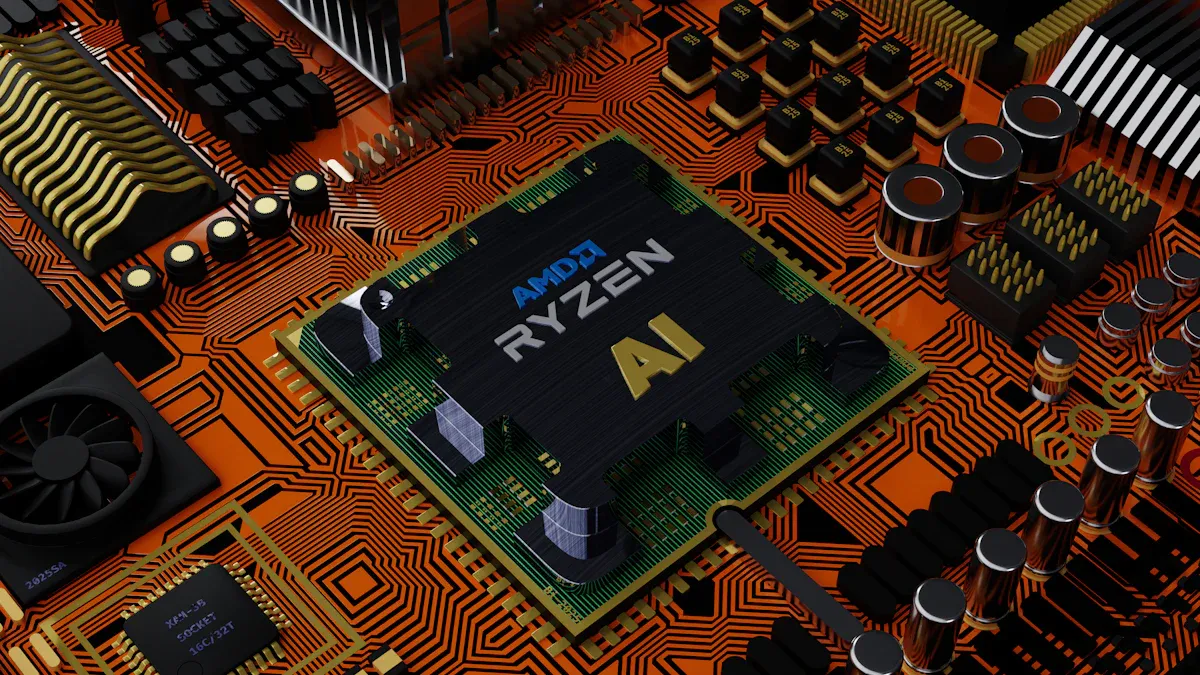
AI in Everyday Devices
Artificial intelligence chips have become a core part of daily life. Many consumer electronics now use these chips to deliver smarter features and better user experiences. People interact with ai technology every day through devices that rely on neural networks and deep learning.
- Smartphones use ai chips for voice recognition, image processing, and predictive text. These chips help phones understand speech, improve photos, and suggest words as users type.
- Smart televisions, like those powered by MediaTek’s Pentonic 2000, use ai-enhanced features such as AI-Voice, AI-Super Resolution 8K, and advanced scene recognition. These features make watching TV more interactive and enjoyable.
- Voice assistant devices, such as smart speakers, use ai chips to process commands quickly and accurately. Neural networks allow these devices to learn user preferences and respond in real time.
- Tablets and other mobile devices use ai chips to boost performance and save power. These chips enable on-device ai processing, which reduces the need for cloud connections and keeps data private.
- Home automation systems use ai chips to control lighting, security, and climate. These systems learn from user behavior and adjust settings automatically.
AI chips improve device capabilities by enabling real-time learning, faster response, and smarter interactions. They also help protect privacy by processing sensitive data locally.
In smart home products, ai chips allow devices to run deep learning algorithms for tasks like image enhancement and predictive analytics. Advanced technology nodes, such as 7 nm and below, increase transistor density and reduce power use. This makes ai chips ideal for compact devices that need to run neural networks efficiently.
Design Challenges
Engineers face many challenges when designing artificial intelligence chips. As ai models grow larger and more complex, chips must handle more data and run more algorithms at once. This creates problems with power consumption, heat dissipation, and scalability.
- AI servers that run large models, such as generative pretrained transformers and deep neural networks, generate high power densities. Racks can reach 30 kW to 50 kW, producing intense heat.
- Traditional cooling methods, like forced-air systems, cannot handle this heat. Without efficient cooling, chips overheat, which leads to instability, shorter hardware life, and wasted energy.
- Advanced cooling technologies, such as direct-to-chip liquid cooling and high-efficiency air systems, help manage heat. These solutions improve energy efficiency and support the growth of ai infrastructure.
- Power usage effectiveness (PUE) becomes a key factor. Efficient cooling lowers operational costs and helps protect the environment.
Researchers also work to overcome the "memory wall" in ai chip design. Conventional chips separate memory and processing units, which slows down data transfer and increases energy use. Compute-in-memory (CIM) architectures combine memory and processing in one place. This reduces delays and saves energy, making chips faster and more efficient for deep learning and neural networks.
Engineers continue to improve ai chip design by focusing on energy efficiency, cooling, and new architectures. These efforts help chips run deep learning algorithms and neural networks at scale.
Future Directions
The future of artificial intelligence chips looks promising. New trends in ai chip design will shape how people use ai technology in the next decade.
| Emerging Trend | Description | Example / Source |
|---|---|---|
| Quantum Computing Chips | Use quantum mechanics to solve problems classical computers cannot handle | Google’s quantum chip completes tasks in minutes that would take supercomputers much longer |
| Photonic (Light-based) Chips | Use light instead of electricity to boost processing power and cut energy use | Lightmatter’s chips multiply processing power and reduce energy demand |
| Electrical Field-based Chips | Use electrical fields for better energy efficiency and lower manufacturing costs | Semron’s chips for mobile and edge ai devices |
| Neuromorphic Chips | Mimic the brain’s neural networks for parallel processing and low power use | IBM’s neuromorphic chips with artificial neurons and synapses |
| Specialized Purpose-built Chips | Optimize for specific ai tasks, making them faster and more efficient than general-purpose chips | Nvidia’s ai chip is 30x faster than its predecessor |
| Public Sector Investment | Governments invest in ai chip innovation and quantum technology | Over $40 billion invested; programs like Quantum for Society Challenge |
Neuromorphic computing stands out as a major trend. Intel’s Hala Point, based on the Loihi 2 processor, uses over 1.15 billion neurons and supports 20 petaops. This system uses asynchronous, event-driven spiking neural networks, which combine memory and computing. Neuromorphic chips enable continuous learning and reduce the energy and computational cost of training large ai models, such as deep learning and generative pretrained transformers. These chips support real-time applications in scientific computing, smart infrastructure, and telecom.
Industry leaders like Nvidia, Amazon, Intel, and Broadcom deploy ai chips in data centers, cloud services, and edge devices. Nvidia’s Blackwell GPU architecture powers large language models, such as ChatGPT, and delivers real-time generative ai at lower cost and energy. Amazon’s AWS Trainium 2 chip speeds up ai training and supports generative ai tools for consumers. Intel’s Gaudi chip runs ai models faster and more efficiently, while Broadcom’s networking chips support scalable ai infrastructure.
Artificial intelligence chips also drive advances in autonomous vehicles and robotics. These chips process data from sensors, such as LiDAR and cameras, to enable real-time decision-making. Neural networks and deep learning algorithms help vehicles and robots learn from their environment and perform complex tasks safely.
Looking ahead, ai chips will become faster, smaller, and more energy-efficient. Advanced manufacturing nodes, such as 3nm and 2nm, will allow more transistors and better performance. AI-powered electronic design automation tools will speed up chip design and reduce costs. In manufacturing, ai will optimize processes, predict maintenance needs, and improve supply chains. The demand for ai-optimized semiconductors will rise in fields like healthcare, defense, and edge computing.
The future of ai chip design will focus on energy efficiency, scalability, and new architectures inspired by neural networks and deep learning. These advances will help ai technology reach more people and industries.
Logic chips have evolved from simple gates to advanced AI chips, powering breakthroughs in artificial intelligence.
- Specialized chips now drive rapid progress, scaling AI training and enabling new capabilities.
- Hardware improvements and automation in chip design accelerate innovation, creating a cycle of growth.
| Aspect | Forecast Highlights |
|---|---|
| Market Growth | USD 31.6B (2024) to USD 846.85B (2035), 34.84% CAGR |
| Fastest-Growing Chips | ASICs and edge AI chips |
| Leading Applications | Computer vision, healthcare, automotive |
These trends show that AI chip technology will shape the future of many industries.
FAQ
What is the main difference between a CPU and an AI chip?
A CPU handles many types of tasks and runs programs one step at a time. An AI chip, like a GPU or NPU, processes many tasks at once. AI chips work faster for deep learning and machine learning.
Why do AI chips use less power than regular chips?
AI chips use special designs that let them process data in parallel. This means they finish tasks quickly and use less energy. Many AI chips also use low-precision math, which saves even more power.
How do logic chips help artificial intelligence?
Logic chips run the calculations that power AI. They process data, run neural networks, and help machines learn. Better logic chips make AI faster and smarter.
Where can people find AI chips in daily life?
People use AI chips in smartphones, smart speakers, and home devices. These chips help with voice recognition, image processing, and smart controls. Many cars and robots also use AI chips for safety and automation.
Tip: AI chips keep getting smaller and more powerful. This helps bring smart features to more devices every year.