The Ultimate Light Bulb Showdown LED vs Fluorescent vs Incandescent
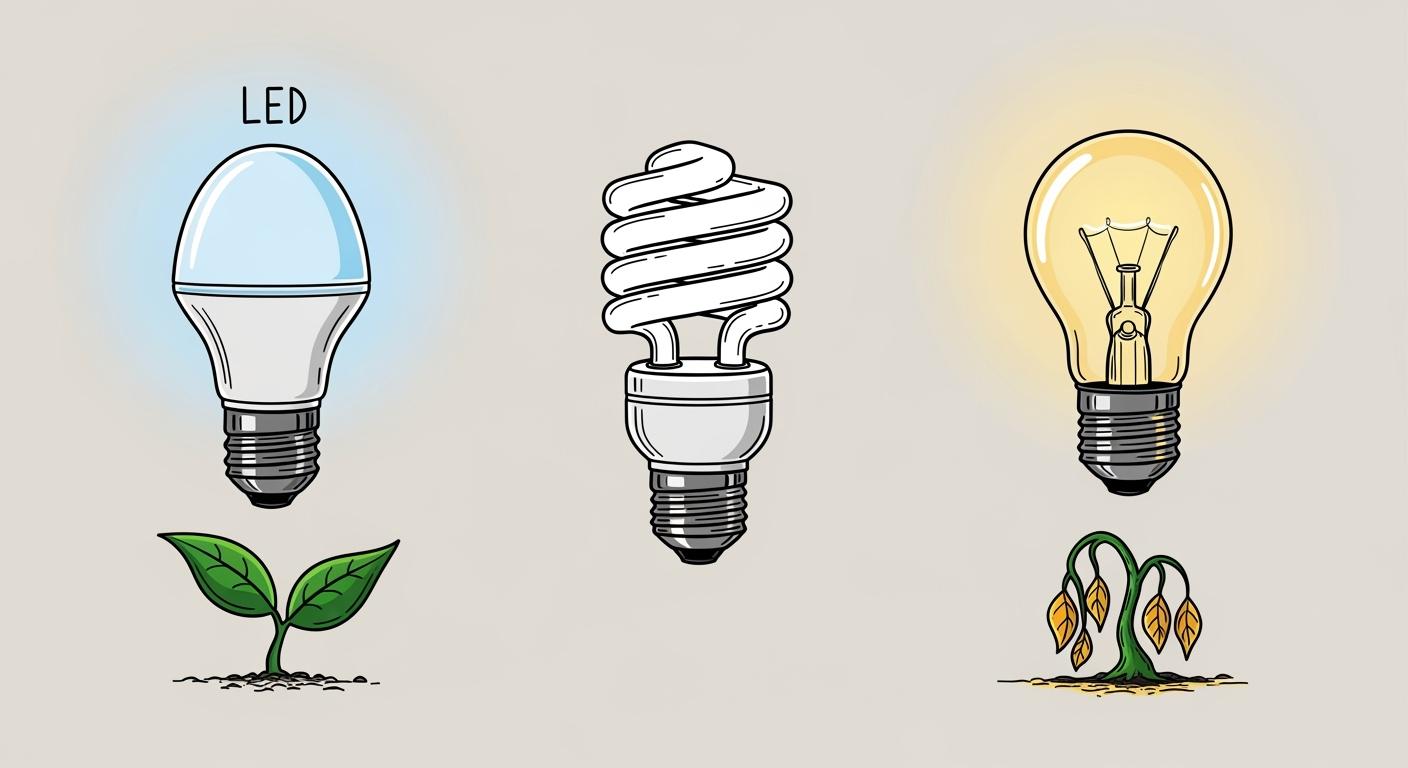
Let's end the debate now: LED bulbs are the clear winner for your home. These light emitting diode bulbs deliver huge energy saving benefits. You get major cost savings from their excellent energy efficiency and long lifespan. Many people agree. In 2020, 47% of US homes used LED for most lighting, a big jump from just 4% in 2015. While old incandescent and fluorescent bulbs have their history, modern LED light bulbs outperform them. Choosing the right bulbs means you save money and time, leaving incandescent light bulbs and fluorescent light bulbs in the past.
Key Takeaways
LED bulbs are the best choice for your home. They save energy and last a long time.
Incandescent bulbs waste a lot of energy as heat. They cost more to use over time.
Fluorescent bulbs contain mercury. They are not as good as LED bulbs.
LED bulbs use fewer watts for the same brightness. Always shop for lumens, not watts.
Switching to LED bulbs saves you money. It also helps the environment.
At-a-Glance: LED vs. Fluorescent vs. Incandescent
When you compare these three types of bulbs, you can quickly see why LED technology comes out on top. Understanding the pros and cons of each option helps you make a smart choice for your home. Let's look at the key differences in lifespan, cost, safety, and environmental impact.
The table below gives you a quick summary of the pros and cons for each bulb.
Bulb Type | Key Pros | Key Cons |
|---|---|---|
LED | Very long lifespan, lowest annual cost of operation, minimal heat, no toxic materials. | Higher initial cost than other bulbs. |
Fluorescent (CFL) | Better lifespan and efficiency than incandescent bulbs. | Contains mercury, takes time to warm up, shorter lifespan than LED. |
Incandescent | Very low purchase price. | Extremely short lifespan, very high annual cost of operation, wastes energy as heat. |
Lifespan and Longevity
You want bulbs that last. A longer lifespan means you spend less time and money on replacements. This is where LED bulbs truly shine.
LED: These bulbs have an exceptionally long lifespan, often lasting 25,000 hours or more. If you use a bulb for about three hours a day, it could last for over 20 years.
Fluorescent (CFL): These bulbs offer a decent lifespan of around 8,000 hours. This is a big improvement over traditional light bulbs but falls far short of LED performance.
Incandescent: These are the least durable bulbs. An incandescent bulb typically lasts only about 1,200 hours, meaning you might replace it once a year.
Annual Operating Cost
Your electricity bill reflects the cost of your lighting. Efficient bulbs use less energy, which saves you money. The annual cost of operation is a major factor.
Did You Know? You can save a significant amount of money just by changing one bulb. Replacing a single 60W incandescent bulb with an equivalent LED can cut your annual energy cost for that light from about $17.00 down to just $1.70.
While LED bulbs have a higher initial cost, their low energy use provides huge savings over time. The pros of long-term savings easily outweigh the cons of the upfront price. In contrast, the low price of incandescent light bulbs hides their high lifetime cost.
Heat Output and Safety
The amount of heat a bulb produces is a matter of both efficiency and safety. Bulbs that get very hot waste energy and can be a burn hazard.
Incandescent: These bulbs are extremely inefficient. They waste about 90% of their energy as heat, with surface temperatures that can exceed 480°F (250°C). This makes them hot to the touch and less safe around children or flammable materials. The pros are almost non-existent here.
Fluorescent (CFL): These bulbs run much cooler than incandescent ones. However, they still generate noticeable heat.
LED: These are the coolest and safest bulbs. They convert most of their energy directly into light, producing very little heat. This efficiency is one of the biggest pros of LED technology.
Environmental Impact
Your choice of lighting also has an environmental impact. Energy consumption and the materials used in bulbs matter for the planet.
LED: These bulbs are the greenest option. Their high efficiency reduces greenhouse gas emissions from power plants. They contain no toxic materials, making disposal safe and simple. The pros for the environment are clear.
Fluorescent (CFL): The major cons for these bulbs involve their contents. Each fluorescent bulb contains a small amount of mercury, a toxic substance. You must dispose of these bulbs carefully at a proper recycling facility to avoid environmental contamination.
Incandescent: The primary environmental impact of incandescent light bulbs comes from their high energy use. This inefficiency puts a greater demand on power plants, contributing to more carbon emissions. The cons heavily outweigh any pros.
Comparing Energy Efficiency

You can unlock significant savings by understanding a bulb's energy efficiency. This is the most important factor that impacts your long-term cost. A more efficient bulb gives you the same amount of light for less electricity. Let's explore how to measure this and see which technology leads the pack.
Understanding Lumens per Watt
The best way to measure a bulb's efficiency is by looking at its "lumens per watt" (lm/W). Lumens measure the total light output, while watts measure the energy used. A higher lm/W rating means you get more light for your money.
As you can see, the differences are huge. Incandescent bulbs are the least efficient, while LED bulbs provide the most lumens for the least energy.
Why Wattage is Misleading
You probably grew up thinking that watts equal brightness. For old incandescent bulbs, a higher wattage meant a brighter light. However, watts only measure energy consumption, not brightness. Modern energy efficient lighting technology has changed the game. An LED bulb can produce the same amount of light as an incandescent bulb using a fraction of the power.
For example, a traditional 60-watt incandescent bulb produces about 800 lumens. You can get the same brightness from an LED bulb that uses only 7 to 9 watts. This shows why you should shop for lumens, not watts, when choosing new bulbs.
The Clear Winner in Efficiency
LED technology is the undisputed champion of energy efficiency. The performance of LED bulbs has improved dramatically over the last decade, with practical efficiency nearly doubling. This rapid evolution makes LED the smartest choice for modern lighting. While fluorescent bulbs were a good step up from incandescent technology, they cannot compete with the superior efficiency of an energy efficient light bulb like an LED. Choosing LED bulbs ensures you get the best performance and the lowest energy cost for your home.
The Champion: LED Light Bulbs
We've seen the high-level comparison, and now it's time to dive into why LED light bulbs are the undisputed champions. These bulbs offer a combination of efficiency, longevity, and safety that older technologies simply cannot match. Understanding what makes a light emitting diode work reveals all the pros behind this modern marvel.
What is a Light Emitting Diode?
So, what is a light emitting diode? It's not a tiny, hot wire inside a glass ball. Instead, an LED is a small semiconductor chip, often made from materials like gallium and indium. The process it uses to create light is highly efficient.
An electric current passes through the semiconductor chip.
This excites electrons inside the material, causing them to move.
As the electrons move, they release energy directly as photons, which is the light you see.
This process, called electroluminescence, produces very little heat. It converts electricity straight into light. This is the main reason a light emitting diode is so much better than an incandescent bulb, which wastes most of its energy making heat.
Superior Energy Savings
The superior energy efficiency of LED bulbs translates directly into major savings on your electricity bill. Because they use a fraction of the power to produce the same amount of light, the long-term financial pros are enormous. Over a 20-year period, the total cost of running a single incandescent bulb can be over $200. An equivalent LED bulb costs around $34 for the same period. These savings make the initial higher price of LED bulbs a smart investment.
Exceptional Lifespan
You will replace LED bulbs far less often than any other type. A key factor when weighing the pros and cons of LEDs is their incredibly long lifespan. One of the biggest pros is that a single LED can last for 25,000 hours or more.
To put that in perspective, you would need to buy and install about 21 incandescent bulbs to get the same amount of light as just one LED bulb.
This long lifespan means less time spent on ladders and more money in your pocket. However, keep in mind that high heat can shorten the lifespan of any LED, so be sure to use bulbs rated for enclosed fixtures if needed.
Instant and Consistent Light
Unlike compact fluorescent bulbs that need time to warm up to full brightness, LED bulbs provide instant light the moment you flip the switch. There is no flicker and no delay. You get consistent, high-quality light immediately. This instant-on feature is one of the simple but significant pros that improves your daily experience with your home's lighting.
The Bridge: Fluorescent Bulbs (CFLs)
For a time, compact fluorescent bulbs (CFLs) were the go-to energy-saving option. They offered a better lifespan and efficiency than old incandescent bulbs. However, modern technology has exposed their flaws, positioning them as a dated bridge to the superior LED era.
How Fluorescent Technology Works
You might wonder how a fluorescent bulb creates light. The process is more complex than a simple hot wire.
An electric current flows through the tube, exciting the mercury gas inside.
This excited gas produces invisible ultraviolet (UV) light.
A white phosphor coating on the inside of the glass absorbs the UV light.
The coating then glows, or fluoresces, converting the UV energy into the visible light you see.
This process is not perfectly efficient. A significant amount of energy is lost as heat during the conversion from UV to visible light. This is one of the cons of fluorescent technology.
The Warm-Up Delay
One of the most noticeable cons of fluorescent bulbs is the warm-up delay. Unlike instant-on LED bulbs, you have to wait for a CFL to reach its full brightness.
Many fluorescent bulbs can take anywhere from 30 seconds to three minutes to achieve their maximum light output. In cold temperatures, this delay can be even longer. This wait can be frustrating in rooms where you need immediate light, like hallways or bathrooms.
Mercury Content Risks
The biggest drawback of all fluorescent light bulbs is their mercury content. Each bulb contains a small amount of this toxic substance. While it is less than what you would find in an old mercury thermometer, it still poses a risk. The mercury creates a negative environmental impact if the bulbs are not disposed of properly.
If one of these bulbs breaks in your home, it releases mercury vapor. Inhaling this vapor can be a health concern, especially for children. This is one of the most serious cons, requiring you to handle broken bulbs with care and take them to a special recycling facility.
A Dated Alternative to LED
Fluorescent bulbs were an important step forward, but their time has passed. Their shorter lifespan compared to an LED means you will replace them more often. The warm-up delay, flickering issues, and the environmental risks from mercury make them a poor choice for a modern home. When you weigh the pros and cons, it is clear that these bulbs are a dated alternative.
The Legacy: Incandescent Bulbs
You probably grew up with incandescent bulbs. These traditional light bulbs were once the only option for lighting your home. Today, they represent old technology with significant drawbacks. Their design is simple but extremely wasteful, making them a poor choice for modern households.
Inefficient Filament Technology
An incandescent bulb creates light in a very old-fashioned way. An electric current passes through a thin wire called a tungsten filament. The filament heats up until it glows brightly, a process known as incandescence. Tungsten is used because it has a very high melting point and can withstand intense heat. This method, however, is the root of the bulb's inefficiency. You are essentially paying to heat a tiny wire just to get a little bit of light.
The High Cost of Wasted Heat
The biggest problem with incandescent technology is wasted energy. These bulbs are more like heaters that happen to produce light.
A shocking 90% of the electricity an incandescent bulb uses is lost as heat. Only 10% becomes visible light.
This extreme inefficiency directly increases your energy cost. The high annual cost of operation makes these bulbs expensive to own, despite their low purchase price. The short lifespan of these bulbs also adds to the long-term cost. The cons are clear: you pay more for electricity and replace bulbs constantly. This high annual cost of operation is one of the major cons of using these outdated bulbs.
Why They Are Being Phased Out
Governments around the world recognize the inefficiency of incandescent light bulbs. They have passed laws to phase them out in favor of more energy-efficient options. This move helps reduce energy consumption and lower carbon emissions.
Key regulations include:
United States: The Energy Independence and Security Act of 2007 (EISA) set new efficiency standards. These standards led to a ban on most general-use incandescent bulbs, which took full effect in 2023.
Europe: The European Union started phasing out incandescent bulbs back in 2009, citing its own regulations to promote energy efficiency.
These actions officially mark the end of the era for these inefficient bulbs.
Making the Switch to LED
You are ready to upgrade your home's lighting and enjoy the benefits of LED technology. Making the switch is simple when you know what to look for. These tips will help you choose the perfect LED light bulbs for every room, saving you money and improving your home's atmosphere.
Shop for Lumens, Not Watts
You should forget about watts when shopping for new bulbs. Watts measure energy use, not brightness. The correct measure for brightness is lumens. A bulb with more lumens is brighter. To replace an old incandescent bulb, you need to match its lumens, not its wattage. This focus on lumens ensures you get the brightness you want with maximum energy efficiency.
This chart helps you find the right LED bulbs to replace your old incandescent ones.
Traditional Incandescent (WATTS) | Typical Light Output (LUMENS) |
|---|---|
450 | |
60 | 800 |
100 | 1,600 |
Choose Your Color Temperature
LED bulbs offer a wide range of light colors, from cozy and warm to crisp and cool. This color is measured on the Kelvin (K) scale. Lower Kelvin values produce a warmer, yellowish light, while higher values create a cooler, bluish light. Choosing the right color temperature helps you set the perfect mood for your lighting.
Warm White (2700K–3000K): This is the standard color of an incandescent bulb. It creates a cozy and inviting atmosphere, perfect for living rooms and bedrooms.
Cool White (Around 4000K): This light is bright and crisp. You can use it in kitchens, bathrooms, and garages where you need task lighting.
Daylight (5000K–6500K): This color mimics natural daylight. It is great for reading areas and home offices.
Check Dimmer Compatibility
Do you have dimmer switches in your home? Not all LED bulbs work with them. An incompatible light emitting diode may flicker, buzz, or fail to dim properly. This can reduce the lifespan of the bulb and affect your lighting experience.
Tip: Always check the packaging. Look for bulbs that are clearly labeled as "dimmable." This simple step ensures your new LED bulbs will work perfectly with your existing hardware, giving you smooth control over your lighting at a lower cost.
You can see that switching to LED light bulbs is a smart decision. These bulbs offer huge savings on your electricity bills. Their long lifespan means you will replace bulbs far less often. You also reduce your environmental impact with a safer, mercury-free product. The future of lighting is clearly LED.
Ready to make the change? Start by upgrading the most-used bulbs in your home, like in the kitchen or living room. You will see the benefits right away.
FAQ
Why are LED bulbs more expensive?
You pay for advanced technology. LEDs use quality semiconductor chips and drivers for efficiency and long life. This initial cost is an investment. You quickly earn it back through significant energy savings and fewer replacements.
How do I dispose of my old light bulbs?
You can dispose of old light bulbs based on their type.
Incandescent: You can throw these in your regular trash.
Fluorescent (CFL): These contain mercury. You must take them to a special recycling facility.
LED: These are mercury-free. You can put them in your household trash.
Are LED bulbs safe to touch?
Yes, LEDs are much safer. They produce very little heat compared to incandescent bulbs, which get dangerously hot. You can handle an LED bulb that has been on without risk of getting burned. This makes them a great choice for your home.
Can an 8-watt LED really replace a 60-watt bulb?
Absolutely! You should compare lumens for brightness, not watts. A 60-watt incandescent bulb produces about 800 lumens. An 8-watt LED produces the same 800 lumens. You get the same light for much less power. 👍