How IR LEDs Are Shaping the Future of Everyday Technology
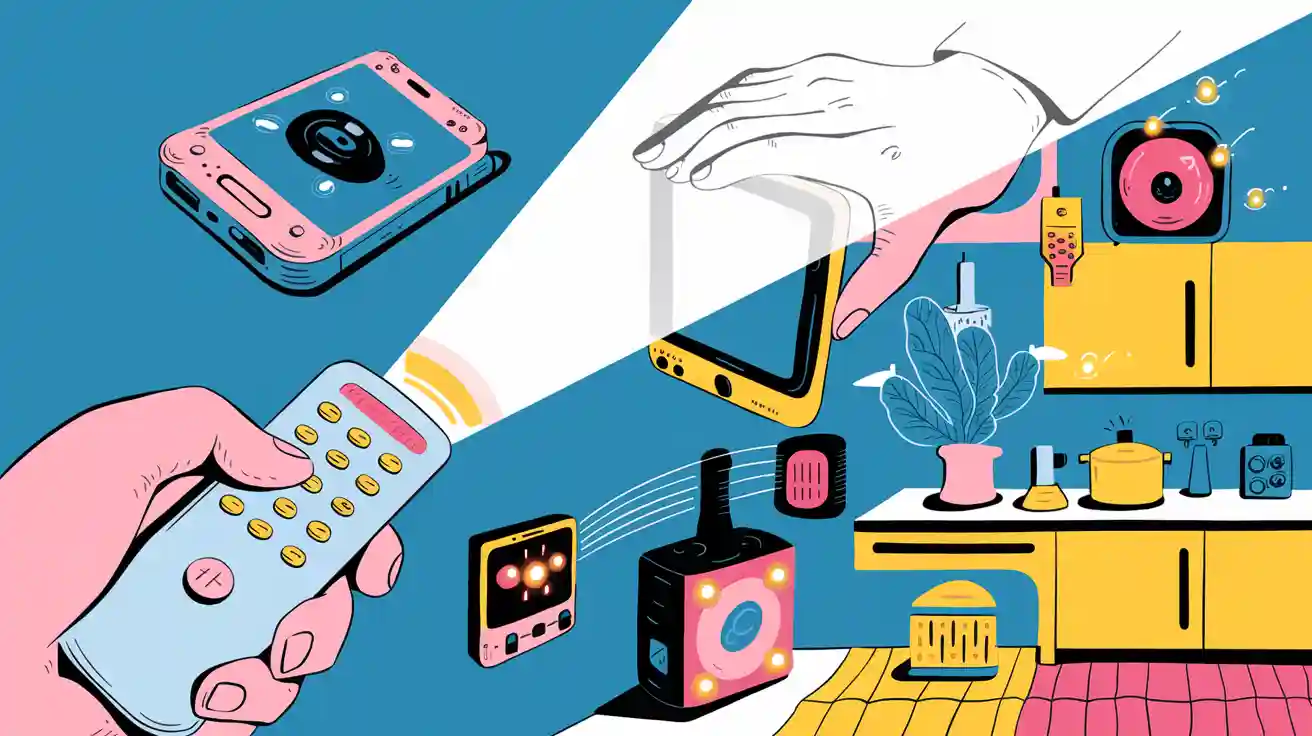
You see IR LEDs everywhere, changing how you interact with technology each day. Their versatility stands out as they move far beyond remote controls. Today, IR LEDs power smart home devices, help secure buildings, and support health monitoring tools.
- The infrared LED market reached about USD 700 million in 2023.
- Experts predict the market will double to USD 1.4 billion by 2032.
- Growth continues at a compound annual rate of 8.0% from 2025 to 2032.
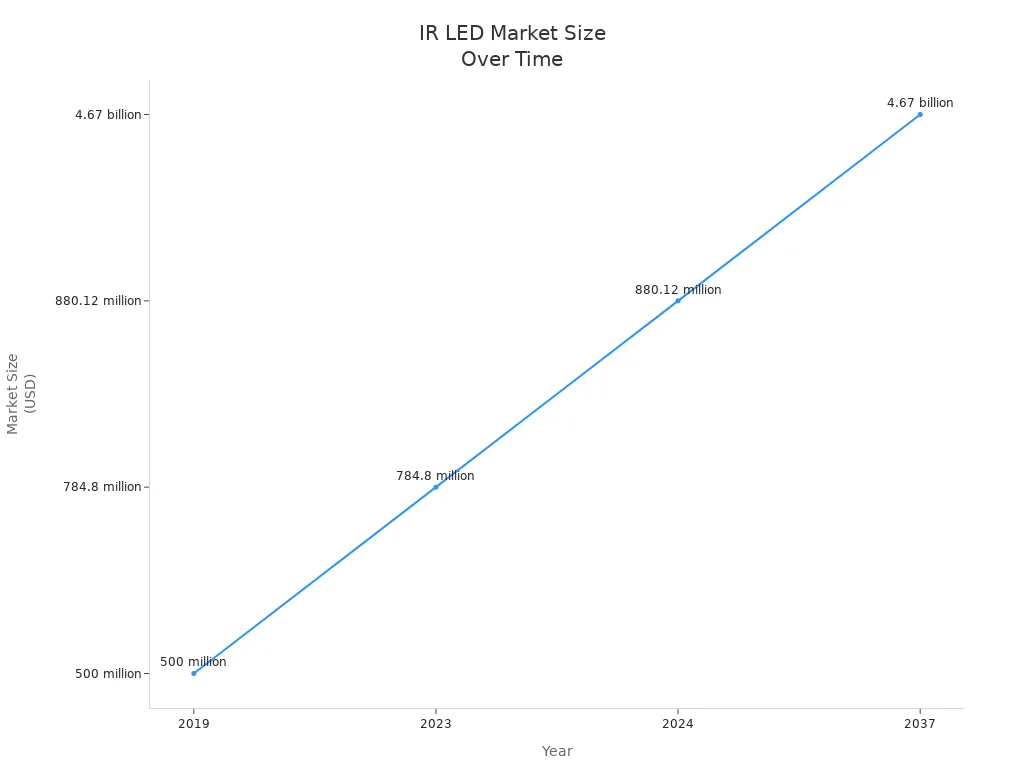
You may not notice these tiny lights, but they shape your routines and will likely play an even bigger role in future technology.
Key Takeaways
- IR LEDs are essential in everyday technology, powering devices like remote controls, security cameras, and smart home gadgets.
- The infrared LED market is rapidly growing, expected to double to USD 1.4 billion by 2032, highlighting their increasing importance.
- Infrared LEDs enable touchless technology, improving hygiene and convenience in public spaces like restrooms and hospitals.
- These LEDs are energy-efficient, converting electricity into infrared light effectively, which helps reduce energy costs and environmental impact.
- IR LED technology supports advancements in healthcare, automotive safety, and smart home automation, enhancing daily life and security.
What Is an IR LED
How IR LEDs Work
You use infrared LEDs every day, even if you do not see them. An IR LED, or infrared light-emitting diode, creates invisible light that powers many devices. The diode uses special semiconductor materials, such as gallium arsenide or aluminum gallium arsenide. These materials help electrons move and release energy as infrared light. The light falls in the near-infrared range, usually between 850 and 940 nanometers. You cannot see this light, but devices can detect it easily.
Infrared LEDs work by sending out photons when electricity passes through the diode. The process creates heat, so engineers design these diodes with good thermal management. This helps the infrared leds last longer and work better. You find this technology in remote controls, security cameras, and touchless sensors. Many people think LEDs only make visible light, but infrared leds show how diode technology can do much more.
Tip: You might not notice infrared leds in your home, but they help your devices talk to each other without wires.
Key Features
Infrared leds stand out because they have unique technical specifications. You can compare them to other LEDs using this table:
| Specification | IR LEDs | Other LEDs |
|---|---|---|
| Emission Wavelength | Above 700 nm (e.g., 800-940 nm) | 380-750 nm (visible spectrum) |
| Human Perception | Invisible to the human eye | Visible light perceived by the human eye |
| Semiconductor Materials | GaAs, AlGaAs (smaller bandgap) | GaP, GaAsP, InGaN, GaN (larger bandgaps) |
| Forward Voltage | 1.2 to 1.7 volts | 2.0 V (red/green), ~3.3 V (blue) |
| Output Measurement Units | Rated in milliwatts (mW) | Rated in lumens (lm) or candela (cd) |
| Primary Applications | Remote controls, night vision, sensors | Indicator lights, displays, general lighting |
You see infrared leds used in many applications because they are efficient and invisible. The diode design lets you use them in places where visible light would distract or bother you. Infrared technology keeps improving, so you will see even more uses for infrared leds in the future.
IR LED Applications
Remote Controls
You use remote controls every day to change channels, adjust volume, or turn on devices. IR LED technology makes these remotes reliable and easy to use. When you press a button, the remote sends infrared light signals to your TV or other electronics. The sensor inside the device receives the signal and responds instantly.
The table below shows how IR LED remotes compare to RF remotes:
| Feature | IR Remotes | RF Remotes |
|---|---|---|
| Simplicity | High - easy to use | Moderate - may require setup |
| Reliability | High - low latency, direct line-of-sight | Moderate - can penetrate obstacles |
| Range | Limited - affected by obstructions | High - can operate through walls |
| Cost-effectiveness | Economical | Generally higher |
| User Experience | Smooth and straightforward | Flexible but may vary |
You notice that IR LED remotes offer high reliability and simplicity. The direct line-of-sight makes them smooth and straightforward for everyday use. The extensive use of IR LEDs in remote controls shows their versatility and cost-effectiveness. You benefit from quick response times and low power consumption. These features make IR LED remotes a popular choice for home electronics.
Surveillance and Security
You depend on surveillance systems to keep your home and workplace safe. Infrared LEDs play a key role in modern security cameras. Night vision cameras use IR LED infrared lights to capture clear images in complete darkness. The sensor inside the camera detects infrared light and converts it into detailed footage.
- Night vision cameras use infrared LEDs to record in low-light or no-light conditions.
- Covert surveillance uses 940 nm infrared LEDs for invisible illumination, perfect for sensitive areas.
- Critical infrastructure monitoring relies on high-end cameras with 940 nm LED arrays for 0 lux monitoring.
Infrared technology enables clear imaging even when there is no visible light. Built-in infrared LEDs illuminate the scene, allowing for continuous monitoring. Special sensors convert infrared light into black-and-white footage, helping you identify intruders. Some advanced cameras even provide color night vision for better detail recognition.
Note: Night vision cameras are designed to operate in low-light or no-light conditions. This allows you to monitor your property 24/7, even in complete darkness.
You gain enhanced visibility, quick identification of dangers, and reliable video footage for investigations. Infrared sensors and motion sensors work together to detect movement and trigger alerts. The versatility of IR LED infrared lights in surveillance applications keeps your environment secure.
Communication Devices
You use communication devices every day, from mobile phones to printers. IR LED technology supports wireless data transfer in devices like IrDA and Li-Fi. IrDA uses infrared light for short-range, secure, and bidirectional data transmission. The sensor detects light pulses, enabling devices to exchange information quickly.
- IrDA uses infrared light for short-range, bidirectional data transfer, ideal for mobile phones and printers.
- Li-Fi employs visible and infrared LED technology to transmit data at high speeds.
- Both technologies modulate light to encode data, but operate in different parts of the electromagnetic spectrum.
LED infrared lights turn on and off rapidly to create a data signal. The sensor detects these pulses, allowing for bi-directional communication. You experience fast and secure data transfer without wires. This method can combine with existing networks to provide robust internet connections. The versatility of IR LED infrared lights in communication devices supports modern wireless technology.
Proximity Sensors and Touchless Interfaces
You interact with touchless technology every time you use automatic doors, faucets, or soap dispensers. IR LED infrared lights power proximity sensors and motion sensors in these devices. The sensor detects infrared light reflected from your hand or body, triggering a response without physical contact.
| Advantage | Description |
|---|---|
| Touchless Interaction | Ideal for hygienic environments where contact is not preferred. |
| Energy Efficiency | Consumes low power, making it suitable for devices powered by batteries. |
| Accuracy | Provides reliable detection of movements and gestures. |
- Touchless interaction is perfect for hygienic environments, such as public restrooms.
- Energy efficiency makes IR LED infrared lights suitable for battery-powered devices.
- Accurate detection ensures reliable operation in a wide range of sensor use cases.
You see motion sensors in public spaces, helping prevent the spread of germs. The CDC recommends touchless fixtures to improve hygiene. 91% of Americans believe touchless fixtures are important in public restrooms. The demand for non-contact technology has increased, making touchless devices essential.
Tip: Infrared sensors and motion sensors provide reliable object detection and gesture recognition, improving safety and convenience.
The versatility of IR LED infrared lights in proximity sensors and touchless interfaces changes how you interact with technology. You enjoy safer, cleaner, and more efficient experiences in everyday life.
Infrared LEDs in Everyday Tech
Consumer Electronics
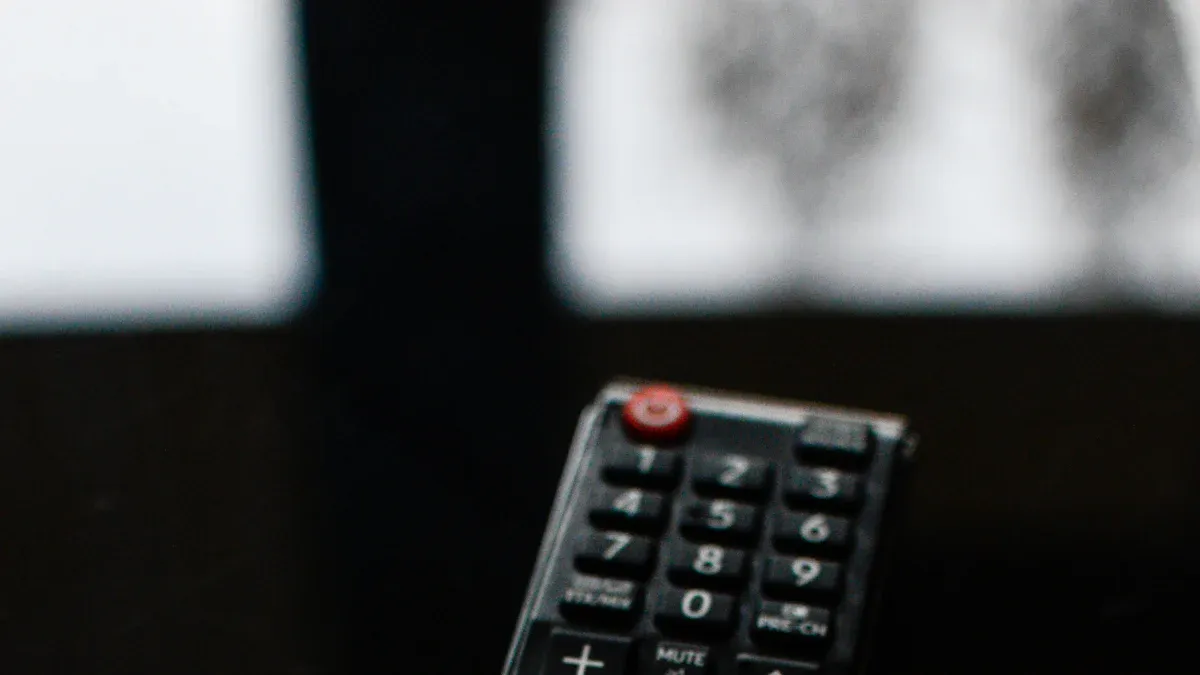
You interact with consumer electronics every day. IR LED technology powers many devices you use at home. Infrared leds send invisible infrared light signals to sensors in your television, air conditioner, and gaming consoles. These sensors read commands and respond instantly. You see this in remote controls, which use led infrared lights to change channels or adjust volume. Gaming consoles use infrared leds and sensors for motion detection, letting you play games with gestures. Smart home automation uses infrared light and sensors to adjust thermostats or lights based on room occupancy.
| Application Type | Description |
|---|---|
| Remote Controls | Used in household appliances like TVs and air conditioners to transmit commands via infrared light. |
| Gaming Consoles | Enhances interactive experiences through motion detection and gesture-based controls. |
| Smart Home Automation | Enables devices to respond intelligently, such as adjusting thermostats based on room occupancy. |
You can build your own arduino projects using IR LED modules and sensors. These projects let you create custom remote controls or automate devices. Infrared leds and sensors make your electronics smarter and easier to use.
Healthcare
You benefit from infrared leds in medical devices every time you visit a clinic or use a fitness tracker. Pulse oximeters use led infrared lights and sensors to measure blood oxygen levels. The sensor shines infrared light through your finger and analyzes how much light your blood absorbs. Smartwatches and fitness trackers use sensors and infrared leds to monitor your pulse and oxygen levels. These medical devices help you track your health without needles or wires.
- Pulse oximetry uses NIR LEDs and sensors to measure blood oxygen saturation.
- Vital sign sensors in smartwatches and fitness trackers use infrared leds for non-contact monitoring.
- Light therapy uses led infrared lights to promote healing and recovery. Infrared therapy helps your body heal without invasive procedures.
You see infrared imaging in some medical devices. Infrared cameras and sensors help doctors see blood flow or detect fevers. Non-contact temperature measurement uses infrared leds and sensors to check your temperature quickly. Arduino projects let you experiment with medical sensors and led infrared lights at home. You can build simple pulse monitors or try infrared therapy devices.
Automotive
You rely on infrared leds and sensors for safety when you drive. Modern cars use led infrared lights and sensors in driver monitoring systems. These sensors watch your eyes and face to detect drowsiness or distraction. Infrared leds provide invisible illumination for these sensors, helping cameras see clearly even at night. Infrared imaging helps with automatic emergency braking and lane keeping.
A study found that nearly 90% of car accidents happen because of human error. Driver assistance systems use infrared leds and sensors to reduce these mistakes. You see infrared leds in night vision cameras, which help you spot obstacles in the dark. Arduino projects let you add simple sensors to model cars or robots. You can experiment with motion detection and infrared imaging.
- Infrared leds act as light sources for image sensors in driver monitoring systems.
- Advanced led infrared lights improve camera performance by controlling light distribution.
- Sensors and infrared leds optimize monitoring for safety.
You see more cars using non-contact sensors and led infrared lights for automatic doors and seat occupancy detection. These applications make driving safer and more comfortable.
Smart Home and IoT
You use smart home devices every day. IR LED technology lets you control lights, thermostats, and appliances with your phone or voice. Sensors and led infrared lights detect motion and occupancy, turning devices on or off automatically. IR blasters retrofit older equipment, making it part of your smart home system.
IR Blasters allow for retrofitting older equipment, making it controllable via modern IoT platforms. This integration enhances functionality and user experience by enabling traditional devices to be part of a smart, interconnected ecosystem.
- IR blasters emulate infrared signals from traditional remotes, letting you control older devices remotely.
- Sensors and led infrared lights automate operations based on environmental triggers.
- You eliminate the need for multiple remotes, simplifying your life.
Arduino projects let you build your own smart home sensors and led infrared lights. You can create motion sensors, automate lights, or add non-contact switches. Infrared leds and sensors make your home smarter and more efficient. You see applications in security, comfort, and energy savings.
Advantages of LED Infrared Lights
Energy Efficiency
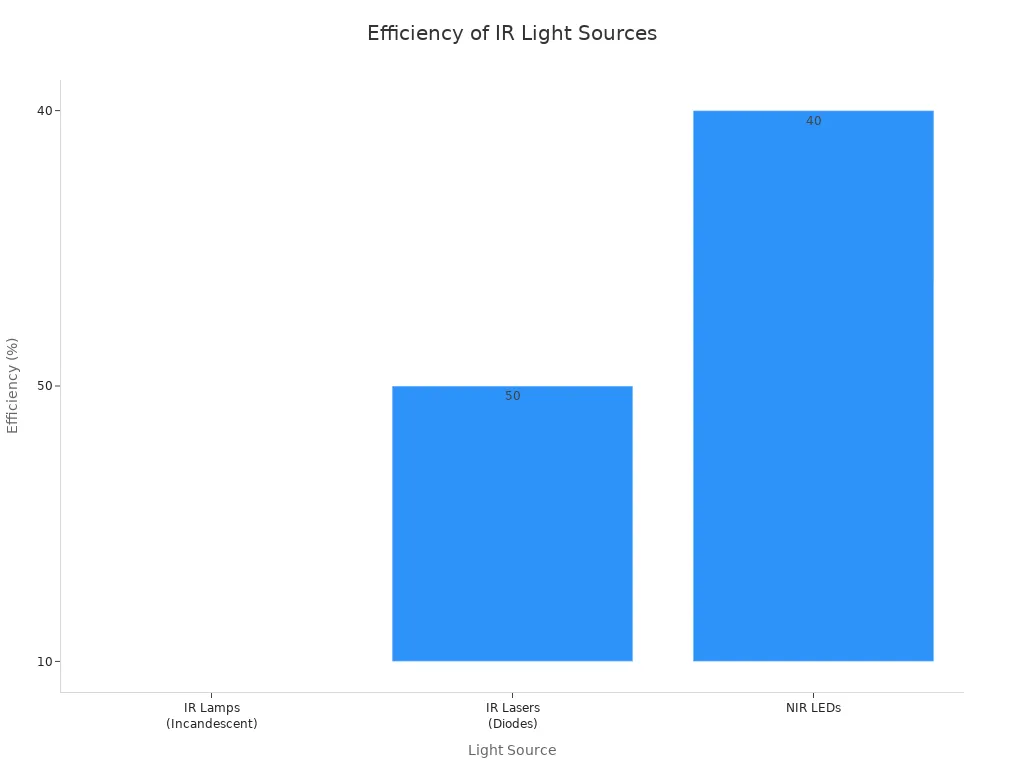
You save energy every time you use a device with an ir led. These LEDs convert electricity into infrared light with high efficiency. Traditional infrared lamps waste most of their energy as heat, but NIR LEDs use power more wisely. For example, a quality 850 nm LED can turn 300 mW of electricity into about 100 mW of infrared light. This means you get around 33% efficiency, while old bulbs lose about 90% of their energy as heat. You help the environment and lower your electricity bills by choosing devices with better led performance.
| Light Source | Efficiency (%) | Heat Loss (%) | Notes |
|---|---|---|---|
| IR Lamps (Incandescent/Halogen) | < 10% | ~90% | Highly inefficient, most energy lost as heat. |
| IR Lasers (Laser Diodes) | 30-70% | N/A | High efficiency, but more complex and expensive. |
| NIR LEDs | 30-50% | N/A | High efficiency, low heat generation, cost-effective for broad-area applications. |
You also notice that devices with NIR LEDs run cooler and last longer. This reduces the need for repairs and helps your sensor work better over time. Lower energy use means less strain on power systems and less heat in your home or office.
Compact Design
You benefit from the small size of modern LED infrared lights. The compact design lets engineers fit sensors into tiny spaces. You find these sensors in fitness trackers, smartphones, and even smart door locks. The small size helps make your devices lighter and easier to carry. You can enjoy more features in a smaller package because of this design.
- The compact size of LED IR SMDs allows for easy integration into portable devices.
- You see more sensors in wearables, smart home gadgets, and medical tools.
- The small design supports better led performance and device miniaturization.
You get more choices and better technology in your daily life because of these advances.
Non-Intrusive Operation
You enjoy technology that works quietly in the background. LED infrared lights operate without shining visible light, so they do not distract you. You can use a sensor for motion detection or non-contact switches without seeing any bright flashes. This makes your home, car, or office more comfortable.
- Sensors detect your presence or motion without disturbing your activities.
- Non-contact features help keep things clean and safe, especially in public places.
- Devices with good led performance work smoothly and do not interrupt your routine.
Tip: You can trust these sensors to work day and night, giving you safety and convenience without drawing attention.
The Future of IR Infrared Sensor Technology
Emerging Trends
You see new trends in ir infrared sensor technology changing how you use devices every day. Companies now use long-wave infrared cameras in autonomous vehicles. By 2035, this market could reach USD 5 billion. Smart home devices use TMOS-based sensors that detect people from four meters away. This helps smart thermostats and gesture-controlled appliances work better. In factories, dual-sensor nodes combine infrared thermography with acoustic emission. These sensors improve anomaly detection and keep machines running smoothly.
| Trend Description | Key Details |
|---|---|
| Integration in Autonomous Vehicles | Long-wave infrared cameras are being mandated for new vehicles. |
| Smart Home Devices | TMOS-based sensors detect humans from four meters away. |
| Industrial Automation | Dual-sensor nodes improve anomaly detection in manufacturing processes. |
You also notice more arduino projects using multi-zone time-of-flight ranging. This extends detection range and lowers power use. Lead-free quantum-dot photodiodes now allow secure face authentication behind OLED displays. Flexible photothermoelectric films help create electronic-skin and AR-haptics. These new applications show how ir infrared sensor technology keeps growing.
The demand for advanced imaging in security and surveillance rises each year. SWIR LEDs improve imaging quality in low-light conditions. You see more ir infrared sensor integration in consumer electronics, which drives market growth. Energy-efficient ir led designs last longer and use less power. Integration with AI and IoT platforms expands applications in smart cities and predictive maintenance. Flexible and transparent sensors now fit into wearable health devices and smart glass.
Impact on Daily Life
You will experience big changes as ir infrared sensor technology advances. In your smart home, touchless interfaces and better biometric authentication will make daily tasks easier. Security systems will use advanced ir infrared sensor arrays for improved night vision and motion detection. Biometric systems will use these sensors for iris and facial recognition, even in low light.
In your car, ir infrared sensor applications will support night vision cameras and driver monitoring systems. This will help keep you safe on the road. Healthcare devices will use arduino-based ir infrared sensor modules for non-contact thermometers and fitness trackers. You will benefit from real-time health monitoring at home.
Note: As more arduino projects use ir infrared sensor modules, you can build custom detection systems for your own needs.
You may face some challenges. High initial costs and strict safety regulations can slow down adoption. The lack of standard testing for new sensors may also create barriers. Still, you will see more arduino kits and modules for ir infrared sensor applications in the future. These advances will help you enjoy safer, smarter, and more connected experiences every day.
You see ir led technology changing many parts of your life. Industries like healthcare, automotive, security, and industrial automation benefit the most:
| Industry | Benefits |
|---|---|
| Healthcare | Over 60% of pulse oximeters and infrared thermometers use IR LED-based optical sensors. |
| Automotive | 35% of IR LED applications; 40% of new vehicles integrate IR LED technology for safety. |
| Security & Surveillance | 40% of the market; 70% of security cameras use IR LED for night vision and motion detection. |
| Industrial Automation | 40% growth in IR LED-based proximity sensors for smart factories and logistics. |
You notice new breakthroughs, such as higher efficiency, miniaturization, and eco-friendly designs. Stay curious about these advances. They will shape how you interact with technology every day.
FAQ
What does IR LED mean?
IR LED stands for infrared light-emitting diode. You see it in devices that use invisible light for communication, sensing, or security. IR LEDs help your electronics work without visible signals.
Can you see infrared light from an IR LED?
You cannot see infrared light with your eyes. IR LEDs emit light outside the visible spectrum. Some cameras or phone sensors can detect this light and show it as a faint glow.
Where do you find IR LEDs at home?
You find IR LEDs in remote controls, security cameras, smart thermostats, and automatic faucets. These tiny lights help your devices sense movement, send signals, or work without wires.
Tip: Try using your phone’s camera to spot the glow from a remote control’s IR LED.
Are IR LEDs safe to use?
You use IR LEDs safely every day. They produce low-power, non-ionizing light. IR LEDs do not harm your skin or eyes during normal use in household devices.
| Device Type | IR LED Use |
|---|---|
| Remote Control | Signal transmission |
| Security Camera | Night vision |
| Smart Faucet | Motion sensing |