Safe and Effective Ways to Test a Circuit Breaker
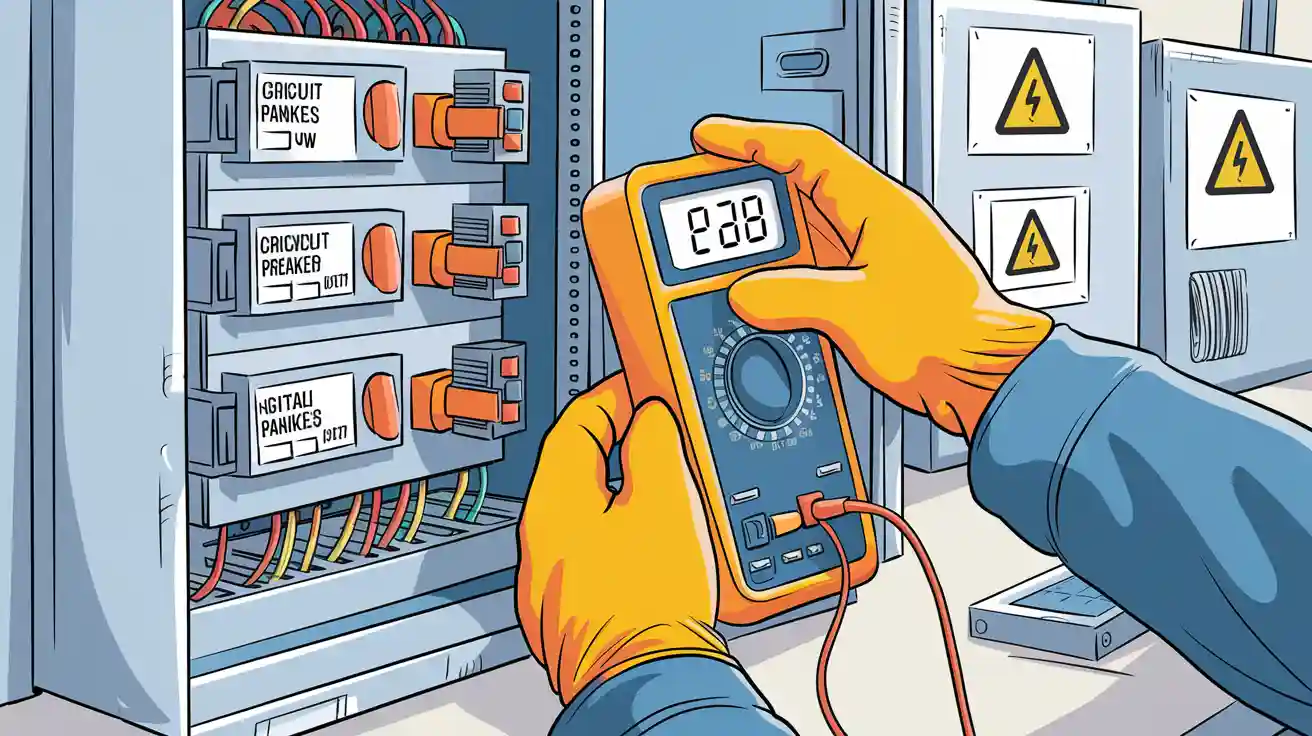
You can learn how to test a circuit breaker safely and effectively by following a few simple steps. Always put your safety first when you work with a circuit breaker. Use the right tools and stay alert for any warning signs. If you feel unsure about how to test a circuit breaker or notice anything unusual, call a professional. Testing a circuit breaker does not have to be risky. Just follow the correct steps to test a circuit breaker, and you can test your circuit breaker with confidence.
Key Takeaways
- Always wear proper safety gear like insulated gloves and safety glasses before testing a circuit breaker.
- Turn off the main power and confirm no electricity is present before starting any tests.
- Use the right tools such as a digital multimeter, clamp ammeter, and non-contact voltage tester for accurate and safe testing.
- Look for signs of a bad breaker like frequent trips, burning smells, heat, or physical damage and replace it if needed.
- Call a professional electrician if you feel unsure, get unclear test results, or face complex electrical problems.
Safety Precautions
Personal Protection
You must protect yourself before you test a circuit breaker. Always wear the right personal protective equipment (PPE). This includes insulated gloves, safety glasses, and arc-rated clothing. Many experts also recommend electrical hard hats, face shields, and hearing protection. Use rubber insulated gloves with leather protectors and EH-rated boots. Make sure your gloves are rated for the voltage you will encounter. Test your gloves for air leaks every day and replace them if they show any damage. Insulated hand tools and UL-listed voltage meters help keep you safe from electrical shock. These items follow the standards set by the National Electrical Code and OSHA.
Tip: Never wear jewelry or metal objects when working with a circuit breaker. Metal can conduct electricity and increase your risk of shock.
Power Off Steps
You need to turn off all appliances and de-energize the circuit before you start testing. Follow these steps:
- Switch off the main power supply by turning off the main breaker.
- Use a multimeter to check the panel and confirm that no electrical current is present.
- Only begin testing or replacing the circuit breaker after you confirm the power is off.
Lockout/tagout procedures help prevent anyone from turning the power back on while you work. This step is important for your safety and for anyone else in the area.
Hazard Checks
Before you test a circuit breaker, look for hazards that could cause injury or damage. Check for damaged cords, frayed wires, or signs of overheating like burn marks or melted plastic. Make sure the area is dry and well-lit. Avoid working in wet or damp conditions. Use a non-contact voltage tester to double-check for live wires. Never try to short-circuit a breaker to test it. This can cause fires, electrical shock, or even explosions.
| Electrical Hazard | How to Spot It | How to Prevent It |
|---|---|---|
| Electrical shock | Damaged cords, frayed wires | Use PPE, insulated tools, lockout/tagout |
| Arc flash | Burn marks, melted plastic | Wear arc-rated clothing, de-energize circuits |
| Working on live circuits | Presence of voltage, unexpected equipment | Always de-energize, test for residual energy |
| Wet conditions | Water near panel or outlets | Keep area dry, use GFCI outlets |
If you skip safety precautions, you risk electrical shock, fire, or serious injury. Always follow the correct steps when you test a circuit breaker.
Tools for Testing a Circuit Breaker
When you test a circuit breaker, you need the right tools to stay safe and get accurate results. Each tool has a special purpose and helps you check different parts of the electrical system.
Digital Multimeter
A digital multimeter is one of the most important tools for testing a circuit breaker. You can use it to measure AC and DC voltage, current, and resistance. Choose a multimeter with automatic range selection for better accuracy. Look for features like data retention and a clear digital display. Always connect the test leads to the correct sockets and use the smallest range needed for your measurement. Before you start, disconnect power and remove any loads from the circuit breaker. Wear insulated gloves and safety glasses for protection. Make sure you see stable readings on the display to confirm your results.
Clamp Ammeter
A clamp ammeter lets you measure current without touching bare wires or opening the circuit. You simply open the jaws, clamp them around a conductor, and read the current on the digital screen. This tool works by detecting the magnetic field around the wire. Some models can measure both AC and DC current. Using a clamp ammeter keeps you safe because you do not need to disconnect the circuit breaker. It also makes testing quick and easy, especially when you want to check if a breaker is overloaded.
Non-Contact Voltage Tester
A non-contact voltage tester helps you check if a circuit breaker or wire is live. You do not need to touch any metal parts. Just hold the tester near the wire or breaker. The tester will beep or light up if it senses voltage. This tool is great for a quick safety check before you start working. However, it does not measure current or test the full performance of a circuit breaker. Sometimes, thick insulation or interference can affect the results, so always double-check with other tools if you are unsure.
Tip: Always treat every circuit as live until you confirm it is safe with a voltage tester.
Insulated Tools
Insulated tools protect you from electric shock when you work on a circuit breaker. These tools must meet strict safety standards, such as OSHA and NFPA 70E. Look for markings like a double triangle logo, voltage rating, and manufacturer details. Insulated tools should have slip-resistant handles and two layers of insulation. Inspect your tools before each use. Check for cracks, burns, or worn-out grips. If you drop a tool or see any damage, replace it right away. Using the right insulated tools keeps you safe and helps you follow safety rules.
| Tool | Main Use | Safety Feature |
|---|---|---|
| Digital Multimeter | Measures voltage, current, resistance | Insulated leads, clear display |
| Clamp Ammeter | Measures current without disconnecting | Non-contact, digital readout |
| Non-Contact Voltage Tester | Detects presence of voltage | No metal contact, audible/visual alert |
| Insulated Tools | Safe handling of electrical components | Double insulation, slip-resistant |
How to Test a Circuit Breaker
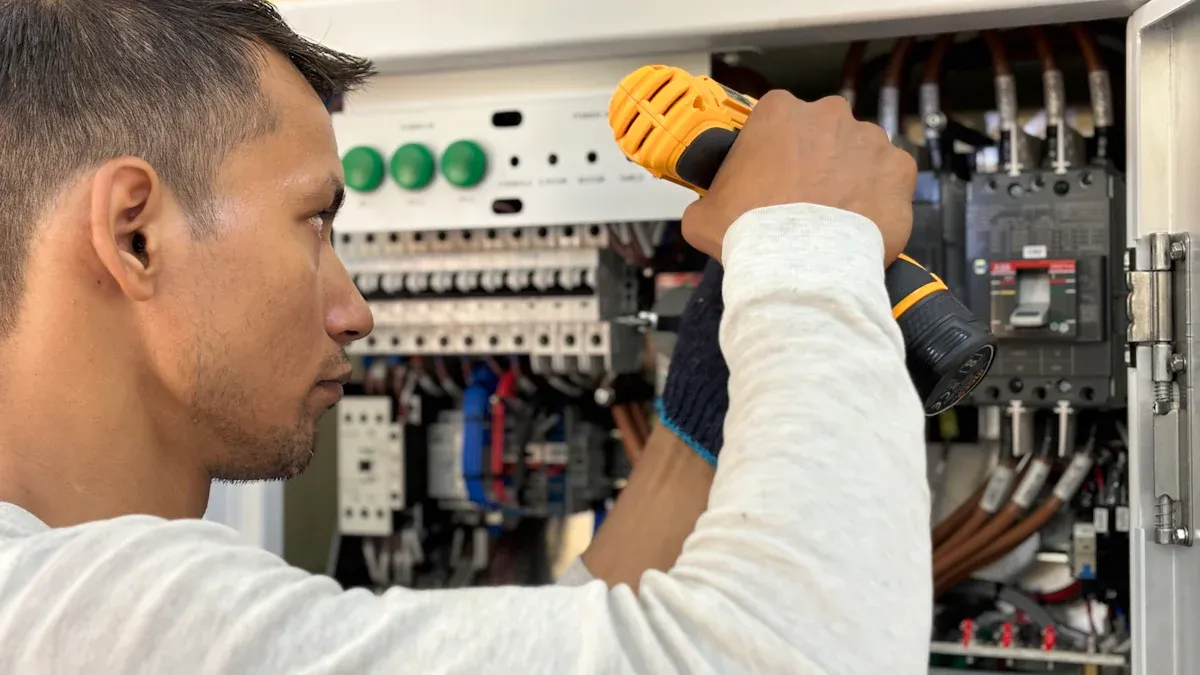
Visual Inspection
Start with a careful visual inspection before you test a circuit breaker. This step helps you spot obvious problems quickly. Follow these steps:
- Look at the outside of the circuit breaker. Check for discoloration, burn marks, or any strange smells. These signs often mean the breaker has overheated or failed.
- Listen for odd sounds. Crackling or humming noises from the breaker box can signal trouble inside the breaker.
- Check the switch position. Make sure the breaker is not tripped. If it is, reset it and see if it trips again.
- Inspect the wiring. Look for loose, frayed, or corroded wires connected to the breaker. Use a screwdriver to gently check if the connections are tight.
- Examine the breaker for cracks, warping, or melted plastic. Any physical damage means you should replace the breaker.
- Make sure the area is dry and well-lit. Never work in wet conditions.
- If you see any serious damage or feel unsure, stop and call a professional electrician.
Note: Always turn off the main power before you open the panel for inspection. Safety comes first.
Testing a Circuit Breaker with a Multimeter
A digital multimeter helps you measure voltage, continuity, and resistance. This tool gives you a clear answer when you want to know how to test a circuit breaker. Here is how you can use it:
- Turn off the main breaker to cut power to the panel.
- Put on insulated gloves and safety glasses.
- Remove the panel cover with a screwdriver.
- Find the breaker you want to test. Use the label or number to identify it.
- Set your multimeter to AC voltage mode. Choose the correct range, such as 200V or 250V.
- Place the black probe on the neutral bar and the red probe on the screw terminal of the breaker.
- Turn the breaker on. A good single-pole breaker should show about 120 volts. If you see a reading much lower than 120 volts or zero, the breaker may be faulty.
- To check continuity, turn the breaker off and set the multimeter to continuity or resistance mode. Place one probe on the breaker’s screw terminal and the other on the output terminal. A beep or a reading close to zero ohms means the breaker is good. High or infinite resistance means the breaker is bad.
- Replace the panel cover and turn the main breaker back on when you finish.
Tip: Always double-check your multimeter settings before you test your circuit breaker. Incorrect settings can give false readings or damage your meter.
| Test Type | Good Breaker Reading | Bad Breaker Reading |
|---|---|---|
| Voltage | ~120V (single-pole) | 0V or much below 120V |
| Continuity | Beep/Low resistance | No beep/High resistance |
Using a Clamp Ammeter
A clamp ammeter lets you measure the current flowing through a circuit breaker without disconnecting any wires. This tool is very useful when you want to test your circuit breaker for overloads. Here is how to use it:
- Open the clamp and place it around only one wire coming from the breaker. Do not clamp around multiple wires at once, or you will get a wrong reading.
- Make sure the clamp fits snugly. Do not force the wires apart.
- Turn on the breaker and any devices on that circuit.
- Read the current value on the ammeter display. Compare this value to the breaker’s rated current. If the reading is much higher than the rating, the breaker or the circuit may have a problem.
- If you see a current above the normal range, turn off the breaker and call a professional. High current can mean overload, insulation breakdown, or other faults.
Alert: Always wear safety gear and keep your hands away from live wires when using a clamp ammeter.
Test Button Method
Some circuit breakers have a built-in test button. This feature helps you check if the breaker can trip properly. Here is how to test a circuit breaker using the test button:
- Make sure the area is safe and dry.
- Press the test button on the breaker. The breaker should trip and switch to the "off" position.
- If the breaker does not trip, it may be faulty and needs replacement.
- After testing, reset the breaker by switching it back to "on".
Note: The test button checks the tripping function, not the full performance of the breaker. If you have any doubts, use a multimeter or call a professional.
⚠️ Important Safety Reminder
Never try to short-circuit a breaker to test it. This method is dangerous and can cause fires, electrical shock, or serious injury. Always use the right tools and follow safe procedures when you want to know how to test a circuit breaker.
How to Tell if a Circuit Breaker is Bad
Frequent Tripping
You may notice your circuit breaker trips often. This is one of the most common circuit breaker symptoms. If you reset the breaker and it trips again right away, you could have a bad circuit breaker. Sometimes, the switch stays in the middle or neutral position. This is a clear sign of circuit breaker problems. Frequent trips can also mean the breaker cannot handle the load or has worn out inside. If you see this happening, you should not ignore it.
Tip: If your lights flicker or dim when you use appliances, this may also point to a bad circuit breaker.
Physical Damage
Physical damage is one of the easiest ways to spot a bad circuit breaker. Look for these signs of a broken breaker:
- Burn marks or discoloration on the breaker
- Cracks or breaks in the plastic casing
- Rust or corrosion around the breaker or panel
- Melted plastic or visible charring
These circuit breaker symptoms show that the device has been exposed to too much heat or moisture. If you see any of these, you should replace the breaker right away.
Burning Smell or Heat
A burning smell or heat coming from your breaker box is a serious warning. These circuit breaker symptoms mean you may have a bad circuit breaker that is overheating. You might also notice buzzing or humming sounds. The smell can come from burning wire insulation or melting parts inside the breaker. If you feel heat on the breaker or smell burning, turn off the main power and call an electrician. This can prevent electrical fires and keep your home safe.
⚠️ Alert: Never ignore a burning smell or excessive heat. These are urgent signs of a bad circuit breaker.
Zero Voltage Reading
You can use a multimeter to check for a zero voltage reading across the breaker terminals. If you find no voltage at the output terminal, this means the circuit breaker is not letting power through. This is a strong sign of a bad circuit breaker. Sometimes, you may also find no continuity when you test the breaker. If you see this, you need to replace the breaker to restore power safely.
Here is a quick checklist of circuit breaker symptoms to watch for:
| Symptom | What It Means |
|---|---|
| Frequent trips | Breaker may be worn out |
| Burn marks or melted plastic | Overheating or electrical stress |
| Burning smell or heat | Danger of fire, urgent action needed |
| Zero voltage reading | Breaker not passing power |
| Buzzing or humming sounds | Possible loose wiring or failure |
If you notice any of these signs of a broken breaker, you now know how to tell if a circuit breaker is bad. Always act quickly to avoid bigger problems.
When to Call a Professional
Complex Electrical Issues
Some electrical problems go beyond basic testing or replacement. If you notice frequent trips, burning smells, or visible damage like scorch marks or melted plastic, you should not try to fix these issues yourself. These signs often point to short circuits, ground faults, or overloaded circuits. You may also face problems with live wires or need to upgrade your circuit breaker panel. These tasks require special skills and tools. Licensed electricians know how to handle these situations safely. They can spot hidden dangers and make sure your home stays safe.
Tip: If you feel unsure or uncomfortable with any part of the process, always call a professional.
Unclear Test Results
Sometimes, your test results do not make sense. You might see fluctuating readings or results that do not match what you expect. This can happen if there are hidden faults or complex wiring issues. Interpreting these results takes experience. If you cannot figure out what is wrong, you should not guess. A professional electrician can use advanced tools and knowledge to find the real problem. This helps prevent mistakes that could lead to fires or damage.
- Unclear or failed test results
- Breakers that will not stay reset
- Persistent problems after basic troubleshooting
Let an expert handle these situations to keep your electrical system safe.
Legal or Safety Concerns
Electrical work in your home must follow strict rules. Local codes and the National Electrical Code set standards for safety. Only licensed electricians should work on your circuit breaker panel. They know how to get the right permits and follow all legal steps. If you try to do this work yourself, you could face legal trouble or create unsafe conditions. Always check the credentials of any electrician you hire. Keep records of permits, inspections, and repairs. This protects you and your home.
⚠️ Alert: Never ignore legal requirements or safety standards. Professional electricians help you stay safe and follow the law.
You can keep your electrical system safe by following a few key steps. Start with a visual inspection, check connections, and test insulation. Always use the right safety gear and tools. If you feel unsure, call a professional. Regular testing and maintenance help prevent most failures, improve safety, and save money over time.
Routine checks can stop up to 90% of failures and keep your equipment running longer.
FAQ
How often should you test your circuit breakers?
You should test your circuit breakers at least once a year. Regular checks help you find problems early. If you notice any issues, test them right away.
Can you reset a tripped breaker more than once?
You can reset a tripped breaker once. If it trips again, do not keep resetting it. This means there is a problem. Call a professional to check your system.
What should you do if a breaker feels hot?
If a breaker feels hot, turn off the main power. Heat can mean a serious problem. Do not touch the breaker again. Call an electrician for help.
Is it safe to test a breaker without turning off the main power?
No, it is not safe. Always turn off the main power before you test a breaker. This step protects you from electric shock and keeps you safe.