How to Identify the Right Button Cell Battery Size
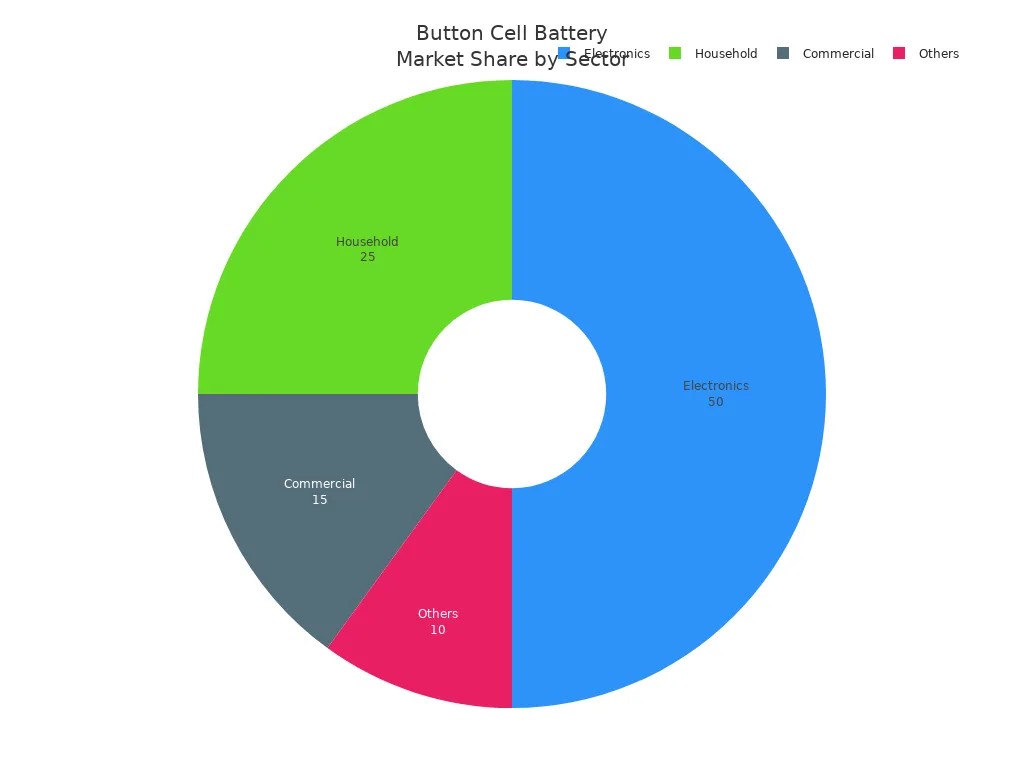
To find the right button cell for a device, users should check the model number printed on the old battery or measure its diameter and thickness. Accurate identification prevents confusion between similar button cell battery sizes. In 2023, electronics used 50% of all button cell batteries, showing their wide use in devices like watches and hearing aids.
Mistakes can happen during selection:
- Choosing the wrong size.
- Ignoring device compatibility.
- Using the incorrect voltage.
Key Takeaways
- Check the model number or measure the diameter and thickness to find the right button cell battery size.
- Understand battery codes: letters show chemistry, numbers show size, helping avoid mistakes.
- Match the battery size and voltage with your device’s specifications for proper fit and performance.
- Use a size chart and cross-reference brands to find compatible button cell batteries easily.
- Keep button batteries away from children and handle them safely to prevent serious injuries.
Button Cell Battery Sizes
Find Battery Size
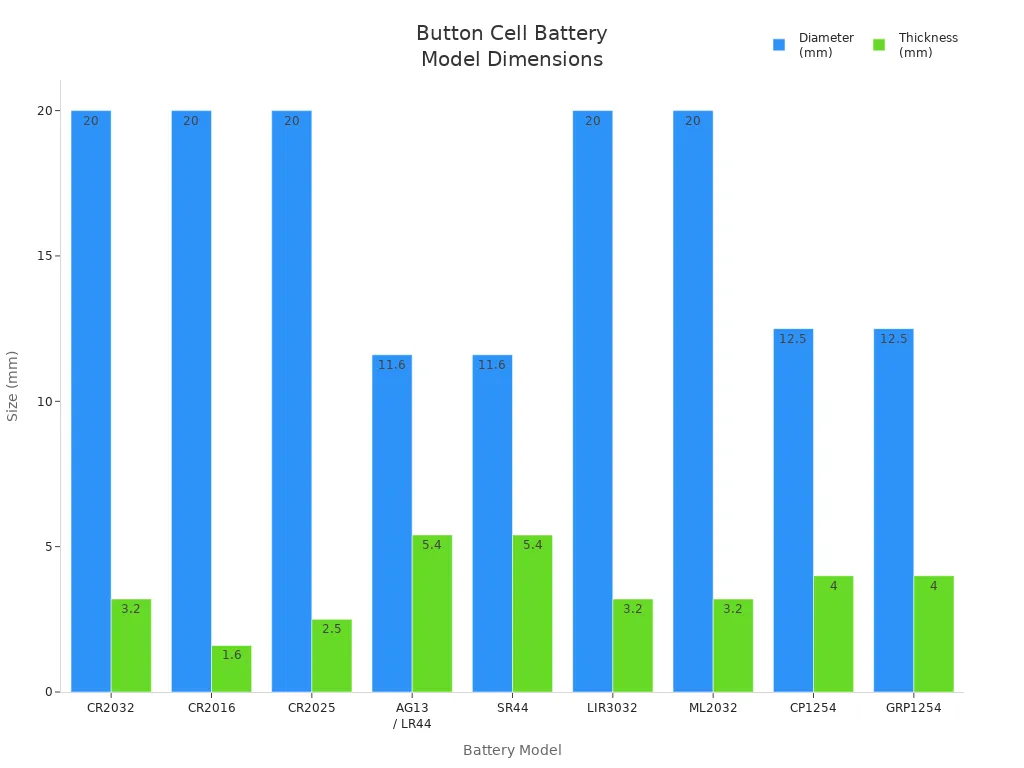
Button cell battery sizes vary widely, making it important to identify the correct one for each device. Most button cell batteries have a diameter between 4.8 mm and 30 mm, and a thickness from 1.0 mm to 7.7 mm. These small batteries are often called coin cells because of their round, flat shape. The model number printed on the battery, such as CR2032 or LR44, usually reveals its size. For example, a CR2032 battery has a diameter of 20 mm and a thickness of 3.2 mm. Devices like watches, calculators, and medical equipment use different button battery sizes, so checking the model number helps prevent mistakes.
The table below shows popular button cell battery sizes and their dimensions:
| Model | Diameter (mm) | Thickness (mm) | Description/Notes |
|---|---|---|---|
| CR2032 | 20 | 3.2 | Lithium coin cell, 3V, very common |
| CR2016 | 20 | 1.6 | Lithium coin cell, 3V |
| CR2025 | 20 | 2.5 | Lithium coin cell, 3V |
| LR44/AG13 | 11.6 | 5.4 | Alkaline coin cell, also called AG13 |
| SR44 | 11.6 | 5.4 | Silver oxide coin cell, same size as LR44 |
| CR927 | 9.5 | 2.7 | Lithium coin cell, 3V |
| CR3032 | 30 | 3.2 | Lithium coin cell, 3V |
Measure Diameter and Thickness
When the model number is missing or hard to read, measuring the button cell battery helps identify the right size. Anyone can measure the diameter and thickness using a simple ruler. First, place the battery flat and measure its width from edge to edge. This gives the diameter. Next, stand the battery upright and measure its height. This shows the thickness. These measurements match the numbers found in standard charts for button battery sizes.
Tip: Always measure carefully and compare your results with a size chart to avoid confusion between similar coin cell batteries.
Here is a simple way to measure button cell batteries:
- Use a ruler to measure the diameter (width) of the button cell.
- Measure the thickness (height) using the same ruler.
- Match these measurements with a button cell battery size chart to find the correct model.
Compare with Device Specs
Matching the button cell battery size with device specifications ensures proper fit and performance. Devices often list the required battery model in their manuals or near the battery compartment. If the model number is not available, use the measurements to compare with standard button battery sizes. Cross-referencing helps find compatible replacements, especially when different brands use various codes for the same coin cell.
- Identify the brand and model number of the old button cell.
- Use a cross-reference chart to find equivalent batteries from other brands.
- If the model is unclear, rely on diameter and thickness measurements.
- Always check voltage, size, and capacity before choosing a replacement, especially for high-drain devices.
For example, a CR1220 coin cell may also be labeled as DL1220 (Duracell), ECR1220 (Energizer), or BR1220 (Panasonic). Reliable sources like www.batteryequivalents.com provide detailed charts for cross-referencing button cell battery sizes and model numbers.
Button cell battery sizes affect device performance and longevity. Larger coin cells like CR2032 offer higher energy density and longer lifespan, making them suitable for devices that need extended power. Smaller button batteries such as LR44 work well in low-drain devices but may not last as long in high-drain applications.
Model Numbers
Read Battery Codes
Manufacturers print codes directly on each button cell. These codes follow international standards, such as IEC 60086 and ANSI C18.1. The codes help users identify the battery’s chemistry, size, and shape. For example, a code like CR2032 appears on many lithium coin cells. The letters and numbers in these codes provide important information. Reading the code correctly helps users avoid confusion between similar-looking button batteries.
| Element | Description | Example Codes |
|---|---|---|
| Shape code | 'R' for round (coin, button, or cylindrical) | R (round) |
| Size code | Diameter in mm (or truncated) + height in tenths of mm | LR44, CR17345 |
| Chemistry suffix | Letters indicating chemistry (e.g., L for alkaline, C for lithium) | LR (alkaline), CR (lithium) |
Note: Some button batteries may have multiple codes from different brands, but the standardized system helps users match the right battery for their device.
Decode Letters and Numbers
The letters at the start of a button cell code show the battery’s chemistry. For example, "CR" means lithium manganese dioxide, "LR" means alkaline, and "SR" means silver oxide. The numbers that follow tell the size. The first two digits show the diameter in millimeters. The last two digits show the thickness in tenths of a millimeter. For example, a CR2032 button cell has a diameter of 20 mm and a thickness of 3.2 mm. This system makes it easy to compare different button battery models.
Manufacturers use these codes to prevent mistakes. For example, LR44 and SR44 look the same but have different chemistries and voltages. LR44 is alkaline, while SR44 is silver oxide. Understanding the code helps users choose the correct button cell battery for their device.
Chemistry and Voltage
Button cell batteries come in several chemistries. Each type has a different voltage and performance profile. The most common types are lithium, silver oxide, and alkaline. The table below compares their main features:
| Battery Type | Chemistry | Nominal Voltage (V) | Notes |
|---|---|---|---|
| Lithium Button Cell | Lithium–Manganese Dioxide (LiMnO2) | 3.0 | Used in high-drain devices, long shelf life |
| Silver Oxide | Silver Oxide (Ag2O) | 1.55 | Stable voltage, higher energy density, more expensive |
| Alkaline Button Cell | Zinc–Manganese Dioxide | 1.5 | Lower cost, common in general use |
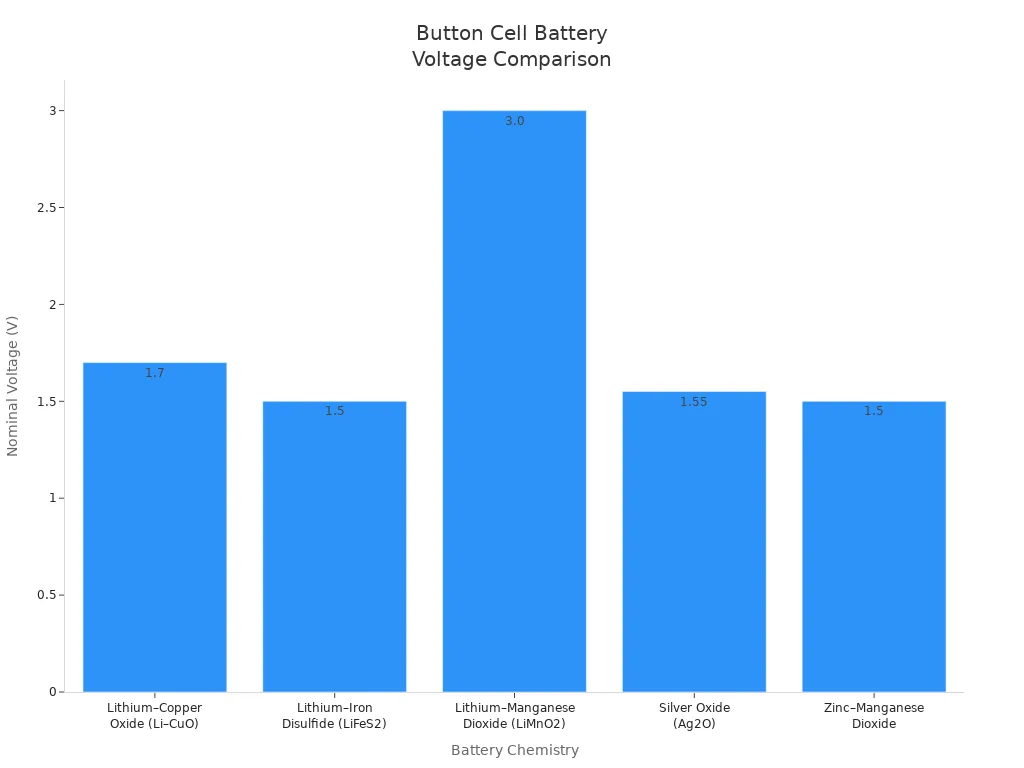
Silver oxide button cells provide a steady voltage throughout their life. This makes them ideal for watches and medical devices. Alkaline button batteries cost less but lose voltage faster as they discharge. Lithium button cell batteries offer the highest voltage and last the longest. They work well in devices that need reliable power over time.
Tip: Always check both the chemistry and voltage when replacing a button battery. Using the wrong type can affect device performance or even cause damage.
Manufacturers also use clear labels and warning icons on packaging. These labels help users avoid confusion between similar button cell models. For example, LR44 and SR44 may look alike but have different chemistries and uses. Reading the model number and understanding the code ensures the right choice every time.
Button Cell Types
Coin Cell Battery
Button battery types come in several forms, but the coin cell battery stands out as the most recognizable. These batteries have a flat, round shape that resembles a coin. The main types include lithium, silver oxide, and alkaline. Each type has a different voltage and chemical makeup. The table below shows the most common button cell battery types, their chemistry, and typical voltages.
| Button Cell Type | Chemical Composition | Typical Voltage (V) | Common Series / Models |
|---|---|---|---|
| Lithium Manganese Dioxide | Lithium MnO2 | 3.0 | CR series (e.g., CR2032, CR2016) |
| Alkaline Zinc-Manganese | Alkaline Zn-Mn | 1.5 | LR and AG series (e.g., LR44, AG13) |
| Silver Oxide | Silver Oxide | ~1.55 | SR series (e.g., SR44) |
| Zinc-Air | Zinc-Air | 1.4 - 1.45 | 675, ZA675 |
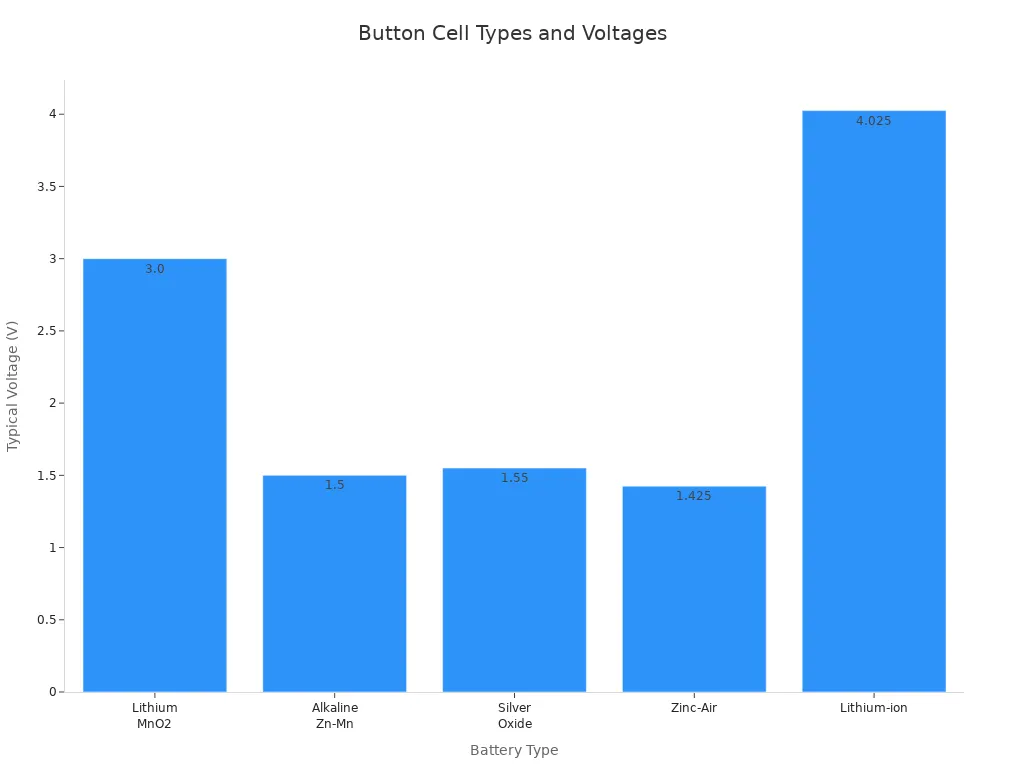
Coin cell batteries are often chosen for their stable voltage and long shelf life. The CR series, for example, provides 3 volts and works well in devices that need steady power.
Common Uses
People use coin cell batteries in many everyday devices. Watches, calculators, and car key fobs often rely on lithium coin batteries. Medical devices, such as glucose meters and digital thermometers, also use these batteries for reliable power. Toys and some remote controls use alkaline coin batteries because they are cost-effective for low-power needs.
| Device Type | Typical Coin Cell Battery Type | Battery Chemistry | Voltage | Notes on Usage and Suitability |
|---|---|---|---|---|
| Wristwatches | CR2032, CR2016 | Lithium (Li-MnO2) | 3V | Stable voltage, long life, suitable for constant power needs |
| Calculators | CR2032, CR2016 | Lithium | 3V | Small size, low power consumption |
| Digital Thermometers | CR2032 | Lithium | 3V | Precision devices, stable output |
| Car Key Fobs | CR2032 | Lithium | 3V | High performance, long shelf life |
| Remote Controls | CR2032 | Lithium | 3V | Long-lasting power, stable voltage |
| Medical Devices | CR2032, CR1225 | Lithium | 3V | Critical use, long lifespan |
| Toys | Alkaline coin cells | Alkaline | 1.5V | Lower power demand, cost-effective |
Lithium coin batteries are popular because they last a long time and provide steady power. Alkaline coin batteries are common in toys and devices that do not need as much energy.
Safety Tips
Button battery types can pose serious safety risks, especially for children. Swallowing a coin cell battery can cause severe injury within two hours. The 20 mm coin cell battery, such as the CR2032, is especially dangerous because it can get stuck in a child's esophagus. This can lead to burns, tissue damage, or even death.
- Keep all coin batteries out of reach of children and pets.
- Store button cell batteries in airtight, non-metallic containers.
- Never leave loose batteries where children can find them.
- Dispose of used coin cell batteries at recycling centers.
- If a child swallows a coin battery, seek medical help immediately.
Note: Most major injuries and deaths from button battery types involve 20 mm coin cells. Quick action can save lives.
Button Battery Sizes Chart
Popular Sizes
A button battery size chart helps users compare coin cell batteries quickly. Many devices use standard sizes, so knowing the most popular coin batteries makes selection easier. The table below lists common button battery sizes, their dimensions, chemistry, and typical uses.
| Battery Size | Diameter x Thickness | Chemistry | Capacity (mAh) | Typical Applications |
|---|---|---|---|---|
| CR2032 | 20mm x 3.2mm | Lithium | 210-240 | AirTags, watches, keyless fobs |
| CR2025 | 20mm x 2.5mm | Lithium | 150-170 | Remote controls, smart sensors |
| CR1632 | 16mm x 3.2mm | Lithium | 120-130 | Medical gadgets, fitness trackers |
| LR44 | 11.6mm x 5.4mm | Alkaline | 110-130 | Watches, calculators, medical equipment |
| LR41 | 7.9mm x 3.6mm | Alkaline | 25-40 | Hearing aids, watches, calculators |
A button battery size chart like this allows users to match the right coin cell to their device. CR2032 and CR2025 share the same diameter, but the CR2032 is thicker and stores more energy. This difference means the CR2032 lasts longer in devices that need more power.
Tip: Always check the button battery sizes in your device manual or compare with the button battery size chart before buying replacements.
Applications
Coin cell batteries power many everyday items. People use them in wristwatches, calculators, and fitness trackers. Medical devices, such as glucose meters and digital thermometers, also rely on coin batteries for steady power. Keyless entry systems and remote controls often use CR2032 or CR2025 coin cells because these batteries offer long life and stable voltage.
- Wearable devices: watches, hearing aids, fitness trackers
- Consumer electronics: key fobs, TV remotes, small toys
- Medical equipment: glucose meters, thermometers, sensors
The button battery size chart shows that larger coin cells, like CR2032, provide higher capacity and longer battery life. Smaller coin batteries, such as LR41, fit compact devices and work well for low-power needs. Users should always compare button battery sizes and check the button battery size chart to avoid mistakes. Choosing the correct coin cell ensures safe operation and maximum performance.
Compatibility Tips
Check Manuals
Device manuals provide essential guidance for selecting the correct button battery. They list the exact battery model number, chemical composition, voltage, and physical size required for each device. Manuals often include a chart of compatible or equivalent models, making it easier to find a suitable replacement. Users should always check the battery compartment for polarity markings and ensure the new button cell aligns correctly. Manuals also explain naming conventions, where letters show the chemistry and numbers indicate the size. Following these instructions helps prevent device malfunction and ensures the button cell battery fits and works as intended.
Avoid Mistakes
Many people make mistakes when replacing a button cell. The most common issues involve choosing a button battery with the wrong voltage, size, or chemistry. Even batteries that look similar may have different electrical properties or physical dimensions. Using the wrong button cell can lead to poor performance, leakage, or even damage to the device. The table below highlights frequent compatibility problems:
| Compatibility Issue | Explanation | Example(s) |
|---|---|---|
| Voltage Differences | Different batteries have varying nominal voltages which can affect device performance or cause damage. | LR44 (1.5V) vs 675 (1.4-1.45V zinc-air/alkaline) - voltage mismatch can reduce performance. |
| Physical Size Mismatch | Batteries differ in diameter and thickness, affecting fit and contact in the device. | LR44 (11.6mm x 5.4mm) vs AA (14.5mm x 50.5mm) - AA too large to fit without modification. |
| Polarity and Connection | Correct polarity and proper electrical contact are essential to avoid damage and ensure function. | Using AA batteries in LR44 slots may require compartment modification and polarity checks. |
| Chemistry and Capacity | Different chemistries (alkaline vs silver oxide) and capacities affect lifespan, leakage risk, and stability. | LR41 (alkaline) vs 377 (silver oxide) - silver oxide offers longer life and stable voltage. |
| Risk of Leakage or Damage | Higher capacity or current delivery can cause heat, leakage, or damage if battery is inappropriate. | AA batteries have higher capacity and current than LR44, increasing leakage risk in small devices. |
Tip: Always compare the old button cell with the new one for size, voltage, and chemistry before installation.
Expert Help
If users feel unsure about which button battery to choose, they should seek expert help. Store staff, electronics technicians, or customer support teams can offer advice based on the device model and the old button cell battery. Experts can help interpret model numbers, explain differences in chemistry, and recommend the safest option. They can also check for less obvious issues, such as contact problems or battery compartment damage. Asking for help ensures the device receives the correct button battery and reduces the risk of costly mistakes.
Choosing the correct button cell or button battery involves a few simple steps:
- Check the model number and compare it with the device’s requirements.
- Measure diameter and thickness if the code is missing.
- Use industry standards and naming conventions to match the right button cell or button battery.
- Remember, some button cell batteries like AG4, LR626, and 377 are interchangeable.
| Aspect | Explanation |
|---|---|
| Naming Convention | Codes show chemistry, shape, diameter, and thickness. |
| Size Importance | Diameter and thickness must fit the device. |
Always double-check the button battery size and consult the manual or an expert if unsure. These steps make button cell and button battery replacement safe and easy for everyone.
FAQ
What do the numbers on a button cell battery mean?
The numbers show the battery’s diameter and thickness in millimeters. For example, a CR2032 has a diameter of 20 mm and a thickness of 3.2 mm. These numbers help users match the battery to their device.
Can different brands of button cell batteries be used interchangeably?
Many brands make batteries with the same size and chemistry. Users can check the model number and compare measurements. A cross-reference chart helps find compatible options from other brands.
How can someone measure a button cell battery at home?
A person can use a ruler to measure the diameter and thickness. Place the battery flat for diameter, then stand it upright for thickness. Compare these measurements with a size chart to find the correct model.
What should users do if the device does not work after replacing the battery?
Users should check the battery’s orientation, size, and voltage. They can also clean the contacts inside the compartment. If the device still does not work, they may need expert help.
Are button cell batteries safe for children?
Button cell batteries can be dangerous if swallowed. Parents should keep batteries out of reach and store them safely. If a child swallows a battery, seek medical help immediately.