Mastering Celsius to Fahrenheit The Ultimate Guide 2025
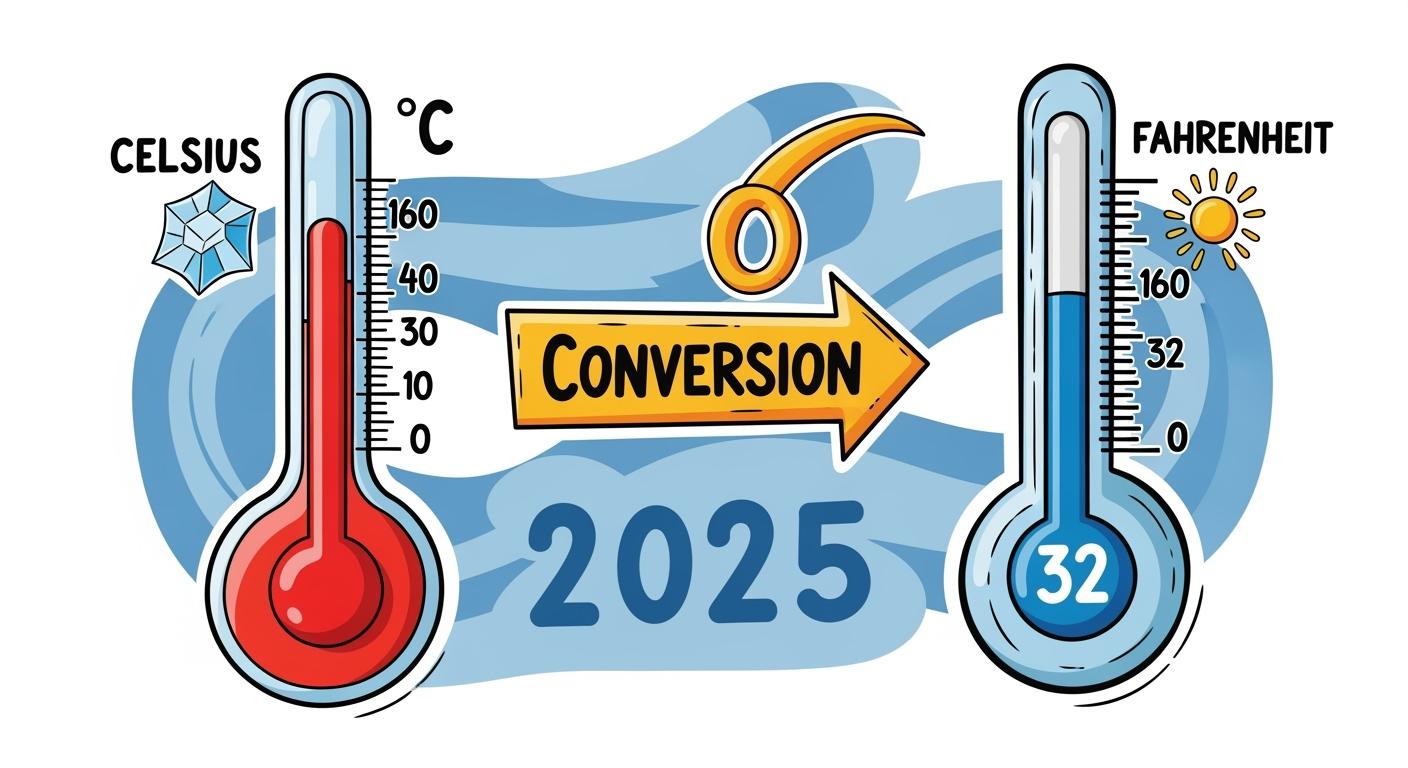
Need to quickly convert Celsius to Fahrenheit? You are in the right place. This guide shows you how to calculate celsius to fahrenheit using one super-easy formula. You will master every c to f conversion with confidence and accuracy. 🌡️
Key Takeaways
Use the formula
°F = (°C × 1.8) + 32to change Celsius to Fahrenheit. This formula works for all temperatures.You can multiply Celsius by 1.8 and then add 32 for quick calculations. Or, multiply Celsius by 9, divide by 5, and then add 32.
Knowing how to convert temperatures helps you understand weather, recipes, and body temperature better.
The Standard Conversion Formula
You can stop searching for different conversion tools. There is one single, official formula that gives you a perfect temperature conversion every time. Understanding this formula is the key to mastering how to calculate celsius to fahrenheit. It works for any number, from a freezing winter day to the heat of a boiling pot.
Let's break down this powerful formula into two easy-to-use methods.
The Official Equation
The globally accepted equation for converting a temperature from Celsius to Fahrenheit is simple and direct. You will use this formula for any exact calculation.
°F = °C × (9/5) + 32
Here is what each part means:
°F represents your final temperature in degrees Fahrenheit.
°C is the starting temperature in degrees Celsius.
× (9/5) is the multiplication step that adjusts for the different size of the degrees.
+ 32 is the final step that aligns the different starting points of the two scales.
Sometimes, you might see this same formula written in a different algebraic style, like 5(°F) = 9(°C) + 160. This is just another version of the same rule, but the first formula is the most direct one for an actual conversion.
Using the Decimal Method
The decimal method is often the fastest way to convert when you have a calculator. This approach uses the decimal form of the fraction 9/5.
Pro Tip: The Decimal Shortcut 💡 The fraction
9/5is equal to the decimal1.8. You can swap them in the formula for an easy conversion formula that is perfect for your phone or calculator.
Your formula now looks like this:
°F = (°C × 1.8) + 32
This version removes the fraction and gives you a straightforward multiplication problem. Many people find this method simpler for quick calculations. It provides the exact same result for the actual conversion.
Using the Fraction Method
The fraction method is excellent for mental math or when you don't have a calculator. It uses the original 9/5 fraction. This is a classic c to f technique.
Here is the process for this c to f conversion:
Take your Celsius temperature.
Multiply it by 9.
Divide that result by 5.
Add 32 to get your final Fahrenheit temperature.
This method might seem like it has more steps. However, the numbers are often easier to manage in your head, especially for common temperatures.
How to Calculate Celsius to Fahrenheit Step-by-Step
Knowing the formula is the first part. Now, you will walk through a real example to see it in action. This step-by-step process makes any calculation simple. Let's use a common and pleasant temperature for our example: 25°C.
Step 1: Multiply the Celsius Value
Your first action is to multiply the Celsius temperature by 9/5 (or 1.8). This step adjusts the Celsius value to the Fahrenheit scale's different degree size. This multiplication effectively reverses the conversion process if you were going from Fahrenheit to Celsius.
Let's apply this to our example of 25°C.
Using the fraction:
25 × (9/5)You can simplify this:
(25 / 5) × 9This becomes:
5 × 9 = 45
Using the decimal:
25 × 1.8This also equals
45.
Calculation Tip 🧠 For many common temperatures, using the fraction
9/5makes mental math easier. Dividing before you multiply often gives you smaller, more manageable numbers.
Step 2: Add the Offset
The second step is to add 32. Why 32? The Celsius and Fahrenheit scales start at different points. Water freezes at 0°C but at 32°F. Daniel Fahrenheit set 32 degrees as the freezing point for water. You add 32 to your result from Step 1 to align the two scales correctly. This is a crucial part of the c to f formula.
Continuing our example, you take the result from Step 1 and add 32.
45 + 32 = 77
This addition completes the main calculation for the actual conversion.
Final Fahrenheit Result
You have now completed the process. By following the two simple steps, you have your final answer. This method shows you exactly how to calculate celsius to fahrenheit for any temperature.
The final result for our example is:
25°C = 77°F
A beautiful day at 25°C is a warm 77°F. You can use this exact method for any number. The process for the actual conversion remains the same.
Here is a table showing other common conversions:
Celsius (°C) | Fahrenheit (°F) |
|---|---|
0 | 32.0 |
10 | 50.0 |
20 | 68.0 |
86.0 |
This chart visually shows you how the temperature changes from Celsius to Fahrenheit.
Quick Estimation Methods
Sometimes you do not need an exact answer. You just need a quick estimate to understand the temperature. These simple tricks help you make a fast mental conversion without a calculator.
The Double and Add 30 Rule
This is the fastest way to get a rough idea of the Fahrenheit temperature. You can do it in your head in seconds.
Here is the simple process:
Take the Celsius temperature and double it.
Add 30 to that number.
For example, if the temperature is 15°C, you double it to get 30. Then, you add 30 to get 60°F. The exact answer is 59°F, so this trick gets you very close. For a more accurate guess, you can "take off a few" degrees from your final number.
The Double, Subtract 10%, and Add 32 Trick
This next method gives you a much more precise estimate. It is a great balance between speed and accuracy.
Let's try it with 27°C:
Double the Celsius value:
27 × 2 = 54.Subtract 10% from that result:
54 - 5.4 = 48.6.Add 32 to finish:
48.6 + 32 = 80.6.
The final result is 80.6°F. This is the exact answer you would get with the official formula. This trick is perfect for converting celsius and fahrenheit when you want precision without a calculator.
Quick Tips for Converting Celsius and Fahrenheit
Memorizing a few key reference points can help you instantly know the temperature. You can use these benchmarks to quickly gauge the weather or other common temperatures.
Memorable Temperature Points 🌡️
-40°C is exactly -40°F. This is where the two scales meet.
0°C is the freezing point, which equals 32°F.
10°C is a cool day at 50°F.
28°C is a warm day, roughly 82°F.
You can use these points to make even faster estimates for nearby temperatures.
Conversion Examples in Daily Life
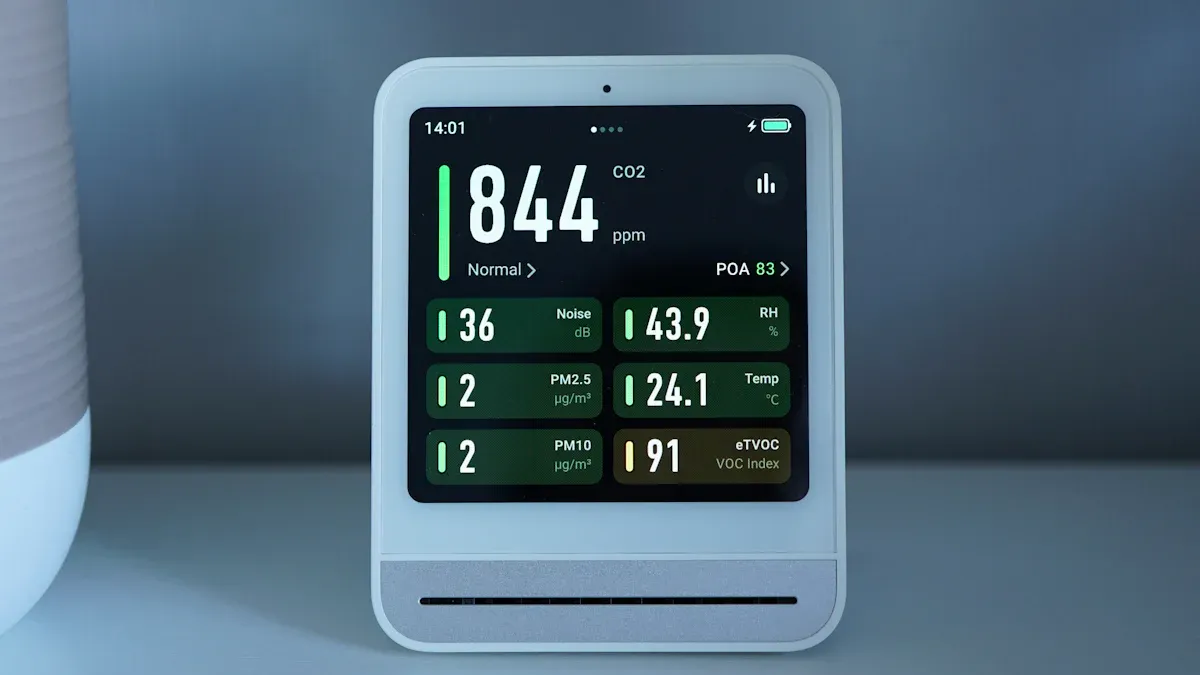
The formula becomes much clearer when you see it work in real-world situations. You encounter temperature conversions daily, from checking the weather to cooking a meal. Let's walk through some common examples.
Weather Temperatures
You often see weather forecasts from cities like London or Paris in Celsius. Knowing how to convert them helps you understand the temperature instantly. Let's see how to calculate celsius to fahrenheit for different weather conditions.
Freezing Day (0°C): Water freezes at 0°C. The conversion is
(0 × 1.8) + 32 = 32°F.Pleasant Day (20°C): A comfortable day at 20°C equals
(20 × 1.8) + 32 = 68°F.Hot Summer Day (35°C): A hot day in many parts of the world is 35°C.
35 × 1.8 = 6363 + 32 = 95°F
This chart shows you more common weather conversions.
Cooking Temperatures
Many recipes, especially from Europe, list oven temperatures in Celsius. A wrong conversion can ruin your dish! 🍳
Baking Tip: A very common oven temperature is 180°C. This is the standard for many cakes and casseroles.
Let's do a quick c to f conversion for that temperature: °F = (180 × 1.8) + 32 = 324 + 32 = 356°F Most American ovens would be set to 350°F or 375°F, so 356°F fits right in between.
Health and Body Temperatures
You also use temperature conversions for health. Normal human body temperature is around 37°C.
What is this in Fahrenheit? °F = (37 × 1.8) + 32 = 66.6 + 32 = 98.6°F
This actual conversion shows why 98.6°F is considered the standard for normal body temperature. A temperature of 38°C or higher is considered a moderate-grade fever, which converts to about 100.4°F.
The Science Behind the Formula

You might wonder why the conversion formula is so specific. The answer lies in the different ways the Celsius and Fahrenheit scales were created. Understanding this history makes the math much clearer.
Different Freezing Points
The two scales start at different numbers. This is the main reason you need to add 32.
A Tale of Two Scales 🧊 Anders Celsius based his scale on water. He set the freezing point of water at 0°C. Daniel Fahrenheit, however, used a different starting point. He made a mixture of ice, water, and salt and set its freezing temperature as 0°F. On his scale, pure water just happened to freeze at 32°F.
Fahrenheit also used the human body temperature as another key reference point. These different foundations created the 32-degree offset you see in the formula.
The 180 vs 100 Degree Scale
The scales also use different step sizes. Think of it like comparing inches and centimeters; they measure the same thing but use different increments.
Celsius Scale: There are 100 degrees between the freezing point (0°C) and boiling point (100°C) of water.
Fahrenheit Scale: There are 180 degrees between the freezing point (32°F) and boiling point (212°F) of water.
Because a Fahrenheit degree covers a smaller change in temperature than a Celsius degree, you need a multiplication step to account for this difference.
Why the Formula Works
The formula combines these two key differences into one simple equation.
The ratio of the scales is 180 degrees for Fahrenheit to 100 degrees for Celsius. This 180/100 ratio simplifies to 9/5 (or 1.8). This is why you multiply the Celsius temperature by 9/5. It adjusts the size of the degrees. Then, you add 32 to account for the different starting points. Together, these steps give you the correct actual conversion every time.
You now have the key to convert celsius to fahrenheit. The formula °F = (°C × 9/5) + 32 is your main tool. This guide's steps make every c to f calculation simple. Whether you are a traveler or a student, you are now well-equipped for any temperature conversion.
You can now handle any Celsius to Fahrenheit conversion with confidence! 🚀
FAQ
How do you convert Fahrenheit back to Celsius?
You can use a reverse formula. First, subtract 32 from the Fahrenheit temperature. Then, you multiply that number by 5/9 to get the Celsius temperature.
Why do you add 32 to convert Celsius to Fahrenheit?
You add 32 because the two scales have different starting points. Water freezes at 0°C. This same temperature is 32°F on the Fahrenheit scale.
Is there a temperature where Celsius and Fahrenheit are the same?
Yes, the two scales meet at one specific point. Both Celsius and Fahrenheit show the exact same temperature at -40 degrees.
Temperature Fact 🥶 -40°C is the same as -40°F. This is the only point where the two temperature scales intersect.