How Does a Low-Pass Filter Function in Electronics
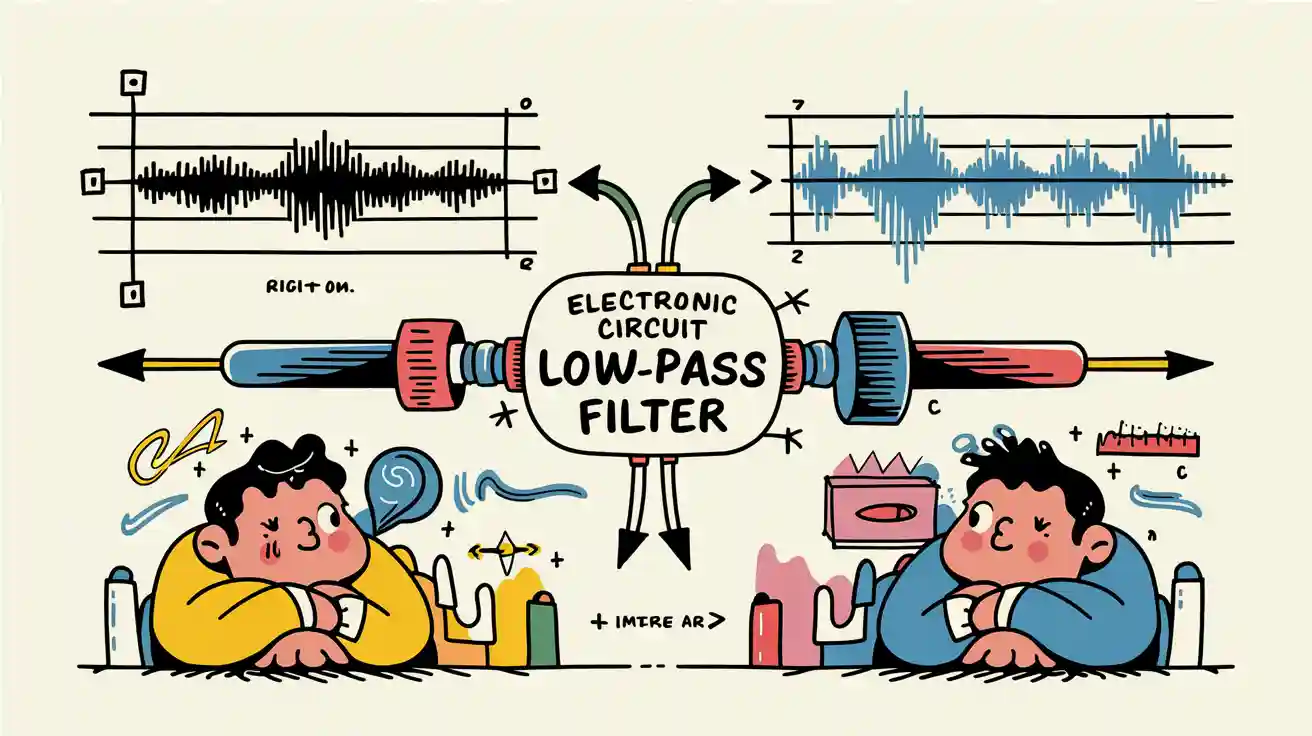
A low-pass filter lets you keep the low-frequency parts of a signal and blocks the high-frequency parts. You use a low-pass filter in electronics to make sure only the sounds or signals you want get through, while unwanted noise stays out. Many industries, like automotive and telecommunications, rely on low-pass filters to deliver clear signals. In audio engineering, a low-pass filter shapes music and voice by removing harsh high tones. The filter lowpass design is essential in modern devices, especially as technology advances and systems become more complex.
Key Takeaways
- A low-pass filter allows low-frequency signals to pass while blocking high-frequency signals. This helps keep desired sounds clear and removes unwanted noise.
- The cutoff frequency is crucial. It determines which frequencies are allowed through and which are blocked. Setting it correctly ensures you maintain important signal parts.
- You can build a simple low-pass filter using a resistor and capacitor. This basic design is effective for many applications, especially in audio systems.
- Low-pass filters are widely used in audio processing and communication systems. They improve sound quality and ensure clear signals in devices like phones and radios.
- Choosing the right type of low-pass filter, whether passive or active, can enhance performance. Active filters provide better control and signal strength.
Low-Pass Filter Basics
What Is a Low-Pass Filter
You use a low-pass filter to let low-frequency signals pass through while blocking high-frequency signals. This type of filter is one of the most important tools in electronics and signal processing. When you want to keep only the smooth, slow changes in a signal and remove the fast, sharp ones, you turn to a low-pass filter. People sometimes call it a treble cut filter, especially in audio systems, because it removes the higher-pitched sounds.
A low-pass filter works by creating a boundary between the frequencies you want and those you do not. This boundary is called the cutoff frequency. When a signal passes through the filter, everything below the cutoff frequency stays strong, while everything above it gets weaker. You see this effect in many devices, from music players to communication systems.
Note:
The cutoff frequency is the point where the output drops to about 70.7% of the input. This point marks the start of strong filtering and is very important in designing any low-pass filter.
You can find several definitions of a low-pass filter in trusted sources:
| Source | Definition/Explanation |
|---|---|
| Lowpass Filter | A lowpass filter suppresses high frequency components while allowing low frequencies to pass. |
| Lowpass Filters | The basic equations for a lowpass system show how high frequency components are attenuated. |
| Low-Pass Filter | A low-pass filter allows signals below a specified frequency to pass while attenuating higher frequencies. |
| Lowpass Filter - an overview | A lowpass filter is defined as a device that suppresses high frequency components while allowing low frequencies to pass. |
You often use a low-pass filter in audio to remove hiss or harshness. In communication systems, you use it to keep signals clear and prevent interference. The filter lowpass design is also common in many other fields, such as medical devices and automotive electronics.
How a Filter Lowpass Works
When you build a low-pass filter, you usually start with simple components like resistors and capacitors. The most basic version is the RC low-pass filter. In this circuit, the resistor and capacitor work together to control how the signal changes with frequency.
Here is how the RC low-pass filter operates:
- At low frequencies, the capacitor acts like an open circuit, so the signal passes through the resistor to the output.
- At high frequencies, the capacitor’s reactance drops, and it starts to short the signal to ground. This action blocks high-frequency signals from reaching the output.
You can see this behavior in the frequency response of the filter. The frequency response shows how much of each frequency gets through the filter. For a first-order filter like the RC low-pass filter, the response drops off smoothly after the cutoff frequency.
The cutoff frequency is a key part of the design. It tells you where the filter starts to block higher frequencies. You can calculate the cutoff frequency for an RC low-pass filter using this formula:
- The cutoff frequency $f_c$ is given by: $ f_c = \frac{1}{2\pi RC} $
This formula helps you choose the right resistor and capacitor values for your application. If you want to keep more of the signal, you set a higher cutoff frequency. If you want to block more noise, you set a lower cutoff frequency.
Tip:
In audio processing, you often set the cutoff frequency around 3 kHz to keep voices clear and remove hiss. In communication systems, you might use a cutoff frequency of 1 MHz to limit the signal’s bandwidth and avoid interference.
The frequency response of a low-pass filter creates two main regions:
- Passband: Frequencies below the cutoff frequency pass through with little change.
- Stopband: Frequencies above the cutoff frequency get weaker and weaker as the frequency increases.
You need to pick the right cutoff frequency for your needs. If you set it too low, you lose important parts of your signal. If you set it too high, you let in too much noise. The frequency response of the filter helps you find the best balance.
Here is a summary of how the cutoff frequency affects your design choices:
- The cutoff frequency marks the point where the filter starts to reduce higher-frequency signals.
- Picking the right cutoff frequency helps you keep the signals you want and remove the ones you do not.
- The cutoff frequency marks the transition from the passband to the stopband.
- Accurate selection of the cutoff frequency is crucial for maintaining target signals while minimizing noise and interference.
When you use a low-pass filter, you shape the frequency response of your system. You can use a first-order filter for simple needs or more complex filters for sharper cutoffs. The RC low-pass filter is the most common starting point, but you can also use active filters with op-amps for better performance.
Types of Low-Pass Filters
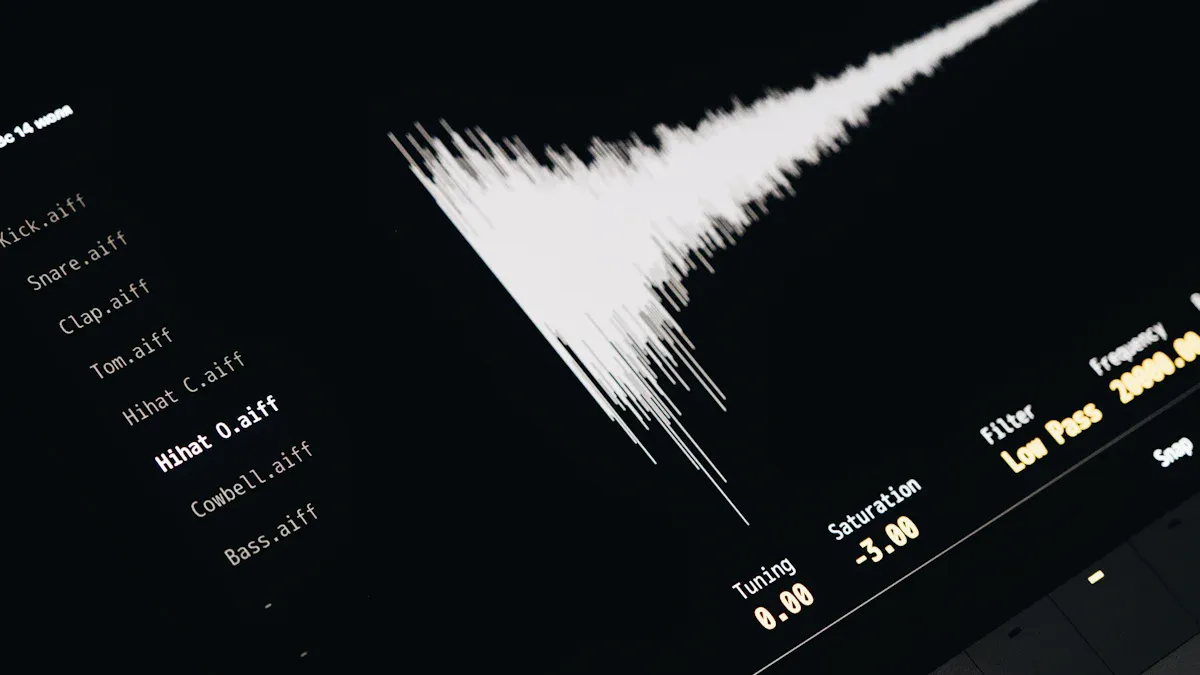
RC Low-Pass Filter
You often start with an RC low-pass filter when you want to block high frequencies and keep low ones. This filter uses two main parts:
- A resistor (R)
- A capacitor (C)
The resistor limits how much current flows. The capacitor stores and releases energy. When you send a signal through this circuit, the resistor and capacitor work together to control which frequencies pass. At low frequencies, the capacitor charges slowly, so the signal moves through to the output. At high frequencies, the capacitor cannot charge fast enough, so it blocks the signal. The time constant, which is the product of the resistor and capacitor values, sets how quickly the filter reacts. You call this a first-order filter because it has one resistor and one capacitor.
The frequency response of an RC low-pass filter shows a smooth drop after the cutoff frequency. Below this point, signals pass with little change. Above it, the filter reduces the signal strength. In audio applications, you might use resistor values from 1 Ω to 1 MΩ and capacitor values from 1 pF to 1 µF. This simple design makes the RC low-pass filter a popular choice in signal processing.
Active Low-Pass Filter
You can build an active low-pass filter by adding an op-amp to the basic RC circuit. This design uses active components, like op-amps or transistors, and needs an external power source. The op-amp boosts the signal, so you get gain instead of just signal loss. You also get high input impedance and low output impedance, which means the filter does not load down your circuit.
Active low-pass filters let you adjust the gain and frequency response more easily than passive designs. You do not need large inductors, so the circuit stays small and simple. These filters work well for low-frequency applications, such as audio systems, where you want to shape the sound and keep signal fidelity high.
Tip:
Op-amp-based filters are easy to design and save space. You can also choose different filter classes, like Butterworth or Chebyshev, to get the frequency response you need.
Other Filter Types
You might see other low-pass filter designs, such as higher-order filters or digital filters. Higher-order filters use more resistors and capacitors, or more complex circuits, to create a sharper cutoff. Digital low-pass filters use software to process signals, which is common in modern electronics.
Different filter types, like Butterworth, Chebyshev, and Bessel, each have unique frequency response curves. Butterworth filters keep the response flat, so you do not lose signal quality. Chebyshev filters give you a steeper roll-off, which blocks unwanted frequencies faster. Bessel filters keep the phase response smooth, which helps when you need to keep the signal shape.
You should always consider the cutoff frequency, time constant, and impedance matching when you choose a filter lowpass design. Each type of low-pass filter has strengths for different signal processing needs.
Applications
Audio Processing
You use a low-pass filter in audio systems to shape and improve sound quality. When you want to remove high-pitched hiss or harshness, a low-pass filter helps you keep only the smooth, deep tones. You can add depth to your music by adjusting the filter lowpass settings, which changes how far away or close a sound feels. Many audio engineers use a low-pass filter to reduce frequency masking, so each instrument stands out clearly in the mix. You can also create different versions of the same sound by changing the frequency response. This makes your music richer and more interesting. When you set the cutoff frequency just right, you define which sounds come forward and which fade into the background.
Proper low-pass filter settings on amplifiers ensure each speaker works within its best range. This gives you clear audio and strong bass without distortion.
Communication Systems
You find low-pass filters in almost every communication device, from mobile phones to Wi-Fi routers. These filters allow only the signals you want to pass through, blocking unwanted high-frequency noise. When you use a filter lowpass in a radio or phone, you get a stable and clear signal. The frequency response of the filter keeps your voice or data transmission free from interference. In satellite and aerospace systems, a low-pass filter removes extra noise, so signals stay accurate and reliable. You also see these filters in industrial controls and Bluetooth devices, where they help maintain signal integrity.
- Low-pass filters block high-frequency interference.
- They improve clarity in voice and data transmissions.
- You get better performance and reliability in your devices.
Signal Noise Reduction
You often deal with high-frequency noise in electronic signals. A low-pass filter helps you clean up these signals by letting only the lower frequencies pass. This selective filtering keeps your output signal clear and stable. In measurement systems, using a filter lowpass can boost your signal-to-noise ratio by up to 40 times. The frequency response of the filter ensures that only the important parts of your signal remain. In radio systems, a low-pass filter removes unwanted radio waves, making communication more effective. You see these benefits in audio systems, laptops, and many other electronic devices.
A well-designed low-pass filter protects your equipment and improves overall system efficiency.
You now know that a low-pass filter lets you control which parts of a signal pass through. This tool shapes the frequency response and removes unwanted high-frequency noise. In your projects, you can use a low-pass filter to:
- Regulate frequency content in audio and electronic signals
- Control tonal quality and sound character
- Remove high-frequency noise for cleaner signals
- Create a warmer sound in audio work
- Improve signal processing in many devices
As technology grows, you will see new trends in low-pass filter design:
| Trend/Factor | Description |
|---|---|
| Customization & Personalization | Demand for tailored solutions in many industries |
| Digital Transformation | Use of cloud, AI, and automation for better efficiency |
| Technological Integration | AI, IoT, and big data help improve operations and decisions |
| Consumer Behavior | People want more personalized and sustainable products |
| Regulatory Compliance | Stricter rules lead to safer and greener solutions |
You can find low-pass filters in music, phones, and even cars. Try to spot where you use them every day.
FAQ
What does a low-pass filter do in audio systems?
A low-pass filter lets you keep the bass and midrange sounds. It removes high-pitched noises like hiss or static. You get a smoother and warmer sound in your music or voice recordings.
How do you set the cutoff frequency?
You choose the cutoff frequency based on what sounds you want to keep. For voices, you often set it around 3 kHz. For music, you may pick a different value. The right setting depends on your needs.
Can you use a low-pass filter with digital signals?
Yes, you can use digital low-pass filters in computers and digital devices. These filters work in software. They help you clean up signals and remove unwanted high-frequency parts.
What is the difference between passive and active low-pass filters?
Passive filters use only resistors and capacitors.
Active filters add components like op-amps for more control and gain.
You use active filters when you need better performance or signal strength.