How Do LEDs Create Light A Beginner's Explanation
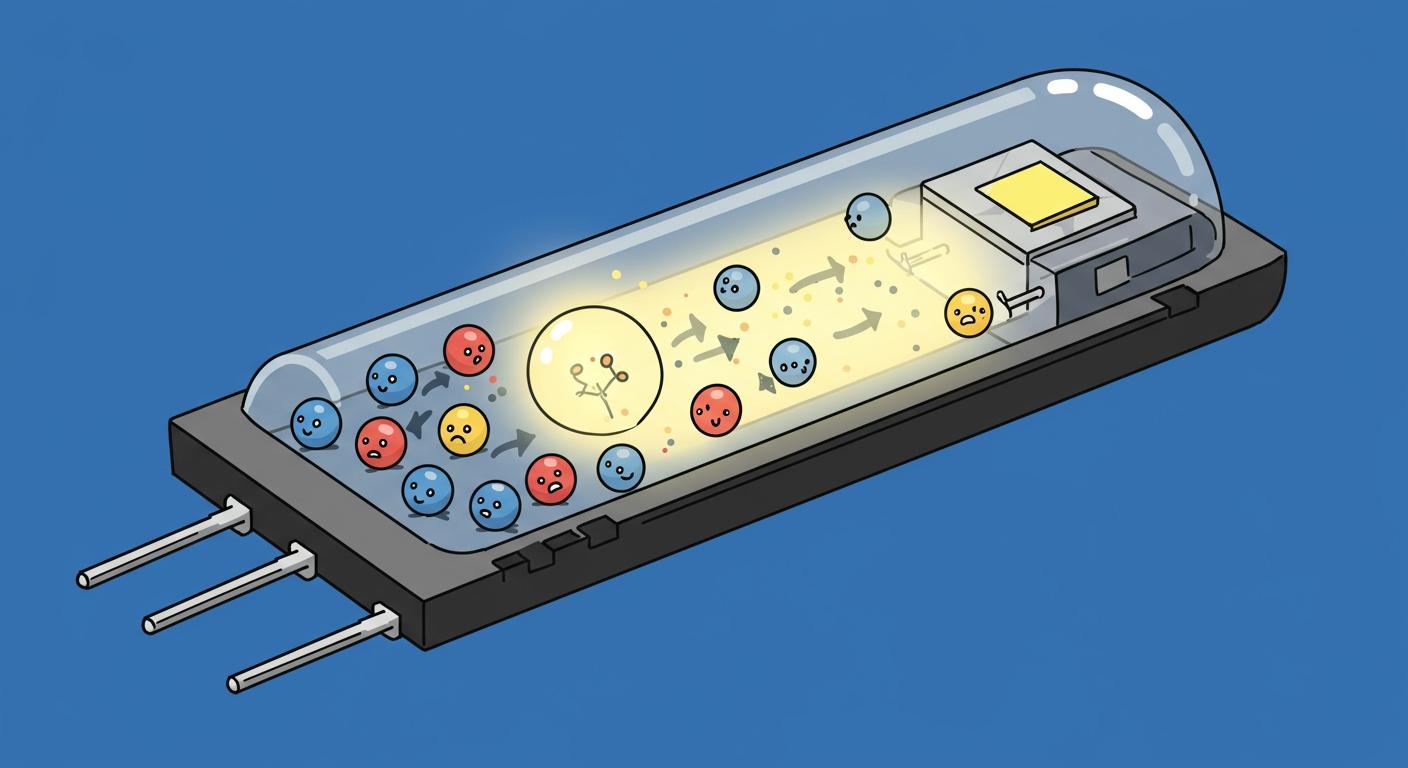
Have you ever wondered how do LEDs work? An LED, or Light Emitting Diode, creates light when you pass electricity through a special material. This process explains how do LEDs produce light.
This electrical energy causes tiny particles (electrons) to release their own energy as light particles (photons).
Efficient LED light is crucial. Lighting once used nearly 20% of global electricity. Today, the market for LED light bulbs and other LED products is growing rapidly. Understanding how does an led light work shows why these light emitting diodes are so revolutionary.
| Metric | Value (2024) | Projected Value (2032) | CAGR (2025-2032) |
|---|---|---|---|
| Global Market Size | USD 97.07 billion | USD 272.44 billion | 14.0% |
Key Takeaways
- LEDs make light when electricity passes through special materials called semiconductors. This process releases tiny light particles.
- An LED has two layers, N-type and P-type, that meet at a P-N junction. This junction is where electrons jump and create light.
- LEDs are very efficient because they turn most electricity directly into light. Old bulbs wasted energy as heat.
- The color of an LED depends on the materials used in its semiconductor chip. Different materials create different colors of light.
- LEDs are durable and last a long time. They do not have fragile parts like the filaments in old light bulbs.
How Do LEDs Work? The Core Components

To understand how do leds work, you first need to look at the heart of the device: the diode. The "D" in LED stands for diode, which is a simple electronic component made from two special materials fused together. These materials are called semiconductors. The invention of the first practical visible-spectrum LED happened back in 1962. A scientist named Nick Holonyak Jr. created a special alloy that could produce red light, paving the way for modern light emitting diodes.
Understanding Light Emitting Diodes
An LED is not like the old light bulbs in your home. Traditional incandescent bulbs have a thin wire (a filament) that heats up and glows. An LED has no filament. Instead, the magic happens inside a tiny semiconductor chip. This is why an LED is a type of "solid-state" lighting. There are no moving parts, no fragile glass, and nothing to burn out. This simple but powerful design is what makes an LED so durable and is key to how do leds work. This technology is now common in everything from traffic signals to modern LED light bulbs.
The P-N Junction Boundary
The semiconductor chip inside an LED is made of two separate layers. Scientists "dope," or add impurities to, these layers to change their electrical properties.
- The N-Type Layer: This side has a surplus of electrons. You can think of it as being negatively charged. To create this layer, manufacturers add elements that have extra electrons, such as:
- The P-Type Layer: This side has a shortage of electrons. This shortage creates "holes" where electrons should be. You can imagine these holes as empty parking spots just waiting for electrons to fill them. This gives the layer a positive charge.
The boundary where these two layers meet is called the P-N junction. This junction is the most important part of all light emitting diodes. It acts like a one-way gate for electricity, and it's where the LED creates light. The efficiency of LED light bulbs depends on how well this junction performs.
How Do LEDs Produce Light?
Now you know the parts of an LED. Let's follow the journey of a single electron to see how do leds produce light. This simple, step-by-step process is what makes an LED so different from an old-fashioned light bulb. Unlike incandescent bulbs, an LED has no filament to heat up and burn out. This solid-state design is the secret to its long life and amazing efficiency.
Step 1: Applying an Electrical Current
First, you need to give the LED a push of electrical energy. You do this by connecting it to a power source, like a battery or your home's wiring. This creates a voltage, which is like electrical pressure. An LED needs a specific amount of voltage to turn on, known as its "forward voltage."
The required voltage for an LED is quite small. For example, a standard red LED only needs about 1.7 to 2.2 volts to light up. This is why a single 1.5-volt AA battery often isn't enough to power every type of LED.
| Component | Typical Voltage (V) |
|---|---|
| Standard AA Battery | 1.2 - 1.5 V |
| Red LED | ~2.0 V |
| White LED | ~3.0 V |
This low power requirement is a key part of how do leds work so efficiently.
Step 2: Electrons Jump the Junction
Once you apply the right voltage, the electrical pressure pushes the extra electrons from the N-type layer toward the P-N junction. At the same time, it pushes the "holes" from the P-type layer toward the junction.
The electrons get excited. They gain enough energy to jump across the P-N junction and move into the P-type layer. Scientists call this movement of electrons across the boundary a "diffusion current." The electrons are now in a new neighborhood filled with empty "parking spots" (the holes).
💡 Pro Tip: Temperature plays a big role here. An LED works best when it stays cool. If an LED gets too hot, the electrons and holes recombine less effectively, which reduces the amount of light it produces. This is why good LED light bulbs have heat sinks to keep them cool.
Step 3: Energy Becomes Visible Light
This is where the magic happens! An electron that just jumped the junction is drawn to one of the many empty holes in the P-type layer. As the electron "falls" into the hole, it has to release the extra energy it gained.
It releases this energy in the form of a tiny particle of light called a photon. This process is called radiative recombination. Millions of electrons do this at the same time, and all those photons create the bright, visible light you see from the LED.
This direct conversion of electricity into light is what makes light emitting diodes incredibly efficient and durable compared to old incandescent bulbs, which wasted most of their energy as heat.
| Feature | Modern LED Light Bulbs | Incandescent Bulb |
|---|---|---|
| Efficiency (Light per Watt) | 100 - 200+ lm/W | ~17 lm/W |
| Average Lifespan | 25,000 - 50,000 hours | ~1,200 hours |
The difference is clear. The superior design of an LED means you get more light for your money and replace your bulbs far less often.
Why Are LEDs Different Colors?

You have seen an led in many different colors, from the red on your TV remote to the bright white of modern led light bulbs. The color of an led is not a dye or a filter. The color comes from the very heart of the semiconductor chip itself.
The Role of Semiconductor Materials
The specific materials used to build the P-N junction determine the color of light an led will produce. Think of it like a recipe. Changing the ingredients changes the final product. Scientists use different combinations of elements to create specific colors.
- Red and Yellow LEDs: These often use materials from the arsenide and phosphide families, such as Gallium Arsenide (GaAs) or Indium Gallium Phosphide (InGaP).
- Green LEDs: To get green light, manufacturers typically use Indium Gallium Nitride (InGaN).
- Blue LEDs: The invention of the blue led was a major breakthrough. It relies on materials with a different recipe, most commonly Gallium Nitride (GaN).
How Do You Get White Light? There is no single material that makes white light. Instead, manufacturers use a clever trick. Most white LEDs are actually a blue led coated with a yellow phosphor. The blue light from the led excites the phosphor, causing it to glow yellow. Your eyes see the mix of blue and yellow light as white.
Energy Gaps and Light Color
The secret behind the color is a property called the band gap. You can think of the band gap as the size of the energy "cliff" that an electron falls off when it drops into a hole. A bigger cliff means a bigger release of energy.
The size of this band gap is determined by the semiconductor material. The energy released by the falling electron creates a photon of light. A bigger energy release creates a higher-energy photon, which has a shorter wavelength.
- A small band gap (like in Gallium Arsenide, ~1.42 eV) releases a small amount of energy. This creates a low-energy, long-wavelength photon, which you see as red light.
- A large band gap (like in Gallium Nitride, ~3.4 eV) releases a lot of energy. This creates a high-energy, short-wavelength photon, which you see as blue light.
The relationship is simple: the material's band gap directly sets the color of the led.
| Material Example | Band Gap (Approx.) | Resulting Light Color |
|---|---|---|
| Gallium Arsenide (GaAs) | 1.42 eV | Red |
| Indium Gallium Nitride (InGaN) | 2.2 eV | Green |
| Gallium Nitride (GaN) | 3.4 eV | Blue |
You now see how do leds work. An LED uses electricity to make electrons jump across a semiconductor junction, releasing energy as light when they fall into holes. This direct conversion is the secret to their incredible energy efficiency. By switching to LED light bulbs, you can save over $200 a year. The future of the LED is even brighter. Emerging tech like LiFi uses an LED to transmit data with light. These simple light emitting diodes and modern LED light bulbs show how a tiny LED continues to change our world.
FAQ
Why don't LEDs get hot like old light bulbs?
LEDs are very efficient. They turn most of their electrical energy directly into light. Old incandescent bulbs wasted over 90% of their energy as heat. You can touch most LEDs safely because they stay much cooler.
What does "solid-state lighting" mean?
Solid-state lighting means the light source has no moving parts, glass bulbs, or filaments that can break. An LED creates light from a solid piece of material (a semiconductor chip). This makes LEDs very durable and long-lasting. 튼튼!
Can you use any battery to power an LED?
No, you cannot use just any battery. An LED needs a specific amount of voltage to turn on. Your battery's voltage must be equal to or greater than the LED's required "forward voltage." A single AA battery often isn't enough for a white LED.
Are LEDs bad for your eyes?
Modern LEDs are safe for your eyes during normal use. However, you should never stare directly into any bright light source, including an LED. Some people prefer "warm white" LEDs because they feel more comfortable for reading.