5 Ways a Proximity Sensor Boosts Factory Safety
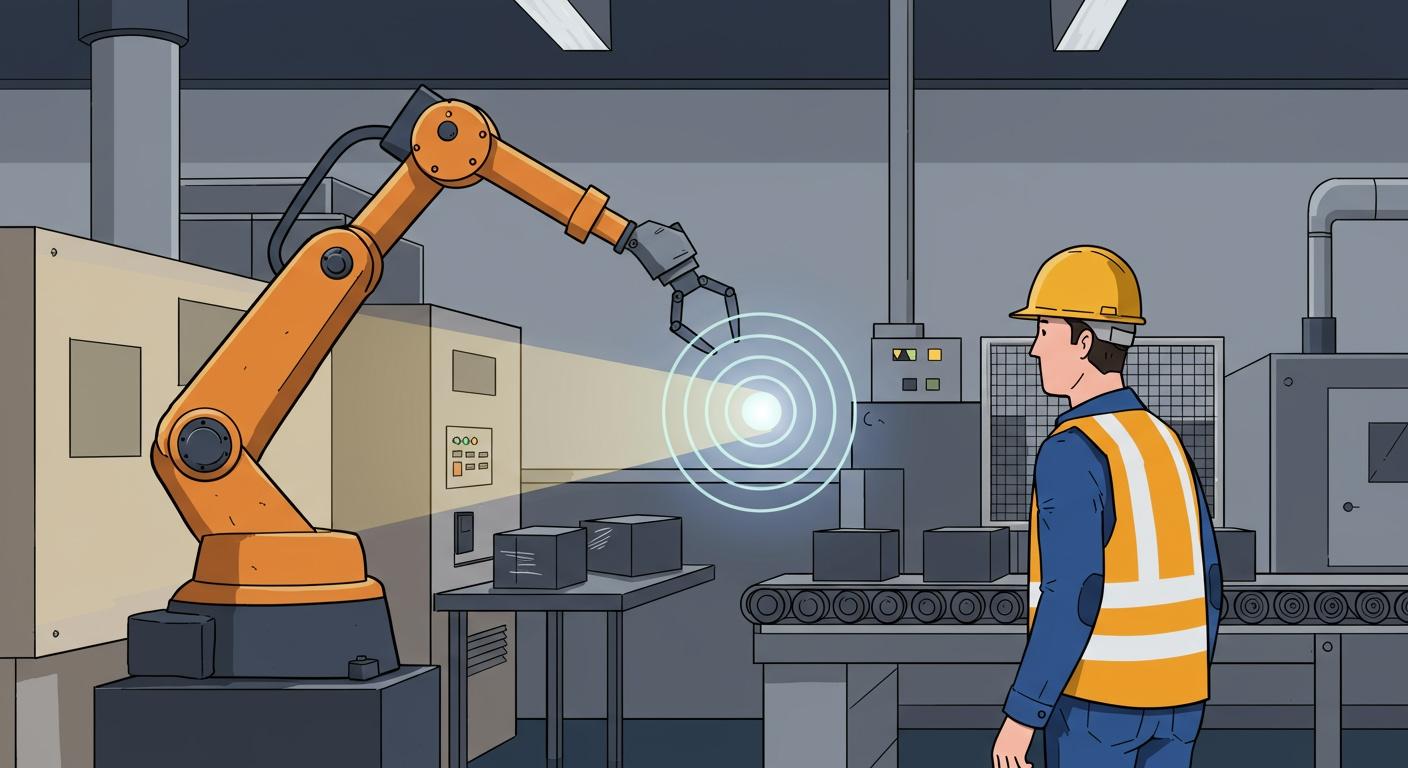
In modern factories, proximity sensors are essential for safety. These important sensors directly prevent accidents in five key ways.
Proximity sensors stop collisions, monitor safety guards, detect foreign objects, ensure correct machine operation, and enable safer industrial automation. 💡
This automation allows workers to avoid dangerous tasks. Robots have reduced injury rates significantly in some high-risk areas. A proximity sensor is a key part of this system. These smart sensors make the entire factory safer for everyone.
Key Takeaways
- Proximity sensors prevent accidents. They stop machines from hitting people or other equipment.
- These sensors make safety guards smart. They ensure machines only run when guards are closed.
- Proximity sensors find unwanted items. They stop production lines if they see foreign objects.
- Sensors help machines move safely. They make sure robots and vehicles stay within their safe areas.
- Proximity sensors check part placement. They confirm parts are in the right spot on assembly lines.
COLLISION PREVENTION
Collision prevention is one of the most critical safety functions of proximity sensors in a factory. These smart sensors act as vigilant lookouts for machines. They prevent costly and dangerous impacts between equipment, products, and people. This protection works in two major areas: creating safe zones for workers and guiding automated vehicles.
WORKER PROTECTION ZONES
Factories use proximity sensors to create invisible safety barriers around moving machinery. These sensors constantly monitor a designated area. If a person enters this protected zone, the sensors immediately send a signal. This signal halts the machine's operation, preventing an accident. Industrial robots, for example, use integrated sensors to work safely near humans. When a sensor on a robotic arm detects a person, it can slow down, stop, or change its path to avoid contact.
These safety systems are not random. They follow strict guidelines to ensure worker protection. Key standards include OSHA 29 CFR 1910.212 (General Machine Guarding) and ISO 13857, which defines safe distances from machinery. These rules help engineers correctly position sensors for maximum safety.
AGV AND VEHICLE NAVIGATION
Automated Guided Vehicles (AGVs) and forklifts are common in modern facilities. Proximity sensors are essential for their safe navigation. The sensors on these vehicles scan the path ahead for obstacles. They can detect other vehicles, structures, products, and people. When an object is detected, the sensors tell the vehicle to slow down or stop, avoiding a crash. Different types of sensors are used for this task.
| Sensor Type | Detection Method | Primary Collision Prevention Use |
|---|---|---|
| Inductive | Detects changes in a magnetic field | Senses metal parts and machine components. |
| Capacitive | Detects changes in an electric field | Identifies non-metallic objects like boxes or people. |
| Photoelectric | Uses a beam of light to see objects | Great for general object and presence detection. |
Additionally, ultrasonic proximity sensors use sound waves to detect objects, making them very versatile. A single proximity sensor can be the difference between a smooth operation and a serious incident. These advanced sensors make the entire factory floor a safer place.
GUARD MONITORING WITH PROXIMITY SENSORS
Factories use physical guards, gates, and doors to keep workers away from dangerous machinery. Proximity sensors make these physical barriers smart. The sensors monitor the position of a guard. They ensure a machine cannot operate unless its safety guards are securely in place. This creates a critical layer of protection for operators and maintenance staff. These powerful sensors prevent accidental exposure to moving parts, high temperatures, or hazardous materials. The system provides constant, reliable monitoring without physical contact.
MACHINE GUARD INTERLOCKS
A machine guard interlock is a safety system that connects a physical guard to a machine's control circuit. Proximity sensors are the core of modern interlock systems. They confirm that a guard is closed before allowing the machine to start or resume operation. If someone opens the guard while the machine is running, the sensors instantly detect the change and trigger a shutdown.
Inductive proximity sensors are ideal for confirming machine guards are in place. An inductive sensor can detect a small metal target on the guard door. The machine will only run when the sensor detects the target, meaning the door is fully closed. 🛡️
These sensors are not just effective; they are also extremely reliable for safety-critical tasks. Their dependability makes them a trusted choice for protecting workers.
- Certain inductive sensors achieve 99.97% accuracy in medical device applications.
- These advanced sensors show a 42% reduction in mechanical failures compared to other sensor types.
- They also have an 83% lower false trigger rate than some alternatives, preventing unnecessary and costly production stops.
RESTRICTED ACCESS CONTROL
Beyond individual machines, proximity sensors also control access to entire hazardous areas. Factories install these sensors at entry points to rooms containing robotic cells, high-voltage equipment, or chemical storage. Workers carry access cards or fobs with unique identifiers. A proximity sensor at the gate reads the card. The system checks if the worker has authorization to enter. If they are authorized, the door unlocks. If not, access is denied. This automated process ensures only trained personnel can enter high-risk zones, significantly reducing the chance of accidents.
FOREIGN OBJECT DETECTION

Foreign object detection is a vital safety measure in automated production. Proximity sensors excel at this task because they identify unwanted items without physical contact. These advanced detection technologies spot misplaced tools, loose metal fragments, or other debris on a production line. The system then halts operations immediately. This prevents product contamination and protects expensive equipment from jams or catastrophic failure. Different types of sensors handle specific materials, making the system highly adaptable.
PREVENTING LINE CONTAMINATION
Production lines, especially in the food, beverage, and pharmaceutical industries, must remain free of contaminants. Proximity sensors provide a powerful solution. For example, inductive proximity sensors can detect a stray metal bolt on a conveyor belt. The sensors signal the control system to stop the line, allowing for removal of the object before it contaminates a batch of products.
In industries with strict hygiene rules, sensors must withstand intense cleaning. Sensors with an IP67 or IP69K rating are essential. These ratings mean the sensors are completely sealed against dust and can endure high-pressure, high-temperature water jets, ensuring they operate reliably without risk of contamination. 🧼
Choosing the right proximity sensor depends on the potential contaminant. Different sensors specialize in detecting different materials.
| Sensor Type | Detectable Materials |
|---|---|
| Inductive | Metals only (e.g., screws, tool fragments) |
| Capacitive | Metals, plastics, liquids, and powders |
| Photoelectric | Any material, including clear glass or plastic |
Capacitive proximity sensors and photoelectric proximity sensors offer versatility for non-metallic objects, while ultrasonic proximity sensors use sound to detect objects regardless of color or transparency.
PROTECTING SENSITIVE MACHINERY
Modern factories rely on high-value, sensitive machinery like CNC machines and robotic arms. A single collision can cause thousands of dollars in damage and lead to significant downtime. Proximity sensors act as active safety limits to prevent these crashes. For instance, inductive proximity sensors mounted near a robot's end-effector can verify its position and prevent it from striking other equipment.
These non-contact sensors eliminate mechanical wear and respond instantly, which is critical for high-speed operations. The investment in these protective sensors offers a rapid return. Preventing a single die crash in an industrial press can justify the entire cost of the protection system. Considering that one hour of unscheduled downtime can cost a company thousands of dollars, the role of inductive proximity sensors in ensuring operational uptime is clear.
ENHANCING INDUSTRIAL AUTOMATION SAFETY
Proximity sensors are a cornerstone of safety in industrial automation. These advanced detection technologies allow machines to operate with greater awareness of their surroundings. The sensors provide real-time data that prevents accidents before they happen. This integration makes the entire automation system smarter and safer for everyone on the factory floor. The sensors enable critical functions like automated emergency stops and prevent dangerous machine movements.
AUTOMATED EMERGENCY STOPS
Proximity sensors create powerful automated emergency stop systems. These sensors can trigger a machine shutdown without any physical contact. For example, some systems allow a worker to stop a machine by simply hovering a hand over an emergency stop button. Other sensors disable main power if they detect a hand near a moving component. This immediate response helps mitigate injury risks. These smart sensors connect directly to the factory's control system.
When selecting sensors for safety-critical automation, it is important to look for specific safety ratings. These ratings confirm the reliability of the components.
- SIL (Safety Integrity Level): A standard for the functional safety of electronic devices.
- PL (Performance Level): A rating used for safety-related parts of machine control systems.
OVER-TRAVEL LIMIT DETECTION
Machines with moving parts, like robotic arms or presses, have a defined safe range of motion. Over-travel occurs when a part moves beyond this safe limit, which can cause a collision or damage the equipment. A proximity sensor acts as a non-contact limit switch to prevent this. The sensors monitor the position of machine components. If a component approaches its travel limit, the proximity sensor sends a signal to the control system to slow or stop the movement.
The response time of these sensors is critical for safety. This reaction time is carefully measured and certified.
- Reaction Time: This is the time from when the sensor sends a signal until the machine completes its stop function.
- Measurement Accuracy: Instruments used for testing must be highly accurate, often calibrated to 0.001 seconds.
- System Tests: The entire system undergoes testing to measure the total reaction time and ensure it meets safety standards.
- Certification: Manufacturers submit test results to a third-party organization for validation, ensuring the sensors perform reliably.
CORRECT MATERIAL POSITIONING
Correct material positioning is essential for both product quality and factory safety. Proximity sensors ensure that parts are in the right place at the right time. This prevents assembly errors that could lead to unsafe products or machine damage. These sensors act as a crucial checkpoint in automated processes, confirming that every step happens correctly. Proper positioning minimizes waste and creates a more reliable manufacturing environment.
PROXIMITY SENSOR PLACEMENT CHECKS
The effectiveness of a proximity sensor depends heavily on its placement and setup. Engineers follow best practices to ensure accurate detection. Following these guidelines helps the sensors perform their safety function reliably.
Proper installation is key to a sensor's success. A well-placed sensor provides accurate data, while a poorly placed one can cause system failures. ⚙️
Best practices for sensor installation include:
- Choosing the Right Sensor: The material determines the sensor type. Inductive sensors detect metals, while capacitive sensors can identify a wider range of materials.
- Avoiding Interference: Installers keep sensor cables separate from high-voltage power lines to prevent electromagnetic interference.
- Considering the Environment: Factories select sensors with the correct IP rating to protect against dust, water, and high temperatures.
- Performing Routine Maintenance: Technicians regularly clean sensors and check their alignment to maintain accuracy.
ASSEMBLY LINE ACCURACY
On an assembly line, proximity sensors act as error-proofing devices. They communicate information about a part's presence, absence, or position to the main automation controller. For example, an inductive sensor can confirm that a robot gripper has successfully picked up a metal component. This real-time data integrates quality checks directly into each manufacturing step.
These checks prevent dangerous assembly mistakes that could lead to product failures. By verifying each component, proximity sensors help avoid common production errors.
- Incorrect Part Installation: A sensor can check that the correct size bolt is used.
- Missing Parts: The system can confirm a washer is installed before a nut is tightened.
- Improper Assembly: Sensors can halt the line if a part is not placed in the correct orientation.
This level of verification ensures that every product leaving the assembly line is built correctly and safely.
Proximity sensors boost factory safety across five critical functions. They prevent collisions, monitor machine guards, detect foreign objects, enhance automation, and ensure correct material positioning. Integrating these smart sensors is a direct and highly effective strategy for creating a safer, more reliable environment. This technology represents a proactive investment in both worker protection and operational integrity. ✅
FAQ
What is the main job of a proximity sensor?
A proximity sensor detects nearby objects without any physical contact. This core function allows it to prevent accidents, stop machines, and guide vehicles safely. It acts as a machine's eyes to improve factory safety. 💡
Which proximity sensor is best for detecting metal?
Inductive proximity sensors are the best choice for detecting metal objects. They create a magnetic field. When a metal part enters this field, the sensor detects the change and sends a signal to the control system.
Can proximity sensors work in dirty factory environments?
Yes, many sensors can. Factories choose sensors with high IP ratings, like IP67 or IP69K. These ratings mean the sensor is sealed against dust and can withstand high-pressure water, ensuring it works reliably in tough conditions. ⚙️
Why use a proximity sensor instead of a regular switch?
Proximity sensors offer non-contact detection. This means they do not wear out from physical contact like a mechanical switch. Their faster response time and higher reliability make them a safer choice for automated systems and emergency stops.