Exploring the Benefits and Uses of the H6 Battery
The h6 battery stands out as a trusted power source for many vehicles. This battery provides strong performance and long life. Drivers often choose the h6 for its reliable start-up power in a range of weather conditions. Many cars, trucks, and SUVs use the h6 because it fits well and meets high electrical needs. With many applications in modern vehicles, the h6 battery offers both safety and efficiency. Vehicle owners value its compatibility and consistent results.
Key Takeaways
The H6 battery offers strong starting power and reliable performance in many vehicles, especially in cold weather.
Its compact size fits many cars, trucks, and SUVs, making it easy to replace older batteries with newer AGM or lithium models.
The battery is durable, vibration-resistant, and maintenance-free, lasting 3 to 7 years or more with proper care.
H6 batteries are safe, sealed, and recyclable, reducing risks of leaks and environmental harm.
Proper selection, installation, and regular maintenance help maximize the battery’s lifespan and performance.
H6 Battery Overview
What Is an H6 Battery
An h6 battery is a mid-sized automotive battery designed for modern vehicles. It belongs to the bci group 48 battery category. This battery uses advanced absorbed glass mat (agm batteries) technology, which makes it different from traditional lead-acid batteries. The h6 battery provides reliable power for starting engines and running electrical systems. Many drivers choose this battery for its strong performance and long lifespan. The h6 battery works well in cars, trucks, and SUVs that need steady power and high cold cranking amps.
Key Specs
The h6 battery comes with several important technical features. Most h6 batteries have a standard voltage of 12 volts. The battery capacity for standard agm batteries ranges from 48 to 72 amp-hours (Ah). Cold cranking amps (CCA) for these batteries usually fall between 600 and 800 amps, which helps vehicles start in cold weather. Some lithium h6 batteries offer even higher performance, with amp-hour capacities from 24 to 60 Ah and CCA ratings from 1000 to 1800. The table below shows typical specifications for both standard agm batteries and high-performance lithium models:
Specification | Value/Range |
|---|---|
Standard Voltage | 12 volts |
Amp-Hour Capacity (Ah) | 48 to 72 (AGM) |
Cold Cranking Amps (CCA) | 600 to 800 (AGM) |
Model | Amp-Hour Capacity (Ah) | Cold Cranking Amps (CCA) |
|---|---|---|
H6-24-RS | 24 | 1000 |
H6-40-RS | 40 | 1500 |
H6-60-RS | 60 | 1800 |
AGM batteries last longer than traditional lead-acid batteries. Many users report a lifespan of 3 to 7 years for an h6 battery, depending on driving habits and climate. Some drivers have seen agm batteries last over 10 years with proper care. AGM batteries also need less maintenance and resist vibration better than standard lead-acid batteries.
Group Size and Fit
The h6 battery matches the bci group 48 battery size. Its typical dimensions are about 11 to 12 inches long, 6.87 inches wide, and 7.5 inches high. The positive terminal sits on the right side. This size fits many full-size cars, SUVs, and trucks. The h6 battery also goes by other names, such as L3 or 66L3 in European standards. Vehicle compatibility is broad, covering brands like Audi, BMW, Mercedes-Benz, Toyota, Ford, and Volkswagen. The chart below shows which vehicle makes have the most models that use the h6 battery:
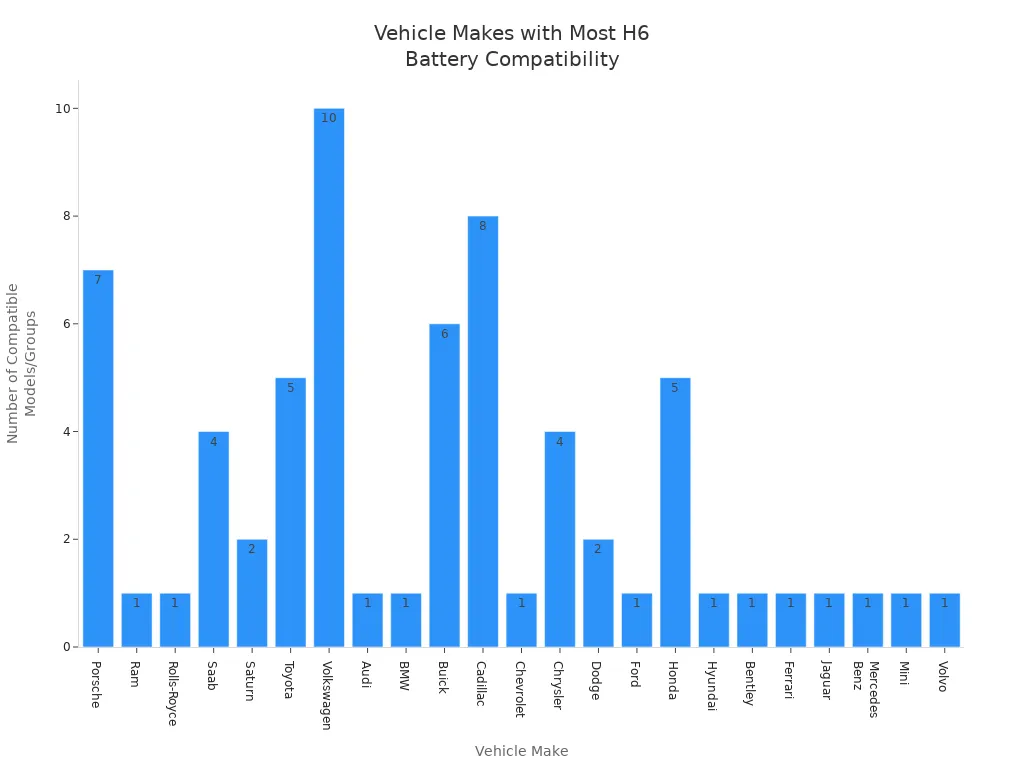
Vehicle compatibility remains a key reason for the h6 battery’s popularity. The battery fits many models from 1980s luxury cars to today’s SUVs and sedans. Its group size and design make it easy to replace older lead-acid batteries with newer agm batteries or lithium options.
Features and Benefits
Performance
The H6 battery stands out for its high cranking power and reliable starting ability. Many drivers notice that the H6 battery delivers strong performance, even in cold weather. For example, the UPLUS H6 Group 48 AGM battery provides about 760 cold cranking amps (CCA). This level of power ensures dependable starting in harsh winter conditions. The H6 battery features advanced AGM technology, which helps it maintain steady voltage and consistent output.
Battery Group | Cold Cranking Amps (CCA) Range | Cold Weather Performance |
|---|---|---|
H6 | Strong cold weather performance, reliable starts | |
H7 | Above 750 up to over 850 CCA | Higher cranking power, better for very cold starts |
The H6 battery features deep cycle capacity, which means it can handle repeated charging and discharging without losing strength. Many lithium H6 batteries offer even higher starting power, with some models reaching up to 1800 CCA. These battery features make the H6 a top choice for vehicles that need reliable starting and steady electrical support. The H6 battery also works well in moderate climates and supports most standard vehicles.
Tip: The H6 battery’s high cranking power makes it a solid option for drivers who face cold mornings or need extra starting strength for larger vehicles.
Durability
Durability is one of the main advantages of the H6 battery. The battery features a rugged design that resists vibration and shock. Many lithium H6 batteries, such as the Antigravity model, show much greater resilience to vibration than traditional lead-acid batteries. These batteries do not contain liquid or acid, so they avoid leaks and spills. The H6 battery features AGM technology, which makes it leak-proof and maintenance-free.
H6 batteries perform well in extreme temperatures and high-vibration environments.
Many off-road vehicles, like ATVs and UTVs, use H6 batteries because of their vibration resistance.
AGM versions of the H6 battery handle rough roads and bumpy conditions with ease.
Lithium H6 batteries do not emit dangerous gases or leak harmful substances.
The H6 battery features a sealed casing that protects internal components from dust and moisture. This design helps extend the battery’s lifespan and keeps it working well in tough environments. While H7 batteries may last longer under the harshest conditions, the H6 battery still offers impressive durability for most drivers.
Safety
Safety remains a key focus in the design of the H6 battery. The battery features a sealed, maintenance-free structure that prevents leaks and reduces the risk of spills. AGM technology absorbs the electrolyte in glass fiber mats, which stops acid from escaping. This design also lowers the chance of dangerous gas emissions during charging.
The H6 battery features a rugged outer shell that shields it from impacts and vibration. Many lithium H6 batteries add another layer of safety by avoiding the use of liquid acid. These battery features protect both the vehicle and the people handling the battery. The H6 battery also supports environmental safety by being recyclable and reducing the risk of hazardous waste.
Note: Proper maintenance and recycling of the H6 battery help protect the environment and ensure safe operation for years.
H6 Applications

Automotive Uses
The h6 battery serves as a reliable power source for many vehicles. Most drivers find it in cars, trucks, SUVs, and large sedans. Many automotive manufacturers choose the h6 for its steady performance and easy fit. This battery supports starting engines, running lights, and powering entertainment systems. Some luxury brands, such as BMW and Mercedes-Benz, use the h6 battery because it meets their high electrical needs. The h6 also works well in vehicles with moderate electrical demands. Its group size allows for simple replacement in many models.
Other Equipment
The h6 battery applications extend beyond the automotive world. Many people use this battery in marine environments. It powers boat engines, navigation systems, and radios, handling high currents and tough conditions. Recreational vehicles (RVs) rely on the h6 to supply energy for lights and appliances during trips. Homeowners and businesses use the h6 battery in backup power systems to keep alarms and medical devices running during outages. Solar energy storage systems use the h6 to store extra power for later use. Off-grid setups depend on the h6 for steady energy from wind or solar sources. Industrial equipment, such as forklifts, also benefit from the h6 battery’s strength. Uninterruptible power supplies (UPS) and emergency lighting systems use the h6 to protect sensitive electronics and maintain safety during power failures.
Marine applications: boat engines, navigation, radios
RVs: lights, appliances, entertainment
Backup power: alarms, medical devices, communication tools
Solar storage: store excess solar energy
Off-grid power: steady supply in remote areas
Industrial: forklifts, warehouse tools
UPS: protect electronics during outages
Emergency lighting: maintain safety in buildings
Compatibility
Compatibility plays a key role in choosing the right h6 battery. Vehicle owners must check that the battery fits the compartment and meets the power needs of their vehicle or equipment. The h6 battery works best in vehicles with standard electrical systems. For vehicles with advanced electronics or higher power needs, a larger battery like the H7 may be better. The table below compares important compatibility aspects:
Compatibility Aspect | H6 Battery Characteristics | H7 Battery Characteristics |
|---|---|---|
Electrical Capacity | Smaller amp-hour capacity, fits standard needs | Larger capacity, supports more electronics |
Reserve Capacity (RC) | Lower RC, less backup during power loss | Higher RC, better for advanced systems |
Cold Cranking Amps (CCA) | 600-800 amps, good for moderate climates | 700-900 amps, better for cold and large engines |
Physical Size & Weight | Compact, lighter, fits tight spaces | Larger, heavier, needs more space |
Suitability for Advanced Systems | Not ideal for high electrical demands | Recommended for advanced electronics |
Tip: Always check the vehicle manual or consult a professional before installing a new battery to ensure proper compatibility and performance.
H6 vs Alternatives
H6 vs H7
The H6 and H7 batteries both use AGM technology and serve many European vehicles. However, they differ in size, capacity, and power. The H6 battery measures 278 x 175 x 190 mm and fits vehicles with moderate electronic needs. The H7 battery is longer at 315 mm and offers more capacity and higher cold cranking amps. This makes the H7 better for luxury sedans, large SUVs, and trucks with advanced electronics or start-stop systems.
Feature | H6 Battery (Group 48) | H7 Battery (Group 94R) |
|---|---|---|
Dimensions (LxWxH) | 278 x 175 x 190 mm | 315 x 175 x 190 mm |
Capacity (Ah) | 74–95 Ah | |
Cold Cranking Amps (CCA) | 600–800 A | 750–950 A |
Weight | 40–50 lbs | 50–60 lbs |
Vehicle Fitment | Standard cars, compact SUVs | Luxury sedans, large SUVs, trucks |
Battery Technology | AGM, maintenance-free | AGM/EFB, maintenance-free |
Suitability
The H6 battery works best in regular cars, small SUVs, and European models with moderate electrical demands. Many BMW, Audi, and Mercedes-Benz sedans use the H6 because it fits tight spaces and provides enough power for daily driving. The H6 also suits work vans, small trucks, and off-road vehicles that need vibration resistance. Vehicles with start-stop systems often use AGM versions of the H6 for reliable engine restarts.
Tip: Choose the H6 battery for vehicles with limited compartment space or moderate electronic features. The H7 fits best in vehicles with higher power needs and more advanced electronics.
Pros and Cons
The H6 battery offers several advantages. It is lighter and easier to install than larger batteries. Its size fits many vehicles, especially those with smaller compartments. The H6 provides enough cold cranking amps for most climates and supports moderate electronic loads. However, it may not meet the needs of vehicles with heavy electrical demands or advanced start-stop systems. The H7 battery, while heavier and larger, delivers more power and longer reserve capacity for demanding vehicles.
Pros of H6 Battery | Cons of H6 Battery |
|---|---|
Lighter and compact | Lower capacity than H7 |
Fits tight spaces | Not ideal for high-demand systems |
Good for moderate climates | Shorter reserve capacity |
Maintenance-free AGM tech | Less suited for luxury vehicles |
Choosing and Maintaining H6
Selection Tips
Selecting the right h6 battery helps drivers get the most from their vehicles. The h6 battery usually offers a capacity between 60 and 72 amp-hours, with a reserve capacity of 120 to 140 minutes and cold cranking amps around 700 to 760. These features support reliable starts and steady power. Drivers should always check the vehicle manual for the recommended battery group size and type. The battery must fit the compartment and match the car’s electrical needs. Climate, electrical load, and vehicle type all affect the best choice. Some vehicles need more cranking power or reserve capacity. The battery’s chemistry, such as AGM or lithium, should also match the vehicle’s requirements. Choosing a reputable brand with a good warranty adds extra peace of mind.
Tip: Always confirm the battery’s terminal placement and vibration resistance before purchase to avoid problems during battery replacement.
Installation
Proper installation ensures the h6 battery works safely and lasts longer. The h6 uses AGM technology, making it spill-proof and stable under the hood. Before starting, drivers should wear protective gear and use insulated tools. Removing metal jewelry prevents accidental short circuits. The battery must be secured tightly with an approved clamp, but not over-tightened. Clean terminals help maintain a strong connection. Good ventilation in the work area prevents gas buildup. The h6 battery is lighter than some alternatives, so installation is easier and safer. Careful handling protects the battery from shocks and vibration.
Wear gloves and safety glasses.
Remove old battery and clean the compartment.
Place the new h6 battery in the tray and secure it.
Connect terminals, positive first, then negative.
Check for a snug fit and clean connections.
Care
Regular care extends the long lifespan of the h6 battery. Drivers should avoid deep discharges and overcharging. Storing the battery in a cool, dry place protects it from heat and moisture. Cleaning the terminals with a baking soda and water mixture removes corrosion and keeps the electrical flow strong. Recharging the battery after use and checking voltage monthly help maintain its health. Drivers should avoid frequent short trips that do not allow full recharging. Using a charger designed for the h6 battery prevents damage. Monitoring battery health and handling it carefully prevent physical damage and early failure.
Note: Corrosion and high heat are common causes of battery failure. Regular cleaning and safe storage help prevent these problems and keep the h6 working well.
The H6 battery supports a wide range of applications, from cars and marine equipment to backup power and solar storage. Industry studies highlight its high energy density, long lifespan, and maintenance-free operation. The table below summarizes key benefits and uses:
Applications | Key Benefits |
|---|---|
Automotive, marine, RVs, backup power, solar, industrial | High cranking power, durability, vibration resistance, fast recharge, compact design |
Understanding the features and proper care of the H6 ensures reliable performance. For best results, drivers should select a quality AGM battery, match it to their vehicle, and follow expert maintenance tips.
FAQ
How long does an H6 battery usually last?
Most H6 batteries last between 3 and 7 years. Lifespan depends on driving habits, climate, and regular care. Proper maintenance helps the battery last longer.
Can someone replace an H6 battery at home?
Yes, many people can replace an H6 battery at home. Always wear gloves and safety glasses. Follow the steps in the vehicle manual for safe installation.
What vehicles use the H6 battery?
Many cars, SUVs, and trucks from brands like BMW, Audi, Mercedes-Benz, and Volkswagen use the H6 battery. Always check the owner’s manual for the correct group size.
Is the H6 battery recyclable?
♻️ The H6 battery is fully recyclable. Most auto shops and recycling centers accept old batteries. Recycling helps protect the environment and saves resources.