The Expanding Role of Force Sensors in Everyday Applications
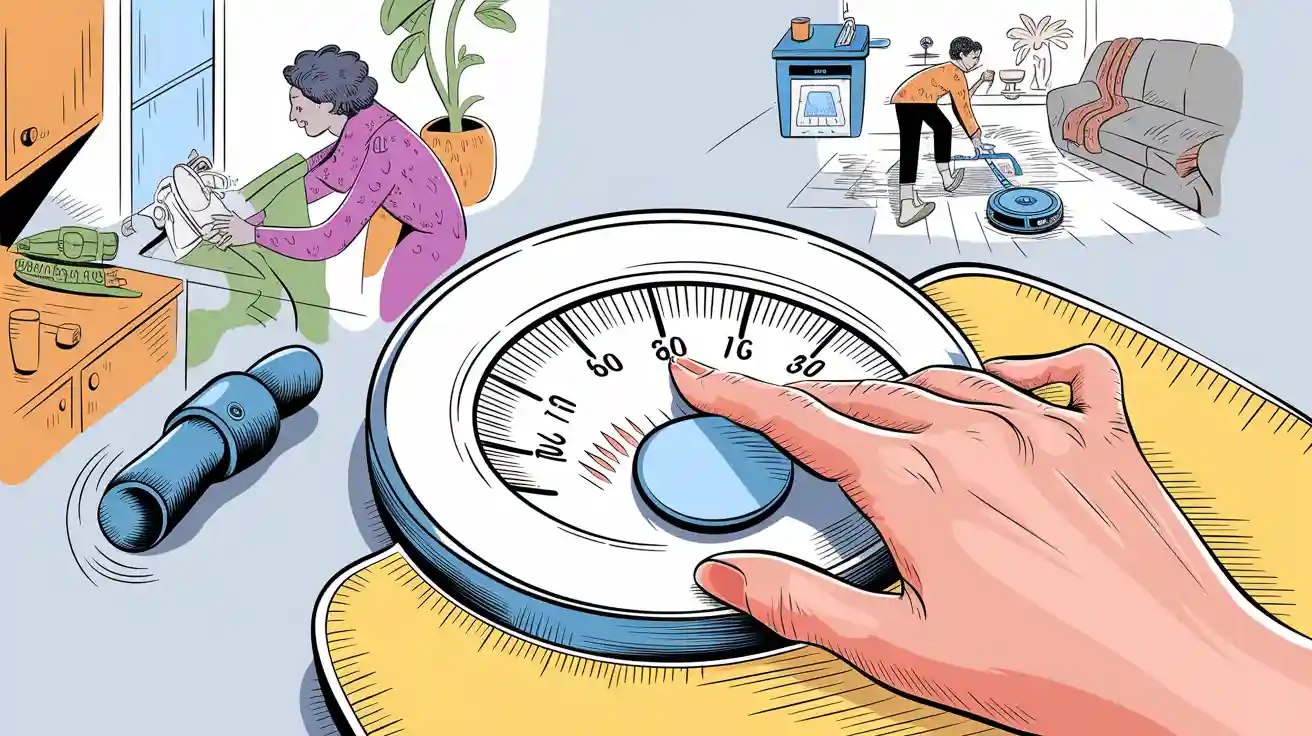
Force sensors now play a vital role in modern devices and systems. These components measure physical pressure or force, enabling smart responses and improved safety.
- Industry 4.0, IoT, and robotics drive demand for advanced sensing, making force sensor technology essential for real-time data collection and predictive maintenance.
- Flexible and piezoelectric sensors have seen rapid integration in wearables and industrial IoT, while innovations like biomimetic 3D force sensors enhance human–computer interaction.
Compared to older technologies, force sensors offer greater efficiency and adaptability, supporting new levels of automation and reliability.
Key Takeaways
- Force sensors measure physical pressure and convert it into electrical signals, enabling smart and precise responses in many devices.
- Different types of force sensors suit various needs, from high accuracy in medical tools to flexibility in wearables and durability in industrial machines.
- Modern force sensors offer great sensitivity, durability, and adaptability, making them reliable in harsh environments and complex applications.
- Force sensors improve safety, efficiency, and user experience in fields like healthcare, robotics, automotive, and smart home devices.
- Advances in miniaturization, integration, and AI support are driving force sensors to become key components in future smart and connected systems.
Force Sensor Basics
Principles
A force sensor measures the amount of force applied to an object. These sensors convert physical pressure into an electrical signal. Engineers use different methods to achieve this conversion. Each method relies on a unique physical principle.
Sensors play a key role in modern technology. They help machines and devices respond to touch, pressure, and movement.
The table below shows how common force sensor types work:
| Sensor Type | Operating Principle | Physical Mechanism | Mathematical Relation | Notes |
|---|---|---|---|---|
| Strain Gauge | Converts force into an electrical signal by stretching or compressing a wire. | Force changes the wire’s length and area, which changes resistance. | ( R \pm \Delta R = \rho \cdot \frac{L \pm \Delta L}{A \pm \Delta A} ) | Needs amplification. Used in bridge circuits. |
| Piezoelectric | Uses special materials that create electric charge when pressed. | Stress changes the crystal’s dipoles, producing surface charges. | ( q = a \cdot F \cdot K_s ) | Works for changing forces only. Needs charge amplifiers. |
| Capacitive | Measures changes in electrical capacitance caused by force. | Force changes the distance or area between plates, altering capacitance. | ( C = \varepsilon \cdot \frac{A}{d} ) | Sensitive to small changes. Used in harsh environments. |
| MEMS | Uses micro-electromechanical systems to detect force at a tiny scale. | Tiny structures bend or move under force, changing electrical properties. | Varies by design. | Enables small, flexible sensors. |
| Force Sensing Resistor | Changes resistance when force is applied to a special material. | Pressure alters the contact between particles, changing resistance. | Resistance decreases as force increases. | Simple and cost-effective. Used in touch controls. |
Types
Force sensors come in many forms. Each type suits different tasks and environments. Engineers select sensors based on accuracy, size, and cost.
- Strain gauge sensors offer high accuracy and stability. They work well in weighing scales and crash detection.
- Piezoelectric sensors respond quickly to changes. They measure vibrations and dynamic loads.
- Capacitive sensors provide high sensitivity. They work in fluid-level sensing and process control.
- MEMS sensors are tiny and flexible. They fit inside wearables and smart devices.
- Force sensing resistors are simple and affordable. They appear in digital scales and touch feedback systems.
- Triaxial and six-axis sensors measure force in multiple directions. Robotics and automation use these sensors for precise control.
- Flexible sensors bend and stretch. They suit wearable devices and soft robotics.
The table below compares the main types:
| Sensor Type | Sensitivity & Range | Application Suitability & Notes |
|---|---|---|
| Capacitive Sensors | High sensitivity; miniature options available | Used in process control, fluid-level sensing, and harsh environments |
| Piezoelectric Sensors | Fast response; wide frequency range | Best for dynamic load monitoring and vibration analysis |
| Piezoresistive Sensors | Flexible, low power, cost-effective | Used in digital scales and force feedback controls |
| Strain Gauge Sensors | Excellent accuracy and stability | Suitable for weighing scales and crash detection |
| Optical Force Sensors | High precision; contactless | Used in biomedical diagnostics and hazardous environments |
Force sensors continue to evolve. Their variety allows engineers to match the right sensor to each application, improving safety and performance.
Versatility Explained
Versatility stands as a critical factor in the selection and application of force sensors across modern industries. Engineers demand solutions that deliver reliable performance in a wide range of environments and use cases. The ability to adapt, maintain accuracy, and withstand challenging conditions allows sensors to support innovation in fields such as robotics, automotive, medical devices, and consumer electronics.
Versatile sensors improve efficiency, safety, and system performance by meeting the diverse requirements of today’s technology-driven world.
Sensitivity
Sensitivity defines how well a sensor detects small changes in force. High sensitivity enables precise measurements, which are essential in applications like robotics, medical devices, and precision manufacturing. Strain gauge load cells, for example, detect minute force changes through linear and repeatable voltage output. Customized metal foil strain elements increase measurement accuracy and reduce errors from off-axis loads. Internal compensation and encapsulation ensure long-term stability and reliability.
- Advanced materials such as stainless steel and semiconductors balance strength and sensitivity.
- Digital signal processing filters noise and reduces errors, enhancing sensor sensitivity.
- Mechanical design minimizes vibrations and deflections, improving measurement accuracy.
- Novel sensor structures, like flexible shear force sensors, isolate specific force components and reduce interference.
Capacitive sensors offer high sensitivity and perform well in various environments. These features allow engineers to select the right sensor for each application, ensuring optimal performance and versatility.
Durability
Durability ensures that sensors continue to function accurately under stress, rough handling, and harsh conditions. Modern force sensors use robust materials and advanced packaging to achieve this goal. Silicon serves as a common base material, providing strength and reliability for semiconductor manufacturing. Proprietary Wheatstone bridge designs enhance both sensitivity and durability.
- Wafer Level Chip Size Packages (WLCSP) enable compact sensors without sacrificing robustness.
- Integration of low noise amplifiers and analog-to-digital converters within the sensor footprint improves reliability and reduces electromagnetic interference.
- Sensors resist humidity, temperature extremes, and exposure to dust or chemicals, supporting long-term performance in demanding environments.
Magnetostrictive sensors, for example, are well-suited for tough conditions, while optical force sensors provide non-contact measurement for precision engineering. These advancements ensure that sensors maintain their performance and versatility across a broad spectrum of applications.
Adaptability
Adaptability allows sensors to meet the unique requirements of different environments and tasks. Engineers customize sensor geometry, materials, and sensing element layouts to address specific challenges. Signal processing and amplification are tailored to minimize interference and maintain signal integrity, even over long distances.
- Custom force sensors overcome environmental incompatibility, such as extreme temperatures or corrosive conditions.
- Calibration protocols match actual operating conditions, improving measurement accuracy.
- Specialized hardware, including loadpins and pressure pots, supports integration in harsh environments.
- Protective housings and connection systems enhance durability and system compatibility.
- Integration with digital platforms enables real-time monitoring, remote access, and predictive maintenance.
The versatility of force sensors ensures that they adapt to evolving operational requirements and regulatory standards. This adaptability supports innovation and reliable performance in industries ranging from aerospace to consumer electronics.
In summary, advancements in accuracy, durability, and design flexibility have made force sensors more versatile than ever. Their ability to deliver consistent performance in diverse applications drives progress in modern engineering.
Force Sensor vs. Traditional Methods
Advantages
Force sensors have transformed the way engineers measure force in modern applications. Strain gauge load cells deliver extremely high accuracy, with non-linearity and non-repeatability as low as ±0.02% of rated output. These sensors maintain low drift over time and compensate for errors such as temperature changes and installation issues. Aerospace-grade materials provide durability and elasticity, ensuring consistent performance under high loads and in harsh environments. Internal circuitry and proprietary metal foil strain gauge technology allow precise calibration, correcting zero offset, linearity, hysteresis, repeatability, and temperature effects. Traditional mechanical methods cannot achieve this level of precision or reliability.
Strain gauge sensors dominate the force measurement industry because they offer unmatched reliability and very low drift. Their design compensates for environmental factors, resulting in superior long-term stability. Engineers rely on these sensors for mission-critical and long-term monitoring applications.
Force sensors also offer adaptability. They integrate easily into automated systems and support real-time data collection. This flexibility improves system performance and enables predictive maintenance, which older analog devices cannot provide.
Limitations
Despite their advantages, force sensors face several challenges compared to traditional techniques.
- Force sensing resistors (FSRs) indicate general pressure trends but lack reliability for absolute measurements without careful error correction.
- Calibration must match measurement conditions due to sensitivity to surface curvature, shear stress, and loading type.
- Different FSR models show varying drift and measurement errors; some perform better under static and cyclic loads.
- Measurement errors can be significant, limiting FSRs' use in precise force measurement.
- Some sensors only measure pressure and may not support other physical parameters like temperature.
- Custom calibration for different objects can be laborious as the number of objects increases.
- Common issues include nonlinearity, drift, saturation, hysteresis, and loss of haptic feedback.
- Limited measurement ranges and environmental factors such as surface curvature and shear stress affect accuracy.
- Optical-based force sensors, while sensitive, have high cost, complex alignment, and limited range.
- Piezoelectric sensors respond quickly but are prone to drift and less precise over time.
- Pressure sensors measure force indirectly and can be influenced by fluid weight and friction.
- Specialized devices like dynamometers and tensiometers offer high accuracy but require skilled operation and may not suit all needs.
Engineers must balance sensitivity, accuracy, ease of use, and cost when selecting a force sensor for each application. The right choice depends on the required performance and the specific environment.
Applications
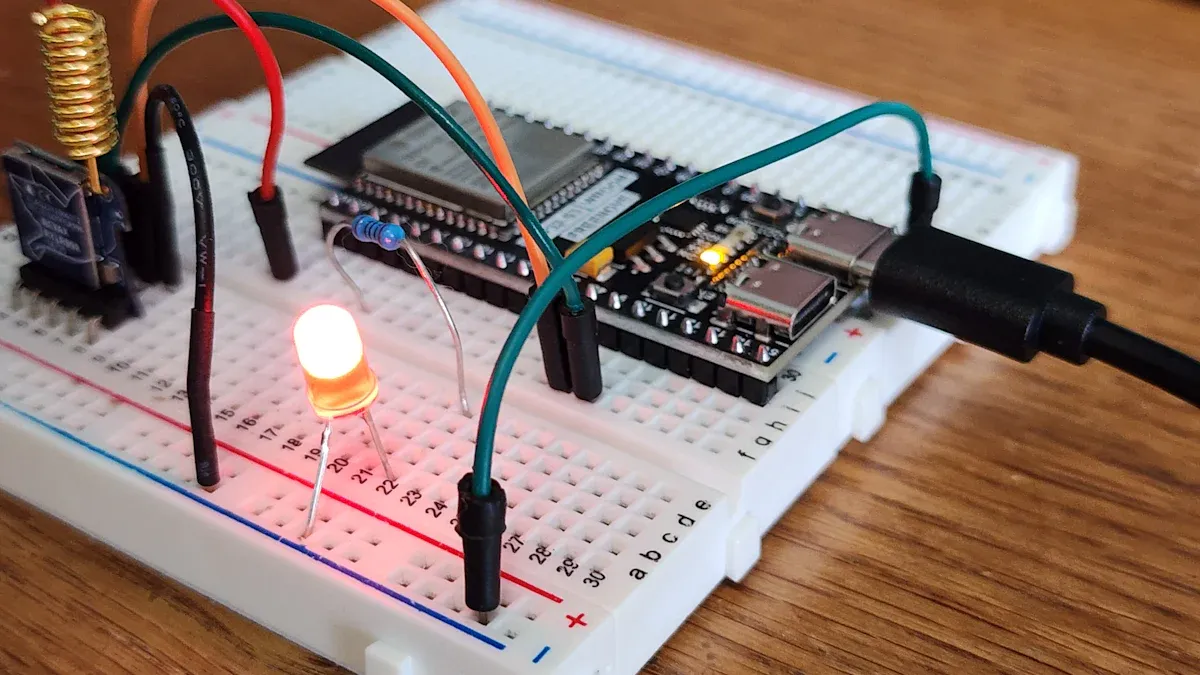
Wearables
Wearable devices use sensors to monitor health and activity in real time. These devices measure signals such as blood pressure, pulse, and movement. Flexible and elastic sensors fit comfortably on the skin and resist sweat, making them ideal for daily use. They convert small changes in pressure or motion into electrical signals. This technology allows users to track heart rate, walking, jumping, and even breathing patterns. Wearable health monitors help people manage fitness, detect health issues early, and support telehealth services. Advances in materials and miniaturization have improved comfort and accuracy, expanding the range of wearable applications.
Smart Devices
Smart devices in homes and offices rely on sensors to create intuitive and responsive environments. Force sensors detect touch and pressure, enabling users to control appliances with simple gestures. For example, smart refrigerators can communicate with ovens to preheat based on recipe selection. Beds with pressure sensors monitor sleep states and adjust lighting for better rest. Medication bottles use pressure sensors to track usage and remind users to take their medicine. Floor sensors detect movement and alert homeowners to unauthorized entry. These applications make daily life safer, more convenient, and more efficient.
Robotics
Robotics depends on advanced sensors for precise control and safe operation. Triaxial and six-axis force sensors measure forces and torques in multiple directions. Robotic arms use these sensors for tasks such as assembly, product testing, and medical procedures. The sensors provide high stability and resist interference, allowing robots to perform delicate operations. Six-axis sensors detect three force components and three torque components, supporting intelligent robot control. This technology enables robots to handle complex tasks, adapt to new environments, and work safely alongside humans. Fiber Bragg grating sensors further improve sensitivity and reduce interference, making robotic applications more reliable.
Robots equipped with multi-axis force sensors achieve precision and safety levels that surpass human capabilities.
Automotive
Modern vehicles use sensors to enhance safety, comfort, and performance. Force sensors integrate into steering wheels, door panels, and touch displays, replacing mechanical buttons with solid-state controls. These sensors detect driver intent and health status, enabling proactive safety features such as automatic vehicle control and emergency assistance. Pinch force sensors in power windows prevent injuries by detecting obstacles. Steering effort sensors support advanced driver-assistance systems, including lane-keeping and variable power steering. Torque sensors optimize engine performance and stability systems. These applications create adaptive driving environments that improve safety and responsiveness.
Medical Devices
Medical devices rely on sensors to monitor patients and support diagnostics. Force sensors provide real-time access to vital health information, improving patient care. They deliver consistent and quantifiable data, reducing guesswork for healthcare providers. Assistive devices use sensors to prevent falls and enhance mobility. In surgical tools, sensors offer feedback and pressure measurements, increasing precision during minimally invasive procedures. Medical training devices, such as CPR manikins, use sensors to improve skill acquisition. Thin, lightweight, and durable sensors enable remote monitoring and long-term care, especially for elderly patients. Robotic surgery benefits from enhanced control and precision, leading to better outcomes.
Industrial Automation
Industrial automation uses sensors to improve efficiency, safety, and product quality. Force sensors enable robots to perform tasks with high precision, reducing waste and errors. They allow collaborative robots to detect human presence and adjust operations to prevent injuries. Real-time force measurement supports quality control by ensuring products meet specifications. Sensors optimize equipment performance and reduce downtime through predictive maintenance. The table below highlights key applications across industries:
| Industry Sector | Application Example | Impact on Efficiency and Quality |
|---|---|---|
| Automotive | Monitoring clamp forces during assembly | Ensures strong joins, improves precision, reduces defects |
| Aerospace | Load testing on parts | Enhances safety, meets strict regulatory standards |
| Food Processing | Weight checks | Maintains consistent product quality |
| Medical Devices | Force measurement during manufacturing | Ensures precision for critical devices, improves product quality |
| Construction | Load monitoring on structures | Aids safety checks, prevents structural failures |
Sensors such as strain gauge, piezoresistive, load cells, and capacitive types are chosen based on accuracy, force range, and response time. These applications support automated force control, adaptive learning, and safe human-robot collaboration, making industrial automation more effective and reliable.
Technical Features
Small Size
Many modern sensors now feature a compact size, making them suitable for a wide range of applications. Manufacturers produce sensors that range from large industrial devices to tiny MEMS-based models. Some miniaturized six-axis force/torque sensors measure as small as 9.3 × 9.3 × 0.98 mm. This compact size allows engineers to place sensors in tight spaces, such as inside surgical instruments or robotic fingertips. Miniaturization not only saves space but also improves precision and sensitivity. Batch manufacturing of these small sensors helps reduce costs and supports new uses in robotics, biomedical devices, and precision tools. The demand for compact size and high-accuracy sensors continues to grow, especially for real-time feedback and AI-enabled control.
Miniaturized sensors open the door to advanced applications like minimally invasive surgery and human-robot collaboration.
Integration
Sensors today are designed for seamless integration with electronic systems and IoT platforms. They produce electrical signals that work well with digital data acquisition systems, enabling real-time data processing. Many sensors now support wireless and Bluetooth connections, which eliminate the need for complex wiring. This makes them ideal for embedding in wearables, smart floors, VR equipment, and industrial machines. Integration with IoT platforms allows for advanced data analytics, predictive maintenance, and process optimization. Gold-plated sensors provide stable signals and high sampling rates, which are important for immediate feedback in automation and biomedical engineering. These features show how sensors fit smoothly into modern electronic and IoT systems.
Reliability
Reliability remains a top priority for sensors used in critical applications. Manufacturers recommend yearly recalibration for strain gauge load cells to address aging and output drift. In harsh environments, more frequent recalibrations help maintain accuracy. Many sensors meet strict standards, such as ISO 17025 and ANSI/NCSL Z540-1, and come with calibration certificates. Accredited labs perform multi-point calibrations to ensure high accuracy. Some sensors also comply with certifications for aerospace, military, and automotive use. Traceability to NIST standards ensures consistent performance and safety. These practices guarantee that sensors deliver reliable results in demanding industries.
Novel materials and MEMS technology further enhance sensor performance. Engineers use carbon nanotubes, silicon nanoladders, and other advanced materials to improve sensitivity and enable device miniaturization. MEMS-based sensors detect tiny deflections and integrate easily into mobile and wearable devices. These innovations support robust, flexible, and reliable sensor designs for the future.
Future Trends
Emerging Uses
Force sensors continue to shape the future of technology. In consumer electronics, these devices improve user interaction in smartphones, gaming consoles, and wearable gadgets. Users experience more responsive touchscreens and advanced gesture controls. Household appliances now feature smart feedback systems that adjust settings based on pressure or force. In industrial sectors, sensors support automation and predictive maintenance. Factories use them for load monitoring, torque sensing, and quality control. Automotive safety systems rely on sensors for collision detection and adaptive cruise control. Aerospace engineers use them in unmanned aerial vehicles and missile systems to ensure precise operation. Integration with IoT and AI enables real-time data collection and smart analytics, helping companies detect anomalies and make quick decisions. Regional growth, especially in Asia-Pacific, reflects rapid industrialization and government support for smart manufacturing.
Next-generation force sensors will play a key role in smart, connected systems, supporting enhanced performance and sustainability.
- Consumer electronics companies like Apple and Samsung invest in advanced sensing for better user experiences.
- Industrial applications include battery management in electric vehicles and process control in manufacturing.
- Healthcare devices use sensors for wearable health monitoring and surgical robotics.
Innovations
Recent innovations drive the evolution of force sensors. Manufacturers focus on miniaturization, multi-axis measurement, and adaptability to harsh environments. Piezoelectric, capacitive, and optical sensing technologies offer higher accuracy and better integration. The use of nanomaterials and flexible substrates creates durable sensors for challenging conditions. Wireless and energy-efficient designs support sustainability goals. Integration with AI and machine learning platforms allows intelligent decision-making and predictive analytics. Digital sensors with IoT capabilities transmit data in real time, improving automation and smart system performance. Multifunctional sensors measure both compression and tension forces, expanding their use in aerospace and construction. Sensata Technologies introduced a micro strain gauge-based Brake Pedal Force Sensor for electromechanical brakes, improving vehicle safety and stopping distances.
Industry reports project strong market growth. The global force sensor market may reach USD 5.9 Billion by 2032, driven by automation, automotive safety, healthcare, and advances in sensor technology. Challenges remain, such as calibration issues and signal interference, but ongoing research and investment promise continued innovation.
Force sensors now drive innovation across healthcare, robotics, automotive, and consumer electronics. Flexible and stretchable designs enable next-generation smart devices to deliver precise health monitoring and improved user interaction. Their adaptability and high sensitivity support safer, more efficient systems in daily life.
Leading companies like TE Connectivity and Honeywell regularly share updates on sensor advancements. Readers can follow industry news and subscribe to newsletters to stay informed as force sensor technology continues to evolve and shape the future.
FAQ
What is a force sensor used for?
A force sensor measures physical pressure or force. Engineers use these sensors in robotics, medical devices, automotive systems, and consumer electronics. The sensor helps machines respond to touch, weight, or movement.
How does a force sensor work?
A force sensor converts applied force into an electrical signal. The sensor uses materials like metal or crystals. The signal changes based on the amount of force. Devices read this signal to monitor or control systems.
How do engineers choose the right force sensor?
Engineers consider accuracy, size, cost, and environment. They select sensors based on the application’s needs. For example, medical devices need small, sensitive sensors. Industrial machines require durable, high-capacity sensors.
How often should force sensors be calibrated?
Manufacturers recommend yearly calibration for most sensors. In harsh environments, more frequent calibration ensures accuracy. Calibration checks the sensor’s output and corrects any drift or error.
Can force sensors be used in wet or dusty environments?
Many force sensors have protective housings. These housings keep out water, dust, and chemicals. Engineers choose sensors with the right protection rating for each environment.