Understanding How Electronic Speed Controllers Power Today’s Electric Cars
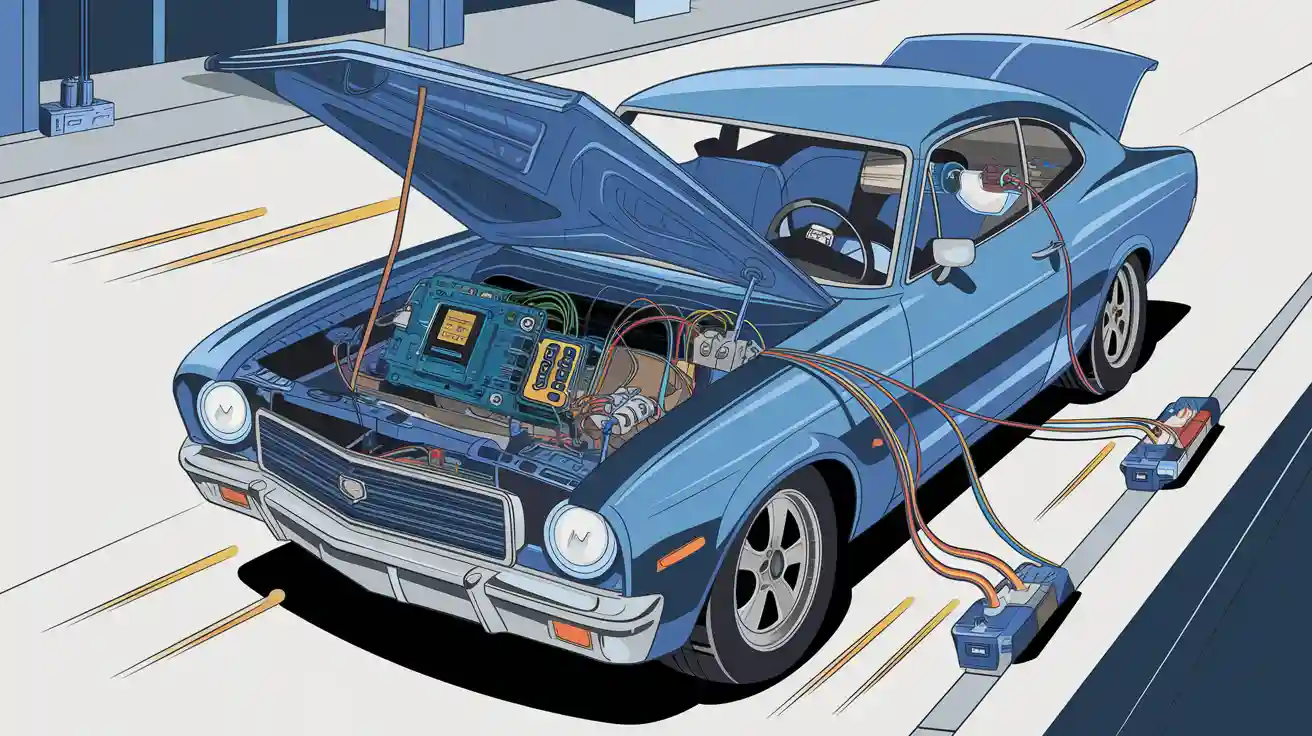
An electronic speed controller acts as the brain between the battery and motor in electric cars. ESCs regulate how fast the motor spins, which direction it turns, and when it stops. Think of an ESC as a skilled conductor guiding an orchestra, making sure each instrument plays at the right time and volume. Recent research shows that advanced electronic speed controllers, especially those using fuzzy logic, help electric vehicles achieve smoother speed changes and better efficiency. ESCs give drivers a more responsive and reliable experience by improving performance and control in these vehicles.
Key Takeaways
- Electronic speed controllers (ESCs) act as the brain of electric cars, controlling motor speed, direction, and braking for smooth and safe driving.
- ESCs improve energy efficiency by adjusting power delivery and supporting regenerative braking, which recovers energy and extends battery life.
- Safety features in ESCs protect the motor and vehicle by monitoring temperature, current, and speed, preventing damage and enhancing stability.
- ESCs create a comfortable driving experience by managing acceleration and braking precisely, reducing jerks and mechanical wear.
- Advanced ESC technologies and future trends like AI and smart sensors promise even better performance, efficiency, and reliability in electric vehicles.
Electronic Speed Controller Basics
What Is an ESC
An electronic speed controller, often called an ESC, manages how a motor works in electric vehicles. The ESC acts as a bridge between the battery and the motor. It decides how fast the motor spins, which way it turns, and when it stops. ESCs use electronic speed control to change the power sent to the motor. This process helps the vehicle move smoothly and safely.
ESCs use special parts to do their job. The table below shows the main components found in an electronic speed controller:
| Component/Feature | Description |
|---|---|
| Field Effect Transistors (FETs) | Switch power to the motor by changing speed and timing. |
| Pulse Width Modulation (PWM) | Adjusts how long power flows to the motor for speed control. |
| Hall Effect Sensors | Measure motor speed for precise control. |
| Brake Application Sensors | Detect braking and help with regenerative braking. |
| Pedal Rotation Sensors | Measure pedal speed to assist motor control. |
| Protection Logic | Prevents damage from too much voltage, current, or heat. |
| Three-Phase AC Generation | Creates three-phase AC power for brushless motors. |
| Regenerative Braking | Captures energy during braking to recharge the battery. |
| Reversing Capability | Allows the motor to run in both directions. |
ESCs stand out from other controllers in electric vehicles. While DC-DC converters and inverters focus on changing voltage or converting power types, ESCs specialize in electronic speed control. They use fast-switching transistors and sensor feedback to manage motor speed, direction, and braking. This makes ESCs perfect for direct motor control in electric cars, electric bicycles, and other vehicles.
ESC Function in EVs
ESCs play a key role in electric vehicles. They use electronic speed control to adjust how much power the motor gets. This control lets the vehicle speed up, slow down, or reverse smoothly. ESCs also help with safety by protecting the motor from overheating or too much current.
Different types of motors work with ESCs. The most common motors include:
- Brushed DC motors: Good for simple speed control and low-speed efficiency.
- Brushless DC motors (BLDC): Offer better heat management and high torque.
- Permanent Magnet Synchronous Motors (PMSM): Provide high efficiency and power.
- Three-phase AC induction motors: Known for reliability and cost-effectiveness.
- Switched reluctance motors: Simple design with strong torque control.
ESCs use electronic speed control to make these motors work well in electric vehicles. They adjust speed and torque quickly, giving drivers a smooth and safe ride. ESCs also support features like regenerative braking, which helps recharge the battery during braking. This function extends the driving range and improves efficiency.
Electronic Speed Controller Operation
Motor Control
An electronic speed controller manages motor control in electric vehicles by acting as a bridge between the battery and the motor. The ESC receives throttle input from the driver and translates it into electronic speed control signals. These signals determine how much power the motor receives, which affects its speed and torque. The ESC uses pulse width modulation to switch the current on and off thousands of times per second. This rapid switching allows the controller to deliver just the right amount of power for precise speed control.
ESCs handle both DC and AC motors. For DC motors, the controller adjusts the duration of the 'on' time in each pulse. This changes the average voltage and controls the motor's speed and torque. For AC motors, the ESC uses advanced techniques like field-oriented control. This method regulates the frequency and voltage of the AC current, allowing the motor to operate smoothly and efficiently.
Tip: ESCs rely on sensor feedback to monitor motor speed, position, and temperature. This information helps the controller make real-time adjustments, protecting the motor from overheating or overcurrent.
The ESC also manages regenerative braking. When the driver slows down, the controller switches the motor into generator mode. This process converts kinetic energy back into electricity, which recharges the battery and improves efficiency.
Ordered List: How ESCs Use Timed Signals for Motor Control
- ESC receives throttle input and sensor data.
- ESC generates pulse width modulation signals.
- Controller adjusts pulse duration for speed and torque.
- ESC monitors motor conditions and makes real-time changes.
- ESC manages regenerative braking during deceleration.
Power Delivery
ESCs deliver power to the motor using electronic speed control techniques. The controller takes DC power from the battery and meters it precisely to the motor. Pulse width modulation plays a key role in this process. By adjusting the duty cycle of the pulsing signal, the ESC controls how much power reaches the motor. Higher duty cycles mean more power and faster motor speed. Lower duty cycles reduce power and slow the motor down.
The ESC converts DC battery power into three-phase AC output for brushless motors. It uses MOSFETs arranged in bridge circuits to switch power on and off rapidly. This method ensures smooth motor operation and efficient power delivery. The controller also supports braking and direction control, including bidirectional motor control and regenerative braking.
| Aspect | Explanation |
|---|---|
| Role of PWM in ESC | PWM regulates power delivered to the motor by switching voltage on and off rapidly. |
| Efficiency | PWM minimizes energy loss as heat, making electronic speed control more efficient. |
| Signal Generation | Microcontroller in ESC generates PWM signals for motor control. |
| Impact of PWM Frequency | Higher frequency improves motor smoothness and efficiency. |
| Additional Features | PWM enables braking, direction control, and protection mechanisms. |
| Application in EVs | ESCs convert DC battery power into AC signals for brushless motors. |
ESCs use software-driven real-time adjustments to enhance electric vehicle performance. Vehicle control units analyze sensor data and send commands to the ESC. These adjustments optimize motor torque, speed, and energy use. AI algorithms can even adapt acceleration and braking based on driving conditions. Communication protocols like CAN bus allow fast data exchange between the controller and other vehicle systems. This teamwork ensures the ESC delivers power efficiently and safely.
ESCs play a vital role in electric vehicles by providing precise speed control, efficient power delivery, and adaptive motor control. Their advanced features help drivers enjoy a smooth and reliable ride.
ESC Importance
Efficiency
Electronic speed controllers play a key role in the energy efficiency of electric vehicles. They manage how much power the motor receives and adjust it in real time. This control helps the vehicle use less energy and travel farther on a single charge. ESCs use advanced algorithms like fuzzy logic control to improve energy efficiency. These algorithms allow the controller to adapt quickly to changes in driving conditions. As a result, the motor runs smoothly and uses less power.
- Advanced ESCs with fuzzy logic control offer better adaptability and robustness than traditional controllers.
- Smoother speed transitions and reduced torque ripple lead to improved energy economy in brushless motors.
- Integration with regenerative braking systems helps recover energy during braking, increasing overall efficiency.
- Fuzzy logic control does not need complex mathematical models, making it fast and suitable for dynamic driving.
- Research shows that fuzzy logic control improves speed control flexibility and stability compared to older methods.
- New developments in fuzzy-tuned systems continue to enhance motor performance and improved energy efficiency.
ESCs also help reduce maintenance costs. They allow for longer preventive maintenance intervals because they protect the motor and other parts from wear. Regenerative braking, managed by the ESC, reduces brake wear and extends the life of brake components. According to the U.S. Office of Energy Efficiency and Renewable Energy, electric vehicles save about $800 per year in service and repair costs compared to traditional cars.
Safety
ESCs add many safety features to electric vehicles. They regulate motor speed and power to ensure smooth acceleration and reduce mechanical wear. The controller works with other systems to keep the vehicle stable and safe. ESCs use feedback from sensors to make real-time adjustments and prevent dangerous situations like overheating or overcurrent.
| Aspect | Explanation |
|---|---|
| Motor speed and power control | Regulates motor speed, power, and accelerator response to ensure smooth acceleration and reduce mechanical wear. |
| Performance optimization | Adjusts motor output based on power needs and driving conditions to maximize efficiency. |
| Integration with safety systems | Works with driver assistance systems like automatic braking and traction control to enhance safety. |
| Stability and safety | Ensures driving stability by controlling wheel traction and preventing slipping on slippery roads. |
| Regenerative braking | Controls power flow during braking to improve stability and reduce brake wear. |
ESCs include several built-in safety mechanisms:
- Feedback systems like back-EMF sensing and direct sensor feedback allow real-time control adjustments.
- Voltage and current ratings have safety margins to avoid overheating and damage.
- Programmable features such as low-voltage cutoff and brake settings protect the motor and battery.
- Cooling systems like heat sinks and fans prevent the ESC from overheating.
- The controller regulates power input to prevent sudden surges and protect the motor.
- Advanced power regulation techniques reduce heat and improve efficiency.
- The vehicle control unit (VCU) works with the ESC to detect faults and coordinate safe operation.
- Communication between the VCU and ESC uses the CAN bus for real-time safety management.
- Integration with advanced driver assistance systems supports features like automatic emergency braking.
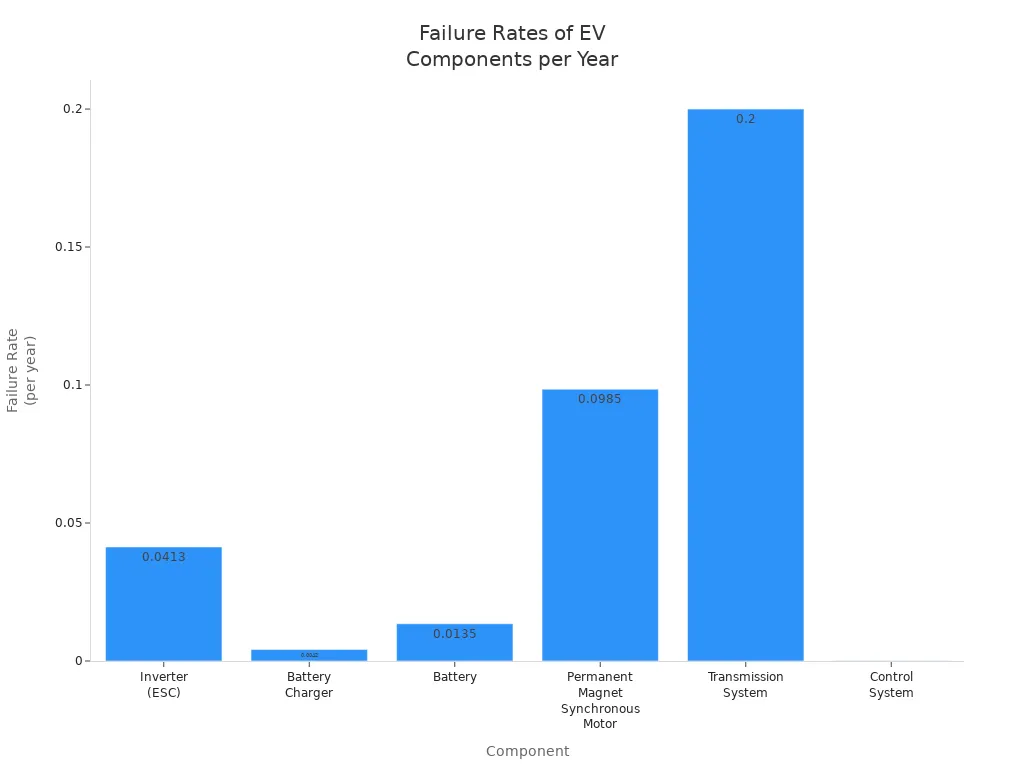
The failure rate of the inverter, which is a key part of the ESC, remains low compared to other vehicle components. The chart below shows how the ESC compares to other parts in terms of annual failure rates:
Smooth Driving
Electronic speed controllers help create a smooth and enjoyable driving experience. They manage motor speed, torque, and direction with great precision. The controller monitors vehicle speed, battery status, and road conditions to adjust power delivery. This control allows for gentle acceleration and deceleration, making the ride feel natural and comfortable.
ESCs also support regenerative braking, which helps slow the vehicle smoothly while recovering energy. By controlling torque at each wheel, the ESC improves handling and stability. This feature supports traction control and stability systems, making the car safer and easier to drive. Drivers notice fewer jerks and smoother transitions when starting, stopping, or changing speed.
ESCs reduce mechanical stress on the motor and other parts. They detect faults early and adjust operation to prevent damage. This protection extends the life of the vehicle and lowers maintenance costs. ESCs also allow for longer intervals between services, saving time and money for drivers.
Note: ESCs make electric vehicles more reliable and comfortable by providing precise control, improved energy efficiency, and advanced safety features.
ESC Performance
Acceleration
ESCs play a major role in how electric vehicles accelerate. The controller receives signals from the driver and quickly adjusts the motor’s power output. Advanced control strategies, such as robust predictive direct torque control, help the motor deliver rapid and stable torque. This means the vehicle can speed up smoothly and respond quickly to changes in throttle input. Laboratory tests show that using a rotor position sensor with higher accuracy reduces torque and speed ripples during acceleration. Drivers notice less vibration and noise, and the vehicle launches more smoothly. These improvements also lead to a 2.5% reduction in energy use during typical driving cycles. ESCs with enhanced motor performance provide better acceleration dynamics and make the drivetrain more responsive.
Regenerative Braking
ESCs help electric vehicles recover energy when slowing down. When the driver presses the brake, the controller switches the motor from driving mode to generator mode. The motor then produces a counter-torque that slows the vehicle and sends electricity back to the battery. This process increases energy efficiency and reduces wear on the mechanical brakes. ESCs work with other systems, such as electronic stability programs and anti-lock braking systems, to keep braking safe and balanced. The controller uses a two-stage strategy: first, it adjusts brake fluid pressure; second, it calculates the best regenerative torque. It considers factors like tire grip, battery safety, and vehicle dynamics. ESCs optimize energy recovery and protect the battery by balancing mechanical and regenerative braking forces.
Tip: Regenerative braking managed by ESCs extends the driving range and helps keep the battery healthy.
Driving Dynamics
ESCs improve driving dynamics by using advanced control software to monitor and regulate the motor. The controller ensures steady torque delivery and maximizes efficiency. These features help the vehicle stay stable and handle well, even during quick maneuvers or changes in speed. Optimized control algorithms allow precise motor adjustments, which improve acceleration power and driving range. Studies show that using a sliding mode controller with Harris Hawks optimization leads to faster and more accurate speed tracking. This means the vehicle responds better to driver input and stays stable under different road conditions. ESCs with enhanced motor performance make electric vehicles safer and more enjoyable to drive.
| Feature | Impact on Driving Dynamics |
|---|---|
| Advanced control software | Steady torque and improved stability |
| Optimized algorithms | Better acceleration and efficiency |
| Precise motor regulation | Accurate speed tracking |
| System coordination | Enhanced safety and handling |
Advances in Electronic Speed Control
New Features
Recent developments in electronic speed control have transformed how electric vehicles operate. Engineers have introduced advanced control algorithms such as Direct Torque Control and Field-Oriented Control. These methods allow precise regulation of motor speed and torque. Regenerative braking management now lets the motor convert kinetic energy into electrical energy during braking, which improves efficiency and extends driving range.
Modern ESCs include robust system protection features. These features guard against faults like overtemperature, overcurrent, and sensor failures. Thermal management systems use fans, liquid cooling, and thermal sensors to handle heat and ensure system longevity. Communication protocols such as CAN Bus help the controller communicate with other vehicle systems.
Adaptive control techniques, including feedforward and feedback control, make ESCs more robust under changing conditions. Power converters now match the vehicle’s voltage range, converting DC from the battery to AC for motor operation. Safety and fault detection mechanisms use AI-enabled algorithms to classify and recover from faults. Manufacturers design controllers for many applications, from cars and eBikes to trains and construction equipment. Choosing the right electronic speed controller and matching esc to motor specifications remain important for optimal performance.
Tip: Advanced ESCs regulate torque based on driver input, which helps control motor speed and acceleration.
Future Trends
The future of electronic speed control looks promising. Engineers are integrating AI, IoT, and machine learning to enable predictive diagnostics and adaptive control. These technologies support remote monitoring and Industry 4.0. The demand for high-performance, miniaturized, and intelligent ESCs is rising, especially for autonomous vehicles and drones.
New semiconductor materials like silicon carbide and gallium nitride improve power density and compactness. Controllers are becoming lighter, smaller, and more energy-efficient, which boosts vehicle efficiency and performance. Software-defined control systems and digital twin technologies allow real-time monitoring and simulation. Wireless connectivity features support connected vehicle ecosystems.
Regulatory focus on energy efficiency, safety, and sustainability drives innovation. ESCs are integrating with battery management and autonomous driving systems. The market is growing quickly, with government incentives and green mobility initiatives accelerating adoption. Engineers continue to develop robust sensors and smart technologies, such as regenerative braking and adaptive cruise control, to enhance ESC capabilities.
| Trend | Impact on EVs |
|---|---|
| AI and machine learning | Predictive diagnostics, adaptive control |
| Advanced semiconductors | Higher efficiency, compact design |
| Wireless connectivity | Real-time monitoring, remote updates |
| Software-defined systems | Flexible control, simulation |
| Sustainability focus | Energy-efficient, eco-friendly vehicles |
Electronic speed controllers serve as the central intelligence in electric cars, managing power flow, optimizing efficiency, and ensuring safety. The table below highlights their essential role alongside other key vehicle systems:
| Component | Role/Function |
|---|---|
| Electronic Speed Controller (ESC) | Acts as the 'brain' of the vehicle, converting signals into commands, managing battery output, adjusting power flow, detecting malfunctions, and protecting the vehicle. Critical for efficient power management, safety, and performance optimization. |
| Power Inverter | Converts DC from the battery into AC for the motor and controls power sent to the motor, thus controlling speed and torque. |
| Battery Management System (BMS) | Monitors battery health, voltage, temperature, and protects against overcharging or deep discharge. |
| Electronic Control Unit (ECU) | Manages various vehicle functions including engine control, battery management, braking, and safety systems. |
Electronic speed controllers continuously monitor motor temperature and battery status, enabling precise power management and integration with stability and braking systems. As automotive technology advances, manufacturers develop smarter, adaptive controllers that promise even greater efficiency and reliability for future electric vehicles.
FAQ
What does an electronic speed controller do in an electric car?
An electronic speed controller manages how much power the motor receives. It controls the speed, direction, and braking of the vehicle. This device helps the car run smoothly and safely.
How does an ESC improve energy efficiency?
The ESC adjusts power delivery to match driving needs. It uses advanced algorithms to reduce wasted energy. Regenerative braking also helps recharge the battery, which increases the car’s range.
Can an ESC prevent motor damage?
Yes. The ESC monitors motor temperature and current. It can reduce power or shut down the motor if it detects a problem. This protection helps prevent overheating and other damage.
Do all electric vehicles use the same type of ESC?
No. Different vehicles use different ESCs based on motor type and size. Cars, bikes, and buses may require unique controllers to match their specific needs.
Is an ESC important for smooth driving?
Yes. The ESC provides precise control over acceleration and braking. It helps the car start, stop, and change speed without jerks. This makes the ride more comfortable for everyone.