How DIN Connectors Adapt to Evolving Electronic Needs
DIN connectors stand out in modern electronic devices for their versatility, reliability, and cost-effectiveness. The DIN Cable Assemblies market reached a value of USD 2.3 billion in 2023 and continues to grow, showing strong trust in these connectors for electrical and electronic applications. Their standardized designs offer a cost advantage over custom connectors, especially in consumer electronics.
| Aspect | Explanation |
|---|---|
| Standardization of connector type | Engineers use one connector type across platforms, reducing unique part numbers and supply chain complexity, which lowers costs. |
| Modular and versatile design | Supports easy maintenance and replacement, reducing downtime and associated expenses. |
DIN connectors, including miniDIN variants, support versatile applications across electrical and electronic industries. Their adaptability helps engineers meet evolving demands in electrical and electronic systems.
Key Takeaways
- DIN connectors offer reliable, cost-effective solutions with standardized designs that simplify maintenance and reduce costs.
- Their robust, circular design with multiple pin options supports secure connections in diverse fields like industrial automation, audio/video, computing, and power control.
- MiniDIN connectors provide compact, space-saving options for smaller devices without sacrificing performance or reliability.
- Modern DIN connectors feature durable materials and advanced coatings that resist dust, water, vibration, and corrosion for long-lasting use.
- Choosing the right DIN connector involves assessing electrical, mechanical, and environmental needs to ensure compatibility and future-proof system performance.
DIN Connectors Overview
DIN Connector Definition
- The Deutsches Institut für Normung (DIN) is the official standards body in Germany.
- DIN sets national standards for electrical and electronic products, including electronic connectors.
- DIN connectors are defined by the German Institute for Standardization.
- The DIN 41612 standard is one of the most recognized for board-to-board electronic connectors.
- These standards help manufacturers and suppliers create products that work together.
- DIN standards align with European and ISO standards, making DIN connectors widely accepted in many countries.
Key Features of DIN Connectors
DIN connectors stand out among types of electronic connectors because of their unique design and technical strengths. Each DIN connector uses a circular metal shield, usually about 13.2 mm in diameter, with a notch that ensures correct orientation during connection. This design prevents mismatching and supports safe electrical connections. DIN connectors come in several pin configurations, often ranging from 3 to 8 pins, which allows them to fit many electrical and electronic applications.
Manufacturers build DIN connectors to meet strict standards, such as DIN EN 175301-803. These standards define the size, shape, and pin arrangement for each connector. Some DIN connectors, like Form A, have an 18 mm distance between certain pins, while others, like Form B and Form C, are smaller and use different pin shapes. Many DIN connectors include features that protect electrical equipment from voltage spikes and can even convert AC to DC power.
The robust enclosures of DIN connectors often have ratings like IP65 or IP67. These ratings mean the connectors resist dust and water, making them reliable in harsh environments. Their sturdy construction allows frequent plugging and unplugging without damage. DIN connectors also use metal shielding to block electrical interference, which is important in sensitive electronic systems.
DIN connectors play a key role in many electrical and electronic devices. Their standardization, durability, and adaptability make them a top choice for engineers who need reliable electronic connectors for industrial, audio, computing, and power control systems.
Types of DIN and MiniDIN Connectors
Classic DIN Connector
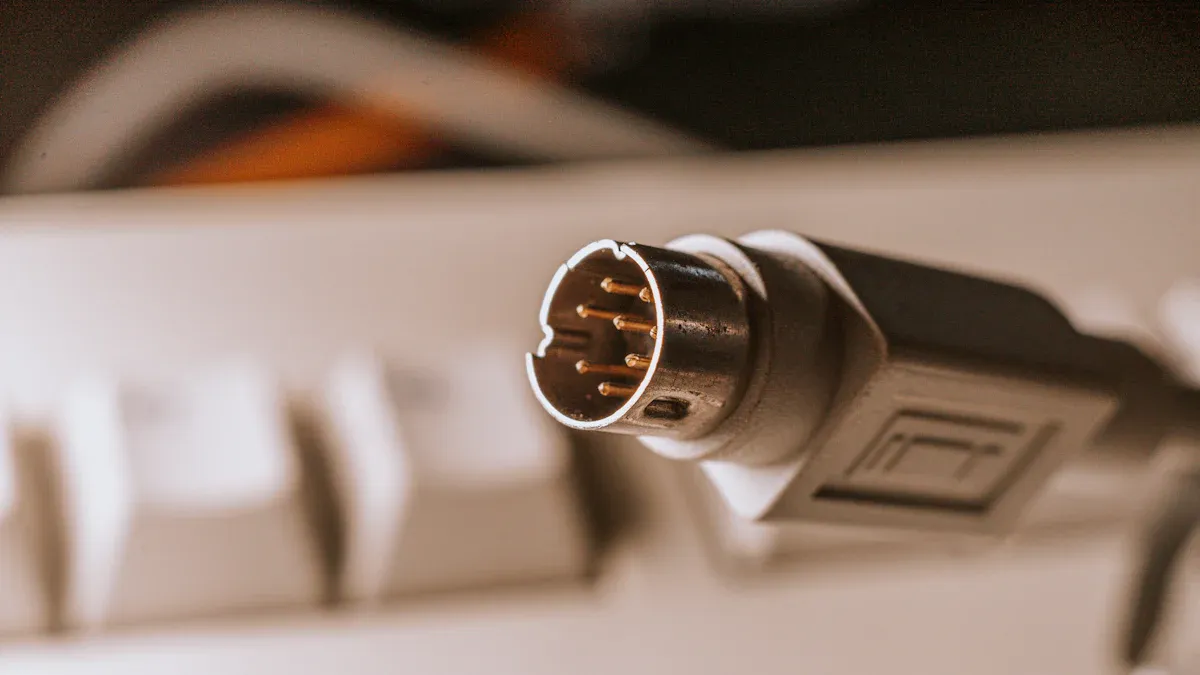
Classic DIN connectors belong to a family of electronic connectors standardized by the Deutsches Institut für Normung. These connectors use a round, keyed design that prevents misalignment and supports frequent use. Classic DIN connectors often appear in analog signal transmission, especially in vintage audio equipment, MIDI devices, and data networks. Their multi-pin structure allows for dependable wiring and strong signal integrity. Many engineers choose classic DIN connectors for their durability and compatibility with both traditional and modern equipment. These connectors help maintain reliable electrical connections in many electronic systems.
MiniDIN Connector
MiniDIN connectors represent a smaller version of the classic DIN connector. They have a compact, round shape and use horizontal pin rows. MiniDIN connectors appear in devices where space is limited, such as S-video ports, PS/2 mouse and keyboard connections, and some computer or audio/video equipment. The table below compares classic DIN and miniDIN connectors:
| Feature | Classic DIN Connectors | MiniDIN Connectors |
|---|---|---|
| Size | Larger, diameter about 13.2 mm | Smaller than classic DIN |
| Pin Arrangement | Circular pattern, 3 to 14 pins | Horizontal rows, generally fewer pins |
| Applications | Audio, video, data, power, signal | S-video, PS/2, computer, A/V equipment |
| Shape | Round | Round |
MiniDIN connectors, also called mini din sockets, support compact electronic designs. They help engineers create smaller devices without losing reliable electrical connector performance.
Configurations and Standards
DIN and miniDIN connectors come in several main categories: Standard DIN, Mini DIN, and Micro DIN. These types of electronic connectors serve many sectors, including consumer electronics, automotive, industrial machinery, and telecommunications. Micro DIN connectors, a growing niche, fit very compact applications like medical devices and portable electronics.
Note: DIN and miniDIN connectors follow strict standards, such as DIN 41612, DIN 41524, and DIN 43650. These standards ensure global compatibility and safety for electronic and electrical connectors.
Some of the most widely adopted configurations include:
- DIN 41612 for board-to-board connections in computers and telecom equipment.
- Circular DIN (DIN 41524) for audio and low-voltage power.
- Mini DIN for S-video and PS/2 connections.
- DIN 43650 for industrial sensors and solenoid valves, often called DIN valve connectors.
- M8 cable connectors for automation, offering IP65/67 protection.
DIN and miniDIN connectors, including mini din sockets and din valve connectors, support a wide range of electronic and electrical applications. Their standardization and variety make them essential in modern connection systems.
Application of DIN Connectors
Industrial Automation
Industrial automation relies on din connectors for reliable and efficient operation. Engineers use din cable assembly and din valve connectors to connect motor controllers, relays, and terminal blocks on standardized DIN rails. These rails provide a stable mounting platform, which optimizes space and allows quick upgrades or replacements. Din valve connectors appear in pneumatic and hydraulic systems, CNC machines, robotics, and assembly lines. Their robust design, made from materials like brass and thermoplastic, protects against chemicals, moisture, vibration, and temperature extremes. Integrated cables simplify wiring and maintenance. The standardized design of din valve connectors ensures compatibility among products from different manufacturers. This compatibility improves safety, reliability, and flexibility in industrial environments. Din connectors also reduce installation time and downtime, making them cost-effective for industrial automation.
Tip: Using din connectors in industrial automation systems helps maintain orderly wiring and enhances system efficiency.
Audio and Video Systems
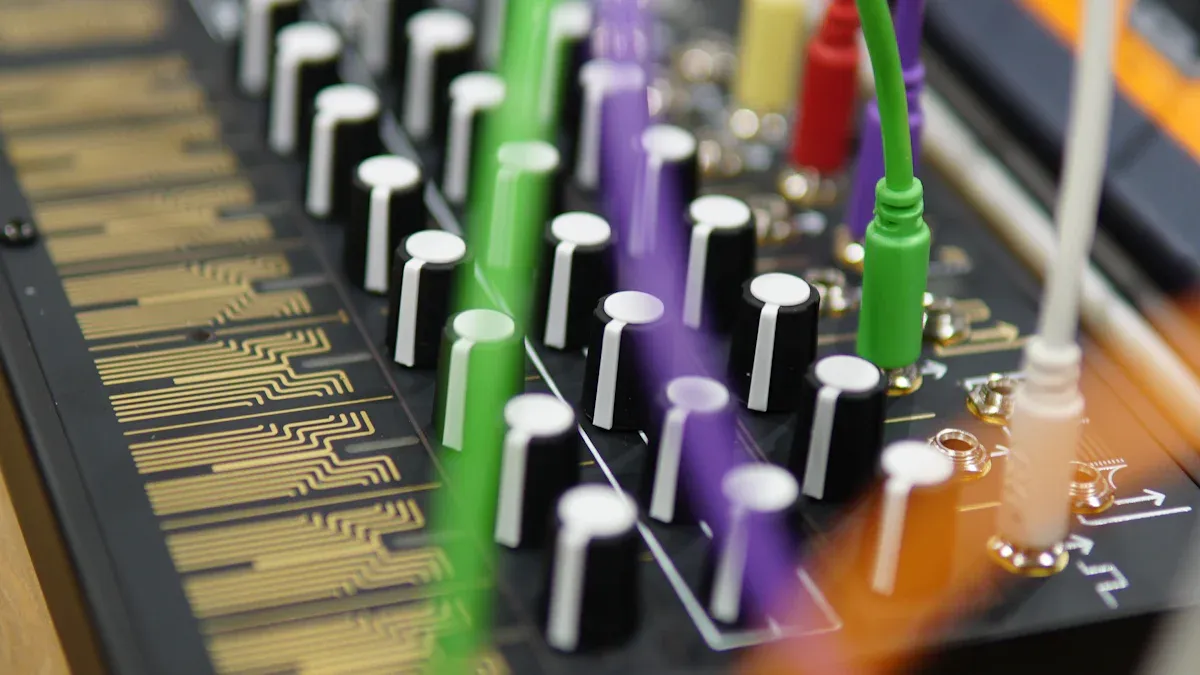
Audio and video systems benefit from the application of din connectors due to their high-frequency transmission and shielding performance. Din cable assembly supports stable and high-quality signal transmission, which is essential for clear audio and video output. The mechanical strength of din connectors ensures reliable connections even in vibrating environments. Waterproof and corrosion-resistant features maintain signal integrity in damp conditions. Easy installation allows quick assembly and maintenance, improving operational efficiency. Mini din sockets and minidin connectors are common in consumer electronics such as S-video ports and MIDI devices. The application of din connectors in midis provides musicians with a secure connection for transmitting musical data. The table below highlights key features:
| Feature | Description |
|---|---|
| High-frequency transmission | Stable, high-quality signals for audio/video applications |
| Shielding performance | Prevents electromagnetic interference, improves signal integrity |
| Mechanical strength | Reliable connections in harsh environments |
| Waterproof/corrosion resistance | Maintains stable transmission in adverse conditions |
| Easy installation | Quick assembly and maintenance |
Din connectors, including mini din sockets, offer versatile applications in audio and video systems, supporting both legacy and modern electronic devices.
Computing and Data
Computing and data transmission systems use din connectors and minidin connectors for reliable and compatible interfaces. Early personal computers featured mini din sockets for keyboard and mouse ports. Mini din-3 connectors appeared in Apple LocalTalk networks, while mini din-4 connectors supported S-video and Apple Desktop Bus. Mini din-6 connectors served as PS/2 ports on IBM PC compatibles. Mini din-8 connectors connected Sun Microsystems keyboards, mice, and serial devices. Mini din-9 connectors were used for Acorn Archimedes mice and Sega Genesis audio/video output. Ham radio operators use mini din sockets for data packet communications and radio programming. Din cable assembly ensures robust connections for audio, video, and data equipment. The application of minidin connectors demonstrates versatility across technologies. Din connectors in peripheral devices provide secure connection and compatibility for a wide range of electronic devices.
- Mini din sockets support S-video, PS/2, and specialized computing applications.
- Din connectors enable reliable data transmission in MIDI instruments and personal computers.
- Din cable assembly offers easy installation and maintenance in computing environments.
Power and Control
Power and control systems depend on din connectors for safe and efficient operation. Din valve connectors, including Form A, B, and C, are used in industrial hydraulic valves and solenoid-operated directional control valves. These connectors feature screw terminals inside rectangular housings, with optional LED indicators and surge suppressors. Easy wiring and field replaceability reduce downtime during repairs. Din cable assembly supports quick replacement and maintenance, which is favored in manufacturing and plant environments. Voltage compatibility and ingress protection ratings (IP65, IP67) ensure reliable operation in outdoor and washdown settings. Compared to alternatives, din connectors offer simplicity and maintainability. Their rugged design meets the demands of electrical and electronic devices in power and control systems.
| Connector Type | Usage/Application | Key Features and Advantages | Advantages over Alternatives |
|---|---|---|---|
| DIN Connectors (Form A, B, C) | Industrial hydraulic valves, solenoid-operated directional control valves | Screw terminals, LED indicators, surge suppressors, easy wiring and replacement | Simplicity and field replaceability reduce downtime; favored in manufacturing and plant environments |
Din valve connectors and din cable assembly provide cost-effective solutions for power and control applications, ensuring reliable electrical connections in demanding environments.
Note: Din connectors offer versatile applications, reliability, and cost-effectiveness across industrial automation, audio/video, computing, and power/control systems. Their standardized designs and robust construction make them essential for modern electronic devices.
Evolution of Electronic Connectors
Durability and Reliability
Connector technologies have changed a lot over time. DIN connectors now use ruggedized designs that help them work well in harsh environments. These environments often have extreme temperatures, shock, vibration, and contamination. Manufacturers choose better materials and mounting methods to make electronic connectors last longer. Modern DIN connectors have improved ingress protection, which keeps out dust and water. This helps them maintain stable performance in industrial and commercial settings.
DIN 41622 connectors show how much durability has improved. These connectors can handle high temperatures and strong vibrations. Their standardized design makes replacement and upgrades easy. This reduces maintenance costs and keeps systems running longer. They work well in places like telecommunications and computer systems. Proper installation and care help them last even longer. Modern DIN connectors are more dependable than older types.
The materials used in these connectors also play a big role. Gold plating in the contact zone lowers electrical resistance and protects against wear. Tin in the solder tail improves soldering and keeps costs down. Nickel in the barrier layer stops metal diffusion and boosts durability.
| Area | Material | Purpose | Thickness (µm) |
|---|---|---|---|
| Contact zone | Gold | Low resistance, wear protection | |
| Solder tail | Tin | Solderability, cost reduction | |
| Barrier layer | Nickel | Prevents diffusion, durability |
Manufacturers use advanced plating methods like nanocomposite coatings. These coatings increase wear resistance and protect against corrosion. Testing methods such as salt spray and thermal cycling check how well the plating holds up. Automated quality control keeps the plating and electrical performance consistent. These steps help electronic connectors last longer and work better.
- Ruggedized, vibration-resistant connectors meet tough safety and durability needs.
- Improved shielding and locking mechanisms increase reliability.
- Miniaturization with high-density layouts saves space and boosts performance.
- Eco-friendly materials support sustainability.
Miniaturization Trends
Miniaturization has changed the way electronic connectors look and work. DIN and miniDIN connectors now come in very small sizes. Some have pitches as low as 0.35mm. This helps engineers build tiny, lightweight devices. Surface-mount technology (SMT) connectors allow more parts to fit on a printed circuit board. This makes devices smaller and improves electrical performance by shortening signal paths.
MiniDIN connectors have become smaller than standard DIN connectors. Their diameter dropped from 13.2mm to 9.5mm. This size change lets them fit into compact electronic devices. These connectors still offer stable performance and reliability. Gold-plated contacts and waterproof ratings help them work well in tough conditions.
Miniaturization is important for military and wearable electronics. Smaller connectors make devices lighter and easier to carry. These connectors must handle shocks, vibrations, and extreme temperatures. Innovations like Nano D-Sub miniature connectors use precise contact spacing and modular designs. They can send both data and power at the same time. This helps build smaller, lighter, and more reliable electronic devices.
- Miniaturization creates tiny connectors for lightweight components.
- SMT connectors allow higher density layouts and better performance.
- Customizable and modular designs give engineers more flexibility.
- Improved reliability and resistance to moisture and dust help portable devices.
- Faster data transfer rates and better thermal performance support advanced uses.
Integration with Digital Systems
DIN connectors have adapted to work with modern digital systems and smart technologies. Connectors like M8 and M12 now support higher data speeds, including 10G Ethernet and single-pair Ethernet. This lets them connect with new digital communication protocols. These connectors provide rugged, watertight, and vibration-resistant connections. They work well in harsh industrial and vehicle environments.
Manufacturers offer adapter solutions that link older connector types with newer ones. This helps electronic connectors work with both legacy and smart systems. M8 and M12 connectors can send power, signals, and high-speed data. This is important for sensors, cameras, LiDAR, radar, and vision systems in automated applications.
- Multifunctional connectors combine power and signal contacts in one compact housing.
- Reliable, high-speed data transmission supports AI, machine learning, and big data.
- Miniaturized and robust connectors keep data flowing in advanced robotics.
- Specialized connectors help IoT devices exchange data in real time.
- Slim, waterproof, and micro coaxial connectors maintain signal integrity in drones and robotics.
- Industrial sensors use smart connectors for Ethernet and wireless communication.
DIN connectors now have higher current ratings to meet new technology needs in automotive, robotics, and telecommunications. The demand for connectors that work with automation and smart manufacturing keeps growing. Innovations target electric vehicle charging and support AI in manufacturing. Eco-friendly and energy-efficient designs help meet sustainability goals. DIN connectors play a bigger role in smart manufacturing, telecommunications, and industrial automation as digital transformation continues.
Tip: Choosing the right DIN connector helps electronic devices achieve stable performance and reliable electrical connections in modern digital systems.
Choosing DIN Connectors
Assessing Requirements
Selecting the right DIN connector for an electronic application starts with a careful assessment of system needs. Engineers look at several important factors:
- Electrical Performance: They check current and voltage ratings, making sure to include safety margins. Signal integrity and data transmission needs also matter to avoid overheating and ensure reliable operation.
- Mechanical Factors: Size, fit, mounting style (panel, PCB, or cable), locking mechanisms, and mating cycle ratings all affect how well the connector works and lasts.
- Environmental Resistance: Temperature range, moisture protection (IP ratings), corrosion resistance, and sealing help the connector withstand tough conditions.
- Regulatory Compliance: Certifications such as UL, CE, and RoHS show that the connector meets safety and performance standards.
- Durability and Reliability: Contact materials like gold plating resist corrosion. Quality manufacturing and high mating cycle ratings reduce failures.
- Cost vs. Performance: Engineers balance the purchase price with installation, maintenance, and replacement costs.
Voltage and current handling play a key role. The current rating shows the maximum current the connector can safely carry. The voltage rating ensures proper insulation and prevents breakdown. For example, connectors with fewer contacts can use larger pins and thicker wires, which support higher current and voltage. This helps match the connector to the electronic system’s needs.
| Connector Variant | Number of Contacts | Pin Diameter (mm) | Max Wire Size (AWG) | Max Current (A) | Contact Resistance (mΩ) | Working Voltage (V) |
|---|---|---|---|---|---|---|
| Variant A | 2 | 0.9 | 22 | 10 | 6 | 330 |
| Variant B | 9 | 0.5 | 28 | 2 | 10 | 200 |
Compatibility Factors
Connector compatibility ensures that DIN connectors work smoothly with existing electronic systems. Engineers check that connectors match controllers, microcontrollers, and contactors in the system. Trusted brands that follow international safety and quality standards offer reliable performance. Compatibility with sensors, switches, fuses, and cable management systems also matters for seamless integration.
| Compatibility Factor | Description |
|---|---|
| Voltage and Current Ratings | Maximum continuous voltage and current the connector can safely handle to avoid overheating and failure. |
| Power Rating | The amount of power that can safely pass through the connection considering resistance and heat generation. |
| Mechanical Durability | Ability to withstand multiple insertion/removal cycles without mechanical failure. |
| Operating Temperature Range | The temperature limits within which the connector can reliably operate. |
| Environmental Sealing | Protection against dust, moisture, corrosive gases, vibration, EMI, and other harsh conditions (e.g., IP ratings). |
| Compatibility/Backwards Compatibility | Ability to work with existing devices and earlier versions under the same standards. |
| Size | Physical dimensions suitable for the application and user handling (e.g., gloves). |
| User Custom Requirements | Features like grip enhancements, strain reliefs, audible seating signals for better usability. |
| Manufacturability | Ease of integration into manufacturing or field installation processes. |
| Data Transfer Capability | Speed and type of data transfer supported (serial, parallel, combined data and power). |
Future-Proofing
Future-proofing electronic systems means choosing DIN connectors that can adapt to new technologies and standards. Modular connector systems allow easy upgrades and customization. These systems support high-speed data, such as 10 Gbit/s Ethernet, and work with different industrial bus systems. New modules often remain compatible with older ones, making upgrades simple.
| Strategy Aspect | Description |
|---|---|
| Modularity | Modular systems enable easy upgrades and customization. |
| Compatibility | Supports evolving data standards and industrial bus systems. |
| Upgradeability | New modules are often reverse compatible with older ones. |
| Safety and Touch Protection | Touch-proof designs meet safety requirements. |
| Integration Flexibility | Supports direct busbar connections and slide-in installations. |
Manufacturers keep DIN connectors up to date by following standards that change with new technology. They use materials and designs that resist water, chemicals, and extreme temperatures. Features like O-rings, lock-nuts, and special coatings help connectors last longer in harsh environments. By choosing connectors with these qualities, engineers ensure their electronic systems stay reliable and ready for future needs.
Tip: Selecting adaptable DIN connectors with strong connector compatibility helps electronic systems remain safe, efficient, and ready for new challenges.
Din connectors remain essential in electronic systems because of their versatility, robust design, and adaptability.
- Their circular shape and multiple pins support secure data, signal, and power connections across many industries.
- Technological advances, such as modular designs and high-performance materials, improve efficiency and reliability.
- The market for din connectors is growing, driven by automation, IoT, and renewable energy.
| Projected Market Size | USD 3.55 Billion by 2033 |
|---|---|
| Key Growth Drivers | Automation, IoT, EVs |
Engineers can trust din connectors for both legacy and future electronic projects.
FAQ
What is a DIN connector used for?
DIN connectors help connect electronic devices. They carry signals, data, or power. Engineers use them in audio systems, computers, and industrial machines.
How do DIN connectors improve reliability?
Manufacturers design DIN connectors with strong materials. These connectors resist dust, water, and vibration. Their sturdy build helps devices work longer without problems.
What is the difference between DIN and miniDIN connectors?
| Feature | DIN Connector | miniDIN Connector |
|---|---|---|
| Size | Larger | Smaller |
| Pin Count | More pins | Fewer pins |
| Use | Audio, power | S-video, PS/2 |
Can DIN connectors work with new technology?
Engineers choose DIN connectors for new devices. These connectors support fast data speeds and smart systems. Modular designs allow easy upgrades.
Are DIN connectors easy to install?
DIN connectors use simple shapes and clear markings. Technicians can plug them in quickly. Their design helps prevent mistakes during installation.