Digital and Analog Signals and Their Impact on Communication Efficiency
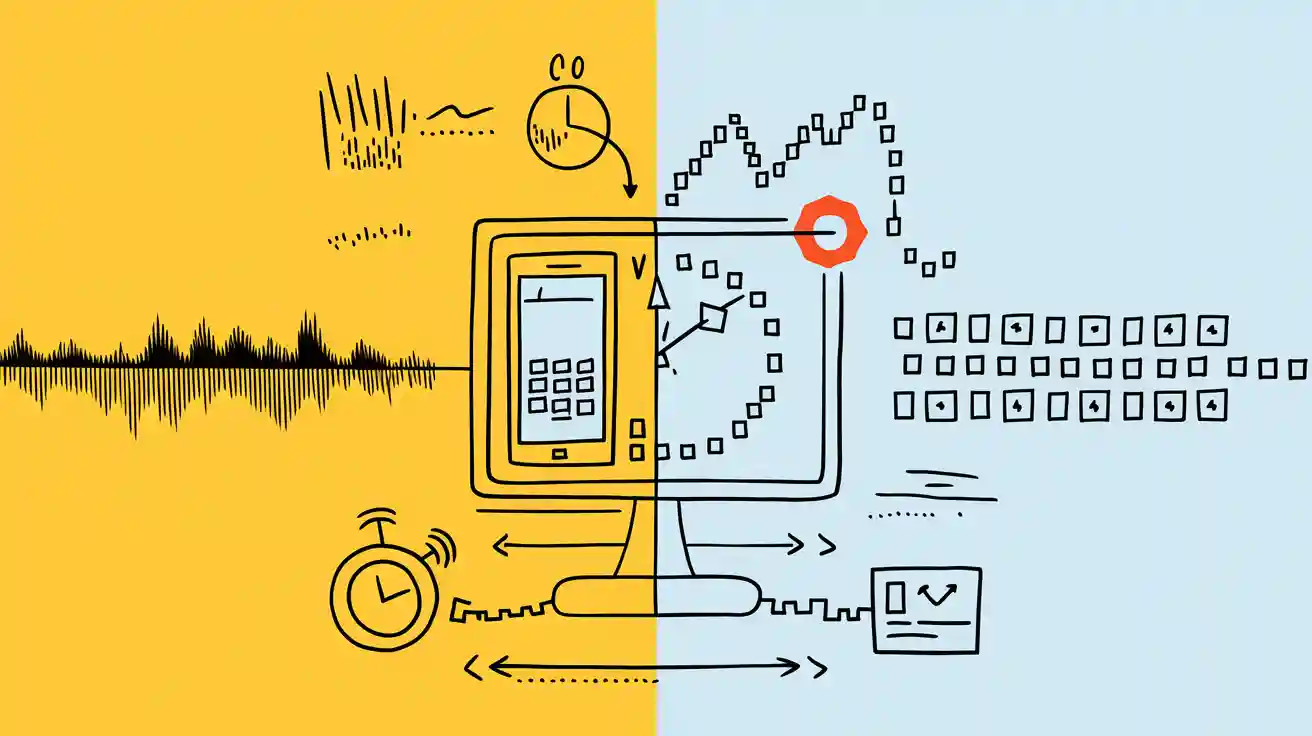
You may wonder which signal type works better for communication. Digital signals usually offer higher efficiency than analog signals. They resist noise and interference, so you get clearer messages. Look at how digital vs analog signals compare:
| Feature | Analog Signals | Digital Signals |
|---|---|---|
| Representation | Continuous values | Discrete (binary values) |
| Signal Noise | Highly susceptible | Highly resistant |
| Processing Complexity | Higher complexity | Lower complexity |
These differences shape the quality and reliability of your devices every day.
Key Takeaways
- Digital signals offer higher efficiency in communication by resisting noise and maintaining data integrity.
- Analog signals are continuous and can lose quality easily due to noise, making them less reliable for long-distance communication.
- Digital systems use error detection and correction techniques, ensuring messages stay accurate even during transmission.
- Compression in digital systems allows for faster data transmission and reduced storage needs, enhancing overall efficiency.
- Understanding the differences between digital and analog signals helps you choose the best technology for clear and reliable communication.
Digital vs Analog Signals
Analog Signals
When you use an analog system, you work with signals that change smoothly over time. These signals can take any value within a range. For example, when you listen to music on a vinyl record, the sound waves are stored as continuous grooves. This is a classic example of how an analog system works.
| Feature | Analog Signals |
|---|---|
| Nature | Continuous |
| Representation | Varies continuously over time |
| Susceptibility to Noise | Highly susceptible to noise, leading to distortions |
| Data Transmission | Mimics real-world phenomena like sound and light |
You will notice that analog signals often pick up noise from the environment. Any small change or interference can distort the original message. This makes the analog system less reliable for long-distance communication. When you compare digital vs analog signals, you see that analog signals struggle to keep information clear.
Tip: If you want to understand key differences, remember that analog signals can lose quality easily because of noise.
Digital Signals
Digital signals work differently. You use a digital system when you send information as a series of 0s and 1s. These signals jump between two fixed values, so they do not change smoothly like analog signals. This is one of the key differences between digital vs analog signals.
| Feature | Digital Signals |
|---|---|
| Nature | Discrete |
| Representation | Represented by binary values (0s and 1s) |
| Susceptibility to Noise | Less susceptible to noise, more reliable |
| Data Transmission | Encoded in pulses, representing on/off states |
Digital signals resist noise much better. Since you only need to tell the difference between a 0 and a 1, small errors do not usually affect the message. This makes digital vs analog signals a popular topic when you look for reliable communication. You will find digital signals in computers, smartphones, and the internet. These systems use digital signals because they keep data accurate and clear.
- Digital signals rely on distinct values (0 or 1), making them less affected by noise.
- Analog signals are continuous, meaning any added noise can distort the original information.
When you compare the key differences, you see that digital vs analog signals have unique strengths. The analog system can capture natural changes, but digital signals offer better protection against noise. You use both types of signals every day, but digital signals now lead in most modern communication systems.
Communication Efficiency
Noise Resistance
You often hear about noise when you study data communication. Noise is any unwanted signal that mixes with your original message. It can come from many sources, such as electrical devices, weather, or even other signals. In analog systems, noise changes the signal's shape and quality. This makes it hard to get a clear message, especially over long distances.
Digital signals handle noise much better. You only need to tell if the signal is a 0 or a 1. Even if noise tries to change the signal, digital circuits use special logic gates to restore the original value. These gates can fix small errors, so your message stays clear. Modern communication systems use digital signals because they resist noise and keep your data safe.
- Digital signals offer advantages in noise immunity compared to analog signals.
- Digital circuits are inherently immune to noise due to high-gain restoring logic gates.
- Digital systems can implement error detection and correction techniques, which further improve resilience against noise.
You see this in action with 5g networks. 5g uses digital communication to send data quickly and clearly, even in busy cities with lots of interference. This noise resistance boosts data transmission efficiency and makes your calls, videos, and downloads more reliable.
Accuracy and Fidelity
Accuracy and fidelity show how well a system keeps the original message during data transmission. In analog systems, noise and distortion can change the signal. This leads to a loss of detail and quality. For example, when you listen to music on an old radio, you might hear static or buzzing. That is noise lowering the fidelity.
Digital communication uses digital signal processing to keep messages accurate. You can measure accuracy and fidelity with several metrics:
| Metric | Description |
|---|---|
| Sampling Rate | Determines how quickly the conversion of analog to digital occurs. |
| Bit Resolution | Affects the granularity and precision of the digital output. |
| Signal-to-Noise Ratio | Measures the clarity of the signal against background noise, crucial for audio fidelity. |
| Dynamic Range | Indicates the range between the smallest and largest signal levels that can be accurately processed. |
Dynamic range and signal-to-noise ratio (SNR) are important for audio quality. If you want high fidelity, you need a high SNR and a wide dynamic range. Digital signal processing helps you reach these goals. It removes noise and corrects errors, so you get clear sound or images. 5g networks use advanced digital signal processing to keep your data communication accurate, even when many people use the network at once.
Note: Sampling frequency must match the highest frequency in your input signal. If not, you may get distortions or lose important details.
Data Integrity
Data integrity means your message arrives without errors or loss. In data communication, you want every bit of information to stay the same from start to finish. Analog signals often lose quality as they travel. Attenuation, distortion, and noise can change the signal, so you may not get the full message.
Digital signals keep data integrity strong. They use packets with checksums to check for errors. If a packet has a problem, the system can resend it. This process keeps your data safe and complete. Digital signals are less affected by electromagnetic interference and radio frequency interference. They do not degrade over distance, which is why digital communication is the standard for 5g and other modern networks.
| Signal Type | Data Integrity Characteristics |
|---|---|
| Analog | Susceptible to degradation and interference; loses information over distance. |
| Digital | Robust and reliable; does not degrade over distance; uses packets with checksums for integrity. |
Common sources of data loss in data communication include attenuation, distortion, and noise:
- Attenuation: Signal strength drops as it travels, leading to weaker messages.
- Distortion: The signal shape changes, causing delays or errors.
- Noise: Unwanted signals interfere, such as crosstalk or thermal noise.
Digital signal processing helps you fight these problems. It checks and fixes errors, so your data transmission efficiency stays high. 5g networks rely on these features to deliver fast, accurate, and reliable data communication.
Digital Data Transmission
Speed and Bandwidth
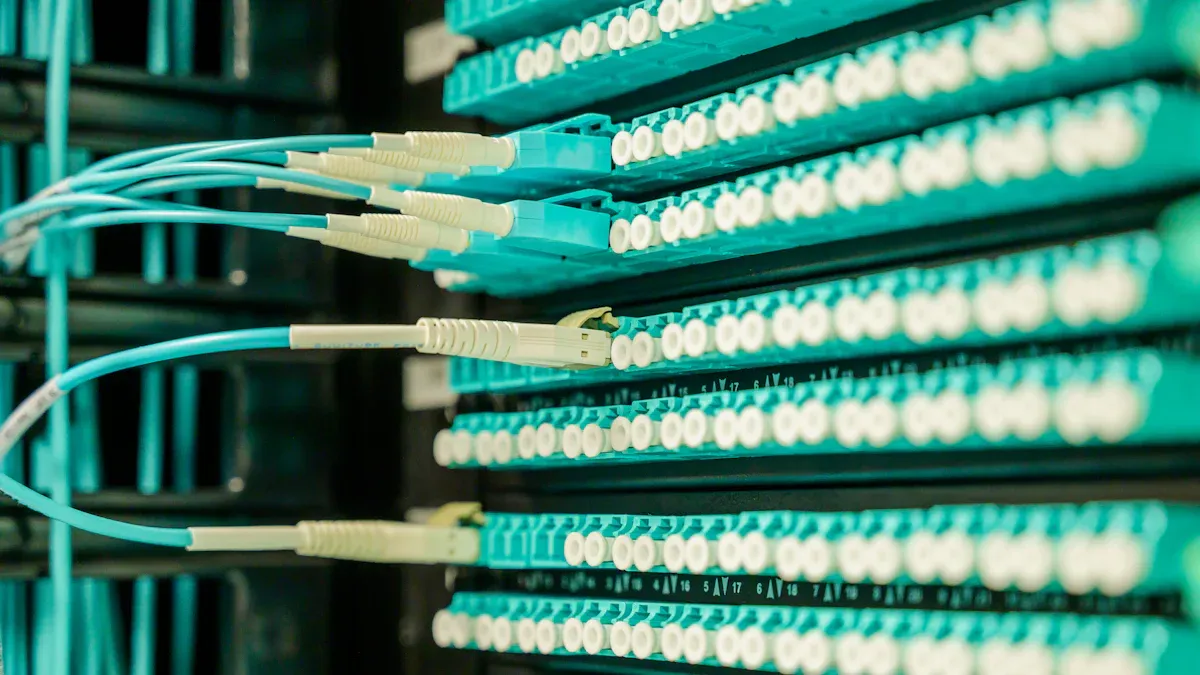
You rely on digital data transmission every day, whether you stream videos or send messages. The speed and bandwidth of a digital system play a big role in how fast and clear your signals travel. Digital systems use advanced technology to send many signals at once. This means you can enjoy high-speed internet, smooth video calls, and quick downloads.
- Digital transmission systems use bandwidth more efficiently than analog systems.
- You can fit over 100 channels into the same space with a digital system.
- Most trunk lines in developed countries now use digital systems like T-carriers and SONET.
- The move from analog to digital systems, such as ISDN and DSL, shows how much more data you can send with digital data transmission.
You see the benefits when you watch high-definition videos or play online games. The digital system keeps your signals strong and clear, even when many people use the network at the same time. This makes digital data transmission the backbone of modern communication.
Compression and Storage
Digital systems also help you save space and time. When you use compression, you make your files smaller. This means you can store more data and send it faster. Compression is important for audio and video transmission, where large files can slow down your device.
| Benefit | Description |
|---|---|
| Reduced Storage | Compressing data reduces the amount of storage space required. |
| Faster Transmission | Smaller files can be transmitted more quickly, improving efficiency. |
| Lower Bandwidth Usage | Compressed data requires fewer bits, reducing bandwidth consumption. |
You can use different types of compression in a digital system:
- Lossless compression lets you get back the exact original data.
- Lossy compression gives you smaller files, but you lose some details. This is common in streaming music or video.
- Text compression makes sure your text files stay the same after you decompress them.
Digital storage offers more than just space. It gives you scalability and reliability. You can add more storage as you need it, and your data stays safe from noise and interference. Look at this comparison:
| Feature | Digital Technology | Analog Technology |
|---|---|---|
| Scalability | Highly scalable, adapts to increasing demands | Struggles with scalability, limited capacity |
| Reliability | Enhanced reliability with error detection | Susceptible to noise and interference |
| Storage Capacity | Vast storage capabilities | Limited storage, prone to distortion |
You can see why digital signals and digital systems have become the standard for storing and sending information. They help you keep your signals accurate, your files safe, and your communication fast.
Modern Communication
Real-World Applications
You see signals at work every day in modern communication. In the past, people used analog signals for many tasks. For example:
- Speaking with someone over the phone used analog signals.
- Listening to music on a radio or a vinyl record involved analog signals.
- Turning on a light with a switch also used analog signals.
- Audio recording and playback, as well as early telephones, relied on analog signals.
Today, digital signals power most of your daily activities. You use the internet to send messages, stream videos, and play games. Digital signals travel through network servers, modems, and processors. The internet depends on digital signals for fast and reliable data transfer. Mobile networks like 4G and 5G use advanced digital technology to give you high-speed connections. Broadcasting has also changed, with digital signals making TV and radio clearer and more efficient.
| Application Area | Description |
|---|---|
| Internet Communication | Digital signals are transmitted through cables, phone lines, and satellites, enabling data transfer. |
| Mobile Networks | 5G technology uses advanced modulation for faster speeds and better quality. |
| Broadcasting | Digital signals improve the quality and efficiency of TV and radio. |
Transition from Analog to Digital
You live in a world shaped by the transition from analog to digital. This shift began in the early 20th century when analog telephones and radios were common. Over time, new inventions changed how you use communication. The invention of the transistor in 1947 and the first commercial digital computer in 1951 started the move toward digital systems. In the 1980s and 1990s, personal computers and digital media like CDs and DVDs became popular. The launch of the iPhone in 2007 brought many digital features together in one device.
The transition from analog to digital has made modern communication faster, clearer, and more reliable. You can now store, copy, and share information without losing quality.
The main drivers behind this transition include resistance to noise, easy storage, and the ability to process and analyze signals in real time. Digital systems also scale easily and work well with computers. The internet, which relies on digital signals, has changed how you connect with others and access information. You now enjoy the benefits of digital signals in almost every part of modern communication.
Pros and Cons
Analog Pros and Cons
Analog signals have several strengths that you might notice in certain situations. They can carry a lot of detailed information because they use continuous values. This means you get a more accurate picture of things like sound and light. You also use less bandwidth with analog signals, which can make them more efficient for some types of communication. Processing analog signals is usually simple, and the equipment often costs less.
| Advantage | Description |
|---|---|
| High data density | You can present more refined information with analog signals. |
| Lower bandwidth usage | Analog signals need less bandwidth than digital signals. |
| Ease of processing | Processing is generally simpler, which adds flexibility. |
| Accuracy | Analog signals show physical changes more accurately. |
| Cost-effectiveness | Analog systems are often less expensive to set up. |
You might find analog signals best for audio and video transmission. They work well when you want to capture natural changes in the world.
However, analog signals also have some clear drawbacks:
- You will notice more noise and distortion, especially over long distances.
- Analog signals can lose quality each time you copy or transmit them.
- They are more likely to pick up unwanted disturbances from the environment.
Analog signals can give you great detail, but they struggle to keep messages clear when noise is present.
Digital Pros and Cons
Digital signals give you many benefits in modern communication. You get clear and predictable results because digital signals use only two values: 0 and 1. This makes it easier to avoid mistakes and keep your data safe. Digital systems use error detection and correction, so your messages stay accurate even if something goes wrong during transmission. You can also compress digital data, which saves space and makes sending information faster. Digital devices often use less power, which helps your phone or computer battery last longer.
Still, digital signals have some challenges:
| Drawback Description | Details |
|---|---|
| Increased system complexity | Digital systems need more complex processing and design. |
| Mixed-signal hardware required | You need special hardware to switch between analog and digital. |
| Higher bandwidth requirements | Digital signals often need more bandwidth for the same data. |
You may find digital systems harder to set up and maintain. They need more advanced technology and sometimes require more bandwidth than analog systems.
Digital signals help you communicate quickly and reliably, but they can be more complex and need more resources to work well.
Future Trends
Emerging Technologies
You will see many new technologies changing how you communicate. These modern technologies help digital signal processing (DSP) become faster and smarter. The table below shows some of the most important advances and their impact on communication efficiency:
| Technology | Impact on DSP Efficiency |
|---|---|
| AI Integration | Lets DSPs process data in smarter ways, improving performance over time. |
| Edge Computing | Processes data close to where it is created, reducing delays and making decisions faster. |
| Quantum Computing | Handles complex signals much faster than older computers, boosting overall efficiency. |
| 5G Networks | Increases the need for DSPs that can manage higher-frequency signals and very low delays. |
You will also notice that researchers are working on new analog signal processing techniques. These focus on improving bandwidth, linearity, and efficiency. For example, the A-to-I Look-Through Program aims to make electronic systems work better in tough conditions. New designs use advanced math to help devices perform well even when they are small, light, or exposed to extreme temperatures.
Evolving Communication Needs
Your needs for speed, reliability, and quality keep changing. Modern technologies must keep up with these demands. You want faster downloads, clearer calls, and safer connections. In cars, for example, safety protocols now cut delays in half compared to older systems. Both safety and entertainment systems keep reliability above 60%, which is important for sending warnings or streaming videos without problems.
The telecommunications landscape has been evolving rapidly, with a significant increase in mobile cellular subscriptions, reflecting a broader trend where consumers are increasingly choosing digital solutions.
You can see how the shift from analog to digital systems improves audio quality and comfort. Early analog systems had problems with signal loss and bulky equipment. Now, digital systems solve these issues and offer more features. The rise of 5g networks and the Internet of Things (IoT) pushes companies to create even better solutions. You benefit from these changes every day, whether you use a smartphone, a smart home device, or a connected car.
You now know digital signals offer higher efficiency in communication. They resist noise, cost less to reproduce, and keep your data accurate over long distances.
| Aspect | Digital Signals | Analog Signals |
|---|---|---|
| Noise Immunity | High | Low |
| Flexibility | Programmable | Less flexible |
| Security | Easier to encrypt | Less secure |
When you choose technology for communication, digital systems give you reliable storage, easy editing, and strong anti-interference. Understanding these differences helps you pick the best tools and avoid problems with data loss or poor quality.
FAQ
What is the main difference between analog and digital signals?
You use analog signals for continuous changes, like sound waves. Digital signals use only two values, 0 and 1. This makes digital signals better for keeping information clear and safe from noise.
Why do digital signals work better in computer networks?
You get more reliable data with digital signals in computer networks. Digital signals resist noise and errors. This helps your messages travel long distances without losing quality.
How does noise affect analog and digital signals?
Noise can change analog signals and make them unclear. Digital signals stay strong because you only need to tell if the value is a 0 or a 1. This keeps your data safe.
Why is digital technology important for video streaming?
You enjoy smooth video streaming because digital signals send data quickly and clearly. Digital technology lets you watch videos without interruptions or loss of quality.
Can analog signals still be useful today?
You can still use analog signals for some tasks, like listening to music on vinyl records. Analog signals capture natural changes well, but digital signals work better for most modern communication.