How Digital Potentiometers Transform Electronic Design
Digital potentiometers change how you design and control electronics. You no longer need to rely on a mechanical potentiometer that wears out or needs manual adjustment. With a digital potentiometer, you gain accuracy, reliability, and easy integration into digital systems. These devices fit into small spaces and resist shock or vibration because they have no moving parts.
- You can program a digital potentiometer for remote control or automatic calibration in different applications.
- Digital potentiometers keep settings even after power loss, making them ideal for modern electronics.
Key Takeaways
- Digital potentiometers offer precise, reliable control without mechanical wear, improving accuracy and durability in electronic designs.
- You can program and control digital potentiometers remotely using microcontrollers, enabling automation and easy calibration.
- These devices reduce noise and support fine adjustments, making them ideal for audio systems, sensors, and industrial applications.
- Digital potentiometers have limits on voltage and current, so check specifications carefully to avoid damage.
- Non-volatile memory in many digital potentiometers keeps settings after power loss, ensuring stable performance and less maintenance.
Digital Potentiometer Basics
What Is a Digital Potentiometer
You use a digital potentiometer to adjust resistance in a circuit without turning a knob. This device replaces the old mechanical potentiometer, which needs manual movement. A digital potentiometer works with digital signals from a microcontroller or computer. You can control it with software, making it easy to change settings from far away or automatically.
Here is a table that shows the main differences between mechanical and digital potentiometers:
| Aspect | Mechanical Potentiometer | Digital Potentiometer |
|---|---|---|
| Construction | Physical resistive element with a sliding wiper moved manually | Series string of resistors with electronic switches controlled digitally by MCU or digital interface |
| Wiper Control | Manual, physical movement | Digital control via microcontroller or digital signals |
| Position Retention | Retains wiper position when power is removed | Usually loses position on power loss unless non-volatile memory is included |
| Current Capacity | Higher current and power ratings, can handle higher voltages | Lower current capacity and limited voltage range |
| Mechanical Wear | Subject to wear and noise due to physical contact | No mechanical wear, more reliable |
| Control Flexibility | Requires one knob per function | Allows remote control and integration with digital systems |
| Interface | None (manual) | Digital interfaces such as SPI, I2C |
A digital potentiometer uses digital control circuitry to set resistance. You do not need to worry about mechanical wear or noise. You get more reliable performance and easier integration with digital electronics.
How It Works
You control a digital potentiometer using digital signals. The device has a resistor string inside. Electronic switches select the tap point on this string. You send commands from a microcontroller or computer using protocols like SPI or I2C. The digital potentiometer changes its resistance in steps, not smoothly like a mechanical potentiometer.
- You can connect a digital potentiometer to a microcontroller. The microcontroller sends digital words to set the wiper position.
- You can use software to change resistance for tasks like adjusting audio volume or sensor calibration.
- Some digital potentiometers have non-volatile memory. These keep their settings even after you turn off the power.
- Most digital potentiometers work only within the supply voltage range, so you must check the voltage limits before using them.
- You can buffer the wiper output with an op-amp if you need to drive larger loads.
Digital potentiometers make it easy to automate adjustments. You can program them for remote control or automatic tuning. You get more flexibility and reliability in your electronic designs.
Advantages of Digital Potentiometers
Accuracy and Repeatability
You get much better accuracy and repeatability with digital potentiometers than with traditional ones. When you use a digital potentiometer, you can set resistance values very precisely. This helps you make finer resolution adjustments in your circuits. The device remembers your settings, so you do not have to worry about drift or changes over time.
Here is a table that compares digital potentiometers and traditional potentiometers:
| Characteristic | Digital Potentiometers (Digipots) | Traditional Potentiometers |
|---|---|---|
| Accuracy | Can achieve as fine as 0.01% with calibration and NVM | Typically around 1% or more (less precise) |
| Wiper Resistance | Tens of ohms to 1 kΩ, introduces nonlinearity and distortion | Near-zero contact resistance |
| Temperature Coefficient | Typically ~300 ppm/°C (some models lower) | Usually negligible |
| Repeatability | High, due to digital control and memory | Lower, mechanical wear affects repeatability |
| Error Sources | Wiper resistance, temperature dependence | Mechanical wear, contact noise |
| Calibration Capability | Supported via nonvolatile memory (EEPROM) | Not applicable |
You can see that digital potentiometers offer much better accuracy and repeatability. This is important in audio systems, where you want the same sound every time, or in sensor calibration, where you need exact values.
Reliability and Durability
Digital potentiometers last longer because they have no moving parts. You do not have to worry about wear and tear from turning a knob. This makes them more reliable in tough environments, such as industrial automation or outdoor equipment.
- Mechanical potentiometers have moving parts that wear out, leading to a shorter lifespan.
- Digital potentiometers use solid-state technology, so they resist shock, vibration, and dust.
- You can use them in places with high humidity or temperature changes, and they will keep working.
- Some digital potentiometers even include temperature sensors to help maintain stable performance.
Tip: If you need a potentiometer for a device that faces lots of movement or harsh conditions, choose a digital potentiometer for better reliability.
You will find that digital potentiometers keep their performance steady over time. This is important in industrial and IoT devices, where you want your equipment to work without frequent maintenance.
Programmability and Remote Control
You can program digital potentiometers using microcontrollers or computers. This gives you full control over resistance values from anywhere. You do not need to be near the device to make an adjustment. This feature supports automation and makes calibration much easier.
- You can use wireless transmitters to change resistance, just like using a remote to control your TV.
- Microcontrollers can send commands to the digital potentiometer, allowing automated adjustments.
- In industrial settings, you can set up automated test equipment to calibrate devices without manual work.
- Digital potentiometers support a high number of write cycles, so you can recalibrate as often as needed.
This programmability means you can fine-tune your circuits for different tasks. For example, you can adjust audio volume, sensor sensitivity, or motor speed with software. You also get ease of integration with digital systems, making it simple to add these features to your projects.
Low Noise and Precision
Digital potentiometers help you achieve low noise and high precision in your circuits. This is important in sensitive analog applications, such as audio processing or laboratory instruments. You can improve signal integrity by using two digital potentiometers in parallel, which reduces wiper resistance and keeps your signals clean.
Here is a table showing noise levels and precision for different potentiometer types:
| Potentiometer Category | Noise Level (µV/V) | Linearity (%) | Temperature Coefficient (ppm/°C) |
|---|---|---|---|
| Premium (Top Ranks) | <0.5 | ±0.06 | ±30 |
| Professional | <2 | ±0.15 | ±75 |
| Cost-Effective | <5 | ±0.35 | ±150 |
You can see that digital potentiometers can match or even beat the performance of premium mechanical types in many cases. You get stable, low-noise operation, which is key for high-quality audio or precise sensor readings.
Note: Digital potentiometers also offer combined functionality, letting you adjust, store, and automate resistance settings in one small package.
Real-World Examples
- In audio systems, you can use digital potentiometers to set volume or tone with high accuracy and no crackling noise.
- For sensor calibration, you can automate the adjustment process, saving time and reducing errors.
- In industrial automation, you can remotely control and recalibrate equipment, improving uptime and reducing maintenance.
You benefit from the ease of integration with microcontrollers and digital systems. This makes digital potentiometers a smart choice for modern electronic design, where automation and performance matter most.
Applications in Modern Electronics
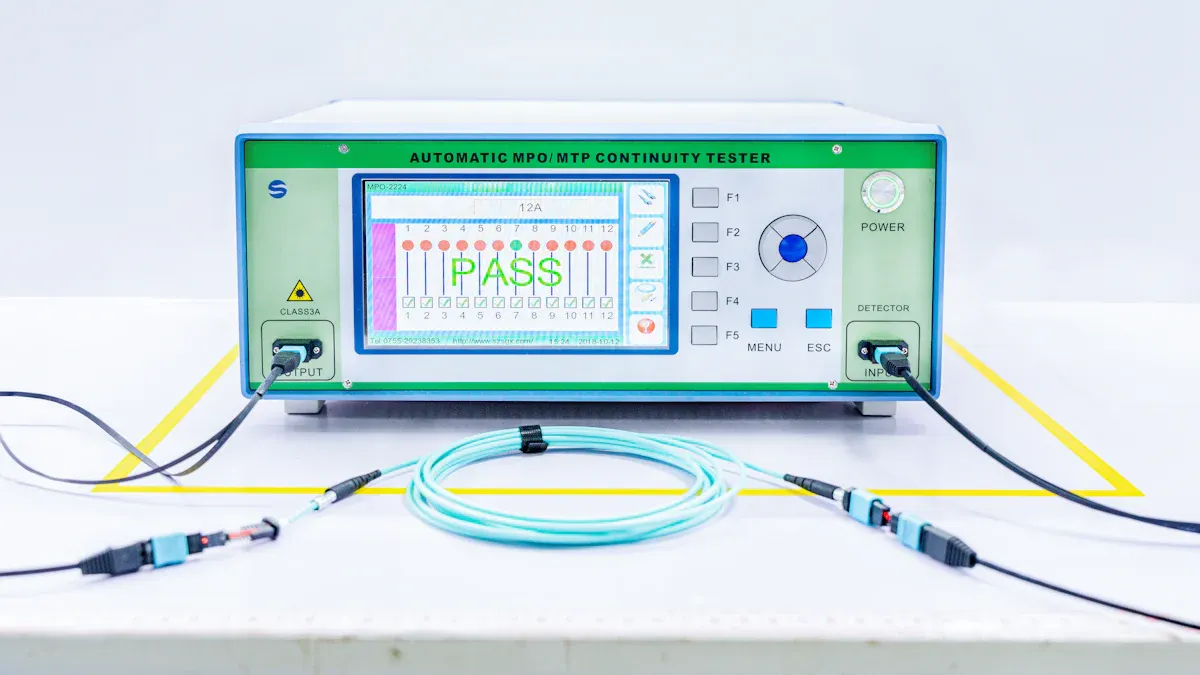
Audio and Signal Processing
You find digital potentiometers in many audio and signal processing applications. These devices help you make fine, programmable adjustments to volume and tone. You can use them in mixing consoles, amplifiers, and studio monitors. Digital potentiometers give you better accuracy and repeatability than traditional potentiometers. They also reduce noise, which keeps your audio signals clear.
- You can connect digital potentiometers to microcontrollers or digital signal processors for advanced features.
- Remote control and automation become possible, so you can recall settings or adjust sound without touching the device.
- Their small size and low power use fit well in modern audio electronics.
Tip: If you want high-fidelity sound and reliable performance, digital potentiometers are a smart choice for your audio applications.
Sensors and Calibration
In sensor and calibration applications, digital potentiometers play a key role. You use them to fine-tune sensor circuits, such as Wheatstone bridges, for better accuracy. These devices let you adjust offset voltages and prevent amplifier saturation. You can set up automatic self-calibration, which helps your sensors stay accurate over time.
Digital potentiometers support real-time adjustment through microcontrollers. This means you can recalibrate sensors to handle changes in temperature, aging, or other factors. You also gain built-in self-test features, which improve reliability in instrumentation applications.
Industrial and IoT Devices
Industrial and IoT devices rely on digital potentiometers for remote monitoring and adjustment. You can use SPI or I2C interfaces to control these devices from a distance. This makes it easy to automate processes and fine-tune machinery without manual work.
Here is a table showing how digital potentiometers help in industrial applications:
| Feature | Benefit |
|---|---|
| Remote Control | Adjust resistance without physical access |
| Digital Interface | Connects easily with microcontrollers |
| Durability | No moving parts, less wear and tear |
| Non-Volatile Memory | Keeps settings after power loss |
| Automation | Supports precise, automated calibration and process control |
You see digital potentiometers in many electronics applications today. They help you achieve reliable, accurate, and automated control in a wide range of modern devices.
Limitations and Considerations
Voltage and Current Limits
You need to pay close attention to voltage and current ratings when you use a digital potentiometer. These devices work only within their supply voltage range. If you send signals outside this range, the internal protection diodes can clamp the voltage, which may damage the device. Mechanical potentiometers can handle higher voltages and currents, so they suit applications with greater power needs. Digital potentiometers use CMOS technology, which makes them more robust against wear and environmental stress, but they cannot dissipate as much power.
Here is a table that shows what happens if you exceed voltage or current limits:
| Failure Mode Category | Specific Failure Modes and Causes | Applicability to Digital Potentiometers |
|---|---|---|
| Mechanical Failures | Mechanical wear, corrosion, surface contamination, substrate cracking | Not applicable (no moving parts) |
| Electrical Overstress Failures | Thermal runaway, electromigration, oxide breakdown, junction damage, latchup, metallisation burnout | Can occur if voltage/current ratings are exceeded |
| Consequences of Overstress | Localized heating, melting, altered current-voltage characteristics, device burnout | Device failure, loss of control |
| Latchup | Triggered by overvoltage or overcurrent pulses, causing overcurrent failure | Possible in digital IC-based potentiometers |
Note: Always check the datasheet for voltage and current limits before you choose a digital potentiometer for your project.
Memory and Power
You benefit from non-volatile memory in many digital potentiometers. This feature lets your device remember its settings even after you turn off the power. Technologies like MRAM and EEPROM offer long data retention, sometimes lasting decades, and can handle millions of write cycles. You get reliable performance in tough environments, such as automotive or industrial systems. Non-volatile memory also helps you keep calibration and configuration settings stable, which reduces maintenance and improves system reliability.
Digital potentiometers with non-volatile memory use very little power in standby mode. You can trust them to keep your data safe, even during power loss or extreme conditions.
Resolution and Noise
You need to consider resolution when you select a digital potentiometer. Resolution means the number of steps you can use to adjust resistance. Higher resolution gives you finer control, which is important for precision analog applications like medical devices or industrial automation.
- You get fine adjustments with high precision.
- More steps mean better control of resistance.
- Precision matters in applications where accuracy is vital.
- Choosing the right resolution ensures your potentiometer matches your circuit needs.
Digital potentiometers also help reduce noise in sensitive circuits. You achieve stable and clean signals, which is important for audio and sensor applications.
You see how digital potentiometers bring precision, reliability, and automation to electronic design. These digital devices work in many areas, from audio equipment to medical tools. You can program them for remote control and fine adjustments. Market trends show steady growth and new uses in smart systems and energy management. When you choose components, consider your project’s needs, cost, and environment to get the best results.
FAQ
What is the main difference between a digital potentiometer and a mechanical potentiometer?
You control a digital potentiometer with electronic signals. You turn a knob to adjust a mechanical potentiometer. Digital potentiometers work well with computers and microcontrollers. Mechanical potentiometers need manual adjustment.
Can you use a digital potentiometer for audio volume control?
Yes, you can use a digital potentiometer to set audio volume. You get precise adjustments and less noise. You can also automate volume changes with software.
Do digital potentiometers keep their settings after power loss?
Many digital potentiometers have non-volatile memory. You do not lose your settings when you turn off the power. Always check the datasheet to see if your device has this feature.
What communication protocols do digital potentiometers support?
You can use SPI or I2C to control most digital potentiometers. These protocols let you connect the device to microcontrollers or computers. You send commands to change resistance values.
Are digital potentiometers suitable for high-power applications?
Digital potentiometers work best in low-power circuits. You should not use them for high voltages or currents. Mechanical potentiometers handle more power and suit those needs better.