What Role Do Differential Pressure Sensors Play in Industrial Applications
A differential pressure sensor measures the difference in pressure between two points. This device plays a key role in keeping industrial environments safe and efficient. Many industries rely on differential pressure sensors to meet strict air and water quality rules.
- These sensors track pressure changes in real time, which helps prevent equipment failures and supports pollution control.
- MEMS differential pressure sensors offer high accuracy and low power use, making them valuable in modern monitoring systems.
Professionals in the field depend on these sensors to ensure compliance and support smooth operations.
Key Takeaways
- Differential pressure sensors measure pressure differences to help monitor and control industrial processes safely and efficiently.
- These sensors play a vital role in filtration, HVAC, cleanrooms, flow monitoring, and leak detection across many industries.
- Using differential pressure sensors improves energy efficiency, reduces maintenance costs, and extends equipment life.
- Regular calibration and proper sensor selection based on accuracy and environment ensure reliable and long-lasting performance.
- Modern sensors with digital features support real-time data, predictive maintenance, and better process control for smarter operations.
Differential Pressure Sensor Basics
What Is a Differential Pressure Sensor
A differential pressure sensor measures the difference in pressure between two points. This device helps monitor and control many industrial processes. Most differential pressure sensors have three main parts: a primary element, a secondary element, and an electronics housing. The primary element creates a pressure difference, often by narrowing a pipe with an orifice plate or a Venturi tube. The secondary element measures this difference as accurately as possible. The electronics housing processes the signal and sends it to a control system.
Many industries use differential pressure sensors to track air, gas, or liquid flow. These sensors can also measure tank levels or detect leaks. Some models, like piezoresistive sensors, use a diaphragm that senses pressure on both sides. Others use strain gauges or capacitive elements. Differential pressure switches work alongside these sensors to trigger alarms or shut down equipment if the pressure difference goes outside safe limits.
Note: Differential pressure sensors can be set up to measure gauge pressure, absolute pressure, or vacuum, depending on how the ports connect to the process.
How Differential Pressure Sensors Work
Differential pressure sensors detect the pressure difference between two points, called the high side and the low side. The sensor converts this difference into an electrical signal. The signal often follows a standard, such as 4-20 mA, which makes it easy to use with industrial control systems.
The table below shows common types of differential pressure sensors and their operating principles:
| Sensor Type | Operating Principle | Typical Applications |
|---|---|---|
| Strain Gauge | Measures strain on a diaphragm using bonded strain gauges. | HVAC, process control, automotive systems |
| Capacitive | Detects changes in capacitance from diaphragm movement. | Medical devices, electronics, tire pressure |
| Piezoelectric | Generates electric charge from pressure on crystals or ceramics. | Airflow, vibration monitoring |
| Resonant Wire | Measures frequency changes in vibrating wires due to pressure difference. | Aerospace, laboratory instruments |
Differential pressure switches use the same principle but act as on/off devices. They respond when the pressure difference crosses a set point. This feature protects equipment and ensures safety.
Regular calibration and maintenance keep differential pressure sensors accurate. These steps help prevent errors caused by temperature changes, humidity, or corrosive substances. High-quality sensors can achieve accuracy as low as 0.5% of full scale and respond in less than a millisecond. This speed and precision make them vital for pressure difference measurement in modern industry.
Industrial Applications
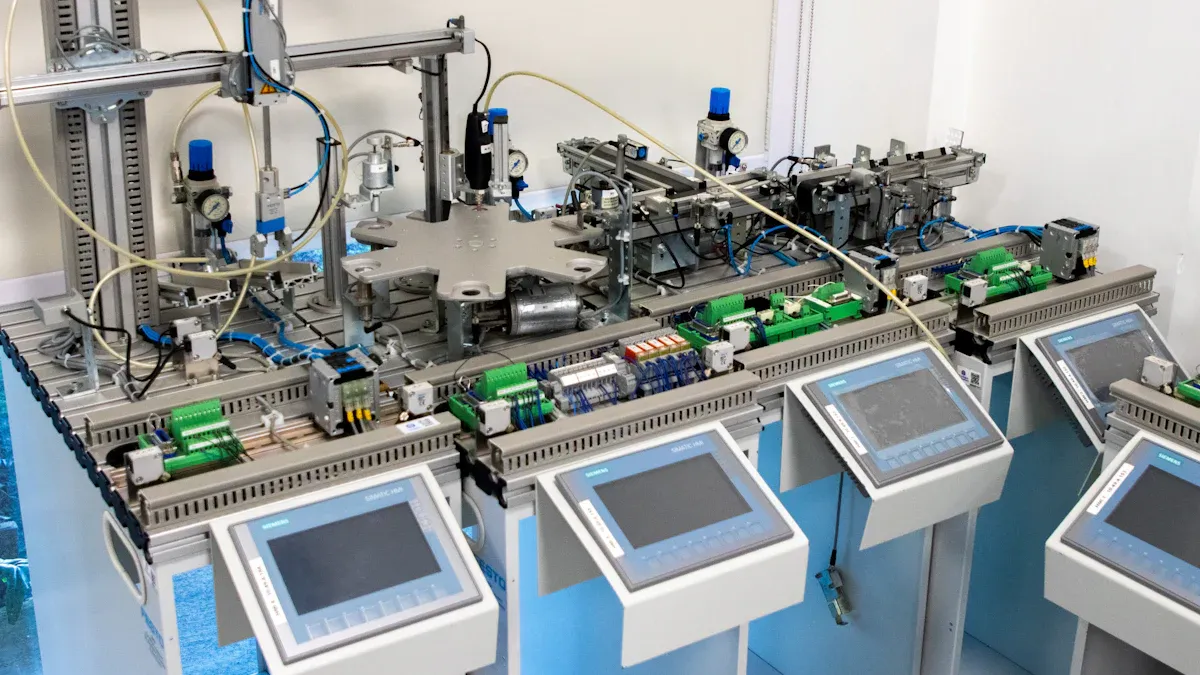
Differential pressure sensors serve as essential tools in many industrial applications. They help companies maintain safety, efficiency, and compliance across a wide range of sectors. The table below shows how different industries use these sensors for specific tasks:
| Industrial Sector | Primary Use Cases |
|---|---|
| Environmental | Monitoring air quality, measuring flow, tracking pressure drops across filters and membranes. |
| Aerospace | Measuring airspeed, monitoring cabin and external pressure, tracking fuel and hydraulic systems. |
| Automotive | Evaluating engine performance, measuring pressure drops across filters, monitoring tire pressure. |
| Food | Controlling production processes, measuring filter pressure drops, monitoring airflow. |
| Water Treatment | Monitoring filter and membrane pressure drops, ensuring water safety, preventing contamination. |
Filtration Systems
Filtration control is a major use for differential pressure sensors. These sensors monitor pressure before and after filters to check for clogging or fouling. When the pressure difference rises, it signals that the filter needs replacement. This approach helps companies avoid sudden failures and keeps systems running smoothly.
- Sensors provide real-time monitoring of filter condition.
- They reduce the need for manual checks, which can be slow and prone to error.
- Automated monitoring systems use these sensors to trigger alarms or adjust process settings.
- In industries like pharmaceuticals and electronics, sensors track HEPA filter resistance to maintain cleanroom integrity.
- In dust-heavy environments, sensors help schedule maintenance to prevent efficiency loss.
Facilities that use differential pressure sensors for filtration control often see 15-25% savings in filter replacement costs. By scheduling maintenance based on sensor data, they extend filter life and reduce downtime. These sensors also support monitoring fluid levels in some filtration systems, adding another layer of process control.
HVAC and Cleanrooms
HVAC systems and cleanrooms rely on differential pressure sensors to maintain air quality and pressure balance. These sensors measure the pressure difference across filters and between rooms. They send real-time data to monitoring systems, allowing facility managers to spot problems like clogged filters or leaks.
Regulatory bodies such as the FDA and EU GMP require strict control of air quality and pressure in cleanrooms. Differential pressure sensors help maintain positive pressure to prevent contamination. They detect small pressure changes and can trigger alarms or adjust HVAC settings to keep conditions safe.
- Sensors must be accurate and regularly calibrated.
- Alarm systems notify staff if pressure goes outside set limits.
- Data logging supports compliance and audits.
- Integration with building management systems allows centralized control.
In cleanrooms, these sensors work with gauges and switches to maintain required pressure differences. They help ensure airflow monitoring meets standards and that cleanroom integrity stays intact.
Process and Flow Monitoring
Many industrial applications depend on accurate flow measurement. Differential pressure sensors play a key role in industrial process monitoring by measuring flow in pipes, ducts, and reactors. They convert pressure differences into electrical signals for control systems, enabling real-time monitoring and process adjustments.
In chemical and pharmaceutical plants, these sensors help maintain correct flow rates and detect leaks or blockages. Their high accuracy and durability make them ideal for harsh environments. They also support compliance with strict regulations by providing reliable data for quality control.
- Sensors use technologies like piezoelectric or capacitive sensing.
- They often include temperature compensation for accuracy.
- Integration with digital control systems allows for continuous process optimization.
Regular calibration and maintenance keep these sensors working well. Preventive steps like cleaning and inspection reduce errors from sensor drift or mechanical damage. Differential pressure switches add another layer of safety by triggering alarms or shutting down equipment if pressure goes outside safe limits.
Tank Level and Leak Detection
Differential pressure sensors also help with monitoring fluid levels and leak detection in storage tanks. In oil and gas facilities, these sensors measure the difference between the pressure at the bottom and top of a tank. This method gives an accurate reading of liquid level, even in pressurized tanks.
- Sensors detect sudden pressure drops, which can signal leaks or system faults.
- Accurate pressure measurement helps prevent overpressure and tank rupture.
- Reliable monitoring supports regulatory compliance and equipment longevity.
These sensors also aid in process control by ensuring optimal pressure for storage and chemical processes. Differential pressure switches can trigger alarms if levels or pressures move outside safe ranges, adding another layer of protection.
Tip: Regular maintenance and calibration of differential pressure sensors help prevent common failure modes such as inaccurate readings, clogged filters, or sensor drift. This practice ensures reliable operation in all industrial applications.
Benefits of Differential Pressure Sensors
Efficiency and Performance
Differential pressure sensors help factories and plants work better. These sensors allow workers to replace filters only when needed, not on a fixed schedule. This method saves time and money. When filters get clogged, fans and pumps use more energy. By catching these problems early, the sensors lower energy use and keep equipment running smoothly.
- Enable filter replacement based on real data
- Lower energy use by preventing blocked airflow
- Detect filter issues before they cause damage
The chart below shows how much efficiency improves after using these sensors in different industries:
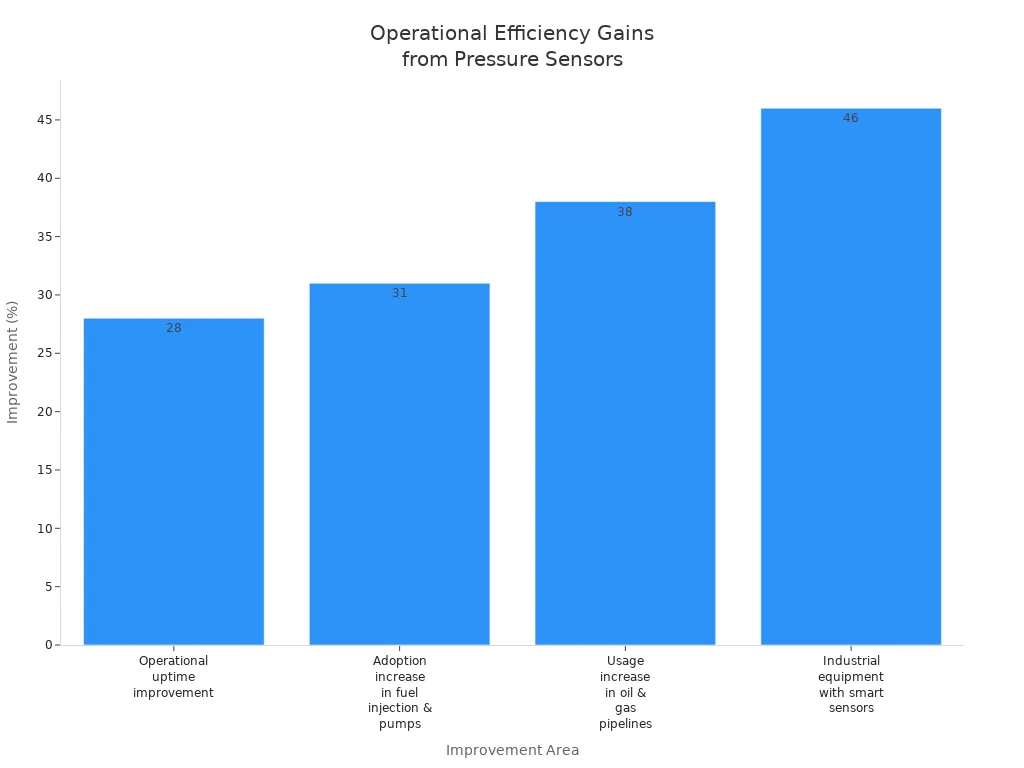
Plants that use differential pressure sensors see up to 28% more uptime and a 46% increase in smart equipment use. These sensors also help keep flow rates steady and support high accuracy in process control.
Safety and Compliance
Many industries must follow strict safety and quality rules. Differential pressure sensors help meet these standards. They monitor pressure in real time and alert workers to leaks or unsafe conditions. For example, cleanrooms and pharmaceutical labs use these sensors to keep air clean and prevent contamination.
| Certification/Standard | Requirement/Description |
|---|---|
| ISO 14644 | Cleanroom air balance |
| USP <797> and <800> | Pharmacy contamination control |
| FDA GMP | Sterile manufacturing |
Sensors with cCSAus and NACE MR0175 certifications work safely in hazardous places like oil and gas plants. These features help companies avoid fines and keep workers safe.
Maintenance and Cost Savings
Differential pressure sensors make maintenance smarter. They provide data for predictive maintenance programs. This means workers can fix problems before they cause breakdowns. Plants report up to 40% fewer emergency repairs and save as much as $450,000 each year in large buildings.
| Metric | Reported Reduction / Savings |
|---|---|
| Emergency Repairs Reduction | 40% reduction |
| Annual Maintenance Savings | $450,000 (commercial office tower) |
| Operational Cost Reduction | 20-35% |
| Maintenance Labor Efficiency | 30-45% improvement |
| Equipment Life Extension | 15-25% increase |
Sensors also extend equipment life and reduce downtime. By using real-time data, companies avoid waste and keep systems running longer.
Choosing the Right Sensor
Accuracy and Range
Selecting a differential pressure sensor starts with understanding its accuracy and measurement range. Accuracy tells users how close the sensor’s readings are to the true pressure. Manufacturers often express accuracy as a percentage of the full-scale range or as a percentage of the reading. High accuracy is important in industries where even small errors can cause big problems. Factors like temperature changes, sensor drift, and response time also affect accuracy. Some sensors offer high accuracy by using advanced materials and designs, such as thin-film-on-steel or piezoresistive elements. These sensors can detect tiny pressure changes and respond quickly. The measurement range must cover both normal and unexpected pressure levels to avoid damage and ensure reliable readings. Long-term stability and regular calibration help maintain high accuracy over time.
Compatibility and Environment
The sensor’s materials and design must match the process media and environment. If the diaphragm or housing reacts with the process fluid, the sensor may fail or give false readings. Stainless steel housings and media-isolated designs help sensors last longer in harsh or corrosive settings. The table below shows how different features affect performance and lifespan:
| Feature | Description | Impact on Sensor Life |
|---|---|---|
| Stainless Steel Housing | Resists corrosion and harsh chemicals | Extends sensor lifespan |
| Media-Isolated Design | Protects sensor from direct contact | Maintains accuracy |
| Dual-Diaphragm Design | Measures pressure on both sides | Improves precision |
| High Stability Rating | ±0.5% FS/Year drift | Reduces recalibration needs |
| Fast Response Time | 1 ms or less | Supports real-time data |
Industrial environments can expose sensors to dust, humidity, vibration, and temperature swings. Sensors with high IP ratings (like IP65 or higher) resist water and dust. Regular cleaning and calibration keep sensors working well.
Technology Advancements
Modern differential pressure sensors use new technologies to improve performance. Many now include digital features, such as wireless communication and edge processing. These upgrades allow sensors to send real-time data to control systems and support predictive maintenance. Digital sensors often have self-calibrating functions and advanced filtering to reduce noise. Some models use AI to analyze data and spot problems before they cause downtime. Miniaturized sensors use less energy and fit into smaller spaces, making them ideal for distributed monitoring. Digital models also connect easily with industrial networks, offering better process control than older analog types.
Industrial professionals see differential pressure sensors as vital for safety, efficiency, and compliance. These sensors support real-time monitoring, predictive maintenance, and energy savings. Industry 4.0 trends drive adoption through automation and IIoT integration. When selecting sensors, users should consider accuracy, compatibility, and environmental needs.
- Market growth continues as new industries and emerging economies adopt advanced sensor technologies.
- For further learning, many companies and websites offer case studies, technical guides, and support services.
FAQ
What is the main purpose of a differential pressure sensor?
A differential pressure sensor measures the difference in pressure between two points. This helps workers monitor systems, detect problems, and keep equipment running safely.
Where do industries use differential pressure sensors most often?
Industries use these sensors in filtration systems, HVAC units, cleanrooms, and storage tanks. They help control air quality, monitor fluid flow, and detect leaks.
How often should workers calibrate differential pressure sensors?
Most experts recommend calibration at least once a year. Some harsh environments may need more frequent checks to keep readings accurate.
Can differential pressure sensors help save energy?
Yes. These sensors help spot clogged filters or blocked pipes early. Workers can fix issues quickly, which lowers energy use and keeps systems efficient.
What features should buyers look for in a differential pressure sensor?
Buyers should check for high accuracy, strong materials, and digital features. Sensors should match the process media and work well in the plant’s environment.